Nepal Judicial Independence Under Threat as International Rights Groups Decry Political Interference and Impeachment Maneuvers
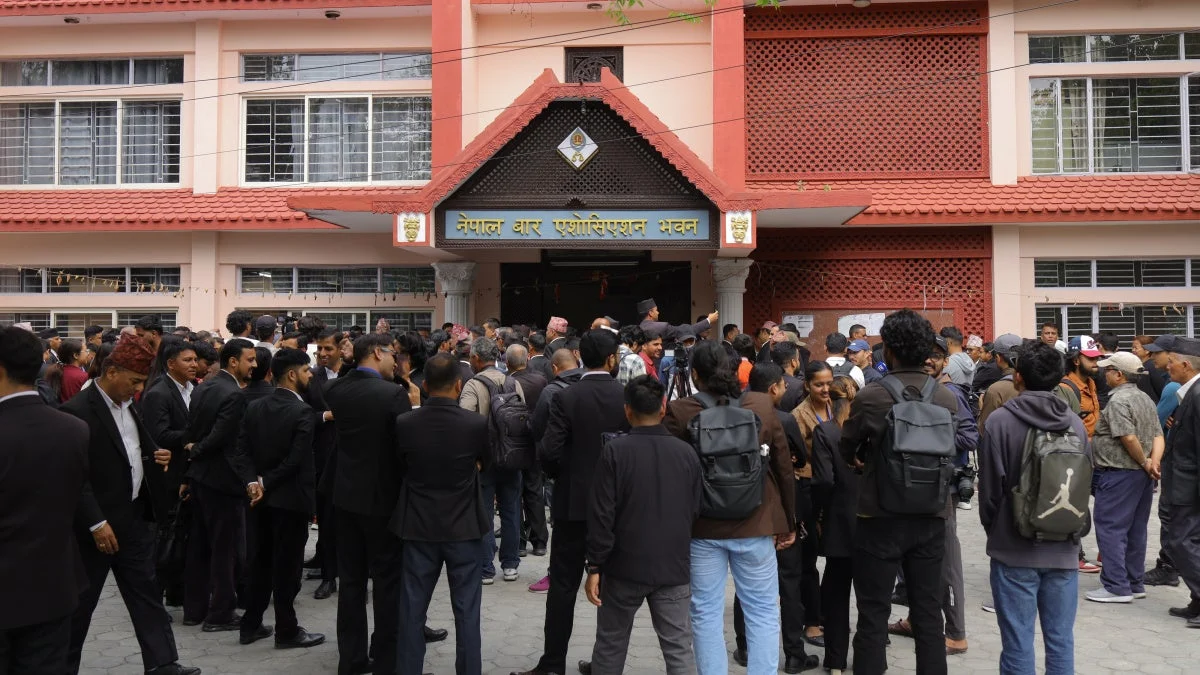
In a joint statement issued from Geneva, three of the world’s leading human rights and legal watchdogs—Amnesty International, Human Rights Watch (HRW), and the International Commission of Jurists (ICJ)—have sounded a global alarm regarding the deteriorating state of judicial independence in Nepal. The organizations expressed profound concern over what they characterize as a systematic campaign by the Nepalese government to undermine the autonomy of the Supreme Court through executive overreach, the bypass of traditional seniority in judicial appointments, and the weaponization of impeachment proceedings against sitting justices. The situation reached a critical juncture in May 2026, when the government bypassed parliamentary oversight to amend the Constitutional Council Act via executive ordinance, a move the rights groups argue violates both the letter and spirit of Nepal’s 2015 Constitution and fundamental rule of law principles.
The core of the controversy lies in the government’s perceived attempt to reshape the judiciary to ensure a more favorable legal environment for executive decisions. According to the joint statement, the independence of the judiciary serves as the ultimate safeguard for human rights and a vital check on the abuse of power. By exerting political pressure on the highest court in the land, the Nepalese government risks dismantling the democratic scaffolding that has been painstakingly built since the country’s transition to a federal republic. The organizations emphasize that any genuine effort toward judicial reform must focus on strengthening the integrity and impartiality of the courts, rather than rendering them vulnerable to the whims of the political establishment.
The Legislative Shift: The Constitutional Council Act Amendment
The catalyst for the current crisis was the executive ordinance issued in May 2026, which fundamentally altered the composition and operational mechanics of the Constitutional Council. This body is a high-level constitutional mechanism responsible for recommending appointments to the country’s most powerful offices, including the Chief Justice and heads of various constitutional commissions. Under the original framework of the Constitution, the Council was designed to require a high degree of consensus, ensuring that appointments were not merely the product of the ruling party’s preferences.
However, the 2026 amendment significantly lowered the quorum and voting requirements. Previously, the Council required the presence of the majority of its members and a consensus-based approach to decision-making. The new ordinance allows the Council to convene and make binding recommendations with a reduced number of members, effectively permitting the executive branch to push through its preferred candidates without the need for bipartisan or multi-branch agreement. Given that political office holders—including the Prime Minister and the Speaker of the House—already constitute a majority of the Council, these changes have concentrated an unprecedented amount of power in the hands of the executive.
Legal experts argue that using an ordinance to amend a law of such constitutional significance is a circumvention of the legislative process. Ordinances are intended for urgent matters when Parliament is not in session, but their use in this context suggests a strategic avoidance of public debate and parliamentary scrutiny. This move has drawn sharp criticism from the ICJ, with Senior Legal and Policy Director Ian Seiderman noting that judicial reform must always prioritize the independence and integrity of the courts over political expediency.
The Appointment of Dr. Manoj Kumar Sharma and the Seniority Principle
The concerns regarding the Constitutional Council were further validated by the recent appointment of Dr. Manoj Kumar Sharma as the Chief Justice of Nepal. Historically, Nepal has followed a "seniority principle" for the appointment of the Chief Justice, wherein the most senior serving justice of the Supreme Court is elevated to the top position. This tradition serves as a safeguard against political favoritism, ensuring that the leadership of the judiciary is determined by experience and tenure rather than political alignment.
In the case of Dr. Sharma, the government departed from this long-standing practice. Despite the presence of three justices more senior than him—Sapana Pradhan Malla, Kumar Regmi, and Hari Phuyal—the Parliamentary Hearing Committee endorsed Dr. Sharma’s nomination. The process was marred by controversy, as the committee reportedly moved forward with the endorsement despite numerous formal complaints regarding the nomination process. Rights groups point out that there was no meaningful public examination of these grievances, leading to a perception that the appointment was a "fait accompli" orchestrated by political actors.
Meenakshi Ganguly, Deputy Asia Director at Human Rights Watch, emphasized that public confidence in the legal system is inextricably linked to the transparency of judicial appointments. When the selection process appears susceptible to political influence, it undermines the administration of justice and weakens the overall rule of law. The departure from the seniority principle, without a clear and merit-based justification, has created a climate of uncertainty within the legal community.
The Weaponization of Impeachment and Political Pressure
Perhaps the most alarming aspect of the current situation is the reported use of impeachment threats against senior justices. Amnesty International and its partners have received credible reports that Justices Sapana Pradhan Malla, Kumar Regmi, and Hari Phuyal—the three individuals bypassed for the Chief Justiceship—have been subjected to intense political pressure to resign. The reports suggest that these justices were threatened with impeachment proceedings should they refuse to vacate their seats.
Under Article 101 of the Constitution of Nepal, the initiation of impeachment proceedings in the House of Representatives results in the immediate and automatic suspension of the judge in question until a final determination is made. This "automatic suspension" mechanism is particularly susceptible to abuse. Even if the charges are eventually found to be baseless, the mere act of filing an impeachment motion can effectively remove a judge from the bench for months, if not years.
The timing of these threats is of significant concern. The Supreme Court is currently seized with several high-stakes constitutional cases involving challenges to government executive actions and legislative decisions. The suspension of three senior justices would not only alter the composition of the benches hearing these cases but also send a chilling message to the remaining judiciary. The rights organizations noted that they are unaware of any publicly stated allegations that would meet the high constitutional threshold for impeachment, which typically requires evidence of "serious violation of the Constitution and law, incompetence, misbehavior, or failure to discharge the duties of office in good faith."
Chronology of the Judicial Crisis
To understand the gravity of the current situation, it is necessary to examine the timeline of events that led to this impasse:
- Early 2026: Increasing friction between the executive branch and the Supreme Court over several rulings that struck down government-backed initiatives as unconstitutional.
- May 2026: The government issues an executive ordinance to amend the Constitutional Council Act, reducing quorum requirements and bypassing the need for parliamentary deliberation.
- June 2026: The Constitutional Council, operating under the new rules, recommends Dr. Manoj Kumar Sharma for the position of Chief Justice, bypassing three senior-most justices.
- July 2026: The Parliamentary Hearing Committee endorses Dr. Sharma’s appointment amidst protests from civil society and legal professional bodies regarding the lack of transparency and the dismissal of formal complaints.
- August 2026: Reports emerge of back-channel political pressure exerted on Justices Malla, Regmi, and Phuyal to resign. Rumors of prepared impeachment motions begin to circulate in political circles.
- Present: Amnesty International, HRW, and the ICJ issue a joint call for the government to cease interference and respect the independence of the judiciary.
Analysis of Implications for the Rule of Law
The implications of this crisis extend far beyond the walls of the Supreme Court. A judiciary that is perceived as being under the thumb of the executive loses its moral and legal authority to mediate disputes between the state and its citizens. In a country like Nepal, which is still navigating the complexities of its post-conflict transition, the Supreme Court has often been the last resort for victims of human rights abuses and those seeking constitutional clarity.
If the "automatic suspension" via impeachment becomes a standard tool for political retaliation, it creates a "revolving door" judiciary where judges are incentivized to rule in favor of the government to protect their careers. This creates a systemic bias that erodes the right to a fair trial and the principle of equality before the law. Furthermore, the bypass of the seniority principle risks politicizing the entire judicial hierarchy, as lower-court judges may begin to align their rulings with political interests in hopes of future promotion.
International standards, including the UN Basic Principles on the Independence of the Judiciary, explicitly state that judges should be subject to removal only for reasons of incapacity or behavior that renders them unfit to discharge their duties. The use of procedural maneuvers to force resignations is a direct violation of these global norms.
Official Responses and Recommendations
While the Nepalese government has maintained that its actions are within the legal framework of the state, the international community remains skeptical. Spokespersons for the ruling coalition have previously argued that judicial reforms are necessary to clear case backlogs and modernize the court system. However, the rights organizations argue that reform should not be a euphemism for control.
Isabelle Lassee, Acting Regional Director for South Asia at Amnesty International, stated that the objective of any judicial reform should be to build stronger, more independent institutions that enjoy public confidence. "Reforms that depart from the principles of separation of powers and transparency risk weakening the very institutions they are intended to strengthen," she warned.
To rectify the situation, the joint statement from Amnesty International, Human Rights Watch, and the ICJ recommends the following actions for the Nepal government:
- Repeal the Ordinance: Immediately withdraw the executive ordinance amending the Constitutional Council Act and ensure that any changes to judicial appointment processes are handled through transparent parliamentary legislation.
- Respect Seniority and Merit: Revert to the established practice of seniority for judicial appointments unless there are clear, documented, and publicly vetted reasons for a departure.
- Cease Intimidation: Immediately stop all forms of political pressure, including the threat of impeachment, against sitting justices.
- Reform the Impeachment Process: Amend constitutional provisions to ensure that the initiation of impeachment does not lead to automatic suspension without a preliminary judicial or independent review of the evidence.
- Ensure Transparency: Conduct all future Parliamentary Hearing Committee sessions with a high degree of transparency, ensuring that public complaints against nominees are investigated and addressed on the record.
The eyes of the international community are now on Kathmandu. As Nepal continues its journey as a democratic republic, the resilience of its judiciary will be the ultimate litmus test for the health of its democracy. The rights groups conclude that without an independent court system, the protection of human rights in Nepal remains a fragile promise rather than a guaranteed reality.

Related Posts

Human Rights Watch Calls for Investigation into Death of Detainee Following Removal from Najaf Hospital by Iraqi Drug Police
Human Rights Watch Urges UN Security Council to Extend Lebanon Peacekeeping Mission Amid Escalating Conflict and Humanitarian Crisis