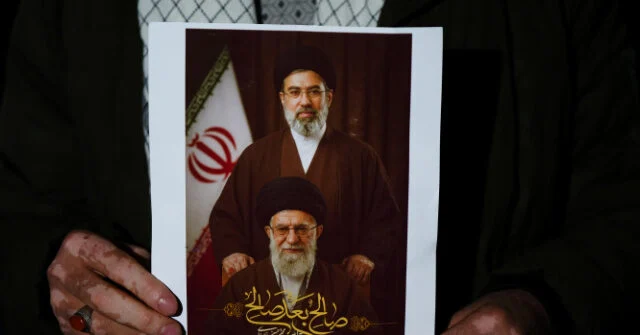
U.S. Intel Says Mojtaba ‘Far More’ Inclined to Seek Nuclear Weapons
Washington D.C. – The U.S. intelligence community has delivered a sobering assessment to President Donald Trump, concluding that Iran’s newly ascended Supreme Leader, Mojtaba Khamenei, demonstrates a significantly greater inclination than his late father to pursue the development of nuclear weapons. This finding fuels mounting concerns that Tehran’s long-term atomic ambitions may have solidified, even as its known nuclear infrastructure has sustained devastating damage from recent military operations. The intelligence, largely compiled prior to the commencement of the ongoing conflict, paints a picture of a more resolute leadership in Tehran regarding its nuclear trajectory, according to U.S. officials briefed on the sensitive information.
The Intelligence Assessment: A Shift in Tehran’s Ambitions
The critical assessment, initially brought to light by the New York Times on Friday, July 24, 2026, highlights a perceived shift in Iran’s strategic calculus under its new leader. Mojtaba Khamenei, who assumed the nation’s highest office following the death of his father, Ayatollah Ali Khamenei, during the initial strikes of "Operation Epic Fury," is described by intelligence analysts as substantially less hesitant about pursuing a nuclear weapon. This contrasts sharply with his father’s long-standing policy, which, while maintaining a significant nuclear program and enriching uranium to advanced levels, was often characterized by a degree of strategic ambiguity and a carefully calibrated approach that avoided outright weaponization in the face of international pressure. The elder Khamenei’s regime frequently denied seeking a nuclear arsenal, framing its activities as peaceful research, yet consistently pushed the boundaries of international agreements. Mojtaba’s reported disposition, however, suggests a potentially more direct and accelerated path towards a weaponized capability, fundamentally altering the strategic landscape.
Mojtaba Khamenei: The Unseen Leader and Strategic Uncertainty
Mojtaba Khamenei’s ascent to power has been marked by a veil of secrecy and uncertainty. Reports indicate he was seriously injured during the "Operation Epic Fury" attacks that claimed his father’s life, and he has not made a public appearance since taking office. This limited visibility has significantly complicated efforts by intelligence agencies to accurately gauge his current intentions and the precise direction of his leadership. U.S. officials have noted that the lack of direct communication channels and public statements from the new Supreme Leader makes definitive assessments challenging, relying instead on indirect indicators and pre-conflict intelligence on his known leanings and influence within the regime. His succession, long speculated upon within Iranian political circles, marks a generational shift in leadership at a time of unprecedented external pressure and internal upheaval for the Islamic Republic. Analysts suggest that his relative youth and potential desire to consolidate power might make him more prone to assertive or even confrontational policies, including a more aggressive pursuit of nuclear capabilities as a guarantor of regime survival.
Iran’s Nuclear Program Under Siege: A Chronology of Conflict and Preservation
The current intelligence assessment arrives amidst a backdrop of significant military action against Iran’s nuclear infrastructure. In June 2026, "Operation Midnight Hammer" saw U.S. and Israeli forces target and destroy or heavily damage Iran’s principal nuclear sites, including the major enrichment facility at Natanz, the deeply buried Fordow plant, and the uranium conversion facility near Isfahan. These strikes were a culmination of years of escalating tensions and perceived Iranian breaches of international nuclear agreements, particularly following the unraveling of the Joint Comprehensive Plan of Action (JCPOA).
Historically, Natanz housed thousands of centrifuges, capable of enriching uranium to levels suitable for reactor fuel and, with further processing, for weapons. Fordow, built deep into a mountain, was considered particularly resilient to aerial bombardment. Isfahan was crucial for converting raw uranium into a gas suitable for centrifuges. The systematic targeting of these facilities aimed to cripple Iran’s overt nuclear production capabilities.
Despite the extensive damage, U.S. officials report that they have observed no evidence of Iran resuming overt nuclear enrichment or weaponization efforts since the conflict began. Instead, Tehran is believed to have pivoted its strategy towards preserving its surviving nuclear assets and expertise. This includes critical equipment, technical documentation, and highly skilled personnel, all of which could eventually enable the revival of its atomic program. Rather than attempting immediate reconstruction of the devastated sites, Iran’s focus appears to be on safeguarding the remaining components of its nuclear infrastructure, a strategy indicative of long-term intent rather than immediate abandonment.
The Enigma of Pickaxe Mountain: A New Nuclear Sanctuary?
A major focal point of Washington’s and Jerusalem’s concerns is the emergence of the undeclared, heavily fortified "Pickaxe Mountain" complex near Natanz. This underground facility has reportedly become a critical sanctuary for Iran’s surviving nuclear program components. Intelligence reports, including those cited by CNN, indicate that Iran may have moved advanced centrifuge equipment towards this mountain complex. Furthermore, portions of Tehran’s highly enriched uranium stockpile are believed to have survived the U.S. and Israeli bombing campaign, potentially having been transferred to or stored within the depths of this new site.
The Pickaxe Mountain complex is thought to contain tunnels extending significantly deeper underground than those at Fordow, which was previously considered among Iran’s most challenging nuclear targets due to its fortified nature. American and Israeli officials are increasingly alarmed by the prospect that any surviving equipment, nuclear material, and key personnel could eventually be consolidated within this mountain stronghold. Such a consolidation would create a highly resilient and virtually impenetrable core for Iran’s nuclear program, making future monitoring or military action exponentially more difficult. The site’s existence and its potential role as a new, covert hub represent a significant escalation in the non-proliferation challenge.
Escalating Rhetoric and the Specter of Further Strikes
The strategic importance of Pickaxe Mountain has not escaped the attention of President Trump, who publicly highlighted the site last week while issuing stark warnings about the United States’ remaining military options. "We’re not finished at all," Trump declared when questioned about the complex, as reported by Breitbart News. When pressed on the timeline for a potential strike against the facility, the President cryptically responded, "Pretty soon," adding that Washington had initially sought to give Tehran an opportunity to reach a negotiated agreement.
This explicit public warning signals a potential shift in U.S. strategy, moving beyond the initial "Midnight Hammer" strikes on known facilities to address covert or newly established sites. The President’s rhetoric underscores a persistent U.S. commitment to preventing a nuclear-armed Iran, while also leaving a narrow window open for diplomatic engagement, albeit under immense military pressure. The phrase "locked and loaded," used by Trump to reporters on Friday, further reinforced the readiness for military action, even as he acknowledged ongoing "talking to them" and the possibility of a "tipping point."
An Extraordinary Contingency: The Ground Operation Scenario
The growing focus on the hardened Pickaxe Mountain complex has reportedly led American military planners to examine an extraordinary contingency operation: a ground mission to secure Iran’s remaining enriched uranium should diplomatic efforts ultimately fail. A New York Post report published Saturday, July 25, 2026, detailed the outlines of such an unprecedented operation. The mission would likely require significant ground forces to establish a secure perimeter around the mountain, followed by specialized military engineers, special operations personnel, and ordnance specialists tasked with penetrating the deep underground complex. Their objective: to locate, reach, and safely extract nuclear material from the fortified location.
Retired Army Lt. Gen. Joseph Rodgers, speaking to the New York Post, described such an undertaking as "one of the most, if not the most, sophisticated operations in military history." He emphasized the "logistically heavy and difficult" nature of the mission, which would demand a substantial ground presence alongside personnel possessing highly specialized skills. These skills would include the ability to identify, handle, and safely transport enriched uranium from potentially extreme depths within a hostile, booby-trapped, and heavily defended environment.
Richard Goldberg, a former National Security Council official, further elaborated on the complexities, distinguishing between a mission solely aimed at destroying the site and one designed to recover sensitive nuclear material. The latter, he argued, would pose substantially greater operational and logistical challenges. It would necessitate securing the surrounding territory, protecting convoys transporting the hazardous material, and preparing for sophisticated defenses, including booby traps, placed within the facility. The scale of such an operation, potentially involving thousands of personnel and specialized equipment, would dwarf previous special forces missions and carry immense risks of casualties and broader regional escalation.
This contingency planning reflects a deep-seated concern that conventional airstrikes, even with advanced bunker-buster munitions, might not be sufficient to neutralize the threat posed by a deeply buried and fortified facility like Pickaxe Mountain. While airstrikes could potentially destroy parts of the complex, they may not guarantee the permanent removal of enriched uranium, advanced centrifuge components, or other surviving nuclear assets from Iran’s control. It is crucial to note that these reports do not confirm that Iran has transferred its entire uranium stockpile to Pickaxe Mountain, that the site is fully operational, or that President Trump has approved a ground operation. Rather, the contingency planning represents one of several military options under active consideration, to be pursued only if negotiations fail and officials determine that Iran is actively attempting to preserve or reconstitute its nuclear capabilities within this undeclared complex.
Strategic Dilemmas and International Implications
The new intelligence assessment, coupled with the focus on Pickaxe Mountain and the extraordinary contingency planning, underscores a critical juncture in the long-running saga of Iran’s nuclear program. President Trump has consistently reiterated his firm stance that Iran "cannot have a nuclear weapon," while simultaneously expressing a preference for a negotiated resolution if Tehran accepts Washington’s demands. This dual approach of maximum pressure and conditional diplomacy creates a delicate balance.
The implications of Iran pursuing a nuclear weapon, especially under a leader perceived as more aggressive in this regard, are profound. Regionally, it would trigger a potential nuclear arms race in the Middle East, with Saudi Arabia, Egypt, and other Gulf states likely to pursue their own nuclear deterrents, dramatically destabilizing an already volatile region. Globally, it would undermine the non-proliferation treaty and set a dangerous precedent for other states seeking nuclear capabilities.
The challenge for international bodies, particularly the International Atomic Energy Agency (IAEA), is immense. Without access to undeclared sites like Pickaxe Mountain, their ability to monitor and verify Iran’s nuclear activities is severely hampered. The prospect of a ground operation, while militarily complex, also carries significant political and diplomatic risks, potentially leading to wider conflict and undermining any future prospects for a negotiated settlement. The current situation places Washington in a difficult strategic dilemma: how to prevent nuclear proliferation without igniting a broader war, and how to address a covert, hardened nuclear program when overt options have been exhausted.
Ultimately, the intelligence assessment confirms that despite the immense damage inflicted on its known nuclear program, Iran’s ambitions may not have been curtailed, but merely driven deeper underground and potentially emboldened by a new, more determined leadership. The fate of Pickaxe Mountain and the course of action chosen by the United States and its allies will determine the future trajectory of nuclear proliferation in the Middle East.

Related Posts
Democratic Candidates Must Moderate to Win General Elections, Says Rep. Greg Stanton

Lisa Demuth Secures Republican Gubernatorial Nomination in Minnesota, Defeating Trump-Endorsed Mike Lindell