The Secret Surveillance State of Madison Square Garden and the Exposed Talent Database
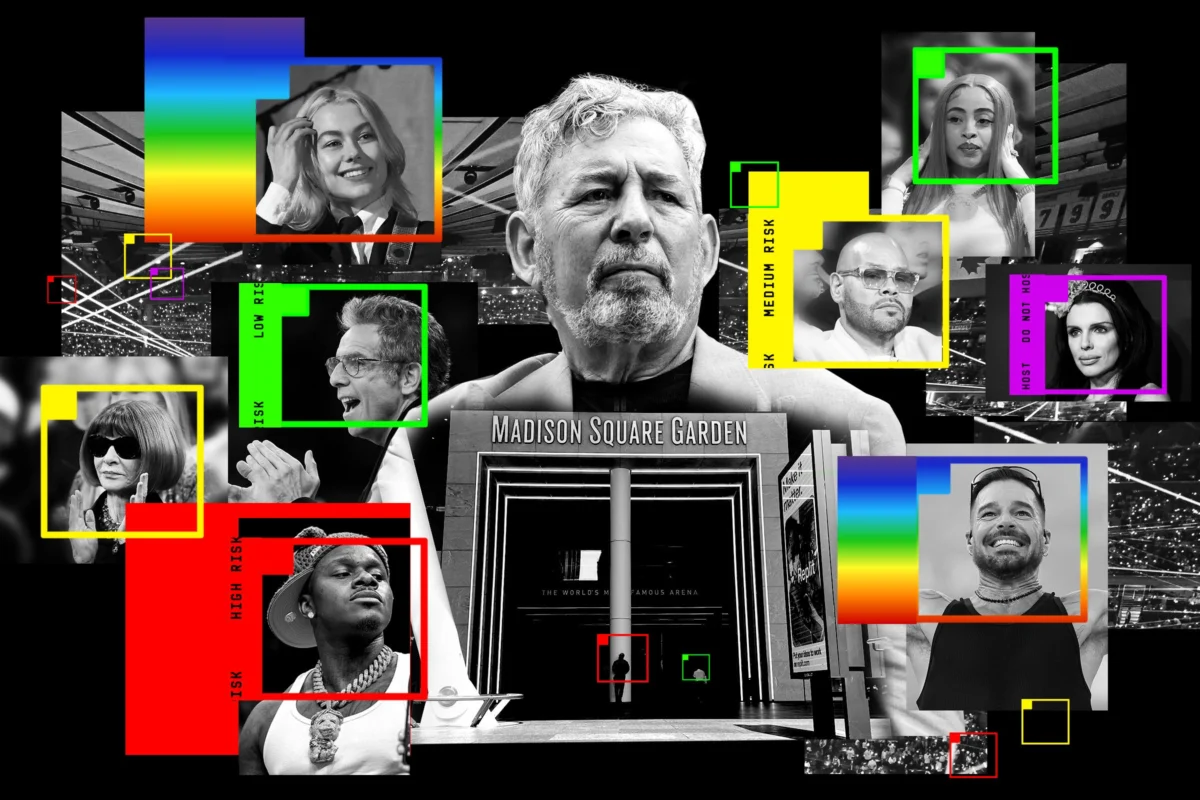
The recent breach of Madison Square Garden (MSG) by the notorious hacker collective ShinyHunters has pulled back the curtain on an expansive, internal surveillance apparatus maintained by the organization under the leadership of James Dolan. While the Knicks celebrated a historic return to the NBA Finals this season, internal documents recovered from the hack reveal that the team’s ownership keeps a rigorous, color-coded "risk" registry of its most high-profile fans, celebrities, and even public officials. This database, which contains nearly 40,000 entries, sheds light on a corporate culture that appears to prioritize the monitoring of perceived dissent over the traditional hospitality associated with professional sports management.
A Culture of Parity and Surveillance
At the center of this controversy is a "talent database" that categorizes celebrities and VIPs based on their perceived loyalty to the MSG brand and its controversial owner. Perhaps most surprising is the inclusion of Fat Joe, a vocal defender of James Dolan who has publicly compared the owner to a benevolent figure in the Gotham City landscape. Despite his vocal support, the internal MSG system lists the rapper as "medium risk."
This designation is not an isolated anomaly. The database, which tracks nearly 40,000 boldfaced names in business, politics, media, and technology, suggests that Garden security engages in constant social media monitoring to assess the sentiment of those who frequent courtside seats. For many, this has resulted in a "do not host" status, effectively barring them from receiving complimentary tickets. Figures such as comedian Adam Pally and iconic producer Pete Rock have been flagged in the system, with Rock noting that the organization’s controlling behavior feels uniquely punitive compared to other professional sports franchises.
The Mechanics of the Breach
The data dump, which occurred in June 2026, was the result of a sophisticated "vishing" (voice phishing) campaign. According to security experts and reports from 404 Media, the hackers targeted the organization’s Microsoft Entra systems, using social engineering to reset employee credentials. This granted the collective access to massive Salesforce customer databases containing over 10.5 million entries, including private contact information for millions of fans and high-ranking public figures.
The chronology of the breach highlights a significant lapse in corporate cybersecurity. As early as 2025, security researchers warned that major organizations relying on cloud-based customer relationship management (CRM) systems were vulnerable to these specific tactics. Despite these warnings, MSG maintained a repository of sensitive information that included not only basic contact details but also records of "threat management" cases, which documented private addresses and contact information for local government officials, including current New York City police leadership.
The Anatomy of the Risk Scoring System
The "talent database" functions as an internal intelligence tool. According to documentation reviewed, the ranking system is tiered to facilitate security decisions:

- Flag: The lowest level, requiring internal supervisor consultation before any guest hosting.
- Low Risk: A classification applied to regular attendees who have occasionally expressed minor criticisms.
- Medium Risk: Reserved for those whose public commentary or personal associations are viewed as potentially disruptive.
- High Risk: A category that includes outspoken hip-hop artists and individuals with a documented history of public opposition to MSG management.
- Banned: An absolute prohibition from venue access, often triggered by physical altercations or severe, repeated public criticism.
The rationale for these scores is often tenuous. In some instances, individuals were flagged simply for their personal connections—such as being the partner of a journalist who wrote a critical article—or for their sexual orientation, with 93 individuals explicitly labeled with LGBTQIA identifiers. Such data collection raises significant questions regarding the necessity of maintaining personal, identity-based dossiers on individuals who are merely attending sporting events.
The Role of Public Officials and Political Influence
The leaked documents reveal that the surveillance machine is not limited to celebrities. The database includes a section for political candidates and elected officials, specifically highlighting those who have expressed support for the Garden’s various permit renewals and legislative goals. While vocal critics of the arena’s operational policies have been subject to monitoring, those who have provided testimony or letters of support for MSG-backed initiatives appear to be exempt from the "risk" scrutiny.
This discrepancy has fueled criticism from digital rights advocates. Evan Greer, director of Fight for the Future, has characterized the system as a "paranoid, terrible" structure that demonstrates an unhealthy fixation on monitoring the public and private lives of those who enter the venue. The inclusion of personal data for individuals like New York City officials, who have previously clashed with Dolan over security and land-use policies, underscores the potential for this data to be used as leverage in political disputes.
Broader Implications for Privacy
The fallout from the hack has already triggered a class-action lawsuit, with legal experts arguing that the breach validates concerns regarding the organization’s collection of biometric and personal data. Critics argue that a company unable to secure a basic customer list should not be authorized to utilize facial recognition technology to monitor patrons.
The ShinyHunters collective explicitly stated that they targeted MSG in retaliation for its surveillance practices, including the controversial use of facial recognition to screen attendees at the Sphere and other venues. While the company has remained largely silent, the release of 45 gigabytes of internal data has provided a roadmap for what observers call the "Dolan surveillance state."
Chronology of Events
- 2020: Public criticism of James Dolan by figures like Jadakiss begins to manifest in internal discussions.
- 2023: MSG aggressively lobbies for permit renewals; the database begins tracking supporters and detractors through public records and testimonials.
- 2025 (June): French authorities arrest members of the hacker community; security researchers warn of "ShinyHunters" utilizing vishing attacks against corporate SaaS providers.
- 2026 (January): Industry warnings intensify regarding the vulnerability of systems like Salesforce and Microsoft Entra.
- 2026 (June 16): ShinyHunters officially announces the data breach, having successfully bypassed network security.
- 2026 (Late June): A class-action lawsuit is filed against MSG as the scope of the exposed data—including private threat assessments of public officials—becomes public.
Conclusion and Future Outlook
The exposure of this database suggests that Madison Square Garden has moved far beyond the standard security protocols expected of an entertainment venue. By cataloging the personal, political, and social lives of its most prominent patrons, the organization has created a high-risk information environment that is inherently vulnerable to the type of systemic breach executed by ShinyHunters.
As the Knicks and the Garden look toward the next season, the organization faces a dual challenge: restoring the trust of its high-profile celebrity row and addressing the significant legal and ethical questions posed by its internal intelligence-gathering operations. For now, the "risk" labels remain a testament to a corporate philosophy that prioritizes total control over the open and inclusive atmosphere that traditionally defines New York’s most iconic arena. Whether the organization will pivot toward transparency or further entrench its surveillance apparatus remains a critical point of concern for both privacy advocates and the public at large.

Related Posts
The Las Vegas Cybersecurity Summit and the Escalating Threat of Autonomous Digital Exploitation
New York City Council members and privacy advocates launch legislative campaign to ban biometric facial recognition at public entertainment venues