Jorge Sampaoli Debuts with Talleres in a Defeated but Revealing Introduction Against Newell’s Old Boys
The highly anticipated debut of Jorge Sampaoli as the new head coach of Talleres de Córdoba took place on Saturday, a moment met with significant fanfare and expectation. The club officially presented Sampaoli on June 10th, underscoring his "personality, playing identity, and international experience," alongside his "leadership" and "competitive spirit." However, his inaugural match in Argentina’s top flight saw Talleres fall 1-0 to Newell’s Old Boys, a result that, while disappointing, offered a glimpse into the challenges and potential of the Sampaoli project. The match itself was imbued with a particular significance, occurring in the shadow of Belgrano’s recent championship victory, Talleres’ archrival, adding an extra layer of pressure to an already high-stakes encounter.
Sampaoli, a 66-year-old native of Casilda, Santa Fe province, expressed his immediate vision post-match, stating, "I came to empower the players and form a team that plays football as we did in the last 35 minutes. The most important thing in football is the players, and they define it." This sentiment was tempered by his candid assessment of the team’s performance, particularly in the first half. "One always has hope, but when a team reacts instead of acting, it leaves you a bit empty," he admitted. "The game plan was different; it didn’t work, and it’s my responsibility. That shows that the message wasn’t assimilated as well as I wanted. It’s my responsibility that the first half was one to forget."
The match itself unfolded at the Estadio Marcelo Bielsa, a venue steeped in footballing history. Sampaoli, visibly intense and embodying his characteristic energetic sideline demeanor, was observed pacing and issuing numerous instructions throughout the first half, even while wearing a club woolly hat to ward off the chill. His frustration with the team’s performance was palpable, a sentiment that likely stemmed from the disconnect between his tactical directives and the players’ execution on the field.
A Career Defined by Peaks and Valleys
Sampaoli’s coaching trajectory is marked by both remarkable successes and notable setbacks. While his tenure with the Argentine national team, particularly the 2018 World Cup campaign, was criticized for a perceived lack of on-field response and internal discord, his most celebrated achievements have come with other clubs and national teams. His time leading Chile is widely regarded as a golden era, culminating in their victory at the 2015 Copa América and their participation in the 2014 World Cup.
Beyond his international success, Sampaoli’s club management has also yielded significant results. With Atlético Mineiro, he reached the Copa Sudamericana final and secured the Campeonato Mineiro in the 2019/20 season. His spell at Olympique de Marseille saw them finish second in the French league. However, arguably his most impactful period was with Universidad de Chile, where he orchestrated a period of dominance, winning the Copa Sudamericana in 2011, along with multiple domestic league titles (Apertura 2011, Clausura 2011, Apertura 2012) and the Copa Chile in 2012/13. This era was characterized by a fluid, attacking style of play that drew widespread admiration from fellow coaches, including the esteemed Marcelo Gallardo.
Now, Sampaoli seeks to re-establish his influence within Argentine football by building a new project at Talleres. To that end, the club has made several high-profile signings aimed at bolstering the squad. Among the key additions are goalkeeper Ezequiel Unsain, arriving from Necaxa to succeed the long-serving Guido Herrera, defender Román Riquelme, and midfielder Federico Fattori, both acquired from Argentinos Juniors. The most recent signing to join the ranks is central defender Valentín Fascendini, recruited from Unión de Santa Fe.
Tactical Setup and Early Encounters
All four of these new signings featured in Sampaoli’s starting eleven for his debut. He opted for a 3-4-2-1 formation, with Unsain in goal. The defensive line comprised Santiago Fernández (despite a strong previous half-season, he struggled in this crucial fixture), Riquelme operating as a sweeper, and Fascendini. The midfield engine room was powered by Timoteo Chamorro, Fattori, Matías Galarza, and Báez. The attacking midfield roles were filled by Giovanni Baroni, a promising talent who emerged earlier in the year, and Franco Cristaldo, both deployed in inverted positions. Spearheading the attack was Ronaldo Martínez, the primary reference point in the penalty area.
From the outset, Talleres aimed to implement a high-pressing strategy, keeping their defensive line advanced. However, Newell’s Old Boys registered the first significant chance of the game. A cleverly chipped pass from Walter Núñez found Matías Coccáro, whose volley was expertly tipped around the post by Unsain. The visitors continued to threaten, with another free-kick from Gómez Mattar being headed by Goitea, again forcing a save from Unsain. Newell’s, managed by Frank Kudelka, adopted a strategy focused on regaining possession deep in their own half and launching swift counter-attacks. They deliberately avoided engaging in a midfield possession battle, a tactic that proved effective. In the opening ten minutes, Talleres enjoyed an overwhelming 83% possession, but this figure steadily decreased, settling around 60% by the end of the first half. This shift indicated Newell’s ability to dictate the tempo and draw Talleres into areas where they were less comfortable.
A Tense First Half Marked by Tactical Battles and Refereeing Decisions
The first half was characterized by a tactical chess match, with Sampaoli’s team struggling to impose their game. Román Riquelme received an early yellow card in the 14th minute for a foul on Coccáro, an unfortunate booking that placed the sweeper on a tightrope for the remainder of the match. Riquelme continued to play on the edge, committing another infringement on Coccáro in the 35th minute. The defensive fragility was further exposed when, in the 33rd minute of the second half, Riquelme was eventually sent off for a second yellow card following an elbow on Ignacio Ramírez. Curiously, the initial offense was not penalized by referee Baliño. However, Riquelme was ultimately dismissed in the 40th minute for another foul on Ramírez. This incident occurred shortly after Sampaoli had introduced another striker, Valentín Dávila, in place of Fattori, raising questions about whether Riquelme, who had flirted with expulsion on several occasions, should have been substituted earlier.
Adding to Talleres’ discomfort, refereeing decisions influenced the flow of the game. In the 39th minute, Baliño controversially changed an attempted goal kick to a corner kick after deeming Unsain to have delayed the restart of play, a new regulation implemented at the World Cup. This led to a chance for Newell’s wing-back Russo, whose left-footed shot sailed over the crossbar. Earlier, the referee had applied another new rule when Coccáro, suffering from a muscular issue, was forced to leave the field for a minute before being allowed to re-enter, a measure designed to prevent time-wasting.
Talleres failed to create any clear-cut scoring opportunities in the first half. Sampaoli made a defensive alteration at halftime, bringing on Augusto Schott for Santiago Rodríguez as a right-sided stopper. Although they possess different attributes—Schott being a natural full-back and Rodríguez a central defender—Sampaoli maintained the three-man defensive structure.
The Decisive Penalty and Newell’s Grip on the Game
The breakthrough came in the 8th minute of the second half when Fascendini conceded a penalty after fouling Mazzantti. The foul originated from a long ball aimed at Coccáro, who flicked it on for Mazzantti. As the winger outpaced the left-sided stopper, Fascendini committed the infringement. Coccáro confidently converted the penalty, putting Newell’s ahead.
This pivotal moment prompted further substitutions from Sampaoli. Depietri and Rick were introduced in place of Baroni and Ronaldo Martínez, respectively. The team appeared increasingly disjointed, with the Brazilian import Rick missing a counter-attacking opportunity that was thwarted by goalkeeper Reinatti. Newell’s continued to threaten, with Martín Ortega making a surging run down the right flank, bringing them close to doubling their lead.
As Talleres pushed forward with an increasingly offensive formation, deploying five forwards—including wing-back Chamorro now playing as a right winger—Newell’s coach Kudelka responded by reinforcing his defense. Lautaro Gianetti, a former Vélez Sarsfield player, made his debut as part of a five-man defensive line, resulting in a 5-4-1 formation. The defensive unit consisted of Reinatti; Ortega, Cabrera, Gianetti, Goitea, and Russo. The midfield comprised Mazzantti, Esponda, Regiardo, and Gómez Mattar, with Ignacio Ramírez replacing Coccáro upfront.
A Late Surge and Lingering Questions
Despite the numerical disadvantage and the scoreline, Talleres mounted a late surge, driven by their desperation. A cross from Rick found Schott, whose header was tipped over the bar by Reinatti. In a last-ditch effort, even goalkeeper Unsain ventured forward for a corner, but Newell’s defense managed to repel the threat.
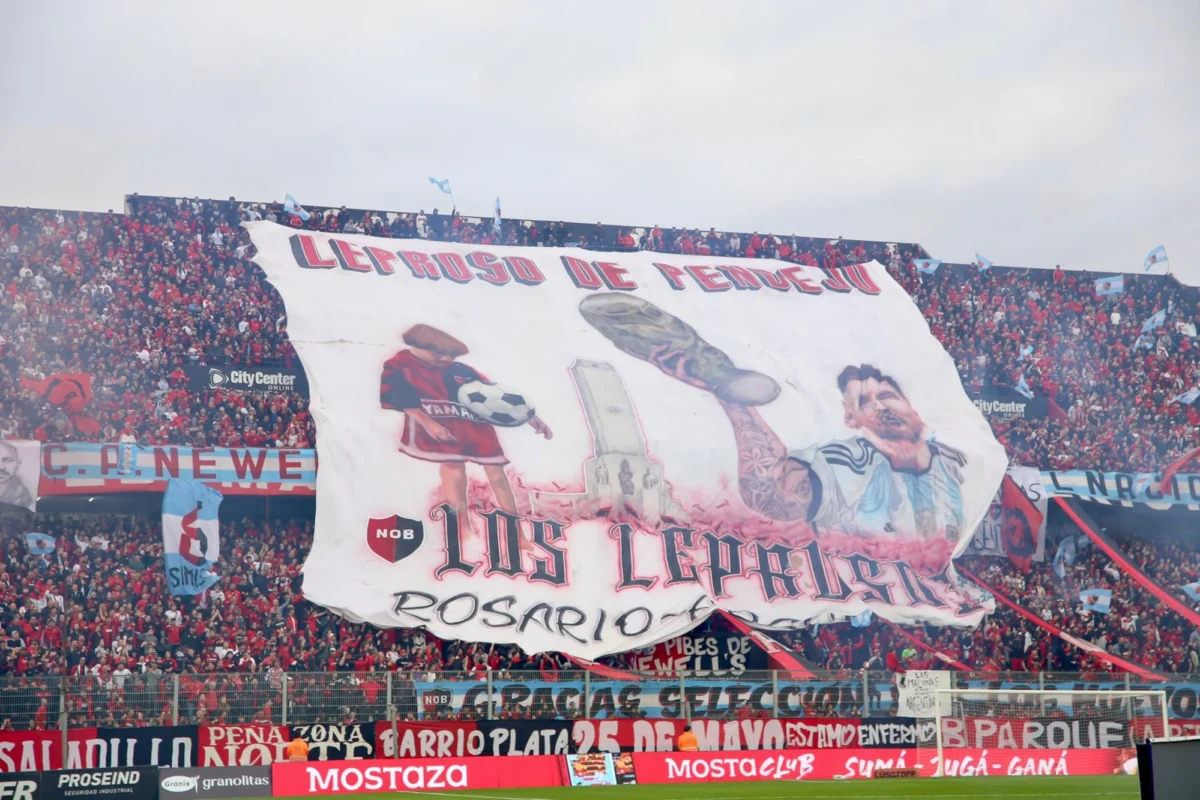
Throughout the stadium, banners and tributes to the Argentine national team were displayed, a common sight across all Argentine football grounds. Sampaoli observed the final minutes with his hands in his pockets, a posture that perhaps reflected the significant task ahead of him. Newell’s Old Boys secured a deserved victory, and Talleres offered very little in terms of cohesive play or genuine scoring opportunities, falling short of the expectations set by their new coach. However, one discernible element from Talleres’ late push was a fighting spirit and a degree of urgency, traits that are undeniably part of Sampaoli’s coaching DNA. The journey for Sampaoli and Talleres has just begun, and this initial defeat, while painful, serves as a stark indicator of the work required to implement his distinctive footballing philosophy.

Related Posts
The Electric Vehicle Battery Health Debate Emerges as Argentina’s EV Market Accelerates
President Donald Trump Confirms Secret Departure from Turkey Amidst Assassination Threat