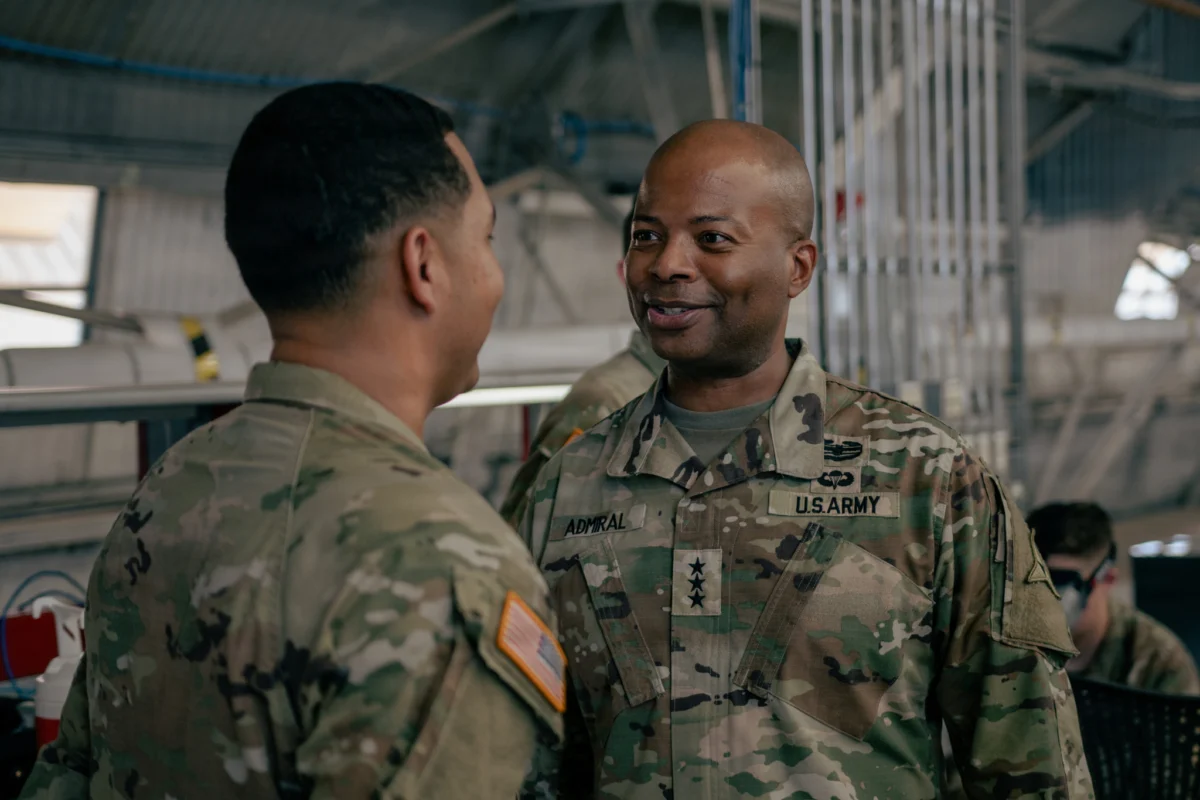
Pentagon Nominates Lieutenant General Kevin Admiral to Lead US Army Europe and Africa Amid Strategic Leadership Realignment
The Department of Defense announced on Thursday the formal nomination of Lieutenant General Kevin D. Admiral to assume command of U.S. Army Europe and Africa, a pivotal role responsible for overseeing land force operations across two continents and coordinating with dozens of international allies. Admiral, who currently serves as the commanding general of the III Armored Corps based at Fort Hood, Texas, is slated to succeed General Christopher Donahue. The nomination comes at a period of significant transition within the Department of Defense, as the Pentagon navigates a series of high-level leadership changes under Defense Secretary Pete Hegseth. If confirmed by the Senate, Admiral will inherit a complex security environment defined by the ongoing conflict in Ukraine, the expansion of NATO’s eastern flank, and shifting geopolitical dynamics across the African continent.
The vacancy at the head of U.S. Army Europe and Africa (USAREUR-AF) was created following the unexpected departure of General Christopher Donahue earlier this month. Donahue, a highly decorated officer known for being the last American soldier to depart Afghanistan in 2021, relinquished his command after only 18 months in the position. Since his exit, the command has been led on an interim basis by Major General Christopher Norrie. Admiral’s nomination is seen as an effort to restore permanent leadership to the Wiesbaden-headquartered command during a time when American military presence in Europe is at its highest level of activity since the Cold War.
Professional Profile of Lieutenant General Kevin D. Admiral
Lieutenant General Kevin Admiral brings a wealth of operational and administrative experience to the nomination. His current role as the commander of III Armored Corps—often referred to as "The Phantom Corps"—places him at the helm of the U.S. Army’s primary heavy armored force, comprising four divisions and multiple separate brigades. His leadership of III Corps has focused on large-scale combat operations (LSCO) and maintaining the readiness of the Army’s most lethal ground combat units.
Prior to his current assignment, Admiral served as the commanding general of the 1st Cavalry Division. During this tenure, he oversaw the division’s activities both at its home station in Texas and during forward deployments to Poland. This experience in Eastern Europe is particularly relevant to the USAREUR-AF role, as Poland has become the logistical and operational hub for U.S. support to Ukraine and the primary site for NATO’s Enhanced Forward Presence.
Admiral’s resume also includes significant time within the Pentagon’s bureaucracy. He previously served as the Director of Force Management in the Office of the Deputy Chief of Staff, G-3/5/7. In this capacity, he was responsible for the organizational structure and resource allocation of the Army, providing him with the institutional knowledge necessary to manage a theater-level command that involves complex coordination with the Joint Staff and Allied partners. His educational background includes a Bachelor of Science from the University of Kansas and a Master of Science in Strategic Studies from the U.S. Army War College.
The Strategic Scope of U.S. Army Europe and Africa
If confirmed, Admiral will step into a dual-hatted role. In addition to commanding USAREUR-AF, he will serve as the commander of NATO’s Allied Land Command (LANDCOM). This position requires the coordination of land forces from across the 32-member NATO alliance and oversight of partnerships with a total of 104 countries within the USAREUR-AF area of responsibility.
The command is responsible for:
- European Deterrence: Managing the approximately 100,000 U.S. service members currently stationed or rotated throughout Europe to deter Russian aggression.
- Security Assistance: Overseeing the training of Ukrainian forces and the delivery of billions of dollars in military hardware through the Security Assistance Group-Ukraine (SAG-U).
- African Engagement: Through U.S. Army Southern European Task Force, Africa (SETAF-AF), the command manages counter-terrorism initiatives, disaster relief, and military-to-military partnerships across the African continent, countering the growing influence of the Wagner Group and Chinese economic interests.
- NATO Readiness: As LANDCOM commander, Admiral would be the senior land advisor to the Supreme Allied Commander Europe (SACEUR), ensuring that NATO’s land forces are interoperable and ready for collective defense under Article 5.
Notably, Admiral’s nomination is for the rank of Lieutenant General (three-star), despite the position traditionally being held by a full General (four-star). This shift in rank for the theater command has sparked internal discussion within the Army regarding the prioritization of theaters and the streamlining of command structures.
Context of the Pentagon Leadership Overhaul
The timing of Admiral’s nomination is inseparable from the broader personnel shifts initiated by Defense Secretary Pete Hegseth. Since taking office, Secretary Hegseth has moved to reshape the senior echelons of the military, emphasizing a return to traditional lethality and moving away from what he has characterized as "bureaucratic inertia."
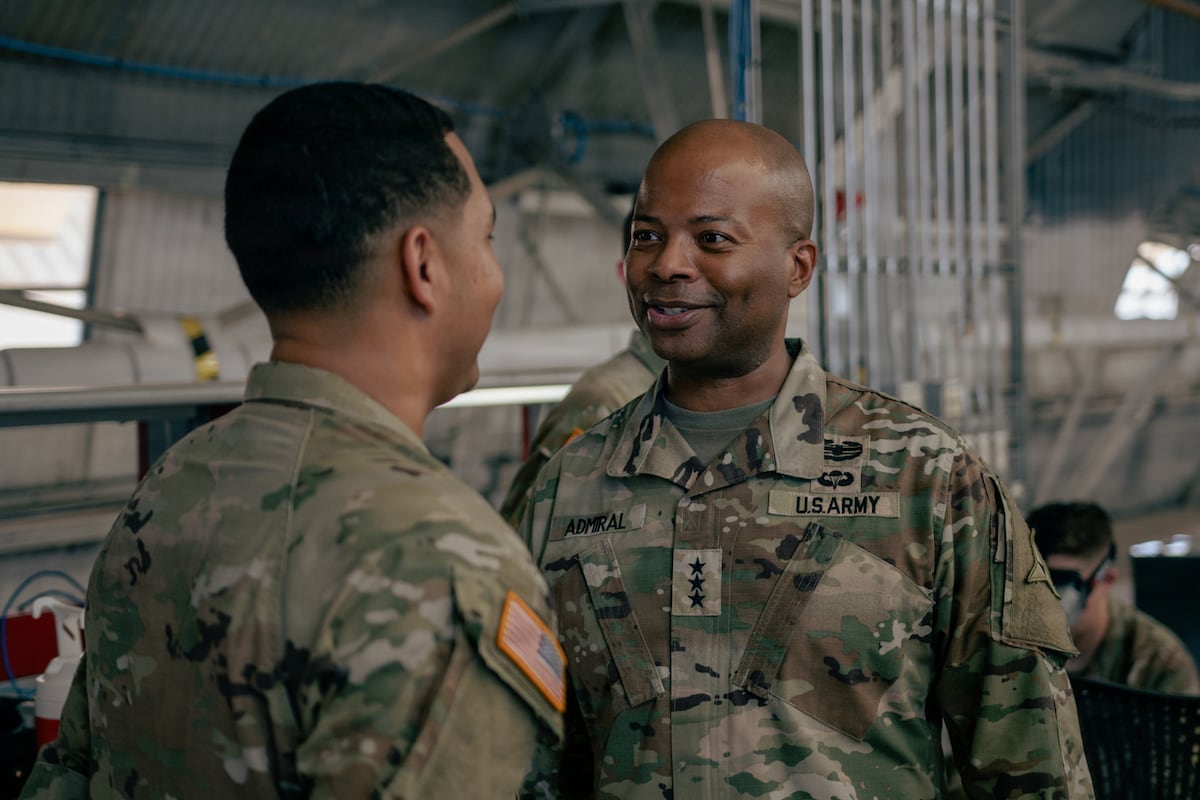
In April, Hegseth requested that General Randy George, the U.S. Army Chief of Staff, retire ahead of his scheduled four-year term. This was followed by the removal or early retirement of several other four-star officers, including former Chairman of the Joint Chiefs of Staff General C.Q. Brown and former Chief of Naval Operations Admiral Lisa Franchetti. The departure of General Donahue from USAREUR-AF earlier this month is widely interpreted by defense analysts as part of this broader effort to install a new generation of leadership aligned with the current administration’s strategic vision.
While some critics in Congress have expressed concern over the "unprecedented" nature of these removals, the Pentagon has maintained that the changes are necessary to ensure the military is prepared for a "great power competition" with China and Russia. Admiral’s nomination represents a key piece in this new leadership puzzle, placing a commander with deep experience in armored warfare and force management at the forefront of the European theater.
Timeline of Recent Leadership Transitions
The following chronology highlights the rapid pace of change within the U.S. military’s top tiers leading up to Admiral’s nomination:
- April 2026: Defense Secretary Pete Hegseth requests the immediate retirement of U.S. Army Chief of Staff Gen. Randy George.
- May 2026: Resignations and reassignments of several senior Joint Staff officers are announced, including the Chairman and Chief of Naval Operations.
- Early July 2026: General Christopher Donahue unexpectedly relinquishes command of U.S. Army Europe and Africa after 18 months in the role. Major General Christopher Norrie assumes acting command.
- July 23, 2026: The Pentagon formally nominates Lieutenant General Kevin D. Admiral to lead U.S. Army Europe and Africa.
- Late July 2026: Senate Armed Services Committee expected to receive formal notification to begin the confirmation process.
Analysis of Implications and Theater Challenges
The transition from Donahue to Admiral occurs at a delicate moment for trans-Atlantic security. The war in Ukraine has entered a high-intensity phase of attrition, requiring constant logistical support and tactical adjustment from U.S. Army Europe. Admiral’s background in force management will be critical as the Army seeks to balance the need for high-end equipment in Europe with the requirement to modernize the force for potential Pacific contingencies.
Furthermore, the "three-star" designation for the USAREUR-AF command may signal a shift in how the Pentagon views the hierarchy of global commands. Historically, the four-star rank provided the commander in Europe with equal standing among other major theater commanders and NATO peers. Reverting to a three-star command could be an attempt to flatten the organization or perhaps reflects a reassessment of the theater’s administrative requirements versus its operational ones.
In Africa, Admiral will face a landscape where U.S. influence is being actively challenged. The recent withdrawal of U.S. forces from Niger and the increasing presence of Russian-aligned paramilitary groups in the Sahel have complicated the Army’s counter-terrorism mission. Admiral will be tasked with revitalizing these partnerships without the large-scale troop presence seen in previous decades.
Official Responses and Next Steps
While the Pentagon has not issued an extensive commentary on the reasons behind the specific timing of the nomination, a spokesperson stated that Lt. Gen. Admiral is a "proven leader with the strategic vision required to lead our soldiers and engage our allies in one of the world’s most demanding environments."
Allied reactions have been cautiously optimistic. Sources within NATO’s headquarters in Brussels indicate that while the frequent turnover in U.S. leadership is noted, Admiral’s previous experience in Poland provides a level of continuity that is welcomed by Eastern European allies. The Polish Ministry of Defense, which worked closely with Admiral during his time with the 1st Cavalry Division, is expected to support the transition as it seeks to finalize the permanent basing of U.S. troops on its soil.
The nomination now moves to the U.S. Senate for confirmation. Given the current political climate and the scrutiny surrounding Secretary Hegseth’s leadership changes, the confirmation hearings are expected to cover not only Admiral’s qualifications but also the broader strategy for U.S. engagement in Europe and Africa. If confirmed, Admiral is expected to assume command in Wiesbaden by late summer, ending the brief period of interim leadership and setting the course for U.S. Army operations in the region through the end of the decade.

Related Posts
Pentagon Forges Landmark Seven-Year Agreements with Boeing and RTX to Accelerate Standard Missile-3 Production and Stabilize Defense Supply Chains
Boeing Unveils Ultra Low-Cost Seeker to Enhance Missile Inventory and Combat Cost Challenges in Modern Warfare