Van Jones: Trump’s WHCD Speech ‘Was Mean and Small and Not Funny’
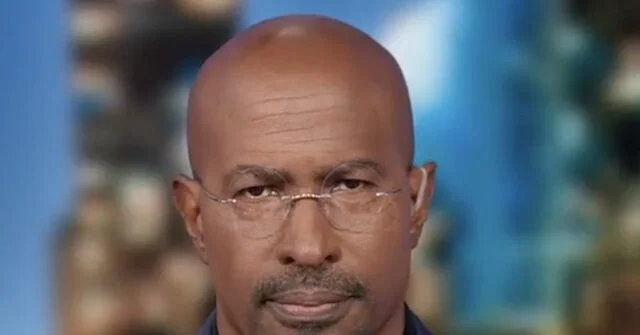
On a Thursday broadcast of CNN’s "News Night," veteran political commentator Van Jones offered a sharp critique of then-President Donald Trump’s characteristic public communication style, describing it as "mean and small and not funny," particularly when viewed through the lens of what a presidential address at the White House Correspondents’ Dinner (WHCD) traditionally embodies. Jones emphasized that Trump’s rhetoric, which he likened to a "rabid grizzly Trump" wandering aimlessly, consistently failed to connect with the broader American public facing everyday challenges, instead focusing predominantly on himself and his political adversaries. This assessment highlighted a significant departure from the historical role of the presidency in fostering national unity and engaging with the press, especially during an event traditionally designed for such interactions.
The White House Correspondents’ Dinner: A Tradition Under Scrutiny
The White House Correspondents’ Dinner, an annual gathering hosted by the White House Correspondents’ Association (WHCA), has long been a unique fixture in American political and journalistic life. Established in 1921, its primary mission is to raise money for scholarships for aspiring journalists and to honor excellence in the profession. Beyond its philanthropic goals, the dinner traditionally serves as a symbolic occasion for the President of the United States to engage in lighthearted banter with the press corps, often delivering a comedic roast that pokes fun at themselves, their administration, and the journalists covering them. This self-deprecating humor and shared evening are intended to underscore the healthy, albeit sometimes adversarial, relationship between the executive branch and a free press.
Historically, presidents from Calvin Coolidge to Barack Obama have embraced the dinner as an opportunity for levity and to briefly lower the political temperature. President John F. Kennedy famously quipped about his media-savvy wife, Jacqueline, and her ability to generate more headlines than his own policy initiatives. Ronald Reagan, known as "The Great Communicator," used his comedic timing to disarm critics and humanize the presidency. Even in times of intense political division, the WHCD often provided a brief respite, a moment for leaders and the press to acknowledge their shared roles in American democracy, even if from different sides of the aisle. The event also typically features a prominent comedian as a guest performer, further cementing its reputation for humor and satire. The revenue generated from ticket sales and sponsorships directly funds scholarships for journalism students and awards for outstanding reporting, reinforcing its foundational commitment to the future of the profession.
President Trump’s Disengagement from the Dinner
Donald Trump’s presidency marked an unprecedented break from this long-standing tradition. Throughout his four years in office (2017-2020), President Trump notably declined to attend the White House Correspondents’ Dinner, a decision that underscored his often-antagonistic relationship with major news organizations, which he frequently labeled "fake news" and "enemies of the people." His absence was a deliberate statement, signaling his disdain for what he perceived as a biased media establishment and a refusal to participate in an event he viewed as out of touch or even hostile.
Instead of attending the dinner, President Trump often opted to hold counter-programming events, such as campaign rallies in various states. For instance, in 2017, the night of the WHCD, he held a rally in Harrisburg, Pennsylvania, where he reiterated his criticisms of the media. This strategic choice allowed him to bypass traditional media filters and speak directly to his base, further cementing his narrative of being an outsider fighting against a corrupt establishment. His administration also encouraged other high-ranking officials to skip the dinner, effectively de-legitimizing the event in the eyes of his supporters. This approach represented a significant departure from predecessors who, regardless of their personal feelings towards the press, recognized the symbolic importance of the dinner in upholding democratic norms and the role of a free press. The WHCA, in response, continued to hold the dinner, often inviting prominent journalists and cultural figures, and emphasizing its core mission of supporting journalism, even in the absence of the presidential spotlight.
Van Jones’s Scathing Critique on CNN’s "News Night"
Van Jones’s commentary on CNN’s "News Night" dissected what he perceived as the core failures of President Trump’s public address style, particularly when contrasted with the expectations surrounding a presidential speech. Jones’s primary criticism was that Trump’s rhetoric was fundamentally "not funny at all," even when it attempted to be mean or small. "It was mean and small and not funny," Jones reiterated, highlighting the absence of wit or self-awareness that could, in other contexts, make even pointed humor palatable. He argued that while "you can be mean and small and funny," Trump consistently missed this mark, delivering a brand of humor that landed flat and alienated rather than entertained or connected.
Beyond the lack of humor, Jones zeroed in on the self-referential nature of Trump’s discourse. He lamented that Trump’s speeches rarely extended beyond "himself and his enemies," neglecting the vast majority of Americans grappling with everyday realities. Jones painted a vivid picture of the forgotten audience: "There are people at home who can’t figure out how to pay for gas, or people at home who worry about their nephew who’s serving overseas. There’s people at home who have real problems who would love to see somebody reflect their reality and maybe make fun of some of their enemies, some of their problems." This poignant observation underscored a perceived empathy gap, where the presidential pulpit, traditionally used to acknowledge and uplift the diverse experiences of the nation, was instead focused on personal grievances and political feuds.
Jones’s characterization of Trump’s trajectory from "cuddly Care Bear Trump" (a rare, softer persona) to "rabid grizzly Trump" (his more common, aggressive public image) that "just kind of wandered around in the backyard like, you know, attacking things and then wandered off the stage," vividly captured the commentator’s frustration. He expressed a weary disappointment, noting, "it’s hard to be disappointed, given what I’ve seen for the past ten years. But it’s like Lucy and the football. Here I am once again, disappointed." This reference to the iconic Peanuts comic strip, where Lucy repeatedly pulls the football away from Charlie Brown at the last moment, conveyed a sense of dashed hopes for a more unifying or presidential tone that never materialized. Jones’s critique was not merely about humor; it was about the perceived missed opportunity for presidential leadership and connection with the concerns of ordinary Americans.
The Broader Context of Presidential Rhetoric
Van Jones’s remarks must be understood within the broader context of President Trump’s unique and often polarizing communication style. Unlike many of his predecessors who relied heavily on prepared remarks, teleprompters, and traditional press conferences, Trump favored rallies, impromptu statements, and extensive use of social media, particularly Twitter. His rhetoric was frequently characterized by direct attacks on political opponents, media outlets, and perceived critics, often employing nicknames, hyperbole, and an unfiltered conversational style that resonated deeply with his base but alienated many others.
This approach marked a significant departure from traditional presidential decorum and communication strategy. While past presidents engaged in political sparring, the level of personal invective and the consistent questioning of the legitimacy of institutions, including the press and the judiciary, was largely unprecedented in modern American politics. Studies on political rhetoric during the Trump administration frequently highlighted an increase in divisive language and a decrease in appeals to national unity, especially when compared to previous administrations. For example, analyses of presidential speeches often noted a higher frequency of "us vs. them" framing and a focus on grievances rather than shared national aspirations. This style, while effective in mobilizing his core supporters, contributed to a climate of heightened political polarization and made events like the WHCD, which rely on a degree of shared understanding and mutual respect, particularly challenging.
Historical Precedents and Departures
The history of the White House Correspondents’ Dinner provides a rich tapestry against which to compare President Trump’s approach. Presidents across the political spectrum have historically used the event to showcase their wit, humility, and willingness to engage with the press, even when relations were strained. Franklin D. Roosevelt, despite intense media scrutiny during the Great Depression and World War II, understood the importance of maintaining a rapport with reporters. Dwight D. Eisenhower, known for his calm demeanor, often used subtle humor to navigate tough questions.
Perhaps the most famous example of a president using the WHCD for comedic effect, even at his own expense, was Barack Obama. In 2011, with Donald Trump famously in attendance, Obama delivered a masterful roast that included pointed jokes about Trump’s then-speculated presidential ambitions and his birther conspiracy theories. The moment became iconic, demonstrating Obama’s ability to wield humor as both a weapon and a bridge-builder. This historical context underscores the stark contrast with Trump, who not only chose to skip the event but whose public rhetoric, as critiqued by Jones, lacked the self-deprecating humor or broader national focus that characterized many of his predecessors’ engagements with the press. Trump’s consistent absence and his administration’s general antagonism towards the media were seen by many as a deliberate undermining of the institution of the free press and the symbolic gestures of mutual respect that the WHCD traditionally represented.
Reactions from the Media and Political Sphere
Van Jones’s critique resonated with many in the media and political establishment who had expressed similar concerns about President Trump’s communication style. Numerous commentators, journalists, and political analysts echoed the sentiment that Trump’s rhetoric often lacked a broader national perspective, focusing instead on personal vendettas and partisan divisions. The White House Correspondents’ Association itself, through its leadership, frequently reiterated the importance of a free and robust press, implicitly pushing back against the administration’s "fake news" narratives.
Conversely, President Trump’s supporters often defended his communication style as authentic, direct, and a refreshing departure from what they viewed as politically correct or overly polished politicians. They argued that his unfiltered approach allowed him to speak truth to power and bypass a biased mainstream media. His rallies, where he delivered many of the types of remarks critiqued by Jones, were consistently well-attended and energized his base, demonstrating that for a significant portion of the electorate, his style was not only accepted but celebrated. This dichotomy of reactions highlighted the deep partisan divide in how presidential communication was perceived and the differing expectations placed upon the office. While critics lamented the perceived erosion of decorum and national unity, supporters saw it as a necessary disruption of an entrenched establishment.
The Evolving Role of the WHCD
The Trump years significantly altered the perception and role of the White House Correspondents’ Dinner. While it continued its mission of supporting journalism scholarships, the absence of the president removed much of its traditional pomp and political significance. The event became less about a presidential roast and more about a celebration of journalism in the face of adversity. This shift sparked a debate within the WHCA and the broader media community about the dinner’s future. Some argued for a return to its traditional format, emphasizing the importance of presidential engagement. Others suggested a permanent re-evaluation, perhaps making it less of a celebrity-filled spectacle and more of a serious journalistic event focused purely on its philanthropic and professional development goals.
The 2020 dinner, which was cancelled due to the COVID-19 pandemic, further complicated its trajectory. Subsequent dinners have seen a renewed effort to bring the president back into the fold, with President Joe Biden attending and delivering a traditional comedic speech. However, the legacy of Trump’s non-attendance and his administration’s strained relationship with the press continues to shape discussions about the dinner’s relevance and format in an increasingly polarized media landscape. The event remains a symbol, whether of a healthy democratic tension or a fractured relationship, depending on the political climate.
Implications for Press-President Relations
Van Jones’s comments, and the broader context they represent, carry significant implications for the relationship between the presidency and the press. A presidential communication style that prioritizes self-interest and attacks over broader national concerns can erode public trust in both the executive branch and the media. When the president consistently labels news organizations as "enemies" or disseminates "fake news" allegations, it can empower others to do the same, making it harder for the public to discern reliable information from disinformation.
The absence of a president from the WHCD, combined with a consistently adversarial rhetoric, signals a profound breakdown in the conventional understanding of the press’s role in a democracy. While a healthy tension between the government and the press is vital, a relationship characterized by open hostility and disrespect can undermine the very mechanisms of accountability and transparency that are crucial for a functioning democracy. This tension also makes it more difficult for journalists to perform their duties without fear of reprisal or accusations of bias, potentially leading to a chilling effect on investigative reporting and critical analysis.
Public Perception and National Discourse
Ultimately, the impact of a president’s rhetoric extends far beyond the Beltway. As Van Jones articulated, ordinary Americans facing real-world problems often look to their leaders for reassurance, guidance, and a reflection of their own struggles. When presidential communication is perceived as self-serving, mean-spirited, or out of touch, it can contribute to public cynicism, disillusionment, and a sense of disconnection from political leadership.
The polarization evident in national discourse is exacerbated when leaders employ divisive language rather than fostering common ground. A consistent focus on "enemies" rather than shared national challenges can deepen existing societal rifts and make it harder to build consensus on critical issues. Jones’s plea for a president to "reflect their reality" speaks to a fundamental desire among citizens for leadership that acknowledges their experiences and attempts to unite rather than divide. The legacy of President Trump’s communication style, as critiqued by commentators like Van Jones, continues to be debated and analyzed, highlighting enduring questions about the nature of presidential leadership, the role of the media, and the health of American democratic discourse in the 21st century.

Related Posts
Democratic Candidates Must Moderate to Win General Elections, Says Rep. Greg Stanton
Lisa Demuth Secures Republican Gubernatorial Nomination in Minnesota, Defeating Trump-Endorsed Mike Lindell