Rep. John Moolenaar Criticizes Ford-Geely EV Partnership, Sparking Debate on U.S. Economic Security and Global Automotive Strategy
Rep. John Moolenaar (R-MI), who chairs the influential House Select Committee on the Strategic Competition Between the United States and the Chinese Communist Party, launched a scathing critique on Thursday against Ford Motor Company’s decision to partner with Chinese automotive giant Geely to produce electric vehicles (EVs) in Europe. The controversial alliance, which will see Geely’s EVs manufactured at Ford’s underutilized plant in Valencia, Spain, and a joint effort to develop new models, has ignited a fierce debate about the balance between corporate profitability, national economic security, and the escalating global competition with China.
The Genesis of Controversy: A Transatlantic Partnership in a Globalized EV Market
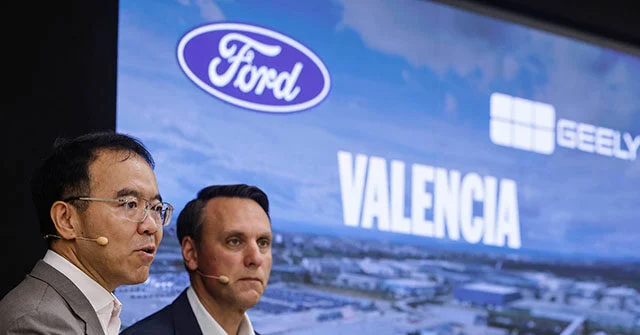
The partnership, formally announced by Geely and Ford, entails the production of two Geely electric sport utility vehicle (SUV) models, including the EX5 electric crossover already available in Europe, at Ford’s Valencia facility. This move is projected to begin by 2026. Furthermore, the two automotive powerhouses will collaborate on the development of a new "multi-energy family crossover," slated to begin rolling off the lines in 2028. This strategic collaboration aims to leverage Ford’s existing manufacturing infrastructure in Europe, where its sales have significantly declined from approximately a million vehicles annually in the 2010s to less than half that today, highlighting the urgent need for market revitalization and cost optimization. Ford has stated that the joint venture would necessitate an expansion of the Valencia plant and the hiring of additional workers, emphasizing that Geely would not be importing labor from China for these roles. The financial structure of the deal sees Ford retaining a 66 percent stake in the joint venture, effectively selling 34 percent of the plant to Geely.
Geely Vice President Alex Nan underscored the collaborative spirit and strategic intent behind the initiative, stating, "This JV with Ford in Europe reflects our commitment to open, collaborative product development as part of our growth strategy, deepening our local presence and commitment to customers in Europe. Put simply: We are building cars in Europe, for Europe, alongside a trusted partner." This statement clearly articulates Geely’s focus on localized production, a critical strategy for Chinese automakers aiming to circumvent potential future trade barriers and establish a stronger, more integrated foothold in the highly competitive European market. The EX5, an electric drive "crossover" vehicle, is already sold in Europe, demonstrating Geely’s existing market penetration and its intent to expand further. Ford currently manufactures its small electric Kuga SUV at the Valencia plant and plans to produce a smaller version of the Bronco SUV for the European market, potentially in electric and hybrid configurations, further indicating the plant’s evolving role in Ford’s European strategy.
Moolenaar’s Alarm: A Warning on Chinese Economic Dominance
Representative Moolenaar’s condemnation was swift and unequivocal, framing the partnership as a direct threat to U.S. economic interests and global supply chain stability. "Ford is actively helping the Chinese Communist Party advance its ambitions to dominate global automotive supply chains and increase the world’s dependence on China," Moolenaar asserted in a press release from his committee. He further warned that "This partnership with Geely will further enable China’s decimation of auto markets in Europe as Chinese automakers set their sights on North America."
The Michigan Congressman expressed deep incredulity at Ford’s decision, especially given the company’s simultaneous appeals for protection against the influx of Chinese automakers into the U.S. market. "Ford’s decision is incomprehensible as it seeks protection from Chinese automakers coming to the United States. As I have said before, Ford should work with our nation’s allies, not our adversaries," he urged. Moolenaar’s comments reflect a broader concern within the U.S. government regarding China’s aggressive industrial policies, which have fostered a formidable EV sector that now poses a significant challenge to established automakers worldwide. The House Select Committee, which Moolenaar chairs, was established precisely to address the multifaceted threats posed by the Chinese Communist Party across economic, technological, and geopolitical spheres. Its mandate includes examining China’s efforts to control critical supply chains, including those essential for the burgeoning EV industry, and advising on policies to counter these ambitions. This perspective views any collaboration with Chinese state-backed enterprises as potentially undermining long-term U.S. strategic interests by inadvertently strengthening a geopolitical rival.
Ford’s Rationale: Navigating a Shifting Global Landscape and Intense Competition
In response to Moolenaar’s pointed criticism, Ford spokesman Dave Tovar defended the company’s strategic move, asserting that "no company has done more to advance the U.S. auto industry than Ford." Tovar emphasized the intense competitive pressures and rapid transformations within the European automotive landscape. "Over in Europe, the landscape is changing fast and we are competing head-on with the Chinese and every other major global automaker. This new reality is forcing every car company to get radically leaner and smarter, which is exactly what we’re doing with our plant in Valencia," Tovar explained.
Ford’s rationale highlights the harsh economic realities confronting legacy automakers globally. The transition to electric vehicles requires monumental capital investment in research, development, and manufacturing capabilities, estimated to be in the tens of billions of dollars for major players. Simultaneously, these companies face the challenge of declining sales in traditional internal combustion engine (ICE) markets and fierce competition from agile, cost-effective Chinese EV manufacturers who have benefited from significant state subsidies and a rapid domestic market expansion. The Valencia plant, currently underutilized, presents a significant fixed cost for Ford. By entering into a joint venture, Ford can inject much-needed capital, improve plant utilization, reduce operating costs, and potentially gain insights into Chinese manufacturing efficiencies and cost structures, which are widely recognized as industry benchmarks for affordable EVs. This move is framed by Ford as a pragmatic business decision to optimize assets and remain competitive in a rapidly evolving global market where scale and cost-effectiveness are paramount.
Geely’s Strategic Expansion and the "Made in Europe" Imperative
The timing and location of the Ford-Geely partnership are particularly significant in the context of evolving European Union legislation and China’s global automotive ambitions. Reuters noted that Chinese automakers are "racing to find space in factories on the continent to make their vehicles ahead of upcoming European Union legislation that will have a ‘Made in Europe’ clause, mandating minimum local content in electric vehicles." This regulatory push is designed to protect European industry, foster local job creation, and reduce dependence on imports, particularly from China. By manufacturing within the EU, Chinese brands like Geely can avoid potential future tariffs and meet local content requirements, making their vehicles more competitive and accessible to European consumers.
Geely, a multinational automotive company, owns brands like Volvo, Polestar, and Lotus, demonstrating its global reach and strategic investments. Its partnership with Ford in Europe aligns perfectly with its broader international expansion strategy and the "Made in Europe" imperative. The EU is currently considering imposing tariffs on Chinese EV imports, following a nine-month investigation into alleged unfair state subsidies that concluded in June 2024. Local production agreements like the Ford-Geely deal could serve as a pre-emptive measure against such tariffs, ensuring continued market access for Chinese brands, which have rapidly gained market share in Europe due to their competitive pricing and advanced technology. For European policymakers, such investments, while potentially controversial from a geopolitical standpoint, bring much-needed jobs and economic activity to regions struggling with industrial decline.
Global EV Landscape and Economic Pressures on Automakers
The broader global automotive landscape underscores the intense pressures driving such unconventional partnerships. The Associated Press (AP) highlighted that China’s dramatic slowdown in domestic consumption has intensified its drive to penetrate foreign markets, with Europe and Latin America being primary targets for its burgeoning EV exports. China’s EV production capacity has outstripped its domestic demand, creating an impetus for aggressive international expansion. Concurrently, American carmakers have expressed disappointment over sluggish EV sales in the United States, particularly after policy shifts like the Trump administration reversing Biden-era incentives for EV adoption and a general softening in consumer demand for EVs at higher price points. This confluence of factors – a capital-intensive transition, declining legacy sales, fierce competition, and varied market reception to EVs – is compelling automakers to rethink traditional strategies and explore new models of collaboration.
Jessica Caldwell, head of insights at Edmunds auto research firm, articulated this paradigm shift, telling the AP that the Ford-Geely deal "underscores a major industry shift we’re likely to continue seeing: automakers can no longer go it alone and must collaborate with rivals — Chinese or otherwise — to survive the capital-intensive transition to electrification." This perspective suggests that the sheer scale of investment required for electrification, coupled with the need to achieve economies of scale and cost efficiencies, is forcing alliances that might have been unthinkable a decade ago. The automotive industry is in the midst of its most significant transformation in a century, demanding unprecedented levels of capital and a willingness to embrace new paradigms.
Sam Fiorani, Vice President of AutoForecast Solutions, offered a stark warning regarding the future of legacy automakers: if they cannot "learn how to cut costs and develop lower-priced vehicles," they may eventually find themselves "selling plants outright rather than sharing them." This projection highlights the urgent need for Western automakers to adapt to a new era of cost-conscious EV production, an area where Chinese manufacturers currently hold a significant advantage due to their mature supply chains, lower labor costs, and robust domestic competition driving efficiency.
The Geopolitical Chessboard: Protectionism vs. Collaboration
The Ford-Geely partnership also brings into sharp focus the ongoing debate about protectionist policies versus global collaboration. Adam Ragozzino, principal battery and powertrain analyst for the Omdia analytics firm, argued that the current U.S. strategy of using tariffs and protectionist regulations to shield domestic automakers from cheap Chinese EVs is ultimately self-defeating. He contended that such measures fail to help "domestic automakers sharpen their dull competitive edge." Instead, Ragozzino believes this "protective wall blocks the vital transfer of technology and operational know-how that Chinese EV leaders possess and Detroit desperately needs."
This perspective challenges the prevailing U.S. government stance, which often prioritizes national security and reducing dependence on China, even at the cost of potential economic efficiencies. The U.S. has imposed significant tariffs on Chinese goods, including EVs, under both the Trump and Biden administrations, aiming to curb China’s industrial ambitions and protect American manufacturing jobs. For instance, the Biden administration recently quadrupled tariffs on Chinese EVs to over 100%. However, critics like Ragozzino suggest that while protectionism might offer short-term relief, it could hinder long-term innovation and competitiveness by isolating domestic industries from global best practices and technological advancements crucial for developing affordable EVs.
The geopolitical implications extend beyond economics. The U.S. government, through committees like Moolenaar’s, views China’s economic expansion as intrinsically linked to its geopolitical ambitions under the Chinese Communist Party. Allowing Chinese companies to gain significant stakes in key manufacturing assets, even in allied nations like Spain, is seen by some as contributing to China’s broader goal of dominating critical global supply chains and weakening the economic resilience of democratic nations. The concern is that economic dependence can translate into political leverage, potentially compromising national security interests in times of heightened tension, especially given China’s human rights record and aggressive foreign policy postures.
Conclusion: A Complex Balancing Act in a Rapidly Evolving Industry
The Ford-Geely joint venture in Spain epitomizes the complex web of economic necessity, intense global competition, and geopolitical rivalry that defines the modern automotive industry. For Ford, it represents a pragmatic move to revitalize underutilized assets, cut costs, and adapt to the rapid electrification trend in a challenging European market, ensuring the viability of its operations. For Geely, it is a strategic pathway to solidify its presence in Europe, comply with future regulatory requirements, and expand its global footprint, leveraging its expertise in EV manufacturing.
However, for U.S. policymakers like Rep. Moolenaar, the deal raises fundamental questions about national security and economic sovereignty, underscoring the deep ideological chasm between free-market pragmatism and strategic competition. The debate pits the immediate financial imperative of legacy automakers against the long-term geopolitical concerns of governments seeking to counter China’s rising influence. As the world accelerates its transition to electric vehicles, the automotive industry will likely witness more such cross-border and cross-cultural collaborations, forcing governments and corporations alike to navigate an increasingly intricate landscape where economic survival often clashes with geopolitical strategy. The Ford-Geely partnership is not just a business transaction; it is a significant indicator of the evolving global economic order and the profound challenges faced by traditional industries in an era of intense competition and technological disruption. The outcome of this and similar ventures will undoubtedly shape the future of global automotive manufacturing and the delicate balance of power in the 21st century.

Related Posts

Democratic Candidates Must Moderate to Win General Elections, Says Rep. Greg Stanton
Lisa Demuth Secures Republican Gubernatorial Nomination in Minnesota, Defeating Trump-Endorsed Mike Lindell