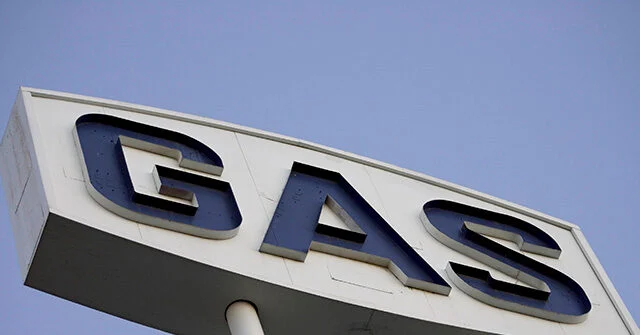
Illinois Maintenance Worker Rescued After Hours Trapped 130 Feet Inside Gas Station Sign Following Lift Malfunction
A maintenance worker in Illinois was successfully rescued after being trapped for several hours inside a towering 130-foot-tall gas station sign, perched precariously near Interstate 55. The incident, which unfolded on a Tuesday morning, captivated local attention and necessitated a complex, multi-agency emergency response to retrieve the individual from the extreme height after his aerial lift equipment suffered a critical malfunction. The ordeal underscored the inherent risks associated with high-altitude maintenance work and highlighted the critical importance of specialized rescue equipment and inter-agency cooperation in emergency situations.
The Incident Unfolds: A Morning of Routine Turns Perilous
The events began on Tuesday morning in Wilmington, Illinois, a community strategically located along the busy Interstate 55 corridor. The worker, whose identity was not immediately released, was engaged in routine maintenance tasks on a prominent gas station sign, a common fixture designed to attract motorists from the adjacent highway. Such signs are vital for businesses, often illuminated and designed for maximum visibility, requiring periodic servicing, cleaning, or bulb replacement. The worker had ascended to a considerable height using an industrial aerial lift, commonly known as a boom lift or cherry picker, a piece of equipment essential for accessing elevated structures. However, at approximately 130 feet above ground level, the lift malfunctioned, rendering it inoperable and leaving the worker stranded within the structural confines of the sign itself.
Reports from WFLX, citing Wilmington Fire officials, indicated that the worker found himself in an unenviable predicament: isolated, high above the ground, and with no immediate means of descent. The gas station sign, a skeletal framework of metal and lighting elements, offered little in the way of internal access or safety features like ladders, which would typically be present in permanent structures designed for human access. This absence compounded the complexity of the impending rescue operation, transforming it from a standard equipment retrieval to a high-angle rescue scenario. Despite the gravity of his situation, the worker reportedly maintained a remarkable composure, even managing to give a "thumbs up" to responders below, signaling his well-being and resilience amidst the challenging circumstances. This display of calm was a crucial factor, alleviating immediate concerns about his physical or psychological state and allowing emergency services to focus on the technical aspects of the rescue.
Chronology of a Complex Rescue Operation
Tuesday Morning: Initial Alert and Assessment
The first emergency calls reached local authorities shortly after the lift malfunctioned, likely from concerned bystanders or fellow workers who witnessed the incident. Wilmington Fire officials quickly arrived on the scene, establishing an immediate perimeter and commencing an initial assessment. Their primary concern was the worker’s safety and the logistical challenges posed by the extreme height. Firefighters confirmed that their standard ladder trucks, while formidable, typically reach heights of approximately 100 feet. This crucial limitation immediately signaled that a conventional ladder rescue would not suffice, necessitating a more specialized approach.
Mid-Morning: Search for Specialized Equipment
Recognizing the unique requirements of the situation, Wilmington Fire officials initiated a broader search for an aerial lift capable of reaching 130 feet. This type of equipment, often referred to as a super-boom lift or specialized high-reach platform, is not standard issue for most municipal fire departments due to its specialized nature, significant cost, and logistical footprint. Such lifts are more commonly found on large construction sites, industrial facilities, or specialized utility operations. The search quickly expanded beyond Wilmington’s immediate vicinity, tapping into regional emergency networks and private sector resources.
Late Morning: Locating the Solution in Joliet
After an intensive search, a suitable specialized lift was identified approximately 17 miles away in Joliet, Illinois, at an active job site. The discovery of this equipment was a pivotal moment in the rescue effort, transforming the predicament from an intractable problem to a solvable one, albeit with significant logistical hurdles. The lift, designed for extreme heights, required careful transportation.
Afternoon: The Interstate 55 Escort
To expedite the critical transport of the specialized lift, Illinois State Police were called upon to provide an escort. The journey from Joliet to Wilmington, spanning approximately 17 miles, was facilitated by the police escort, which cleared the route and ensured the safe and swift passage of the oversized equipment through traffic. This inter-agency collaboration was vital, shaving precious minutes off the transit time and demonstrating the coordinated response capabilities of Illinois’ emergency services. The sight of the massive lift, accompanied by police vehicles, likely drew considerable attention along the interstate, a testament to the urgency of the unfolding situation.
Mid-Afternoon: Arrival and Setup
Upon its arrival in Wilmington, the specialized lift was meticulously positioned and prepared for the delicate rescue operation. Setting up such a large piece of equipment safely and effectively requires trained operators and careful site assessment, especially in potentially confined spaces or near busy roadways. Emergency responders worked swiftly to ensure stability and proper alignment for the upcoming ascent.
Just Before 4:00 PM: The Rescue and Aftermath
Approximately five hours after the initial malfunction, the rescue operation commenced. Trained personnel ascended in the specialized lift, carefully maneuvering towards the trapped worker. The rescue itself was likely a slow and deliberate process, prioritizing the worker’s safety and the stability of both the rescue platform and the sign structure. Just before 4:00 PM, the worker was successfully retrieved from his aerial prison and safely brought back to ground level. Despite the prolonged ordeal and the considerable height, fire officials reported that the worker refused medical treatment, indicating he was in good health and spirits. He was expected to be "OK," a testament to his composure and perhaps the absence of any direct physical injury from the malfunction itself.
Background and Context: The World of Elevated Work and Emergency Preparedness
Aerial Lifts and Workplace Safety:
Aerial lifts, such as boom lifts and scissor lifts, are indispensable tools in a myriad of industries, from construction and utility maintenance to sign installation and tree trimming. They provide safe and efficient access to elevated work areas that would otherwise be difficult or impossible to reach. However, their operation is inherently hazardous, necessitating stringent safety protocols, regular maintenance, and comprehensive operator training. Malfunctions can arise from various factors, including mechanical failure, hydraulic issues, electrical problems, or human error.
OSHA (Occupational Safety and Health Administration) regulations govern the use of aerial lifts, mandating daily inspections, proper fall protection, and adherence to manufacturer specifications. While these regulations aim to minimize risks, incidents like the one in Wilmington underscore that even with precautions, unexpected failures can occur, requiring robust emergency response plans.
Challenges of High-Angle Rescue:
High-angle rescue refers to operations conducted in situations where the angle of the terrain is steep enough to require ropes, specialized equipment, and trained personnel to prevent falls and safely move victims. While this incident involved a vertical structure rather than terrain, the principles are similar: the height itself presents significant dangers, including the risk of falling, exposure to elements, and the psychological stress on the trapped individual.
Local fire departments, particularly in smaller communities, often have limitations regarding the height their standard equipment can reach. Most municipal ladder trucks are designed to access multi-story buildings, typically up to 75-100 feet. Rescues exceeding these heights often necessitate specialized equipment, which might be regional assets, private contractor equipment, or military resources. This incident highlights the critical gap that can exist and the need for robust inter-jurisdictional mutual aid agreements and regional resource sharing.
Wilmington, Illinois: A Crossroads Community:
Wilmington, a city in Will County, Illinois, sits strategically along Interstate 55, a major artery connecting Chicago to St. Louis. Its location makes it a hub for various services catering to travelers and commuters, including gas stations, restaurants, and logistics operations. Large, prominent signage is common along such interstates, essential for attracting transient business. The incident’s proximity to I-55 also meant high visibility and potential for traffic disruption during the multi-hour rescue, underscoring the public safety implications beyond just the worker’s immediate well-being.
Official Responses and Inter-Agency Coordination
Wilmington Fire Department’s Role:
A spokesperson for the Wilmington Fire Department, likely the Chief or a designated incident commander, would have emphasized the department’s primary focus on the worker’s safety throughout the ordeal. They would have detailed the initial assessment, the immediate recognition of their equipment limitations, and the swift decision to seek specialized external resources. A statement would commend the rapid inter-agency coordination, specifically mentioning the critical role played by the Illinois State Police in facilitating the transport of the specialized lift. The official would also likely praise the trapped worker’s calm demeanor, which significantly aided the rescue effort by preventing panic and allowing responders to execute their plan methodically. "Our priority from the moment we arrived was the safe retrieval of the worker," an official might state. "The challenge presented by the extreme height quickly necessitated reaching out to our regional partners and identifying a specialized asset. The successful outcome is a testament to seamless inter-agency cooperation and the professionalism of all involved."
Illinois State Police’s Contribution:
The Illinois State Police would have confirmed their role in providing the critical escort for the oversized equipment. A representative might explain that ensuring the rapid and safe transport of such vital equipment is a standard procedure in emergency situations where time is of the essence. "Our troopers responded promptly to the request, understanding the critical nature of the cargo and the urgency of the situation," an ISP spokesperson could have remarked. "Facilitating the safe passage of the specialized lift allowed emergency crews in Wilmington to execute their rescue plan efficiently."
Gas Station and Maintenance Company Responses (Inferred):
While specific statements from the gas station management or the worker’s maintenance company were not immediately detailed in initial reports, it is logical to infer their perspectives. The gas station management would undoubtedly express relief at the worker’s safe return and likely reiterate their commitment to safety and operational integrity. They might indicate an internal review of the incident and their contracted maintenance procedures. The maintenance company responsible for the lift and the worker would also likely issue a statement expressing profound relief, gratitude to emergency services, and initiating a thorough investigation into the lift malfunction. Such an investigation would typically involve equipment specialists, engineers, and safety officers to determine the root cause of the breakdown and implement corrective measures to prevent future occurrences. "Our thoughts were with our colleague throughout this challenging period, and we are immensely relieved by his safe return," a representative from the maintenance company might have stated. "We are fully cooperating with authorities and conducting a comprehensive internal review of the equipment and procedures to understand exactly what happened and reinforce our safety protocols."
Broader Impact and Implications
Review of High-Altitude Safety Protocols:
This incident will likely prompt a review of safety protocols for maintenance work involving extreme heights, not just for the involved company but potentially across the industry. Such reviews often focus on the frequency and thoroughness of equipment inspections, operator training certifications, emergency preparedness plans for lift malfunctions, and the availability of secondary descent mechanisms or rescue platforms. The "no ladder inside" detail is particularly salient here, emphasizing the need for contingency planning when workers are in enclosed or partially enclosed high structures.
Regional Emergency Preparedness:
The challenge faced by Wilmington Fire in locating a sufficiently tall lift highlights a potential gap in regional emergency preparedness. While rare, incidents requiring specialized high-reach equipment can occur anywhere. This event could spur discussions among regional emergency management agencies about mapping specialized equipment assets across counties, establishing clearer mutual aid agreements for their deployment, and potentially investing in shared regional resources. The ability to quickly identify and deploy such equipment is paramount.
The Human Element and Resilience:
The worker’s ability to remain in "good spirits" and give a "thumbs up" while trapped 130 feet in the air for five hours is a remarkable testament to human resilience under duress. Such an ordeal could easily induce panic or despair. His calm demeanor not only helped himself but also undoubtedly assisted the rescuers, allowing them to focus on the technical aspects of the operation without the added pressure of an immediate medical emergency or a distressed victim. This aspect of the story serves as a powerful reminder of the psychological fortitude often exhibited by individuals in unexpected crisis situations.
Public Awareness and Appreciation for Emergency Services:
Incidents like this, particularly those with a visible public component near a major interstate, tend to draw significant public attention. They serve to raise public awareness about the complex and often dangerous work performed by emergency services personnel. The coordinated efforts of the Wilmington Fire Department, Illinois State Police, and other agencies involved in locating and deploying the specialized lift underscore the extensive training, planning, and collaborative spirit required to resolve such unique emergencies successfully. It reinforces public trust and appreciation for the capabilities and dedication of first responders.
Technological Advancements in Rescue and Safety:
The incident may also indirectly spur discussions on technological advancements in both aerial lift safety and rescue operations. This could include better remote diagnostic capabilities for lifts, enhanced emergency descent systems, or even the development of more versatile and rapidly deployable high-angle rescue drones or platforms. The ongoing evolution of technology continuously offers new tools to enhance workplace safety and improve emergency response efficacy.
In conclusion, the successful rescue of the maintenance worker from the 130-foot gas station sign near Interstate 55 in Wilmington, Illinois, stands as a testament to the effective coordination and professionalism of emergency services. While the ordeal was prolonged and technically challenging, the worker’s resilience and the decisive actions of multiple agencies ensured a positive outcome. The incident serves as a valuable case study for reinforcing high-altitude safety protocols, assessing regional emergency equipment capabilities, and celebrating the dedication of those who respond to unforeseen crises.

Related Posts

Democratic Candidates Must Moderate to Win General Elections, Says Rep. Greg Stanton
Lisa Demuth Secures Republican Gubernatorial Nomination in Minnesota, Defeating Trump-Endorsed Mike Lindell