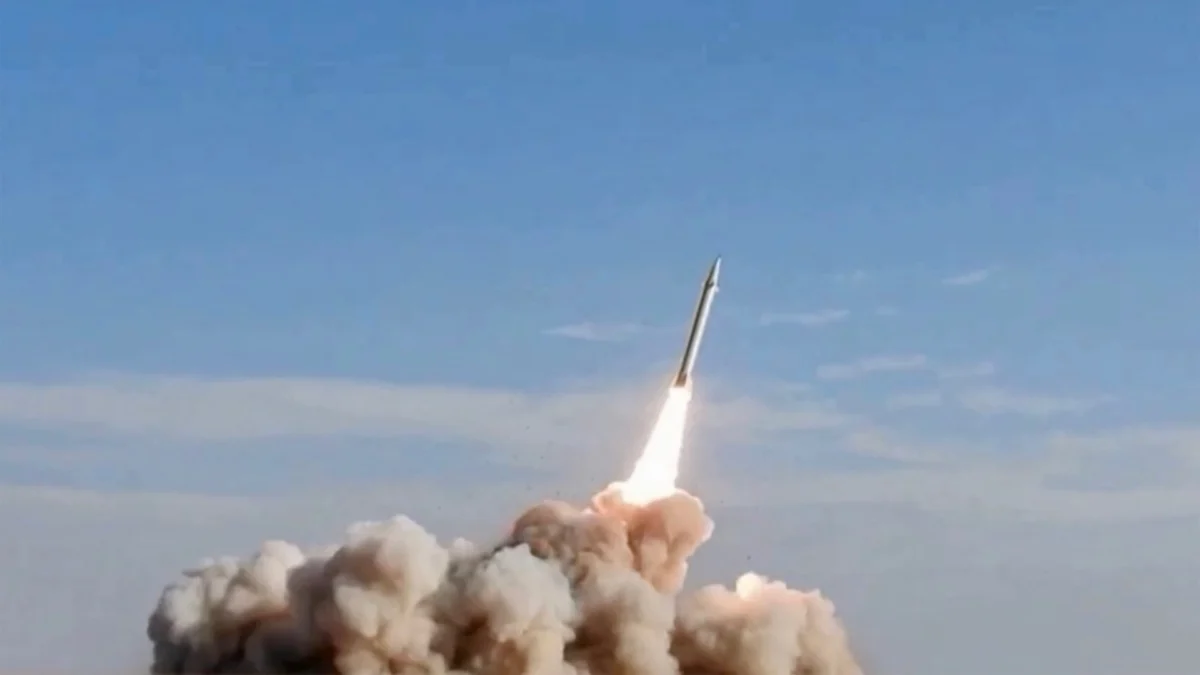
Jordanian Army Intercepts Iranian Drones and Missiles, Signifying Escalation in Regional Conflict
On July 24, 2026, at approximately 13:54 BST, the Jordanian Armed Forces announced the successful interception of seven Iranian missiles and six unmanned aerial vehicles (UAVs) that had entered Jordanian airspace. The official statement from Amman confirmed that the aerial threats were neutralized without causing any casualties or structural damage within the Hashemite Kingdom. This incident marks a significant escalation in the ongoing regional tensions, often referred to by observers as the "War on Iran," underscoring the precarious security environment in the Middle East and the critical role Jordan plays in maintaining regional stability.
The Incident Unfolds: A Defensive Success
The interception, which occurred over Jordanian territory, demonstrated the advanced capabilities and readiness of the Jordanian air defense systems. While specific details regarding the origin points within Iran or the intended targets of the projectiles were not immediately disclosed, military analysts widely infer that these munitions were likely transiting Jordanian airspace en route to other adversarial targets in the region, potentially within Israel or towards U.S. military installations. The successful neutralization of such a substantial volley of aerial threats—comprising both ballistic or cruise missiles and advanced drones—highlights Jordan’s robust defensive infrastructure, possibly aided by allied intelligence and air defense assets stationed within the kingdom. The prompt and effective response prevented potential civilian casualties and infrastructure damage, a testament to the vigilance of Jordanian forces amidst a volatile geopolitical landscape. The interception operation itself would have involved sophisticated radar tracking, threat assessment, and the deployment of surface-to-air missile batteries, likely including systems such as the Patriot or NASAMS, which Jordan operates as part of its modern air defense network.
Geopolitical Backdrop: The War on Iran
The July 24 incident is not an isolated event but rather a direct consequence of a protracted and increasingly overt conflict referred to as the "War on Iran." This period of intense regional instability, which gradually escalated from proxy conflicts and economic sanctions over the past decade, reached a critical juncture in late 2025 and early 2026. Root causes include Iran’s persistent advancement of its nuclear program beyond international safeguards, its ballistic missile development, and its extensive network of regional proxies, which Tehran views as strategic depth against perceived external threats. Conversely, a coalition of nations, primarily the United States, Israel, and several Gulf Arab states, perceives these actions as destabilizing and a direct threat to their security interests.
The conflict has seen a series of tit-for-tat attacks, including cyber warfare, maritime incidents in the Strait of Hormuz, and strikes on oil infrastructure, culminating in more direct military engagements. Prior to July 2026, the region had witnessed several significant developments:
- Late 2025: Increased frequency of drone and missile attacks by Iranian-backed militias in Iraq and Syria against U.S. forces and regional allies, leading to retaliatory strikes.
- Early 2026: A major maritime incident in the Persian Gulf involving Iranian naval forces and international shipping, further disrupting global oil markets.
- Spring 2026: Heightened rhetoric and military drills by both sides, with Iran demonstrating new long-range missile capabilities and the U.S. reinforcing its military presence in the Middle East.
- June 2026: Reports of direct engagements between Iranian Revolutionary Guard Corps (IRGC) elements and forces from the U.S.-led coalition in disputed border regions, pushing the conflict into a more open phase.
This timeline underscores the environment of heightened alert under which Jordan’s interception occurred, illustrating how easily regional conflicts can spill over and involve non-belligerent nations through their airspace.
Jordan’s Strategic Imperative and Neutrality
Jordan, a steadfast U.S. ally, shares borders with Syria, Iraq, Saudi Arabia, and Israel, placing it at the geographical epicenter of regional conflicts. Its long-standing policy has been one of maintaining neutrality while simultaneously safeguarding its sovereignty and stability. This delicate balance is crucial for a nation that hosts a significant refugee population and serves as a critical partner in regional counter-terrorism efforts. The interception of Iranian projectiles highlights Jordan’s commitment to protecting its airspace and preventing its territory from being used as a transit route or a battleground for external powers.
The decision to intercept these missiles and drones reflects several key Jordanian imperatives:

- Sovereignty Protection: Any unauthorized entry into Jordanian airspace is a violation of national sovereignty, irrespective of the projectiles’ ultimate destination.
- Preventing Escalation: Allowing such munitions to pass unhindered could implicate Jordan in the wider conflict or risk miscalculation if a projectile were to malfunction or be intercepted over Jordanian civilian areas by other parties.
- Maintaining Stability: Jordan’s internal stability is paramount. Any incident leading to damage or casualties could destabilize the kingdom, which has historically been a bulwark against regional chaos.
- Security Commitments: As a close partner of the U.S. and a nation with a peace treaty with Israel, Jordan is integrated into a broader regional security architecture that necessitates a robust defensive posture against threats from actors like Iran.
This incident reaffirms Jordan’s proactive stance in managing regional security challenges, even when it means directly confronting powerful adversaries.
Regional and International Reactions (Inferred)
While official detailed reactions from all parties are pending, based on the nature of the event and the ongoing conflict, several responses can be reasonably inferred:
- Jordanian Government: An official statement, similar to the initial announcement, would likely reiterate Jordan’s commitment to protecting its sovereignty and national security. It would emphasize the professionalism of its armed forces and call for de-escalation from all parties involved in the wider regional conflict, stressing the need to respect international law and the territorial integrity of all nations.
- United States: Washington would almost certainly issue a strong condemnation of Iran’s actions, characterizing them as reckless and destabilizing. The U.S. would praise Jordan’s defensive capabilities and reaffirm its unwavering support for Amman’s security, potentially highlighting the effectiveness of U.S.-Jordanian military cooperation and intelligence sharing. There might be calls for international pressure on Iran to cease its aggressive actions.
- Iran: Tehran’s response would likely involve a denial of direct targeting of Jordan, possibly claiming the projectiles were aimed at legitimate military targets elsewhere and that Jordan’s interception was an act of interference or collaboration with its adversaries. Iran might frame its actions as self-defense in the context of the "War on Iran," asserting its right to respond to perceived aggressions from the U.S. or Israel.
- Israel: While Israel might refrain from an immediate direct statement to avoid escalating rhetoric, its security establishment would likely express silent gratitude for Jordan’s actions, which effectively neutralized a threat that could have potentially reached Israeli territory. Covert intelligence sharing and coordination between Israeli and Jordanian defense forces would likely intensify.
- United Nations and International Bodies: The UN Secretary-General would likely issue a statement expressing deep concern over the escalating tensions in the Middle East, calling for immediate de-escalation, restraint from all parties, and respect for international law and sovereignty. The incident could prompt discussions within the UN Security Council regarding the broader implications of the "War on Iran" and potential avenues for diplomatic resolution.
- Gulf Arab States: Nations like Saudi Arabia and the UAE, also wary of Iranian regional ambitions, would likely voice solidarity with Jordan and condemn Iran’s actions, emphasizing the need for a united front against threats to regional stability.
Technicalities of Interception and Iranian Capabilities
The successful interception of both missiles and drones underscores the sophistication of modern air defense. Iranian missile and drone capabilities have significantly advanced in recent years, with a diverse arsenal including:
- Ballistic Missiles: Such as derivatives of the Fateh-110 (e.g., Zolfaghar, Dezful) with ranges up to 700-1000 km, known for their precision and ability to carry various warheads.
- Cruise Missiles: Like the Soumar or Paveh series, which fly at lower altitudes, making them challenging targets for traditional radar systems.
- Unmanned Aerial Vehicles (UAVs): Ranging from reconnaissance drones to sophisticated attack drones like the Shahed-136 (loitering munition) or Shahed-129 (combat drone), capable of long-range strikes and evading detection.
Jordan’s defensive response likely involved a multi-layered approach:
- Early Warning Systems: Advanced radar networks (potentially including U.S.-provided assets) to detect launches and track trajectories.
- Command and Control: Integrated systems to assess threats, prioritize targets, and coordinate defensive measures.
- Interception Systems: Surface-to-air missile (SAM) batteries. Jordan operates MIM-104 Patriot systems, which are highly effective against ballistic missiles, cruise missiles, and advanced aircraft. It also possesses NASAMS (National Advanced Surface-to-Air Missile System), which is effective against drones and cruise missiles, providing a complementary defense layer. The use of electronic warfare (EW) capabilities might also have been employed to disrupt drone navigation or communication.
The specific number of interceptions (7 missiles, 6 drones) suggests a coordinated attack or a multi-wave launch, which further validates the readiness and effectiveness of Jordan’s air defense strategy.
Broader Implications for Regional Stability
This incident carries significant implications for the already fragile stability of the Middle East:
- Escalation Risk: The successful interception, while preventing damage, simultaneously demonstrates the willingness of all parties to engage in direct military action. This increases the risk of miscalculation and further escalation, potentially drawing more nations into the direct conflict.
- Humanitarian Concerns: A full-scale regional conflict would undoubtedly trigger a massive humanitarian crisis, leading to unprecedented displacement, food insecurity, and loss of life. Jordan, already hosting millions of refugees, would face immense pressure.
- Economic Impact: The "War on Iran" has already begun to impact global oil prices and shipping routes. Any further escalation, particularly involving key chokepoints like the Strait of Hormuz, would send shockwaves through the global economy, potentially triggering a recession.
- Alliances and Realignment: The incident might solidify existing alliances and potentially push some fence-sitting nations to take clearer sides, leading to a broader regional realignment of power. It could also prompt a re-evaluation of defense strategies and intelligence sharing protocols among U.S. allies.
- International Diplomacy Challenges: The incident underscores the difficulty of achieving a diplomatic resolution to the "War on Iran." It highlights the deep-seated distrust and security dilemmas that plague the region, making multilateral negotiations exceedingly complex.
The Road Ahead
The interception of Iranian missiles and drones by Jordan on July 24, 2026, serves as a stark reminder of the escalating dangers inherent in the ongoing "War on Iran." While Jordan’s defensive success averted immediate catastrophe, the incident highlights the urgent need for international efforts to de-escalate tensions and seek peaceful resolutions. The coming days and weeks will be crucial in observing the ripple effects of this event, as regional powers and international actors weigh their responses and adjust their strategies in a Middle East teetering on the brink of wider conflict. The stability of not only Jordan but the entire region hinges on cautious diplomacy and a concerted effort to prevent further military confrontation.

Related Posts
Over 150 Israeli Settlers Storm Al-Aqsa Compound and Perform Prayers, Violating Status Quo Under Police Protection.
UN Report Highlights Over 900 Obstacles Hampering West Bank Aid Amid Escalating Humanitarian Crisis