
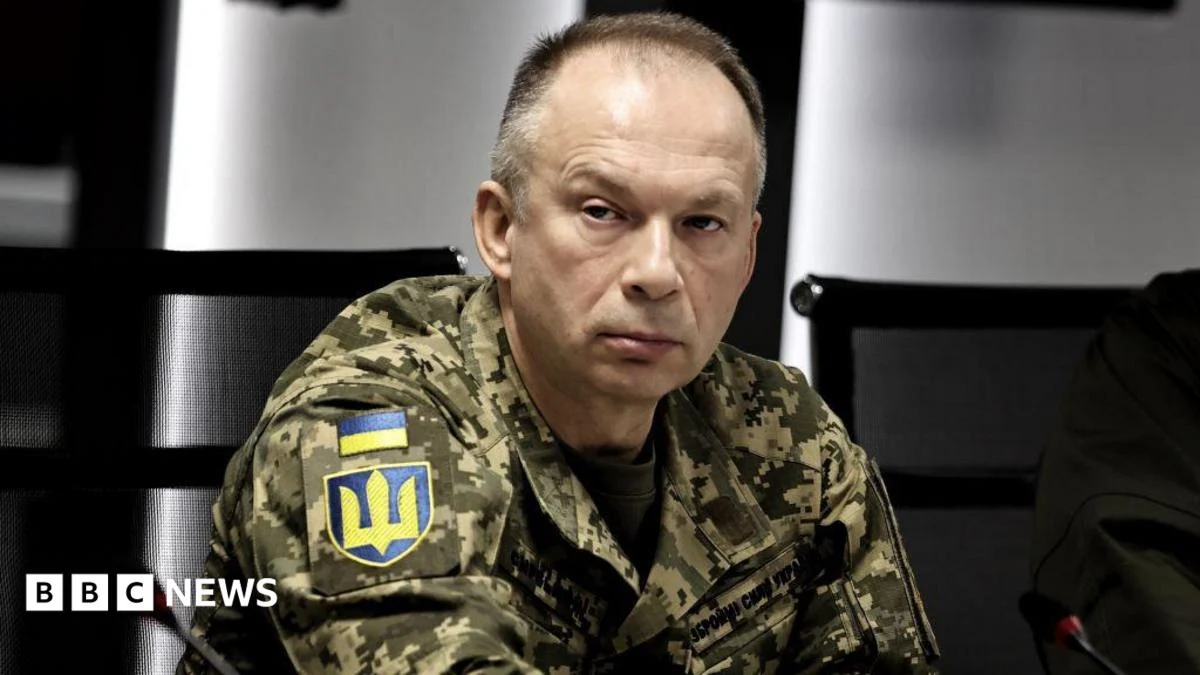
Ukraine’s President Zelensky Reshuffles Top Military Leadership Amidst Public Discontent and Strategic Realignments
In a significant shake-up of Ukraine’s military command, President Volodymyr Zelensky has announced the dismissal of the country’s army commander-in-chief, General Oleksandr Syrskyi. This high-profile decision comes just days after the controversial removal of the widely acclaimed Defence Minister Mykhailo Fedorov, a move that ignited widespread street protests across the nation. The swift leadership changes underscore a period of intense scrutiny and pressure on Ukraine’s wartime government, grappling with both the immediate demands of the conflict and the long-term imperative for reform and efficiency.
A Tumultuous Week: The Dismissal of Key Figures
The chain of events began with the ousting of Mykhailo Fedorov, 35, from his post as Defence Minister. Fedorov, a dynamic figure known for his tech-forward approach and relentless drive against corruption, had rapidly become a symbol of modernization within the armed forces. His departure, announced last week, triggered an immediate and vocal backlash from the Ukrainian public, who viewed him as a crucial agent of change. Protests erupted in several major Ukrainian cities, with citizens demanding clarity and expressing profound disappointment. The initial confusion surrounding Fedorov’s dismissal soon gave way to speculation that it was linked to a deep-seated disagreement with General Syrskyi, then the army’s commander-in-chief. These rumors were subsequently confirmed by various sources close to the administration, highlighting a significant rift at the pinnacle of Ukraine’s defense establishment.
General Syrskyi, 60, a veteran commander with a background rooted in the Soviet military school system, had faced increasing criticism for what many perceived as a reluctance to embrace radical reforms and innovative strategies essential for modern warfare. His leadership style, while credited with past successes such as the defense of Kyiv in 2022, was increasingly seen as outdated in the face of evolving battlefield dynamics and the need for agile, data-driven decision-making.
In his place, President Zelensky appointed Mykhailo Drapatyi, 43, a general lauded for his popularity, proven combat experience, and more forward-thinking approach. Drapatyi’s appointment appears to be a direct response to the public’s demand for leadership that aligns with Fedorov’s vision of a modern, efficient military.
The New Guard: Drapatyi Takes the Helm
General Drapatyi, whose career has been marked by significant combat roles, including commanding units during the 2014 conflict in eastern Ukraine and demonstrating tactical prowess in the ongoing full-scale invasion, immediately conveyed his commitment to the immense task ahead. "I will work responsibly, with full focus, and with respect for the people who are defending our country today," Drapatyi declared on his Facebook page, signaling a clear understanding of the public’s expectations. In a gesture of professional continuity, he also acknowledged his predecessor, thanking Syrskyi "for his consistent work to strengthen the Ukrainian army," and adding, "I grew up in it." This statement, while respectful, also subtly underlined the generational and strategic shift in military leadership.
President Zelensky, in a video address posted on social media late on Tuesday, formally acknowledged Syrskyi’s contributions, specifically crediting him for his pivotal role in military campaigns, including the successful defense of the capital Kyiv during the initial, critical days of Russia’s full-scale invasion in February 2022. This recognition, while standard protocol during high-level dismissals, also served to frame the change as a strategic evolution rather than a condemnation of past service.
The President also revealed a crucial development regarding Fedorov: he had met with the former Defence Minister earlier in the day and offered him a "worthy position in power." Zelensky, however, did not disclose whether Fedorov had accepted the offer, leaving the political future of the popular reformist open to speculation. Fedorov was last week replaced as Defence Minister by Yevhenii Khmara, a former top official at Ukraine’s Security Service (SBU), who remains in an acting capacity. Zelensky concluded his address by stating, "All decisions will be formalised tomorrow," indicating a swift administrative process to cement the changes.
Fedorov’s Legacy and the Voice of Change
Mykhailo Fedorov’s tenure as Defence Minister, though brief, was transformative. Appointed only in January, he quickly distinguished himself by championing the integration of data analytics and technological innovation to enhance battlefield performance. His background as a former Minister of Digital Transformation uniquely positioned him to lead these efforts. From the nascent days of the full-scale invasion, Fedorov was instrumental in establishing the volunteer "IT Army of Ukraine," which launched crucial cyber-attacks against Russian infrastructure. He later spearheaded the highly successful "Army of Drones" fundraising campaign, a grassroots initiative that significantly bolstered Ukraine’s aerial reconnaissance and strike capabilities. Perhaps most innovatively, he introduced elements of "gamification" to the war effort, designing a system that awarded Ukrainian military units credits for successfully engaging Russian assets, thereby fostering a competitive and results-driven environment.
Fedorov himself was quick to endorse Drapatyi’s appointment, describing it as "a new hope in the fight of free people for freedom and justice." His statement, released shortly after the news, resonated with the public’s sentiment, portraying the change as "the voice of change that could not be ignored." He further revealed that he had personally contacted Syrskyi to thank him for the defense of the Kyiv region and other "historic battles." However, Fedorov’s forward-looking perspective was clear: "But we need to move even faster and write new chapters correcting all previous mistakes," he asserted, articulating the underlying sentiment that drove the recent political pressure.
The Public Outcry and Political Pressure
The initial ousting of Fedorov triggered six consecutive days of widespread protests across Ukraine. These demonstrations, fueled by a deep public attachment to Fedorov’s reform agenda and a growing frustration with perceived bureaucratic inertia, placed immense pressure on President Zelensky to address the root causes of the discontent. The calls for Syrskyi’s dismissal intensified during this period, with protesters demanding a leadership that could accelerate military modernization and combat corruption more effectively.
President Zelensky’s decision to replace Syrskyi with Drapatyi is widely interpreted as a direct response to this public pressure. Drapatyi, being younger and regarded as a more innovative commander, aligns more closely with the public’s desire for a forward-thinking military leadership. Furthermore, the widely reported close friendship between Drapatyi and Fedorov is likely to be a strategic asset, potentially helping to bridge the recent divide and restore public confidence. Fedorov’s unequivocal endorsement of Drapatyi is crucial in this regard, offering a strong signal that the spirit of reform will continue.
Syrskyi’s Perspective and the Complexity of Command
General Syrskyi, while not publicly commenting directly on his dismissal, offered insights into his perspective on the complex challenges of wartime leadership in an op-ed for the Militarny website on Monday, just before his removal was announced. Addressing his relationship with Fedorov, he stated, "I perceived our relationship as a working one," and notably added, "If I offended anyone, Mykhailo Albertovych [Fedorov], I’m sorry." This rare public apology, though indirect, hinted at the underlying tensions that had become unmanageable.
Regarding the protests, Syrskyi articulated the inherent difficulties of wartime decision-making, emphasizing that issues such as military contracts, procurement, and mobilization, which were being passionately debated in the press and reduced to "pithy slogans" by protesters, were far more intricate than most realized. "Decisions on which people’s lives depend are not made with slogans," he wrote, underscoring the gravity of his responsibilities. He concluded by asserting, "Real work, not the public drama surrounding it, wins the war," a statement that, while true in principle, highlighted a disconnect with a public demanding transparency and demonstrable progress.
Broader Implications and the Path Forward
The comprehensive reshuffle at the top of Ukraine’s military command carries profound implications for the country’s war effort, its political landscape, and its international standing. For the immediate future, acting Defence Minister Khmara remains in his position, working alongside the newly appointed Commander-in-Chief Drapatyi. President Zelensky has tasked both Khmara and Drapatyi with developing a new defense strategy. This mandate is expansive, covering critical areas such as reforming the military corps system, optimizing weapons supply chains, and further integrating drone technology into combat operations. This strategic overhaul signals a concerted effort to adapt Ukraine’s military to the realities of modern warfare, emphasizing agility, technological superiority, and efficient resource allocation.
The political crisis triggered by Fedorov’s dismissal and the subsequent public outcry underscore the delicate balance Zelensky must maintain between wartime unity and addressing legitimate public grievances. While Drapatyi’s appointment and Fedorov’s potential return to a position of influence may mend the immediate damage to Zelensky’s image, the episode has exposed vulnerabilities in the government’s communication and decision-making processes. Many citizens, having witnessed what they perceived as an initial misstep, will remain vigilant, demanding tangible evidence that the leadership changes will indeed translate into enhanced military effectiveness and a renewed commitment to transparency and reform.
Internationally, Ukraine’s allies will be closely observing these developments. Sustained Western support, both military and financial, is predicated not only on Ukraine’s battlefield performance but also on its commitment to democratic principles, good governance, and anti-corruption efforts. A perception of internal instability or strategic incoherence could complicate future aid packages and diplomatic relations. The appointment of reform-minded leaders like Drapatyi, particularly if Fedorov returns in a significant capacity, could reassure international partners that Ukraine remains dedicated to building a resilient, modern state.
Ultimately, the success of these leadership changes will be measured on the battlefield. As Ukraine continues its arduous struggle against Russian aggression, the effectiveness of its military command, its ability to innovate, and its capacity to inspire public confidence will be paramount. The recent reshuffle represents a critical juncture, offering both challenges and opportunities for Ukraine to refine its strategy, strengthen its defense, and reaffirm its commitment to a future defined by freedom and justice. The coming months will reveal whether this bold realignment can indeed write the "new chapters" that Fedorov and the Ukrainian people so urgently desire.

Related Posts
Zambia on Edge: Opposition Leader Arrested Amid Allegations of Insurrection Plot and Election Tensions
Rescuers search for survivors of powerful Indonesia earthquake

