US Air Force Advances Autonomous Flight with VENOM F-16 Testing Program at Eglin Air Force Base
The United States Air Force has officially entered a new phase of aerial warfare development, initiating piloted flights and autonomy tests for a fleet of modified F-16 Fighting Falcons. Under the Viper Experimentation and Next-gen Operations Model (VENOM) program, these aircraft are being utilized as flying laboratories to evaluate the performance of artificial intelligence (AI) agents in complex flight environments. This milestone marks a significant transition from laboratory simulations to real-world applications, as the military seeks to integrate autonomous systems into its core combat architecture.
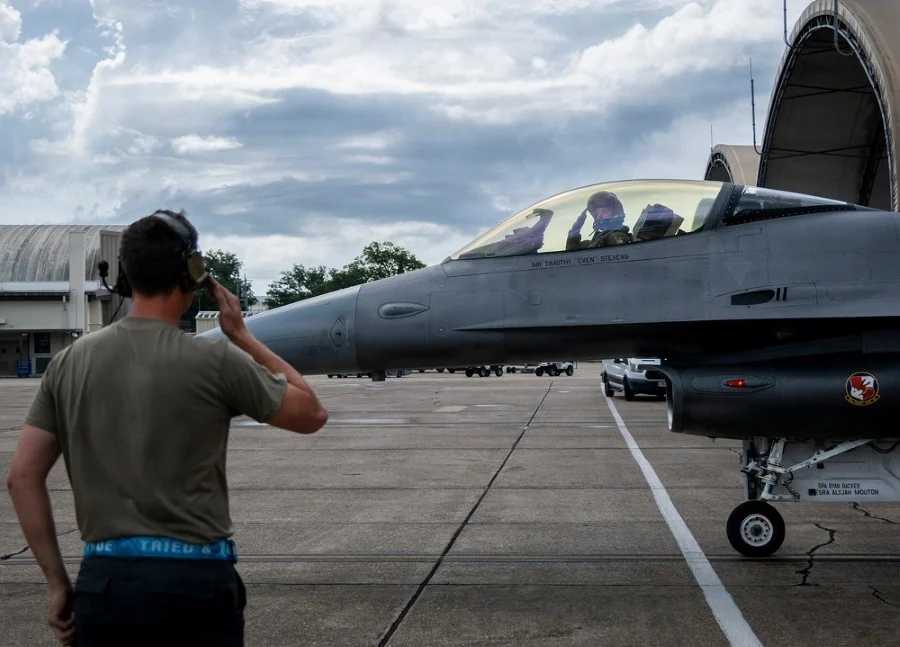
Operating out of Eglin Air Force Base in Florida, the VENOM program is a collaborative effort involving the 96th Test Wing and the 53rd Wing. The modified aircraft, which have been retrofitted with specialized hardware and software suites, recently completed a series of sorties designed to validate the integration of AI flight control systems. While the aircraft are flown by AI agents during specific test parameters, human pilots remain in the cockpit at all times to monitor system performance, ensure safety, and intervene if the technology deviates from its programmed objectives.
The Evolution of the VENOM Program
The VENOM project is the culmination of years of iterative development within the Department of Defense’s research ecosystem. It was born out of the Air Combat Evolution (ACE) program, a Defense Advanced Research Projects Agency (DARPA) initiative that gained international attention in 2020 when an AI agent defeated a human pilot in a simulated dogfight. The transition to the VENOM program represents the "next phase" of this technological journey, moving the focus from purely competitive dogfighting to broader operational tasks and mission-level autonomy.
Before the first modified F-16 took to the skies in mid-2024, the program underwent an exhaustive period of ground-based preparation. This included thousands of hours of high-fidelity simulations and rigorous engine testing to ensure that the airframe could handle the unique stresses of AI-driven maneuvers. The integration process required stripping legacy F-16s of certain analog components and replacing them with high-speed data buses and powerful mission computers capable of running sophisticated neural networks in real-time.
According to program officials, the testing timeline has been aggressive. In June 2026, the 40th Flight Test Squadron began verification flights to ensure the physical modifications to the aircraft did not negatively impact its flight envelope. By July, the program progressed to active autonomy testing, where the AI agent was given primary control of the aircraft’s flight surfaces and mission systems during specific windows of the sortie.
Technical Modifications and Instrumentation
To transform a standard F-16 Fighting Falcon into a VENOM-capable testbed, engineers had to implement a suite of hardware and software enhancements. The F-16 is an ideal candidate for such modifications due to its fly-by-wire flight control system, which allows digital signals to be translated directly into mechanical movements of the wings and tail.
The "Viper" modifications include:
- High-Performance Edge Computing: Onboard servers capable of processing sensor data from radar, infrared, and electronic warfare suites with minimal latency.
- Independent Flight Control Buffers: A "safety "layer" of software that allows a human pilot to instantly override AI commands with a physical input, ensuring the aircraft remains under human authority at all times.
- Advanced Data Link Integration: Enhanced telemetry systems that allow the aircraft to transmit massive amounts of flight data back to engineers on the ground for post-mission analysis.
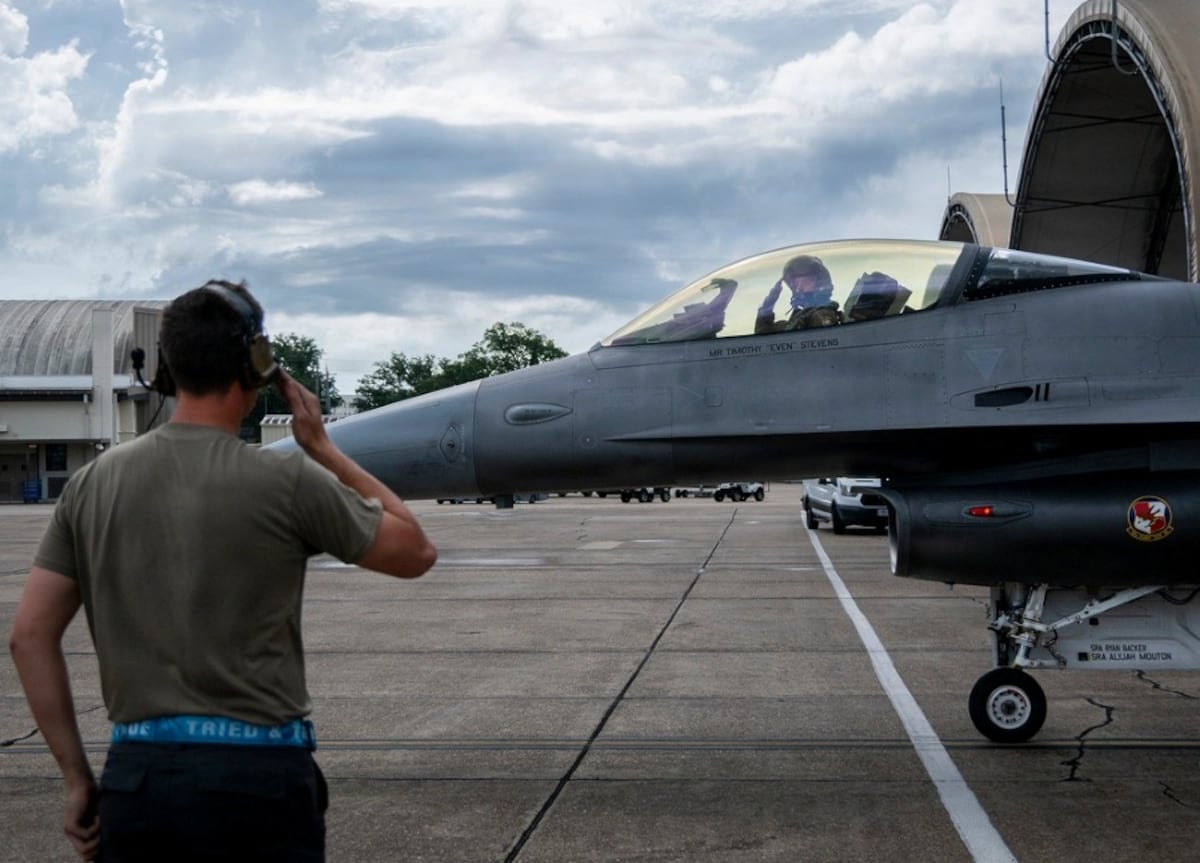
Tim Stevens, a VENOM test pilot with the 40th Flight Test Squadron, emphasized the complexity of this integration. "Getting the aircraft into the air is always a monumental milestone for a complex test program," Stevens noted in an official release. "It represents years of design, modification, and test planning poured into this project by a dedicated team of hundreds."
The Strategic Importance of Autonomous Airpower
The VENOM program is not merely a technical experiment; it is a strategic necessity driven by the changing landscape of global peer competition. As adversaries develop sophisticated anti-access/area-denial (A2/AD) capabilities, the U.S. Air Force is looking toward Collaborative Combat Aircraft (CCA) to bolster its force structure.
CCAs, often referred to as "loyal wingmen," are envisioned as affordable, autonomous drones that fly alongside manned fighters like the F-35 Lightning II or the Next Generation Air Dominance (NGAD) platform. The data gathered from VENOM tests will directly inform the development of these CCAs, providing the "brains" for future unmanned systems. By using the F-16—a platform with well-understood flight characteristics—the Air Force can isolate the variables of AI behavior without worrying about the aerodynamic quirks of a brand-new airframe.
The financial implications are equally significant. Training a human fighter pilot costs the U.S. government millions of dollars and takes years of instruction. AI agents, once perfected, can be replicated and deployed across an entire fleet instantly. Furthermore, autonomous aircraft can be designed without the heavy life-support systems required for human occupants, allowing for more fuel, more ordnance, or higher-G maneuvers that would be fatal to a human pilot.
Operational Testing and the "Combined Test Force" Approach
One of the unique aspects of the VENOM program is the close cooperation between developmental and operational testers. Traditionally, developmental testing (ensuring a system works as designed) and operational testing (ensuring a system works in a combat environment) are conducted sequentially, often separated by years.
In the VENOM program, the 96th Test Wing (developmental) and the 53rd Wing (operational) are working in tandem at Eglin AFB. This "Combined Test Force" approach allows operational pilots to provide feedback early in the AI’s learning curve. If an AI agent makes a tactical decision that a human pilot finds counterintuitive or dangerous, the software can be adjusted in a matter of days rather than months.
This rapid iteration is part of the DARPA Artificial Intelligence Reinforcements (AIR) program, which seeks to create "trusted" autonomy. Trust is a major hurdle in the adoption of military AI; pilots must be confident that their autonomous wingmen will not only perform the mission but also adhere to the rules of engagement and avoid fratricide.
Broader Implications for National Security
The success of VENOM has far-reaching implications for the future of the Department of Defense. As the Pentagon moves toward a more "data-centric" way of war, the ability of AI to process information at "machine speed" is seen as a decisive advantage. In a high-end conflict, the volume of data coming from sensors, satellites, and other aircraft would overwhelm a human brain. AI agents can filter this data, identify the most lethal threats, and suggest the most efficient responses.
However, the program also raises ethical and safety questions that the Air Force is actively addressing. The presence of a pilot in the cockpit during VENOM tests is a deliberate choice to maintain "meaningful human control" over the use of force. While the AI may fly the plane, the decision to engage a target remains a human responsibility.
The Air Force has also emphasized that the goal of VENOM is not to replace human pilots but to augment them. By offloading the "basics" of flight and sensor management to an AI, the human pilot is freed to act as a mission commander, focusing on high-level strategy and complex decision-making.
Timeline of Future Milestones
As the VENOM program continues through the mid-2020s, several key milestones are on the horizon:
- Multi-Aircraft Autonomy: Testing how multiple AI-controlled F-16s interact with one another in a coordinated formation.
- Manned-Unmanned Teaming (MUM-T): Sorties where a manned F-35 or F-22 acts as a "quarterback" for a group of VENOM-controlled aircraft.
- Complex Environment Simulation: Moving tests from the clear skies over the Gulf of Mexico to "contested" electronic warfare environments where GPS and communications may be jammed.
The data harvested from these flights will be fed into the broader "autonomy stack" that will eventually power the first generation of production-ready CCAs, expected to enter the inventory by the late 2020s.
The VENOM program stands as a bridge between the legacy of 20th-century dogfighting and the 21st-century reality of algorithmic warfare. By proving that AI can safely and effectively operate a high-performance fighter like the F-16, the U.S. Air Force is laying the groundwork for a more flexible, scalable, and lethal aerial force. As Tim Stevens and the team at Eglin AFB continue their flights, they are not just testing a new piece of software—they are defining the future of air superiority.

Related Posts
Pentagon Forges Landmark Seven-Year Agreements with Boeing and RTX to Accelerate Standard Missile-3 Production and Stabilize Defense Supply Chains
Boeing Unveils Ultra Low-Cost Seeker to Enhance Missile Inventory and Combat Cost Challenges in Modern Warfare