A Dangerous Partnership: Abuses, Unanswered Questions, and US-Ecuador Security Cooperation
The deepening security relationship between the United States and Ecuador has come under intense scrutiny following a comprehensive investigation by Human Rights Watch (HRW). The report, released in Washington, D.C., alleges that joint operations and intelligence-sharing initiatives have been linked to a series of grave human rights violations, including torture, arbitrary detentions, and unexplained drone strikes on civilian vessels. As the two nations intensify their efforts to combat transnational organized crime and drug trafficking, advocates and legal experts are warning that a lack of transparency and the erosion of legal safeguards are creating a climate of impunity for security forces.
The 94-page report, titled "A Dangerous Partnership: Abuses, Unanswered Questions, and US-Ecuador Security Cooperation," documents specific incidents occurring in the first half of 2026. These events range from a violent military raid on a rural dairy farm near the Colombian border to high-seas attacks involving advanced drone technology in the Pacific Ocean. HRW is now calling on the US Congress to exercise its oversight authority to investigate these incidents and reevaluate the terms of the bilateral security agreement.
The Geopolitical Context: A Hardline Turn in Security Policy
The current state of US-Ecuador relations must be understood within the context of escalating domestic violence in Ecuador and a shift toward militarized policing under the administration of President Daniel Noboa. Following his re-election in 2025, Noboa has doubled down on a "mano dura" (iron fist) approach to the country’s security crisis, which has seen homicide rates skyrocket due to turf wars between rival gangs such as Los Choneros and Los Lobos.
Simultaneously, the return of President Donald Trump to the White House has signaled a shift in US foreign policy toward more aggressive, direct intervention in regional counter-narcotics efforts. This alignment has resulted in the United States providing unprecedented levels of equipment, training, and real-time intelligence to Ecuadorian forces. However, HRW argues that this cooperation has been characterized by an alarming lack of accountability.
In early 2026, the Ecuadorian government officially designated the country’s internal security situation as an "internal armed conflict." This legal maneuver allows the military to take a leading role in domestic law enforcement, a move that human rights organizations claim is being used to bypass civilian judicial oversight and justify the use of lethal force against non-combatants.
The San Martín Raid: Torture and Destruction in the Borderlands
One of the most harrowing accounts in the HRW report details a series of "partnered operations" conducted between March 1 and March 6, 2026. The operations took place in San Martín, a rural community situated on the volatile border between Ecuador and Colombia. While Ecuadorian and US authorities initially lauded the mission as a "professionally executed" strike against the "Comandos de la Frontera"—a notorious armed group—the reality on the ground told a different story.
According to HRW researchers, who interviewed victims and reviewed satellite imagery, the military operation resulted in the arbitrary detention and torture of four dairy farm workers. One victim recounted being subjected to repeated electric shocks with a taser while being doused with water, leading to multiple instances of loss of consciousness.
"They tortured me with electricity… I lost consciousness at least twice," the survivor told investigators.
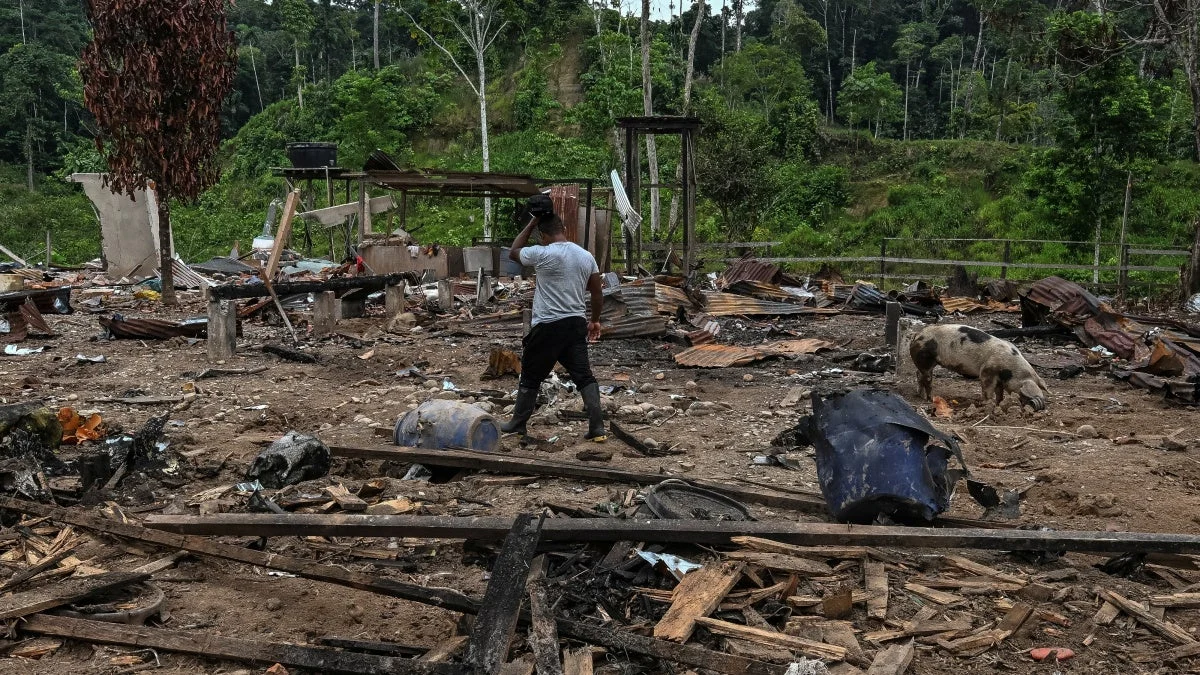
Furthermore, the military allegedly burned three properties to the ground. Two of these structures were later targeted with air-dropped munitions. Despite military claims that these were insurgent facilities, HRW’s investigation—utilizing property records, commercial receipts, and witness testimony—found that one was a functioning dairy farm and the others had been abandoned for years. No evidence was ever produced linking the four detained men to criminal groups, and they were eventually released without charges.
General Francis L. Donovan, head of the US Southern Command (SOUTHCOM), publicly praised the operation during testimony before the US Senate Committee on Armed Services, yet the report highlights a glaring discrepancy between the official narrative of a surgical strike and the reported reality of scorched-earth tactics against civilians.
Mystery at Sea: Drone Attacks and Enforced Disappearances
Perhaps the most enigmatic and disturbing aspect of the HRW report concerns a series of attacks on fishing vessels in the Eastern Pacific, near the Galápagos Islands. Between January and March 2026, three separate incidents raised questions about the use of unmanned aerial vehicles (UAVs) in maritime interdiction.
On January 20, the vessel Fiorella disappeared without a trace. Eight crew members remain missing, and their families have received no information regarding their whereabouts. In the months that followed, two other vessels—the La Negra Francisca Duarte II and the Don Maca—reported being attacked by armed drones.
Survivors of the Don Maca strike described a terrifying scene in which their vessel was targeted from the air, followed by the arrival of a blue-and-white ship. The crew alleged that they were boarded by English-speaking personnel wearing military-style uniforms with US flag insignias. These individuals, armed with "long guns," reportedly questioned the survivors about casualties before transferring them to the custody of the Salvadoran Coast Guard.
At least four crew members sustained serious injuries from shrapnel and burns during these drone strikes. While the US Department of Defense and the US Coast Guard have issued denials regarding their involvement in these specific attacks, HRW maintains that the evidence—including interviews with 13 survivors and vessel monitoring data—points to a high likelihood of US knowledge or participation.
Methodology and Findings
The HRW report is the result of an intensive investigation conducted between March and June 2026. Researchers interviewed 62 individuals, including survivors, legal experts, and community members. To verify the testimonies, the organization analyzed more than 100 photographs and videos, alongside satellite imagery, fire detection data, and medical records.
The findings suggest a pattern of "opaque" operations where the lines between Ecuadorian and US responsibility are intentionally blurred. Juanita Goebertus, Americas director at Human Rights Watch, emphasized that the lack of transparency is a deliberate feature of the current security framework.
"US-Ecuador cooperation on security has been too opaque and too dangerous for Ecuadorians," Goebertus stated. "Joint security operations against organized crime should not become a cover for abuses."
Official Responses and Legal Implications
To date, neither the Ecuadorian nor the US government has provided a substantive response to the specific allegations raised by HRW. The US Department of Defense has maintained a general denial of misconduct, while the Ecuadorian Ministry of Defense continues to frame its actions as necessary measures within the context of its declared internal armed conflict.
However, international law experts argue that the mischaracterization of organized crime as an "armed conflict" does not grant a license to ignore human rights. Under the Leahy Law, the United States is prohibited from providing military assistance to foreign security force units that commit gross violations of human rights with impunity. The HRW report suggests that current US assistance to Ecuador may be in direct violation of these statutory requirements.
Furthermore, the involvement of third-party nations like El Salvador in the detention and transfer of Ecuadorian fishermen adds another layer of legal complexity, suggesting a regionalized network of "black site" style maritime interdictions that circumvent traditional extradition and due process protocols.
Chronology of Key Events in 2026
- January 20: The fishing vessel Fiorella disappears in the Eastern Pacific with eight crew members on board.
- March 1–6: Joint US-Ecuador "Operation Total Extermination" takes place in San Martín; dairy farm workers are detained and tortured.
- March 17: La Negra Francisca Duarte II is attacked by an armed drone; crew members are injured and later detained.
- March 26: Don Maca is struck by a drone; survivors report being boarded by English-speaking personnel with US flag patches.
- April – May: HRW begins field research, gathering satellite data and medical evidence of taser and shrapnel injuries.
- July 21: HRW officially releases "A Dangerous Partnership," calling for a US Congressional investigation.
Analysis of Broader Impacts
The implications of this report extend beyond the borders of Ecuador. It highlights a growing trend in the Western Hemisphere where the "war on drugs" is being rebranded as a counter-insurgency effort, allowing for the deployment of advanced military technology against civilian populations. The use of armed drones in maritime policing, if confirmed to be part of US-backed operations, represents a significant escalation in the use of force in international waters.
For Ecuador, the Noboa administration’s reliance on military force risks alienating the very communities it seeks to protect. The destruction of civilian property and the torture of rural workers can serve as a radicalizing force, potentially driving marginalized populations toward the criminal organizations the government is trying to dismantle.
For the United States, the allegations pose a diplomatic and ethical challenge. If the US Congress fails to investigate these claims, it risks signaling to other regional partners that human rights are secondary to security objectives. This could undermine the United States’ standing as a proponent of the rule of law in Latin America.
The HRW report concludes with a series of recommendations. It urges the Ecuadorian government to reassess its "internal armed conflict" declaration and shift its focus toward strengthening the judiciary and civilian police forces. For the United States, the recommendation is clear: the Trump administration must provide a full accounting of its role in the San Martín and maritime incidents, and the US Congress must implement rigorous safeguards to ensure that American taxpayer dollars are not subsidizing torture and extrajudicial killings.

Related Posts
Human Rights Watch Calls for Investigation into Death of Detainee Following Removal from Najaf Hospital by Iraqi Drug Police
Human Rights Watch Urges UN Security Council to Extend Lebanon Peacekeeping Mission Amid Escalating Conflict and Humanitarian Crisis