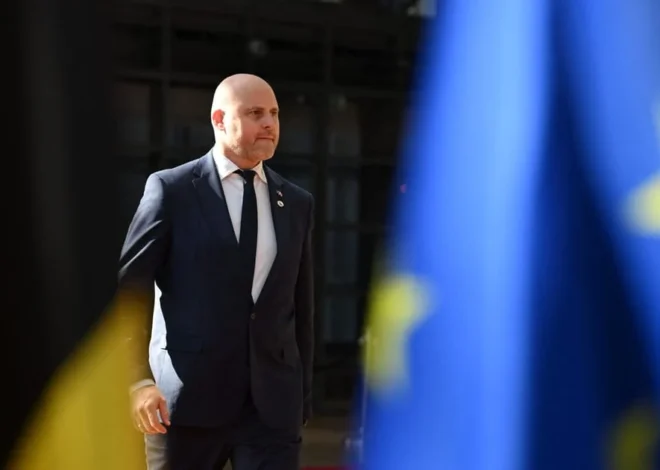
Britain’s Brexit Minister Nick Thomas-Symonds axed in reshuffle
The Evolution of the Border Stalemate
The status of Gibraltar has been a point of contention since the 1713 Treaty of Utrecht, but the stakes shifted dramatically following the 2016 Brexit referendum. Because Gibraltar is a British Overseas Territory, it was excluded from the initial EU-UK Withdrawal Agreement, leaving it in a state of precarious uncertainty. For years, the border at La Línea de la Concepción remained a potential flashpoint for trade disruption and personal inconvenience for the approximately 15,000 workers who cross the border daily from Spain to work in Gibraltar’s finance, gaming, and tourism sectors.
The path to this agreement involved grueling diplomatic sessions between London, Brussels, Madrid, and the Government of Gibraltar. The central challenge was how to integrate Gibraltar into the Schengen Area—the EU’s passport-free travel zone—without compromising the United Kingdom’s sovereignty over the territory. The eventual solution creates a "soft" border, utilizing modern technology and joint monitoring to ensure security while facilitating the free flow of goods and people.
Chronology of the Diplomatic Shift
The recent developments are the culmination of a long, iterative process:

- June 2016: Gibraltar votes overwhelmingly to remain in the EU (96 percent), creating immediate friction with the UK’s national decision to leave.
- December 2020: The UK and Spain reach an "in-principle" agreement on the framework for a treaty, preventing a "hard" border on January 1, 2021.
- 2021–2025: A series of technical talks occur, focusing on the use of the Gibraltar airport, police cooperation, and the specific terms of the Schengen implementation.
- July 2026: Finalizing the details, the UK and EU reach a definitive consensus, signaling a new chapter in post-Brexit cooperation.
Economic Implications and Data Insights
The economic stability of Gibraltar is intrinsically linked to its permeability with Spain. Gibraltar’s economy, valued at approximately £2.5 billion, relies heavily on its ability to act as a bridge between the UK and the European single market. Data indicates that nearly 70 percent of Gibraltar’s workforce resides in Spain. Without this open-border arrangement, the administrative burden of customs checks would have caused significant bottlenecks, likely triggering a contraction in the hospitality and gaming sectors, which account for roughly 25 percent of the territory’s GDP.
Furthermore, the integration into the Schengen framework is expected to boost tourism. By removing the requirement for physical passport stamping and extensive documentation at the frontier, the territory is better positioned to attract the millions of visitors who travel through the Andalusia region annually.
Starmer’s Domestic Challenges and the "Welcome Gifts"
While the Gibraltar breakthrough marks a foreign policy success, the new UK government led by Prime Minister Keir Starmer faces a complex domestic landscape. As Starmer settles into power, he has inherited several pressing issues that have been dubbed "welcome gifts" for his administration—a series of inherited headaches ranging from fiscal deficits to social policy mandates.
Among these is a looming defense spending crisis. Analysis suggests that the current budgetary trajectory leaves a significant gap in the Ministry of Defence’s ability to meet NATO commitments while simultaneously modernizing equipment. Furthermore, the administration is grappling with the implementation of a proposed ban on social media for teenagers, a policy that has sparked intense debate regarding the role of government in regulating digital spaces. These issues, alongside the ongoing necessity to stabilize trade relations with the EU, suggest that the new government is operating under immense pressure to deliver immediate, tangible results.

The Broader Context of UK-EU Relations
The resolution of the Gibraltar issue is emblematic of a broader, more pragmatic approach currently being adopted by the UK and the EU. Following the transition of power in London, there has been a palpable desire on both sides of the English Channel to move past the acrimony of the early post-Brexit years. British EU Minister Nick Thomas-Symonds recently traveled to Brussels to signal a commitment to maintaining momentum on critical agricultural and trade pacts.
This "speedy deal" approach is not just about Gibraltar; it is about preventing the erosion of existing trade linkages. The EU’s push for a streamlined framework reflects a recognition that supply chain disruptions are in no one’s interest. By focusing on sector-specific agreements, the UK government is attempting to "de-risk" its relationship with the EU, focusing on economic utility rather than political grandstanding.
Analysis: The Future of Sovereignty
The success of the Gibraltar agreement provides a blueprint for how the UK might manage other complex relationships with the EU. By decoupling the symbolic issue of sovereignty from the functional issue of border management, negotiators have found a way to maintain the status quo without surrendering political principles.
However, the implications are not entirely devoid of risk. Critics argue that allowing EU border agents to operate within a British territory—even under a joint framework—sets a precedent that could be scrutinized by those advocating for a more "hardline" approach to national borders. Conversely, proponents argue that this pragmatic arrangement is the only way to safeguard the livelihoods of the thousands of people who call the Gibraltar-Spain border region home.

Looking forward, the success of this agreement will be measured by its implementation. The transition to a frictionless border requires seamless data sharing between the UK and the European Border and Coast Guard Agency (Frontex). Any technical failure or perceived security breach could lead to a swift re-imposition of checks, highlighting the fragility of the current arrangement.
Official Responses and Stakeholder Sentiment
While official statements have been cautiously optimistic, the sentiment on the ground in Gibraltar is largely one of relief. Local business leaders have welcomed the end of years of uncertainty, noting that the ability to plan for the future is as valuable as the trade access itself. In Madrid, the government has emphasized the importance of a "zone of shared prosperity," viewing the border solution as a catalyst for regional development in the province of Cádiz, which has historically suffered from high unemployment.
In London, the focus remains on ensuring that these agreements do not infringe upon the "red lines" of sovereignty. The government has consistently maintained that no agreement would be signed that did not protect the constitutional integrity of the Rock. By framing the agreement as an administrative necessity rather than a political surrender, the administration has managed to neutralize potential dissent within its own ranks.
Conclusion
The transformation of the Gibraltar border into a symbolic line on a map marks a defining moment in the post-Brexit era. It illustrates that even after a contentious separation, pragmatic, functional cooperation remains possible. As the UK navigates its new reality, the lessons learned from the Gibraltar negotiations—prioritizing economic stability and cross-border mobility—will likely serve as the foundational principles for future diplomatic engagements with its European neighbors. Whether this spirit of cooperation can be scaled to broader trade and social policy remains the central question of the Starmer administration’s early tenure. For now, however, the residents of the Rock can look toward a future where the border is a bridge, rather than a barrier.