Lionel Messi’s World Cup Journey Concludes Amidst Spanish Triumph, Marking a Potential End to an Illustrious International Career.
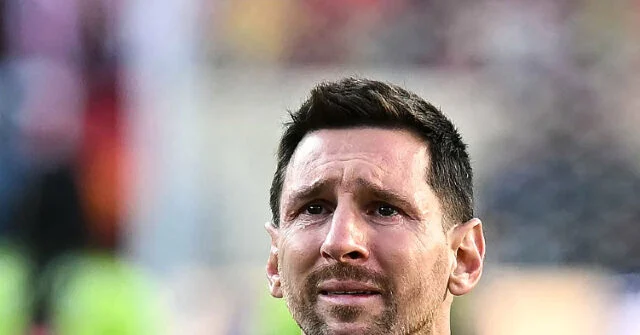
The final whistle echoed through the stadium, signaling not only the conclusion of the World Cup tournament but potentially the definitive end of one of international football’s most extraordinary careers. For Lionel Messi, the esteemed captain of Argentina, Sunday’s defeat against a formidable Spanish squad represented a poignant culmination, a moment where the elusive World Cup trophy once again slipped from his grasp, casting a long shadow over an otherwise unparalleled professional journey. The image of Messi, visibly overcome with emotion, soaking in the adulation and sorrow of the Argentinian faithful, will undoubtedly become one of the defining photographs of this tournament, encapsulating the raw, unvarnished reality of sporting glory and heartbreak.
Argentina’s Perilous Path to the Final
Argentina’s progression through the World Cup was, by many accounts, a testament to resilience rather than dominance, a narrative woven with threads of narrow escapes and last-ditch heroics. Despite entering the tournament as defending champions and perennial favorites, the Albiceleste frequently found themselves in precarious positions, a stark contrast to their triumphant campaign in the preceding tournament.
Their group stage commenced with an unexpected challenge, requiring a late surge to secure victory against a well-organized Egyptian side in their opening fixture, a match that concluded with a hard-fought 2-1 scoreline. This initial stumble set a tone of apprehension, as subsequent matches against Cape Verde and England in the knockout rounds similarly demanded maximum effort. Against Cape Verde, a team lauded for its defensive fortitude, Argentina needed a dramatic extra-time goal to break the deadlock and advance, showcasing their fighting spirit but also exposing vulnerabilities. The quarter-final clash with England, a classic rivalry, was a tense affair decided by a penalty shootout after a 1-1 draw, with Argentina’s goalkeeper making crucial saves to keep their World Cup dream alive. These encounters, characterized by "miracle comebacks or white-knuckle defensive stands," underscored a reliance on individual brilliance and collective grit, rather than a consistent, commanding performance befitting a defending champion. Analysts frequently pointed to a perceived lack of fluid offensive synergy and occasional defensive lapses that forced Messi and his teammates into high-pressure scenarios, highlighting a tournament path that was anything but straightforward.
The Decisive Encounter: Spain’s Ascendancy
The final match against Spain, held on a sun-drenched Sunday afternoon, presented a different challenge entirely. Spain, under the guidance of a tactical maestro, showcased a brand of football characterized by relentless pressing, intricate passing, and clinical finishing. From the opening whistle, the Iberian squad asserted control, dictating the tempo and suffocating Argentina’s creative outlets. The Spanish midfield, marshaled by experienced veterans and invigorated by youthful dynamism, consistently disrupted Argentina’s attempts to build play from the back, denying Messi the space and service he typically thrives on.
The first goal arrived midway through the first half, a meticulously crafted sequence culminating in a precise finish that left the Argentinian defense scrambling. This early advantage further emboldened Spain, allowing them to play with confidence and execute their game plan with even greater precision. Argentina, accustomed to finding a way back into matches, found themselves increasingly frustrated. Their attempts to penetrate the Spanish defense were repeatedly thwarted, with the backline, anchored by the emerging talent of Pau Cubarsi, exhibiting remarkable discipline and anticipation. The statistics from the match painted a clear picture of Spanish dominance: Argentina failed to register a single shot on target throughout the entire 90 minutes, a statistic virtually unheard of for a team featuring a player of Messi’s caliber. Spain’s second goal, a testament to their fluid attacking play, effectively sealed the match in the second half, extinguishing any lingering hopes of an Argentinian comeback. The 2-0 scoreline, while not a blowout, reflected the comprehensive nature of Spain’s victory, a performance that was as clinical as it was captivating.
Messi’s Enduring Legacy: A Career Unparalleled
The post-match scenes were heavy with emotion, particularly for Messi. His face, a canvas of disappointment and profound sadness, captured the weight of a nation’s expectations and the personal quest for the sport’s ultimate prize. As the final serenade from the heartbroken yet appreciative Argentinian fans filled the air, a collective gasp seemed to emanate from the broadcast booth, with French World Cup champion Thierry Henry managing only a hushed "Wow." This single exclamation spoke volumes, acknowledging the magnitude of the moment and the unique standing of Messi in the pantheon of football greats.
Lionel Messi’s career statistics are staggering, a testament to his consistent brilliance over two decades. With seven Ballon d’Or awards, more than any other player in history, he has redefined individual excellence. His club career at Barcelona saw him amass 35 major trophies, including 10 La Liga titles and 4 UEFA Champions League crowns, scoring an astounding 672 goals in 778 appearances for the club. For Argentina, he holds the record for most caps and most goals, having scored over 100 international goals. His leadership culminated in the 2021 Copa América triumph, an emotional victory that broke a significant international trophy drought for his nation.
However, the World Cup has remained the singular, elusive jewel in his crown. This tournament marked his fifth World Cup appearance, a journey that began in 2006. He reached the final in 2014, only to lose to Germany in extra time. Despite winning the Golden Ball as the tournament’s best player in that edition, the ultimate team prize eluded him. This latest attempt, potentially his last at 37 years old, represented a final, valiant effort to etch his name onto the most coveted trophy in football. His "tour de force" performance record across all competitions solidifies his status as a generational talent, but the lack of a World Cup winner’s medal, for many, will remain the poignant asterisk in an otherwise perfect narrative.
Voices from the Broadcast Booth and Beyond
The immediate aftermath of the final saw an outpouring of commentary from football pundits, former players, and fans worldwide. Thierry Henry’s "Wow" was quickly followed by more extensive analysis from the broadcast crew, who collectively acknowledged the profound significance of witnessing what might be the final World Cup appearance of arguably the greatest player ever. Analysts spoke of the immense pressure Messi has carried throughout his career, particularly concerning the World Cup. "To see a player of his magnitude, with all his achievements, still feel such raw emotion over a single tournament, it underscores what this trophy means to him and to every footballer," remarked a seasoned commentator.
Argentinian coach Lionel Scaloni, while visibly dejected, offered words of praise for his captain. "Leo gave everything, as he always does. His commitment, his leadership, his sheer will to win for this country is unmatched," Scaloni stated in the post-match press conference. "We fell short, but his legacy is secure, regardless of this outcome. He is an inspiration to millions." Messages of support flooded social media from fellow athletes and celebrities, highlighting the global reverence for Messi. Even some Spanish players, in their moment of triumph, acknowledged the somber atmosphere surrounding Messi’s potential farewell. "He is a legend, and it’s tough to see him like this," commented a Spanish midfielder, "but this is football. You win some, you lose some." The fans who waited to cheer Messi off the field, despite their own heartbreak, demonstrated the deep, unconditional love and respect he commands, a bond forged over two decades of breathtaking football.
The Future Landscape: Argentina’s Crossroads and Spain’s New Dawn
Argentina’s future without Lionel Messi, or at least without his dominant presence, presents an undeniable crossroads. The team has heavily relied on his genius for over a decade, and his departure will necessitate a significant strategic recalibration. The Argentinian Football Association (AFA) will face the monumental task of transitioning from a Messi-centric squad to one that can compete at the highest level through collective strength and emerging talent. While players like Lautaro Martínez and Julián Álvarez have shown flashes of brilliance, the void left by Messi’s playmaking, goal-scoring, and leadership will be immense. The nation, accustomed to the presence of a footballing demigod, will need to foster a new generation of leaders and creative forces, a process that is often challenging and lengthy. Speculation has already begun about potential successors for the captaincy and the creative burden, signaling an uncertain, yet potentially transformative, period for Argentinian football.
In stark contrast, Spain celebrates its second World Cup title with a future that appears remarkably bright and assured. Their triumph is not merely a testament to current prowess but a powerful endorsement of their youth development system. The emergence of teenagers like Lamine Yamal and Pau Cubarsi, both of whom played pivotal roles in Spain’s successful campaign, signifies a robust pipeline of talent. Yamal, with his electrifying pace and dribbling ability, became one of the youngest players to feature in a World Cup final, while Cubarsi anchored the defense with a maturity far beyond his years. These young stars, alongside other burgeoning talents, suggest a sustainable period of competitiveness for La Roja. The Spanish model, emphasizing technical proficiency and tactical intelligence from an early age, appears to be yielding spectacular dividends, promising a sustained era of dominance on the international stage.
The Global Impact of a Generational Transition
The potential conclusion of Messi’s World Cup career, alongside the rise of a new Spanish generation, marks a significant generational transition in global football. For fans, it signifies the passing of an era, a moment to reflect on the unparalleled careers of legends like Messi and Cristiano Ronaldo, who have dominated the sport for nearly two decades. Their eventual full retirement from international play will leave a void that new stars, however brilliant, will struggle to fill in terms of sheer cultural impact and sustained excellence.
The implications extend beyond the pitch to the commercial and cultural landscape of football. Messi’s global appeal has been a massive draw for sponsorships, broadcasting rights, and fan engagement. The transition will challenge federations and leagues to cultivate new global icons capable of captivating audiences worldwide. Furthermore, the outcome of this World Cup reinforces the cyclical nature of international football, where power shifts and new narratives emerge. Argentina, a footballing superpower, must now confront its future without its brightest star, while Spain, having rebuilt and re-energized, looks poised to lead the sport into its next chapter. This tournament, therefore, is not just about a final result; it is a profound narrative of endings and beginnings, of legacies cemented, and of new eras dawning on the grandest stage of world football.

Related Posts

Democratic Candidates Must Moderate to Win General Elections, Says Rep. Greg Stanton

Lisa Demuth Secures Republican Gubernatorial Nomination in Minnesota, Defeating Trump-Endorsed Mike Lindell