
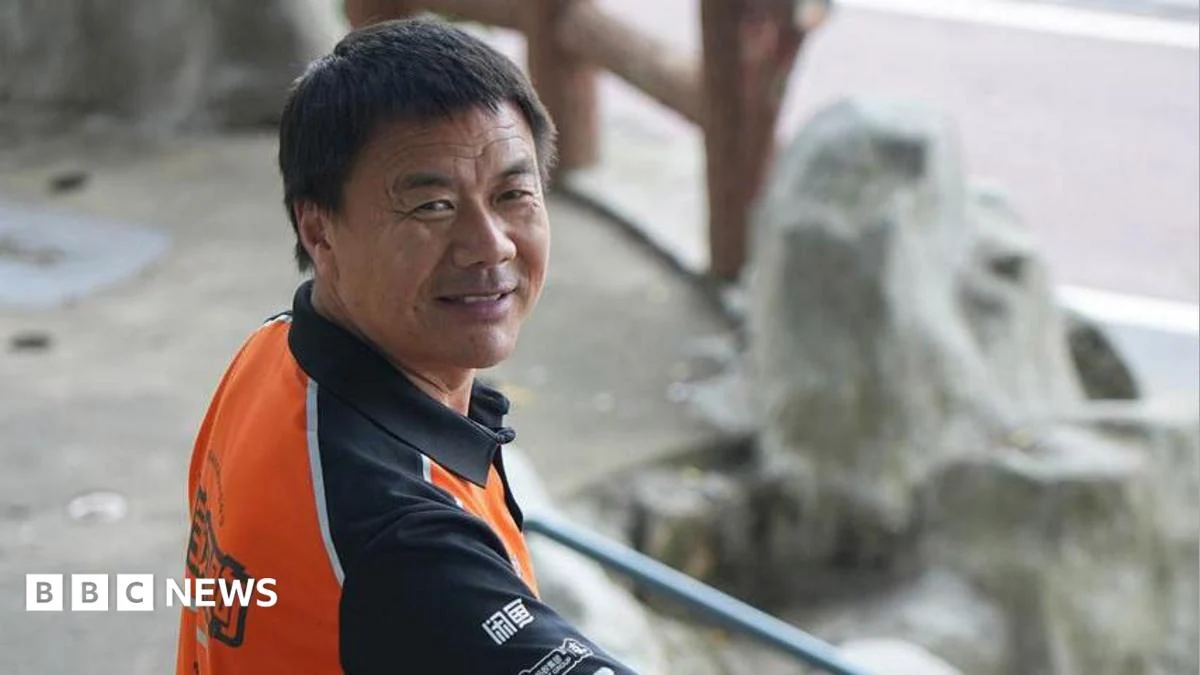
Wang Jibing, a Food Delivery Rider, Wins China’s Prestigious Lu Xun Literary Prize for Poems Penned Between Deliveries
A poignant collection of poems, many of which were spontaneously jotted down on slips of paper during the brief lulls between frantic food deliveries, has propelled Wang Jibing, a 56-year-old food delivery rider, to the pinnacle of Chinese literature, earning him one of the nation’s most coveted literary accolades: the Lu Xun Literary Prize. His winning collection, "Low Flight," deeply rooted in the daily trials and overlooked resilience of China’s vast gig economy workers, stands as a testament to the power of authentic voice and the unyielding spirit of creation amidst hardship. The prize, named after Lu Xun, widely revered as the father of modern Chinese literature, underscores a significant shift in the country’s literary landscape, increasingly recognizing narratives from the grassroots.
The Unlikely Laureate: From Odd Jobs to Literary Acclaim
Wang Jibing’s journey to literary stardom is one marked by perseverance against a backdrop of economic adversity. Born in Jiangsu province, his formal education was curtailed in his teenage years due to severe financial hardship at home. This early setback launched him into decades of various odd jobs, a common trajectory for many in China’s rapidly industrializing and urbanizing society. He toiled in construction, scoured for waste, and operated a street stall, embodying the definition of a blue-collar worker striving for survival. It was only around 2019, at the age of 52, that he transitioned into the demanding role of a food delivery rider, a profession that would paradoxically become the muse for his most celebrated works.
Despite the grueling nature of his work, Wang’s profound love for reading and literature never waned. Over the past decade, he cultivated a presence on social media platforms, sharing his poems and essays with a growing online audience. This digital forum proved crucial, allowing him to connect with readers and gain recognition outside traditional publishing channels. In 2022, one of his poems, "Man in a Hurry," resonated deeply with the public and went viral across the internet. The poem drew inspiration from a frustrating incident in 2019 where a customer’s incorrect address led him on a protracted and fruitless delivery, a common grievance among riders. The raw authenticity of his experiences struck a chord, turning him into an unexpected literary sensation. Building on this momentum, he published his first poetry collection, also titled "Man in a Hurry: Poems of a Food Delivery Rider," in 2023, solidifying his place as a voice for the marginalized.
"Low Flight": A Symphony of the Gig Economy
The collection that ultimately secured him the Lu Xun Literary Prize, "Low Flight," published in 2024, is not merely a chronicle of his personal struggles but a broader exploration of the gig economy experience. To enrich his work, Wang undertook extensive research, conducting interviews and surveys with approximately 200 fellow delivery riders. This meticulous approach allowed him to capture a kaleidoscopic view of their shared challenges, dreams, and resilience. The title itself, "Low Flight," encapsulates a central theme, as articulated in one of his verses: "Who says spreading your wings means flying high? Flying low is also flying." This line beautifully encapsulates the dignity and purpose found in humble, everyday labor, challenging conventional notions of success and ambition.
Wang’s reaction to winning the prestigious award was one of profound relief and a touch of trepidation. "I held my breath and felt extremely nervous… Once it was revealed, everything was settled," he recounted to the state media outlet Global Times on July 15, when the news broke. He also admitted that the sudden surge of media attention had generated considerable mental pressure, a common experience for those thrust into the public eye from obscurity.
The Lu Xun Literary Prize, while primarily an honour, also comes with a monetary award. Though the exact sum is not publicly announced for each recipient, reports from 2014 indicated it stood at 100,000 Chinese yuan (approximately $14,800 USD or £11,000 GBP at the time). While a significant sum, especially for someone who has faced financial struggles, Wang affirmed his intention to continue his work as a delivery rider until he reaches 60. "Financially I don’t need this job to make a living, but I love the vibe of the work and it keeps me fit," he stated, adding a resolute declaration: "I want a down-to-earth life and the award will never change who I am." This statement underscores his grounded perspective and commitment to the life that has so profoundly shaped his art.
The Lu Xun Literary Prize: A Beacon of Chinese Literature
The Lu Xun Literary Prize is one of China’s most significant literary awards, established in 1986 by the Chinese Writers Association. It is presented every three years and recognizes outstanding literary works across various categories, including novels, novellas, short stories, reportage literature, poetry, essays, literary criticism, and translations. Its namesake, Lu Xun (1881-1936), is a towering figure in Chinese literature and intellectual thought. Often hailed as the "father of modern Chinese literature," Lu Xun was a master of satirical novels and short stories, which he wielded to critique traditional Chinese society, feudalism, and national character. His seminal works like "The True Story of Ah Q" and "Diary of a Madman" are foundational texts in Chinese literary curricula and continue to resonate deeply with contemporary audiences.
The enduring relevance of Lu Xun’s work was recently highlighted when Kong Yiji, a character from his short story "Kong Yiji," became a poignant meme symbolising the disillusionment among Chinese youth struggling to find stable employment. This resurgence of interest in Lu Xun’s social commentary suggests a contemporary yearning for voices that articulate societal anxieties and pressures, making Wang Jibing’s win for "Low Flight" particularly resonant with the spirit of the prize’s namesake. The prize traditionally celebrates works that demonstrate both artistic merit and a keen engagement with contemporary social realities, criteria Wang’s poetry unequivocally meets.
China’s Gig Economy: A Harsh Muse for a New Generation of Writers
Wang Jibing’s win comes amidst the backdrop of China’s colossal and rapidly expanding gig economy, which has become a defining feature of its modern labor market. Platforms like Meituan, Ele.me, and Didi have created millions of jobs, particularly for migrant workers and those seeking flexible employment. Estimates suggest that China’s gig economy employs upwards of 200 million people, a staggering figure that underscores its societal impact. Food delivery riders alone number in the tens of millions, forming a vast, often unseen, army that keeps urban life functioning.
However, this convenience comes at a significant cost for the workers. Gig economy jobs are frequently characterized by intense pressure, long hours, low pay relative to the cost of living in major cities, precarious employment conditions, and a lack of social security benefits. Algorithms dictate routes and delivery times, often pushing riders to their physical and mental limits. Reports by organizations like the China Labour Bulletin have highlighted issues such as wage disputes, lack of insurance, and the psychological toll of constant surveillance and tight deadlines. It is precisely these daily struggles—the race against the clock, the challenging weather conditions, the occasional customer frustration, and the camaraderie among fellow riders—that form the fertile ground for Wang Jibing’s poetry. His work provides an intimate, first-person perspective that quantitative data often fails to capture, giving voice to a demographic that is critical to China’s economic machinery yet often culturally marginalized.
A Growing Literary Trend: Voices from the Grassroots
Wang Jibing is not an isolated phenomenon but rather a prominent figure in a burgeoning literary movement in China, where blue-collar workers are increasingly making their mark in the literary world. This trend signifies a democratization of literature, enabled by social media and a growing appetite for authentic narratives that reflect the diverse realities of contemporary Chinese society.
One notable example is Hu Anyan, a former courier whose 2023 memoir, "I Deliver Parcels in Beijing," became a runaway bestseller in China and garnered significant media attention internationally. The book, translated into English last year, offered a raw and unfiltered account of life as a parcel deliveryman in the bustling capital, exposing the physical demands, emotional toll, and surprising moments of human connection inherent in the job. Hu’s success demonstrated a clear public hunger for narratives that illuminate the lives of ordinary people contributing to the nation’s economic engine.
Another seminal work in this genre is "I Am Fan Yusu," an autobiographical essay penned by a migrant worker that swept the Chinese internet in 2017. Fan Yusu’s candid and eloquent portrayal of her personal struggles, her journey from rural village to urban centers, and her experiences with poverty and discrimination, resonated so profoundly that the response was overwhelming. Fan herself had to temporarily leave her home to escape the relentless media requests, a testament to the essay’s immense social impact.
These works, including Wang Jibing’s, share common threads: they are often autobiographical or semi-autobiographical, written in a direct and accessible style, and focus on themes of labor, migration, social inequality, and the search for dignity and meaning in challenging circumstances. They challenge the traditional literary canon, which has historically been dominated by more academic or elite voices, by introducing a vibrant, unvarnished perspective from the ground up. This literary movement not only enriches Chinese literature with new themes and styles but also serves as a crucial form of social commentary, fostering greater empathy and understanding across different segments of society.
Broader Societal and Cultural Implications
Wang Jibing’s win carries significant implications for Chinese society and its cultural landscape. Firstly, it elevates the status and visibility of gig economy workers, acknowledging their invaluable contributions and the complexities of their lives. By transforming their daily grind into award-winning art, Wang has humanized a demographic often viewed merely as cogs in a logistical machine. This recognition can foster greater societal empathy and potentially spur discussions about improving working conditions and social protections for these essential laborers.
Secondly, his success, alongside that of Hu Anyan and Fan Yusu, solidifies the importance of "grassroots literature" as a legitimate and powerful genre within Chinese letters. It signals to aspiring writers from all walks of life that their stories, no matter how humble their origins, possess intrinsic value and the potential for national, and even international, recognition. This can lead to a more diverse and representative literary output, moving beyond established narratives and embracing a wider spectrum of human experience.
Thirdly, the role of social media in facilitating this literary phenomenon cannot be overstated. Platforms like WeChat and Weibo have provided an accessible, low-barrier entry point for individuals like Wang Jibing to share their work, build an audience, and gain critical traction, bypassing traditional gatekeepers of publishing. This digital democratization of literature is reshaping how literary talent is discovered and nurtured in China.
Finally, Wang Jibing’s steadfast commitment to his "down-to-earth life" despite his newfound fame serves as a powerful message. It reinforces the idea that true artistic integrity can exist independently of commercial success or societal expectations. His choice to continue working as a delivery rider, not out of financial necessity but out of a love for the "vibe" and a desire to stay grounded, embodies the very essence of the "low flight" he so eloquently describes in his poetry. It suggests that the authenticity of experience is not something to be shed once success is achieved, but rather a wellspring to be continually drawn from.
In conclusion, Wang Jibing’s triumph is more than just an individual success story; it is a symbolic victory for millions of blue-collar workers in China and a testament to the enduring power of literature to illuminate overlooked lives. His poems, born from the pressures of the gig economy and scribbled on scraps of paper between deliveries, have flown low, yet soared high, forever etching his name into the annals of Chinese literary history and inspiring a nation to look closer at the unsung heroes who keep its wheels turning.

Related Posts
Zambia on Edge: Opposition Leader Arrested Amid Allegations of Insurrection Plot and Election Tensions

Rescuers search for survivors of powerful Indonesia earthquake

