UN Loss and Damage Fund Defers Initial Project Approvals Amidst Massive Funding Gap and Growing Climate Crisis Demands
The board of the United Nations’ fledgling Fund for Responding to Loss and Damage (FRLD) concluded its high-stakes meeting in Manila this week with a decision to postpone the approval of its inaugural suite of climate relief projects until December. This move confounded widespread expectations among international observers and climate advocates who had anticipated the backing of an initial set of four pilot proposals during the three-day summit in the Philippine capital. The deferral highlights the complex administrative and financial hurdles facing the fund as it attempts to transition from a conceptual victory of international diplomacy to a functional lifeline for the world’s most climate-vulnerable populations.
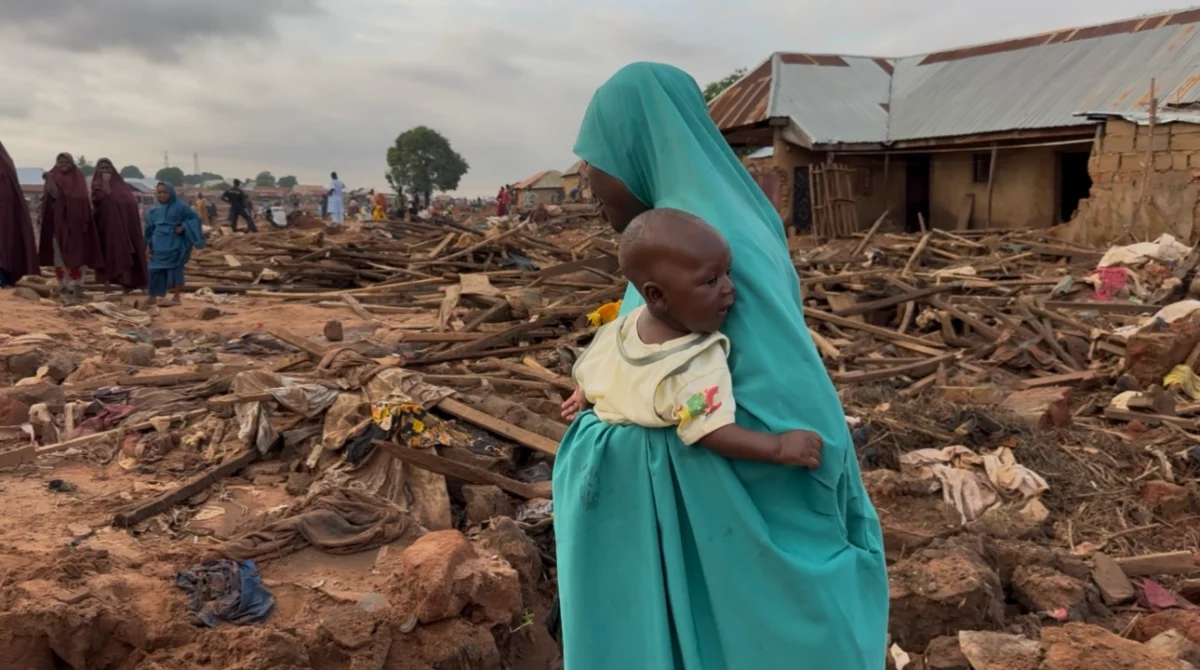
The FRLD, which was formally established to provide financial assistance to developing nations suffering from the irreversible impacts of climate change, currently faces a staggering disparity between its available liquidity and the global demand for assistance. According to internal reports and board discussions, the fund’s first call for proposals yielded nearly 180 submissions from across the globe, with a cumulative funding requirement of approximately $2.8 billion. In stark contrast, the fund currently holds only $250 million in ready-to-allocate capital. While the board reached a consensus on Friday to release an additional $100 million in response to the overwhelming volume of requests, the total available pool of $350 million remains a fraction of what is necessary to address the applications already on the table.
The Manila Meeting: Deliberations Behind Closed Doors
The three-day board meeting in Manila was characterized by a high degree of opacity, much to the chagrin of civil society organizations and climate justice advocates. A significant portion of the deliberations took place in executive sessions, closed to the public and the media. This lack of transparency made it difficult for external experts to monitor the specific criteria being used to evaluate projects or to understand the nuances of the disagreements that led to the postponement of the first funding package.
Observers present at the venue reported that draft decisions were frequently projected on screens for board members to review, with final versions only being solidified and adopted in the closing hours of the meeting on Friday. This process has sparked concerns regarding the accountability of the fund’s governance structure. For many in the Global South, the FRLD represents a hard-won acknowledgment of historical responsibility by industrialized nations; consequently, any perceived lack of transparency in how funds are prioritized is met with significant scrutiny.
During the closing session, the atmosphere was one of palpable frustration. Government board members representing climate-vulnerable regions, alongside civil society observers, voiced their disappointment over the widening chasm between the accelerating pace of climate-induced disasters and the slow, underfunded response of the international community. The sentiment echoed a broader critique of global climate finance: that the mechanisms designed to help are often too small, too slow, and too mired in bureaucracy to meet the urgency of the moment.
Chronology of the Fund for Responding to Loss and Damage
The road to the Manila meeting has been a long and contentious one, spanning decades of climate negotiations. Understanding the current dilemma requires a look at the timeline of the fund’s development:
- 1991: The Alliance of Small Island States (AOSIS) first proposes a mechanism to compensate countries for the impacts of sea-level rise.
- November 2022 (COP27): In a historic breakthrough in Sharm El-Sheikh, Egypt, parties agree to establish a Loss and Damage fund after intense pressure from the G77 and China.
- 2023: A Transitional Committee meets throughout the year to design the fund’s operational framework, facing significant friction between developed and developing nations over the fund’s host and its independence.
- November 2023 (COP28): The fund is officially operationalized in Dubai. Initial pledges are made by several countries, including the UAE, Germany, the UK, the US, and Japan, totaling roughly $700 million.
- July 2024: The Philippines is selected as the host country for the FRLD Board, providing a symbolic and strategic base in one of the world’s most disaster-prone regions.
- September 2024: The Manila meeting concludes with the decision to delay the first project approvals to December 2024, citing the need for more rigorous selection processes amidst a massive funding shortfall.
Data Analysis: The Fiscal Disparity and the "Substantial Dilemma"
The data emerging from the first call for proposals paints a grim picture of the global climate reality. The 180 submissions received by the fund cover a wide array of crises, ranging from the slow-onset effects of desertification and ocean acidification to the immediate devastation caused by "super-storms" and catastrophic flooding.
The $2.8 billion requested represents only a sliver of the actual economic loss and damage occurring annually. Recent studies suggest that by 2030, the economic cost of loss and damage in developing countries could range between $290 billion and $580 billion per year. Against these figures, the $350 million currently earmarked by the FRLD board appears almost symbolic.
The "substantial dilemma" mentioned by board members involves the methodology of prioritization. With funds sufficient to cover only about 12% of the requested amount, the board must decide whether to:
- Distribute small grants widely: Spreading the $350 million across dozens of projects to provide limited relief to many.
- Concentrate on high-impact pilot projects: Fully funding a small number of initiatives to demonstrate the fund’s efficacy and establish a "proof of concept" for future donors.
- Prioritize specific vulnerabilities: Focusing exclusively on Least Developed Countries (LDCs) and Small Island Developing States (SIDS), potentially excluding middle-income nations that also face extreme climate risks.
Stakeholder Reactions and Official Perspectives
The reactions to the Manila outcomes have been mixed, reflecting the divided interests of the international community. Representatives from developed nations, who are the primary donors to the fund, have emphasized the need for "robust fiduciary standards" and "clear monitoring and evaluation frameworks" before money is disbursed. For these stakeholders, the December delay is a necessary step to ensure that the World Bank—the interim host of the fund—can guarantee the integrity of the financial flows.
Conversely, representatives from the Global South have expressed a sense of "betrayal by bureaucracy." A spokesperson for a coalition of Pacific Island nations remarked that while the board debates "frameworks" and "modalities," coastal communities are losing ancestral lands to the rising tide. The frustration is compounded by the fact that the $700 million initially pledged at COP28 has not yet been fully realized in the fund’s bank accounts, as many nations are still navigating their domestic legislative processes to release the promised capital.
Civil society groups present in Manila, such as ActionAid and Climate Action Network, have called for a radical increase in "new and additional" finance. They argue that the current funding model, which relies on voluntary contributions from wealthy nations, is inherently unstable and insufficient. They advocate for innovative sources of finance, such as taxes on fossil fuel profits or global shipping levies, to provide the FRLD with a predictable and substantial revenue stream.
Broader Implications for Global Climate Diplomacy
The delay in project approvals has significant implications for the upcoming COP29 climate summit in Baku, Azerbaijan. Loss and damage was expected to be a cornerstone of the negotiations in Baku, particularly regarding the New Collective Quantified Goal (NCQG) on climate finance. The inability of the FRLD to show tangible results before December may weaken the bargaining position of developing nations who are calling for trillions in climate finance.
Furthermore, the operational challenges of the FRLD serve as a cautionary tale for other international climate mechanisms. It highlights the difficulty of scaling up financial institutions in real-time as the climate crisis accelerates. The "overwhelming demand" noted by the board is a clear indicator that the world has entered an era where the costs of climate inaction are beginning to manifest in ways that outpace the global financial system’s ability to respond.
The decision to release an additional $100 million is a positive gesture, but it does little to solve the structural problem of undercapitalization. As the board prepares for its December meeting, the pressure will be on to not only approve the first set of projects but also to secure firm commitments for a second round of replenishment.
Future Outlook: The Road to December and Beyond
As the FRLD board looks toward its next gathering in December, the primary objective will be to finalize the selection of the four initial proposals that were bypassed in Manila. These projects are expected to serve as the template for how the fund will operate in the years to come. Whether they focus on rebuilding infrastructure in the Caribbean, implementing early warning systems in Sub-Saharan Africa, or providing social safety nets for displaced communities in South Asia, their success or failure will define the fund’s reputation.
The international community will also be watching closely to see if the fund can improve its transparency. The "closed-door" nature of the Manila meeting has created a trust deficit that must be addressed if the FRLD is to maintain its legitimacy. Ensuring that local communities and indigenous groups have a seat at the table—and a say in how the money is spent—will be crucial.
In the final analysis, the Fund for Responding to Loss and Damage is currently a vehicle with a massive engine but very little fuel. The $2.8 billion in applications sitting on the board’s desk is a testament to a world in distress. Until the global community matches its diplomatic rhetoric with the necessary capital, the FRLD will remain a symbol of what is possible, rather than a provider of what is required. The December meeting will be the true litmus test of whether the world is ready to pay the price for the climate crisis it has created.

Related Posts
Constitutional Court of South Africa Bars Shell Oil Exploration in Landmark Victory for Environmental and Community Rights
The Battle for Saldanha Bay: South Africa’s Ambitious Ocean Economy Strategy Faces Legal and Environmental Reckoning