Saronic Unveils Port Alpha A Three Billion Dollar Autonomous Shipyard to Revitalize American Maritime Power in Brownsville Texas
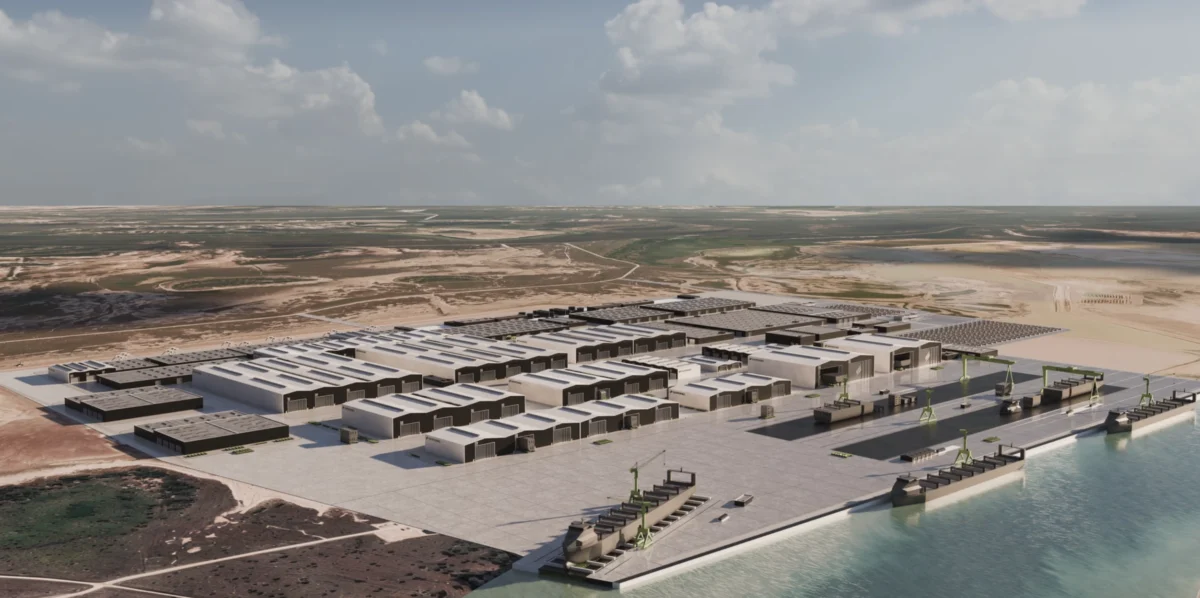
In a move that signals a paradigm shift in the American defense industrial base, autonomous maritime technology leader Saronic has officially selected the Port of Brownsville, Texas, as the site for its landmark "Port Alpha" shipyard. Described by the company as the most technologically advanced shipbuilding facility in the world, the project represents a capital investment exceeding $3 billion and aims to address the critical shortfall in U.S. naval production capacity through high-tech automation and modular construction techniques.
The announcement marks a significant escalation in Saronic’s operations, transitioning the company from a manufacturer of specialized drone boats to a major player in the production of large-scale naval vessels. Port Alpha is designed to integrate robotics, artificial intelligence, and advanced manufacturing at a scale previously unseen in the maritime sector, positioning Texas as a central hub for the next generation of American sea power.
Technical Specifications and Site Development
The selection of the Port of Brownsville follows an intensive multi-state search that included competing bids from established maritime hubs in Virginia and California. Saronic ultimately secured an initial 835-acre site in Cameron County, with an option to expand the footprint to nearly 4,400 acres as production demands increase.
According to technical briefings provided by the company, Port Alpha will initially be capable of constructing vessels up to 850 feet in length—comparable to the U.S. Navy’s Wasp-class amphibious assault ships. However, the facility’s long-term design includes provisions for dry docks and assembly lines capable of supporting vessels exceeding 1,200 feet, which would put the yard in the rare category of facilities capable of servicing or building supercarriers and massive logistics ships.
Construction is scheduled to break ground before the end of the current calendar year, with a projected operational date in 2028. Unlike traditional shipyards that rely heavily on manual labor for hull fabrication, Port Alpha will utilize a "digital-first" architecture. This includes the use of autonomous welding systems, 3D-printed components for internal structures, and a software-defined assembly process that allows for rapid design iterations—a necessity in the fast-evolving landscape of electronic warfare and autonomous navigation.
Combat Validation: The Rise of the Corsair
The timing of the Port Alpha announcement follows a string of high-profile operational successes for Saronic’s flagship product, the Corsair autonomous surface vessel (USV). These events have served as a "proof of concept" for the company’s technology in contested environments.
On July 12, three Corsair units were involved in a precision strike against the Bandar Abbas naval base in Iran. U.S. Central Command (CENTCOM) identified this as the first instance of American forces utilizing unmanned surface vessels in a direct combat role. The mission demonstrated the Corsair’s ability to penetrate sophisticated coastal defenses and deliver kinetic effects without risking human operators.
This combat debut followed a humanitarian and search-and-rescue milestone in June. A Navy-operated Corsair was instrumental in the rescue of two Army aviators after their AH-64 Apache helicopter went down near the Strait of Hormuz. The USV was able to reach the crash site faster than manned surface assets, providing real-time telemetry to recovery teams. These dual-use capabilities—both lethal and life-saving—have solidified Saronic’s standing with Department of Defense (DoD) procurement officers, leading to a $392 million production contract awarded in December.
A Strategic Timeline: From Austin Startup to Industrial Giant
Saronic’s trajectory reflects the rapid acceleration of the "attritable" systems market—low-cost, high-volume autonomous platforms designed to augment traditional fleets.
- 2022: Saronic is founded in Austin, Texas, with a focus on high-performance autonomous surface vessels.
- December 2024: The U.S. Navy awards Saronic a $392 million contract for the mass production of the 24-foot Corsair USV.
- February 2025: Saronic unveils the conceptual framework for Port Alpha, an "autonomous shipyard" intended to scale USV technology to larger hulls.
- April 2025: President Donald Trump issues an executive order on "Restoring America’s Maritime Dominance," prioritizing domestic shipbuilding and the integration of AI in naval architecture.
- June 2026: A Corsair USV completes a first-of-its-kind rescue mission in the Strait of Hormuz.
- July 12, 2026: Corsair USVs participate in the strike on Bandar Abbas, Iran.
- July 16, 2026: Saronic officially names Brownsville, Texas, as the home for Port Alpha.
Economic Impact and Local Incentives
The scale of the investment has drawn significant attention from state and local officials. Texas Governor Greg Abbott, speaking from Saronic’s headquarters in Austin, characterized the project as a "game-changer" for the state’s economy. The project is projected to create up to 10,000 direct jobs over the next decade, ranging from high-precision welding and machining to software engineering and naval architecture.

The economic forecasts associated with Port Alpha are substantial:
- Total Economic Impact (Texas): $264.5 billion.
- Total Economic Impact (Cameron County): $160 billion.
- Annual Wage Contribution: Approximately $750 million at full build-out.
To secure the project, the State of Texas provided an $80 million grant through the Texas Enterprise Fund. Locally, Cameron County commissioners approved a 95% tax abatement for the project spanning approximately 20 years. However, this agreement includes strict "clawback" provisions: Saronic is required to fill at least 35% of its workforce with local residents. Failure to meet these hiring targets will result in a proportional reduction of the tax incentives.
Local Opposition and Public Discourse
Despite the projected economic benefits, the deal has faced scrutiny within the Brownsville community. During the public comment phase, at least 40 residents and activists submitted statements opposing the tax abatements. Critics questioned why a company with a private valuation of $9.25 billion required such significant taxpayer-funded incentives.
Concerns were also raised regarding the environmental impact on the sensitive coastal ecosystem surrounding the Port of Brownsville. In response, Saronic CEO Dino Mavrookas emphasized that Port Alpha would be a "clean" facility, utilizing electric-powered logistics and advanced waste-management systems that exceed current maritime industrial standards. The June 16 vote to approve the incentives passed only after two delays and hours of heated public testimony, highlighting the tension between rapid industrialization and local community preservation.
Geopolitical Context: The Race Against China
The development of Port Alpha is inextricably linked to a broader federal effort to close the gap between U.S. and Chinese shipbuilding capacities. Currently, China possesses the world’s largest navy by ship count and controls nearly 50% of the global commercial shipbuilding market. In contrast, the U.S. share of global commercial shipbuilding has plummeted to less than 1% over the last several decades.
The SHIPS for America Act and the 2025 Maritime Action Plan are designed to reverse this trend by incentivizing private capital to rebuild domestic yards. Mavrookas stated that Port Alpha was designed specifically to deliver ships at a "speed and scale not seen since World War II," leveraging automation to bypass the labor shortages that have plagued traditional yards like those in Newport News or Bath Iron Works.
"America’s maritime future depends on our ability to build again," Mavrookas said. "We are moving into an era where the quantity of hulls matters as much as the quality of the technology. Port Alpha is our answer to that challenge."
Analysis: The Future of Large-Scale Autonomy
While Saronic’s current successes are rooted in smaller vessels like the Corsair and the 180-foot Marauder (produced at its Franklin, Louisiana site), Port Alpha signals an ambition to "unman" the entire fleet. Mavrookas noted that while the large ships produced in Brownsville might not be fully autonomous on "day one," the facility is being built to support a transition where even 800-foot vessels can operate with minimal or zero crew.
The strategic implications are profound. Unmanned large-scale vessels could serve as "motherships" for smaller drone swarms, autonomous fuel tankers for long-range missions, or mobile missile magazines that can stay at sea for months without the logistical burden of supporting a human crew.
Saronic is currently one of seven companies competing for the U.S. Navy’s Medium Unmanned Surface Vessel (MUSV) contract. At-sea testing for these prototypes is scheduled to continue through October. The results of these tests, combined with the groundbreaking at Port Alpha, will likely determine the trajectory of U.S. naval doctrine for the mid-21st century.
By combining the venture-capital-backed agility of a tech startup with the industrial scale of a traditional defense prime, Saronic is attempting a feat that has eluded the maritime industry for decades: the successful modernization of the American shipyard. If Port Alpha meets its 2028 operational goals, the Port of Brownsville will not just be a site of local economic growth, but the literal birthplace of a new era in global maritime dominance.

Related Posts
Pentagon Forges Landmark Seven-Year Agreements with Boeing and RTX to Accelerate Standard Missile-3 Production and Stabilize Defense Supply Chains
Boeing Unveils Ultra Low-Cost Seeker to Enhance Missile Inventory and Combat Cost Challenges in Modern Warfare