Ukraine’s Hunger Paradox: Humanitarian Convoys Race Against Russian Drones in the Breadbasket of the World
In the vast, sun-drenched fields of Ukraine, the land continues to produce massive quantities of wheat, corn, and sunflower oil, yet the very people living in the shadow of the front lines are increasingly severed from these resources. As the war of attrition enters a grueling phase in mid-2026, the irony of the situation is stark: Ukraine remains a cornerstone of global food security, exporting tens of millions of tons to the Middle East, Africa, and Asia, while 700,000 of its own citizens rely on high-stakes, life-or-death logistics just to secure their daily bread.
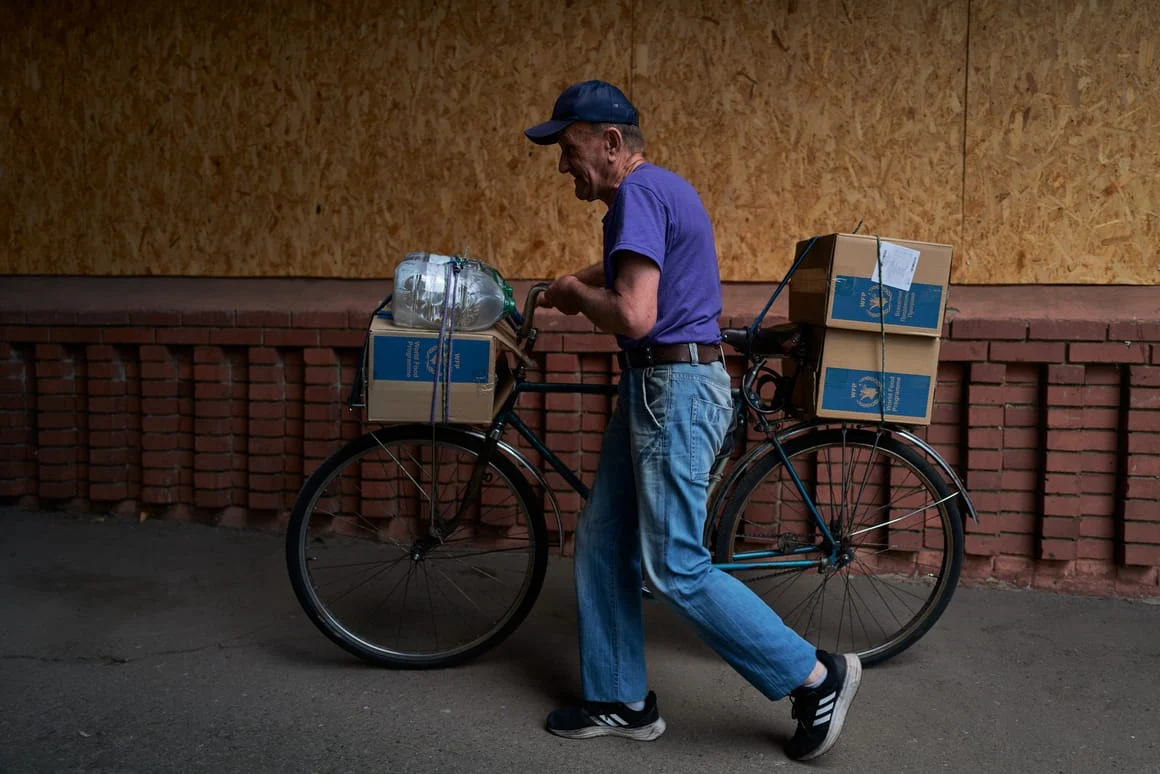
The delivery of essential supplies has transformed into a harrowing tactical operation. Humanitarian trucks, operated by the United Nations World Food Programme (WFP), now traverse regions shielded by improvised anti-drone netting—mesh structures draped over roads and residential rooftops to intercept lethal aerial threats. These convoys operate under a regime of extreme brevity; vehicles pause only for seconds to allow families to collect pre-packaged rations before speeding away to avoid becoming targets for the Russian drones that dominate the skies.
The Expanding Killing Zone
The operational environment for humanitarian aid in Ukraine has deteriorated rapidly over the first half of 2026. Carl Skau, the WFP’s acting chief, recently returned from a mission spanning from the industrial hubs of Kharkiv to the port city of Odesa, bringing with him a grim assessment of the security landscape.
According to WFP data, the "killing zone"—the range within which humanitarian vehicles are considered at high risk of direct drone strikes—has expanded significantly. Where aid workers previously operated with relative caution 10 to 15 kilometers from the front line, that danger zone has now surged to 50 kilometers. This tactical shift is corroborated by incident logs; in a single day of operations in the Donetsk region, authorities recorded 1,400 separate drone incidents.
This escalation is not merely statistical; it is reshaping the demography of eastern Ukraine. June 2026 was documented by U.N. human rights monitors as the deadliest month for Ukrainian civilians since the early days of the full-scale invasion in April 2022. With at least 293 deaths and nearly 2,000 injuries, the data highlights a brutal reality: the reach of short-range, tactical drones has made mundane activities—shopping, walking pets, or even waiting for aid—a lethal gamble.
A Chronology of Escalating Risk
The deterioration of humanitarian access has been incremental but steady since the conflict intensified in early 2022.
- Pre-2022: The WFP operated in Ukraine primarily as a major purchaser, buying Ukrainian grain to supply its global hunger-relief programs.
- Early 2022: Following the full-scale invasion, the WFP pivoted to an emergency relief model, scaling up to feed over one million people displaced or trapped by the conflict.
- 2025: The organization faced increasing logistical friction as regional infrastructure became a primary target of strategic bombing campaigns.
- May 2026: A precision-guided missile struck a primary WFP warehouse in Dnipro. Despite the building being clearly marked with humanitarian insignias—including visible rooftop markings—the facility sustained significant damage.
- July 2026: WFP reports that the number of attacks and near-misses on its operations during the first six months of this year alone has already eclipsed the total number of incidents recorded throughout the entirety of 2025.
The Human Toll of Displacement
For the civilian population, the tightening of the noose around front-line communities has forced a painful choice between survival and displacement. At transit centers near Sloviansk, the faces of those leaving are often etched with the trauma of prolonged exposure to the conflict. Skau recounts meeting a 90-year-old woman and her daughter, who had spent years refusing to abandon their home, only to be pulled from the wreckage of their house following a strike.

Such stories are becoming common as the "front-line fatigue" finally gives way to the necessity of flight. The psychological impact of being "hunted" by drones, as described by evacuees, has eroded the resilience of even the most determined residents. For those who remain, the WFP has had to adapt its strategy, moving beyond simple food delivery to a dual-pronged approach of direct food aid and cash assistance. In areas where local markets have been destroyed or shuttered, the WFP delivers sustenance; in areas where goods exist but the banking infrastructure has collapsed, they provide cash to enable residents to survive.
Economic and Logistical Challenges
The economic paradox facing Ukraine is profound. While the agricultural sector remains a global powerhouse, the local supply chain has essentially snapped in the east. The WFP currently sources a significant portion of its aid from local Ukrainian farmers—a practice that helps sustain the domestic agricultural economy and provides meals for children in "bunker schools," such as those operating within the Kharkiv metro system.
However, the sustainability of this model is under threat from two directions: security and funding.
Financial constraints have forced the WFP to reduce its caseload from over one million beneficiaries to approximately 700,000, with projections suggesting this could shrink to 600,000 by late autumn. The organization has issued an urgent appeal for $234 million to maintain operations through October 2026. The 350,000 individuals removed from the aid lists were not self-sufficient; rather, they are part of a growing class of vulnerable citizens falling through the cracks of a shrinking humanitarian safety net.
Implications and Official Stance
When pressed on whether the increased frequency of strikes on aid infrastructure reflects a deliberate policy of targeting humanitarian workers, officials like Skau remain cautious, emphasizing the data over political attribution. "We can just say that the number of incidents is dramatically increasing," Skau stated during his briefing in Brussels. "We’re determined to continue to deliver and to stay, but I need to be responsible for the security of our staff, and right now it’s getting increasingly dicey."
The implications of this trend are grave. If humanitarian organizations are forced to withdraw or drastically reduce their footprint, the burden of care will fall on local authorities and civil society groups, which are already stretched to their breaking point. Furthermore, the inability to guarantee the safety of aid convoys complicates the broader diplomatic push to maintain civilian stability in contested zones.
As the conflict stretches into the second half of 2026, the international community faces a difficult reckoning. The WFP’s primary objective remains returning to its pre-war role: being a customer of Ukrainian grain rather than a provider of emergency relief. Yet, until the kinetic intensity of the conflict subsides and the skies over the Donbas are no longer dominated by prowling drones, the organization finds itself in the uncomfortable position of being both a lifeline and a target in a region that feeds the world but cannot feed itself.