International Seabed Authority Asserts Global Governance as The Metals Company Challenges Regulatory Oversight in Deep-Sea Mining Dispute
The International Seabed Authority (ISA) has moved to vigorously defend its mandate as the sole arbiter of mineral extraction in international waters, following a high-profile legal challenge by subsidiaries of The Metals Company (TMC). At the opening of the ISA’s annual assembly in Kingston, Jamaica, newly appointed Secretary-General Leticia Carvalho delivered a forceful address, emphasizing that the deep ocean floor remains the "common heritage of humankind" and cannot be unilaterally claimed by corporate interests or individual nations. The confrontation marks a pivotal moment in the decade-long effort to establish a regulatory framework for deep-sea mining, as the industry nears a transition from exploration to active exploitation.
The legal friction began when two subsidiaries of the Canadian-headquartered TMC—Nauru Ocean Resources Inc. (NORI) and Tonga Offshore Mining Ltd (TOML)—initiated legal proceedings to halt an internal investigation into their conduct. While the specific details of the investigation remain confidential under ISA procedural rules, the move by TMC is widely viewed by observers as a preemptive strike against regulatory scrutiny. The tension is further exacerbated by TMC’s recent strategic pivot toward the United States, where the company has sought to secure mining permits under domestic frameworks proposed by the Trump administration, effectively attempting to bypass the United Nations-led process established under the United Nations Convention on the Law of the Sea (UNCLOS).
The Mandate of the International Seabed Authority
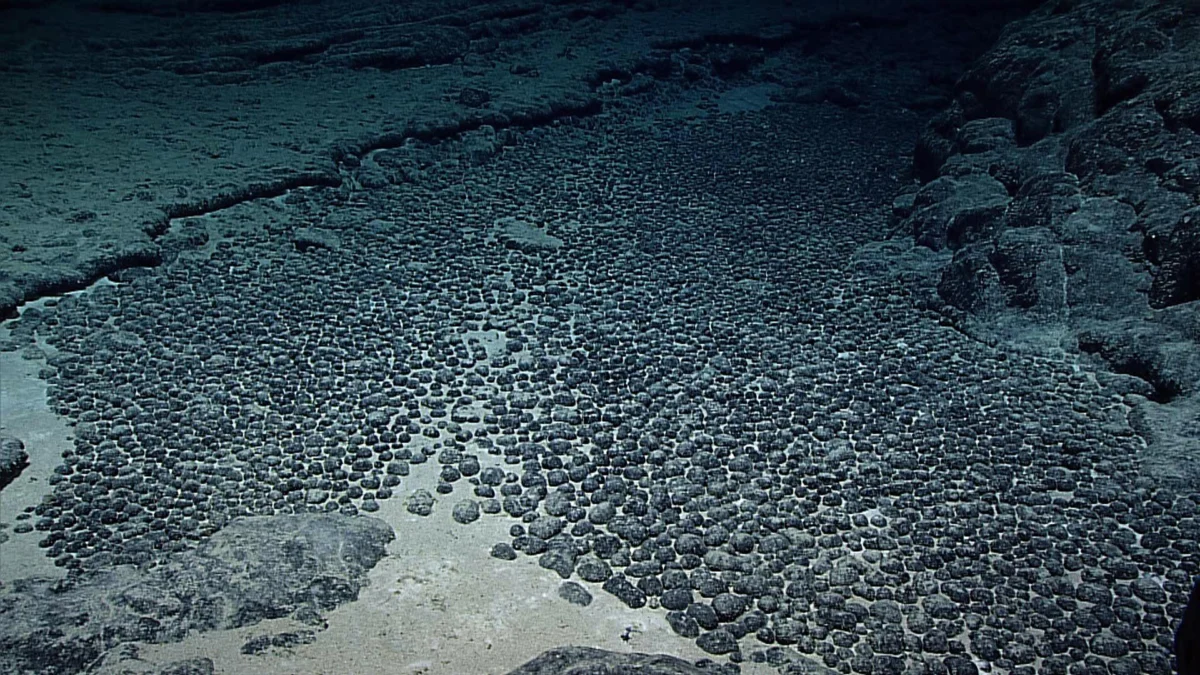
Established in 1994 under the 1982 UNCLOS, the ISA is tasked with organizing, regulating, and controlling all mineral-related activities in the international seabed area for the benefit of mankind as a whole. The "Area," which covers approximately 50% of the total area of the world’s oceans, contains vast deposits of polymetallic nodules, cobalt crusts, and seafloor massive sulfides.
Secretary-General Carvalho, who took office amid intensifying pressure from both pro-mining nations and environmental advocates, used her Monday address to reinforce the ISA’s central role. "The deep seabed belongs to no single country and no corporation; it belongs to all of us," Carvalho stated. She warned that the international community risks "repeating on the ocean floor the same injustices and destruction we still strive to remedy on land" if the governance framework is undermined by private litigation or national bypasses.
The ISA currently manages 31 exploration contracts involving 22 different countries. However, it has yet to finalize the "Mining Code," the comprehensive set of rules, regulations, and procedures required to regulate the transition from exploration to commercial exploitation.
Chronology of the Deep-Sea Mining Dispute
The current crisis is the culmination of several years of accelerating commercial pressure and legal maneuvering:
- June 2021: The Republic of Nauru, the sponsoring state for TMC’s subsidiary NORI, invoked a "two-year rule" found in a 1994 agreement related to UNCLOS. This provision required the ISA to finalize mining regulations within two years.
- July 2023: The two-year deadline passed without the adoption of a formal Mining Code. This created a legal "gray zone" where companies could technically submit applications for mining licenses, even in the absence of a completed regulatory framework.
- Early 2024: TMC began signaling its intent to move toward commercial production by 2025 or 2026, regardless of the status of the ISA’s final regulations.
- Late 2024: The Trump administration in the United States signaled support for domestic deep-sea mining initiatives, despite the U.S. not being a party to UNCLOS. This provided TMC with a potential alternative path to market.
- April 2025: TMC subsidiaries launched legal action against the ISA to block investigations into their operations, leading to the current standoff in Kingston.
The Role of The Metals Company and US Interests
The Metals Company has positioned itself as a leader in the race to secure minerals essential for the global energy transition. The company’s primary focus is the Clarion-Clipperton Zone (CCZ), an abyssal plain in the Pacific Ocean between Hawaii and Mexico. The CCZ is estimated to hold billions of polymetallic nodules containing high concentrations of nickel, manganese, cobalt, and copper—minerals required for electric vehicle (EV) batteries and renewable energy storage.
TMC’s strategy to seek U.S.-sponsored permits represents a significant challenge to the UN-led international order. Because the United States has never ratified UNCLOS, it does not officially recognize the ISA’s jurisdiction over the international seabed. By aligning with U.S. interests, TMC aims to tap into American concerns over mineral security and the dominance of China in the terrestrial mineral processing supply chain.
Industry analysts suggest that TMC’s legal challenge against the ISA investigation is a calculated move to protect its valuation and operational timeline. For a pre-revenue company like TMC, regulatory delays or negative findings from an investigation could be catastrophic for investor confidence.
Supporting Data: The Mineral Stakes
The urgency behind deep-sea mining is driven by data regarding the global "green" mineral demand. According to the International Energy Agency (IEA), the world will require a six-fold increase in mineral inputs by 2040 to reach net-zero emissions targets.
- Nickel: Demand is projected to grow by 19 times by 2040.
- Cobalt: Demand is projected to grow by 21 times in the same period.
- Manganese: Essential for steel production and increasingly for high-performance EV batteries.
The Clarion-Clipperton Zone contains more manganese, nickel, and cobalt than all known terrestrial deposits combined. TMC claims that harvesting these nodules from the seafloor results in 70% to 90% less CO2 equivalent emissions compared to traditional land-based mining, which often involves deforestation and significant waste (tailings) management issues.
However, marine biologists argue these statistics ignore the ecological "cost" of deep-sea mining. Research indicates that the deep sea is home to thousands of unique species, many of which are slow-growing and highly sensitive to the sediment plumes and noise generated by mining machinery.
Official Responses and Global Reactions
The legal action by TMC and the ISA’s firm stance have triggered a wave of reactions from member states and international organizations.
Environmental Advocacy Groups:
The Deep Sea Conservation Coalition and Greenpeace have called the legal action by TMC a "bullying tactic." Louisa Casson, a campaigner with Greenpeace, stated: "A private company is trying to sue its way out of accountability while attempting to bypass the only international body that has the legal right to manage the seabed. This is a direct assault on the rule of law at sea."
Sponsoring States:
The Republic of Nauru has remained supportive of TMC, emphasizing the economic benefits for small island developing states (SIDS). However, other Pacific nations, such as Vanuatu and Palau, have led a growing coalition calling for a "precautionary moratorium" on deep-sea mining until the environmental impacts are fully understood.
The "Moratorium" Coalition:
As of mid-2025, over 25 countries—including France, Germany, Canada, Chile, and Brazil—have officially supported a moratorium or a "precautionary pause." These nations argue that the ISA must prioritize environmental protection over commercial haste.
Implications for International Law and Governance
The outcome of this dispute will have profound implications for the future of international ocean governance. If TMC successfully bypasses the ISA or prevents the regulator from conducting oversight, it could set a precedent that renders UNCLOS largely toothless in the face of corporate interests.
Furthermore, the involvement of the United States adds a geopolitical layer to the conflict. If the U.S. begins issuing its own permits in international waters, it could lead to a fragmented "wild west" scenario on the high seas, where different nations recognize different sets of rights to the same mineral patches. This would likely lead to maritime disputes and could destabilize the long-standing legal consensus regarding international waters.
The ISA’s investigation into TMC is believed to center on whether the company’s exploration activities have complied with existing environmental standards and whether its corporate structure adequately ensures that the "common heritage" principle is upheld. By defending its right to investigate, the ISA is asserting that participation in deep-sea mining is a privilege granted by the international community, not an inherent right of any corporation.
Analysis: The Path Forward
The ISA now faces a dual challenge: it must navigate the legal obstacles erected by TMC while simultaneously finalizing the Mining Code. Secretary-General Carvalho’s leadership will be tested as she attempts to balance the demands of industry-aligned states like China and Nauru with the environmental concerns of the moratorium coalition.
A failure to reach a consensus on the Mining Code could lead to a "legal vacuum" where mining begins without adequate environmental safeguards. Conversely, if the ISA implements overly stringent regulations, companies like TMC may follow through on their threats to abandon the UN process entirely in favor of national sponsors like the United States.
The current session in Kingston is expected to focus on "the roadmap" for 2025-2026. Negotiators are grappling with complex issues, including a "benefit-sharing mechanism" that would redistribute a portion of mining royalties to developing nations—a core requirement of the UNCLOS "common heritage" mandate.
As the meeting continues, the eyes of the global community remain on the ISA. The resolution of this legal and political standoff will determine whether the final frontier of the Earth’s surface will be managed as a collective resource for the benefit of future generations or as a new territory for industrial exploitation. The stakes extend beyond minerals; they involve the very integrity of global cooperation and the protection of the largest habitat on the planet.

Related Posts
Constitutional Court of South Africa Bars Shell Oil Exploration in Landmark Victory for Environmental and Community Rights

The Battle for Saldanha Bay: South Africa’s Ambitious Ocean Economy Strategy Faces Legal and Environmental Reckoning