Global Climate Strategy Shifts Toward Electrification as Electrify Now Campaign Gains Momentum for COP31 Targets
The global climate policy landscape underwent a significant transition during the recent London Climate Action Week, as electrification moved from a secondary technical consideration to the centerpiece of the international diplomatic agenda. Central to this shift was the formal launch of the Electrify Now campaign, an initiative that has injected fresh political momentum into an ambitious global target first proposed during the Bonn climate talks earlier this year. The campaign advocates for a transformative goal: by 2035, electricity should account for at least 35% of the world’s final energy consumption, a substantial increase from the current level of approximately 20%.
This objective is now being positioned as a defining benchmark for COP31, scheduled to be hosted in Türkiye. Unlike previous summits that focused heavily on emission reduction targets in the abstract, the road to COP31 is increasingly defined by the practicalities of replacing fossil fuel combustion in transport, residential heating, and heavy industry with clean, renewable electricity. Mohamed Adow, the founder and director of Power Shift Africa and a leading voice in the campaign, emphasizes that for the climate summit to be successful, it must move beyond the negotiation of non-binding texts and provide a concrete roadmap for global energy decarbonization.
The Strategic Pivot to Electrification
The focus on electrification represents a maturation of the global energy transition. While the last decade was characterized by the rapid scaling of renewable energy generation—primarily solar and wind—the challenge of the next decade lies in the "demand side." Generating clean power is insufficient if the infrastructure to consume that power—electric vehicles, heat pumps, and industrial electric furnaces—is not in place.
Currently, the global energy system is dominated by the direct combustion of fossil fuels. According to the International Energy Agency (IEA), while electricity’s share of final energy consumption has grown, it remains roughly one-fifth of the total. To meet the goals of the Paris Agreement and limit global warming to 1.5°C, this share must nearly double within the next decade. The Electrify Now campaign argues that a 35% target by 2035 is not only a climate necessity but a technological possibility, provided that policy frameworks and financial flows are realigned.
Chronology of a Growing Movement
the momentum for this electrification target has built steadily through a series of international climate milestones:
- The Bonn Climate Change Conference (June 2024): During the mid-year UN climate talks in Germany, negotiators and civil society groups began circulating the 35% electrification target. It was framed as a necessary "implementation pillar" to support the global pledge made at COP28 to triple renewable energy capacity.
- London Climate Action Week (June 2024): The formal launch of the Electrify Now campaign brought together policy experts, financiers, and activists. The event served as a platform to bridge the gap between technical energy modeling and high-level climate diplomacy.
- The Road to Baku (COP29): The upcoming summit in Azerbaijan is expected to focus heavily on climate finance. Proponents of electrification are pushing for "The New Collective Quantified Goal" (NCQG) on finance to include specific provisions for grid modernization and electrification infrastructure in the Global South.
- The Road to Belém (COP30): The 2025 summit in Brazil will see countries submit their updated Nationally Determined Contributions (NDCs). The Electrify Now campaign is lobbying for these NDCs to include explicit electrification targets.
- The Türkiye Milestone (COP31): Türkiye’s presidency is viewed as the "Electrification COP," where the 35% target could be formally adopted as a global commitment, signaling the end of the internal combustion engine and gas-boiler era.
Data and the Scale of the Challenge
The transition to a 35% electrified world requires a massive overhaul of global infrastructure. Supporting data highlights the magnitude of the task ahead. Global electricity demand is projected to grow by nearly 4% in 2024 and 2025, the highest growth rate in two decades. However, to reach the 2035 target, the pace of electrification in sectors like transport and heating must accelerate by a factor of three.
In the transport sector, electric vehicles (EVs) currently make up about 18% of new car sales globally. To align with a 35% total electrification target, this figure needs to rise to over 75% by 2030. Similarly, in the building sector, the installation of heat pumps must replace traditional gas and oil boilers at an unprecedented rate. In the European Union, for example, heat pump sales saw a slight contraction in early 2024 due to policy uncertainty, highlighting the fragility of the transition without consistent government support.
Furthermore, the "grid gap" remains a primary obstacle. The IEA estimates that 80 million kilometers of power lines must be added or refurbished by 2040 to accommodate the shift to electricity. This is equivalent to the entire existing global grid. Investment in grids must double to more than $600 billion a year by 2030 to prevent the infrastructure from becoming a bottleneck for renewable energy deployment.
The African Context: Opportunity Amidst Crisis
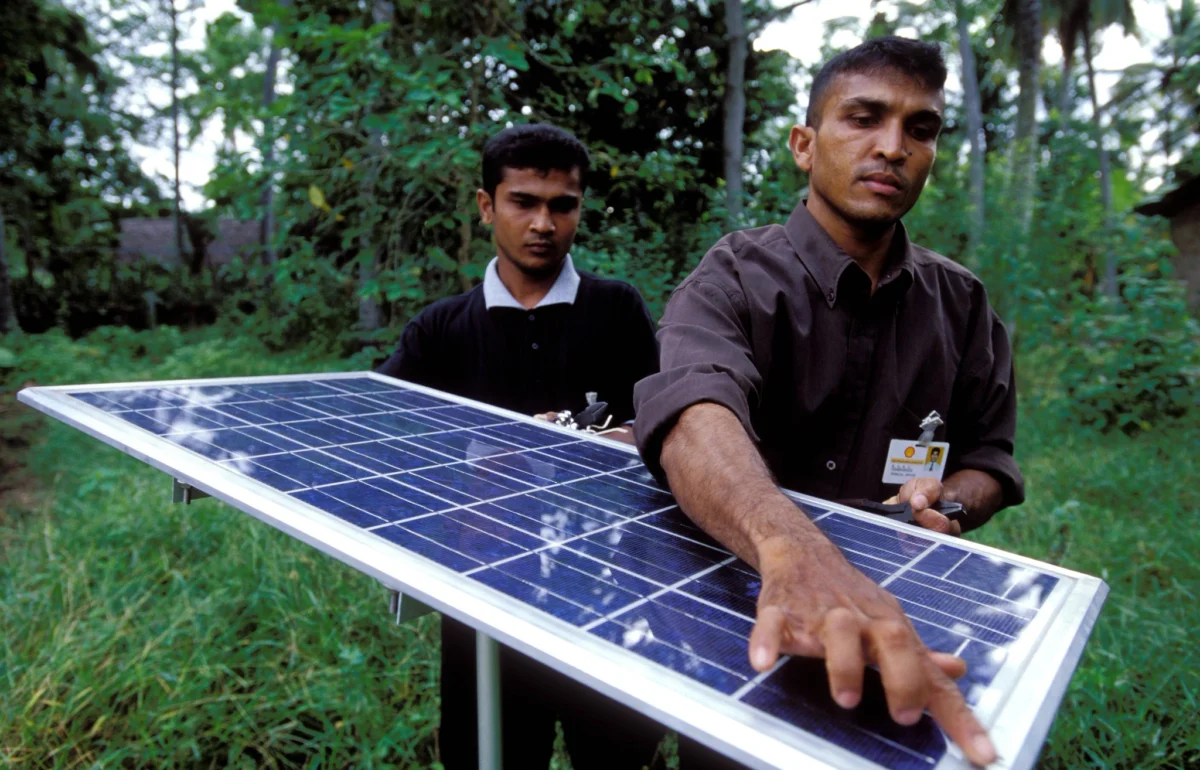
For Africa, the electrification agenda is not merely a climate strategy; it is a fundamental development necessity. The continent currently faces a dual reality: it is home to 60% of the world’s best solar resources, yet more than 600 million Africans—roughly 43% of the population—lack access to any form of electricity.
Mohamed Adow and other African leaders argue that this deficit provides a unique "leapfrogging" opportunity. Unlike industrialized nations in Europe and North America, many African countries are not burdened by trillions of dollars in legacy fossil-fuel infrastructure, such as extensive gas distribution networks or aging coal plants. This allows for the construction of 21st-century energy systems from the ground up, centered on decentralized renewable micro-grids and large-scale green hydrogen production.
However, the financial barriers are immense. Africa receives less than 3% of global energy investment. The cost of capital for renewable projects in Africa is often three to four times higher than in developed economies due to perceived risks. For the Electrify Now campaign to succeed on a global scale, it must address the "justice" element of electrification, ensuring that the 35% target includes universal energy access for the Global South.
Official Responses and Geopolitical Implications
The reaction to the electrification push has been varied, reflecting the complex geopolitical interests at play. In Europe, the "Green Deal" framework already aligns with many of the campaign’s goals, though there is internal pushback from industrial sectors concerned about the high cost of electricity compared to imported gas.
In Türkiye, the host of COP31, officials have expressed interest in the electrification theme as a way to leverage the country’s growing role as a renewable energy hub and a manufacturer of electric vehicles (notably through the domestic brand Togg). By championing electrification, Türkiye aims to position itself as a bridge between the technological advancements of the West and the developmental needs of the Global South.
Major international organizations, including the International Renewable Energy Agency (IRENA), have welcomed the focus. IRENA’s Director-General, Francesco La Camera, has frequently noted that "the energy transition is the transition to electricity." However, some oil-producing nations remain cautious, viewing the rapid electrification of transport and heating as a direct threat to their primary export revenues.
Analysis of Implications: A New Industrial Revolution
The shift toward a 35% electrification target by 2035 implies a radical restructuring of the global economy. This is not just a change in fuel source; it is a change in industrial logic.
- Energy Security: Electrification reduces dependence on volatile international oil and gas markets. By powering transport and heating with domestically produced renewable electricity, nations can enhance their strategic autonomy.
- Economic Growth: The transition is expected to be a net job creator. The manufacturing of EVs, batteries, heat pumps, and grid components requires a massive labor force. However, it also requires a significant "just transition" strategy for workers in the internal combustion engine and fossil fuel extraction industries.
- Environmental Impact: Beyond carbon emissions, electrification significantly improves local air quality. The removal of tailpipe emissions and the elimination of indoor gas combustion for cooking and heating would have immediate public health benefits, particularly in densely populated urban centers and in developing nations where "clean cooking" remains a major health challenge.
- Critical Minerals: A highly electrified world will be mineral-intensive. The demand for lithium, copper, cobalt, and rare earth elements will skyrocket. This shifts the geopolitical focus from the Middle East’s oil fields to the mineral belts of Africa, Latin America, and Australia, necessitating new standards for sustainable and ethical mining.
Conclusion: The Road to COP31
As the international community prepares for the upcoming cycle of climate summits, the Electrify Now campaign has successfully reframed the debate. The question is no longer just "how much" renewable energy we can produce, but "how fast" we can wire the world to use it.
The 35% target by 2035 serves as a North Star for policy makers. It provides a clear, measurable goal that links climate science with industrial policy. For leaders like Mohamed Adow, the success of this movement will be measured by whether it can deliver clean, affordable power to the 600 million Africans currently in the dark, while simultaneously dismantling the fossil fuel dependencies of the world’s largest economies. If COP31 in Türkiye can codify this ambition into global policy, it may well mark the beginning of the end for the fossil fuel era.

Related Posts
Constitutional Court of South Africa Bars Shell Oil Exploration in Landmark Victory for Environmental and Community Rights

The Battle for Saldanha Bay: South Africa’s Ambitious Ocean Economy Strategy Faces Legal and Environmental Reckoning