US Navy Reliance on Starlink Under Scrutiny Following Drone Testing Failures and Systemic Outages
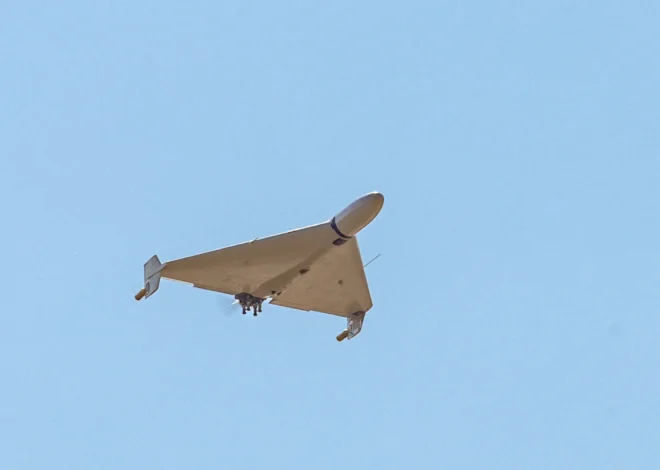
In August 2025, during a high-stakes demonstration of autonomous maritime capabilities, U.S. Navy officials encountered a critical vulnerability that brought a fleet of cutting-edge vessels to a standstill: a total dependence on Starlink. A global outage of Elon Musk’s satellite network, which affected millions of commercial and private users worldwide, simultaneously severed the command-and-control links for two dozen unmanned surface vessels (USVs) operating off the coast of California. For nearly an hour, these autonomous boats—integral to the Pentagon’s strategy for a potential conflict in the Indo-Pacific—remained adrift and unresponsive, highlighting what internal documents describe as a "single point of failure" in the military’s increasingly digital infrastructure.
The incident was not an isolated technical glitch but part of a series of documented disruptions that have raised alarms within the Department of Defense. Internal Navy reports and communications reviewed by investigators reveal that the military’s reliance on SpaceX’s Low-Earth Orbit (LEO) constellation has created a paradoxical situation: the very technology intended to provide a resilient, high-speed data link is also a bottleneck that can be compromised by commercial outages or the strategic decisions of a single private individual.
The August Outage and the California Tests
The August disruption involved a fleet of USVs designed to perform various roles, from reconnaissance to mine clearance. These vessels, developed by contractors such as Maryland-based BlackSea and Austin-based Saronic, are part of the Navy’s "Replicator" initiative—a program aimed at deploying thousands of relatively inexpensive, autonomous systems to counter the numerical advantages of the Chinese People’s Liberation Army Navy (PLAN).
According to a Navy safety report, the August outage caused a complete loss of situational awareness for operators on the shore. Without the Starlink handshake, the autonomous software on the boats entered a "safe mode," causing them to bob in the water to avoid collisions, but effectively rendering them useless for the duration of the downtime. While no vessels were lost or damaged, the inability to maintain a persistent connection during a routine test raised questions about how such systems would perform in a contested electronic warfare environment where an adversary might actively jam or spoof satellite signals.
This event followed a series of challenges observed earlier in the year. In April 2025, during separate trials involving both maritime and aerial drones, Navy technicians reported that Starlink struggled to maintain stable connections when subjected to "multiple-vehicle load." The high data requirements for streaming real-time telemetry and high-definition video from several platforms simultaneously appeared to saturate the available bandwidth, leading to significant latency and dropped connections. The report also identified secondary failures in radios provided by Silvus and network hardware from Viasat, suggesting that the entire communications ecosystem for autonomous warfare remains fragile.
Chronology of SpaceX-Pentagon Integration
The military’s integration with SpaceX has accelerated rapidly over the last five years, driven by the sheer scale and cost-effectiveness of the Starlink constellation.
- 2020–2022: The U.S. Air Force and Army began testing Starlink for remote base connectivity, citing its superior latency compared to traditional Geostationary (GEO) satellites.
- 2023: The Pentagon formally contracted with SpaceX for "Starshield," a government-specific version of Starlink designed for national security applications, including encrypted communications and Earth observation.
- September 2023: Controversy erupted when reports surfaced that Elon Musk had restricted Starlink access during a Ukrainian offensive in Crimea, citing fears of nuclear escalation. This event prompted the first major wave of congressional concern regarding "sole-source" dependency.
- April 2025: Navy tests in California exposed bandwidth limitations under heavy operational loads, signaling that commercial-grade LEO service might not meet the rigorous demands of multi-domain drone swarms.
- August 2025: A global Starlink outage halted U.S. Navy autonomous operations for approximately 60 minutes, confirming the "single point of failure" risk.
- Summer 2026 (Projected): SpaceX is expected to launch its Initial Public Offering (IPO) at a valuation of $2 trillion, cementing its role as a global utility provider for both civilian and military sectors.
Supporting Data: The Scale of Dependency
The Pentagon’s reliance on SpaceX is rooted in the company’s unmatched infrastructure. As of early 2026, SpaceX maintains a constellation of nearly 10,000 satellites in LEO. To put this in perspective:
- Launch Dominance: SpaceX currently accounts for over 80% of all mass launched into orbit globally. The U.S. Space Force recently reassigned a GPS III satellite launch to a SpaceX Falcon 9 rocket for the fourth time, following technical delays with the Vulcan rocket produced by the United Launch Alliance (ULA)—a joint venture between Boeing and Lockheed Martin.
- Latency Advantages: Traditional military satellites in GEO orbit sit approximately 35,000 kilometers away, resulting in a signal delay of 600–800 milliseconds. Starlink satellites, orbiting at 550 kilometers, offer latency as low as 25–40 milliseconds, which is essential for the real-time control of autonomous weapons systems.
- Cost Efficiency: Commercial Starlink terminals cost the military a fraction of the price of bespoke tactical satellite hardware, allowing for the rapid scaling of the "Replicator" program.
However, this efficiency comes at the cost of redundancy. While the Pentagon’s Chief Information Officer, Kirsten Davies, has stated that the department leverages "multiple, robust, resilient systems," the reality on the ground—and in the water—often tells a different story. For many remote autonomous operations, there is currently no viable high-bandwidth alternative to SpaceX.
Geopolitical Risks and Congressional Warnings
The technical failures are compounded by the unique geopolitical position of SpaceX’s leadership. Democratic and Republican lawmakers alike have expressed unease over the influence held by Elon Musk. In 2024, then-U.S. Representative Mike Gallagher sent a formal inquiry to Musk regarding allegations that Starlink service was being withheld from U.S. service members stationed in Taiwan. While SpaceX disputed these claims on social media, the incident underscored a growing fear: that the strategic interests of the United States could be held hostage by the personal or business interests of a private citizen.
The situation in Taiwan is particularly sensitive. As the U.S. military prepares for a potential "island chain" defense scenario, the ability to maintain communications without relying on undersea cables—which are vulnerable to Chinese cutting—is paramount. If Starlink is the only available high-speed wireless link, any decision by SpaceX to disable service in the region could effectively blind U.S. forces.
Furthermore, the Defense Department’s recent experiences with other tech sectors have served as a cautionary tale. A recent rift between the Pentagon and the AI startup Anthropic demonstrated how quickly an over-reliance on a single vendor can turn into a strategic liability when contractual or ethical disagreements arise.
The Competitive Landscape: Amazon and ULA
Recognizing the risks of a SpaceX monopoly, the U.S. government and private competitors are racing to provide alternatives. This week, Amazon.com announced an $11.6 billion agreement to acquire satellite manufacturer Globalstar, a move intended to accelerate the deployment of Amazon’s "Project Kuiper." Kuiper aims to rival Starlink by launching its own constellation of over 3,000 satellites.
However, Amazon is years behind. While SpaceX has nearly 10,000 satellites in orbit, Project Kuiper is still in its early deployment phase. Similarly, the United Launch Alliance has struggled to provide a consistent alternative for heavy-lift launches. The recurring glitches with the Vulcan rocket have forced the Space Force to return to SpaceX, further entrenching the company’s monopoly.
Expert Analysis and Strategic Implications
Military analysts suggest that the Pentagon is currently trapped in a "vendor lock-in" of historic proportions. Bryan Clark, an autonomous warfare expert at the Hudson Institute, argues that the military is making a calculated, albeit dangerous, trade-off. "You accept those vulnerabilities because of the benefits you get from the ubiquity it provides," Clark said. "There is no other system that allows a small speedboat in the middle of the Pacific to transmit high-definition video back to a command center in Hawaii for a few hundred dollars a month."
However, Clayton Swope of the Center for Strategic and International Studies (CSIS) warns that the August outage should serve as a final wake-up call. "If there was no Starlink, the U.S. government wouldn’t have access to a global constellation of LEO communications," Swope noted. "But being ‘indispensable’ is a dangerous thing for a private company to be in the context of national security. It removes the government’s leverage."
The strategic implication is clear: the U.S. Navy’s dream of a "ghost fleet" of autonomous drones remains tethered to a commercial network that was never designed for the rigors of combat. As SpaceX moves toward its $2 trillion IPO, the tension between its role as a commercial internet provider and its function as a backbone of American military power is reaching a breaking point. For the Pentagon, the challenge for 2026 and beyond will be to build a "network of networks" that ensures a single outage—or a single phone call from a CEO—cannot leave the nation’s most advanced weapons systems bobbing helplessly in the sea.

Related Posts
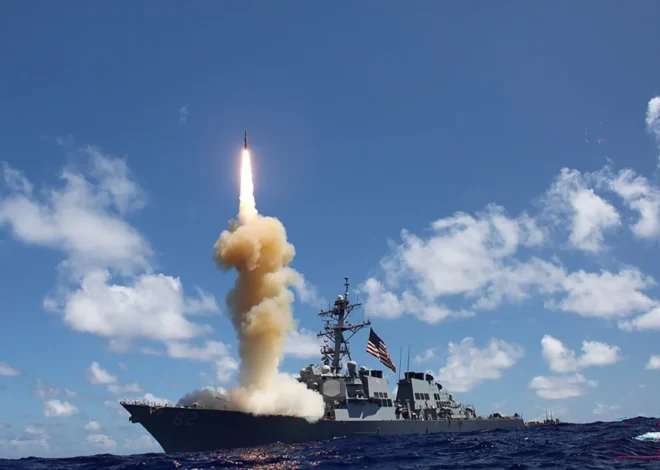
Pentagon Forges Landmark Seven-Year Agreements with Boeing and RTX to Accelerate Standard Missile-3 Production and Stabilize Defense Supply Chains
Boeing Unveils Ultra Low-Cost Seeker to Enhance Missile Inventory and Combat Cost Challenges in Modern Warfare