International Human Rights Organizations Call for Immediate Halt to Execution of Omar bin Yacob Bamadhaj in Singapore
A coalition of prominent international human rights organizations has issued an urgent appeal to the Singaporean government to stay the execution of Omar bin Yacob Bamadhaj, a 46-year-old Singaporean national scheduled to be hanged on April 16, 2026. The joint statement, released on April 15, 2026, by Human Rights Watch (HRW), Amnesty International, the Capital Punishment Justice Project (CPJP), and the Anti-Death Penalty Asia Network (ADPAN), characterizes the pending execution as a violation of international law and a "cruel, inhumane, and degrading" use of state power.
Omar bin Yacob Bamadhaj was convicted of importing approximately one kilogram of cannabis into Singapore in 2018. Under the city-state’s stringent Misuse of Drugs Act, the trafficking of more than 500 grams of cannabis carries a mandatory death sentence. The case has reignited a fierce global debate regarding Singapore’s unwavering commitment to capital punishment for drug offenses, a practice that international bodies increasingly view as a breach of human rights standards.
Chronology of the Case and Legal Proceedings
The legal trajectory of Omar bin Yacob Bamadhaj began nearly eight years ago. On July 12, 2018, Omar was stopped during a routine security check at the Woodlands Checkpoint, the primary land border crossing between Singapore and Malaysia. Authorities discovered 1,009 grams of cannabis in his possession. At the time of his arrest, Omar was no longer a resident of Singapore; he had been living in Germany with his family and had returned to the region to observe the holy month of Ramadan with his extended family.
Following his arrest, Omar was charged under the 1973 Misuse of Drugs Act. During the trial, the defense argued that Omar’s involvement was limited to the transportation of the substance and that he did not have the intent to distribute it within the context of a wider criminal enterprise. However, under Singaporean law, the quantity of the drug found in his possession triggered a presumption of trafficking.
In February 2021, the High Court of Singapore found Omar guilty and sentenced him to death. The presiding judge noted that while Omar’s role was that of a "courier," the legal requirements for avoiding the mandatory death penalty had not been met. Under Section 33B of the Misuse of Drugs Act, a judge can only exercise sentencing discretion—commuting a death sentence to life imprisonment and caning—if two conditions are met: the defendant must be proved to have been a mere courier, and the Public Prosecutor must issue a "certificate of substantive assistance" confirming that the defendant assisted the Central Narcotics Bureau (CNB) in disrupting drug trafficking activities. In Omar’s case, the prosecution did not issue such a certificate.
Omar’s legal team subsequently filed an appeal with Singapore’s highest court. In October 2021, the Court of Appeal dismissed the challenge, upholding both the conviction and the sentence. After four and a half years on death row, Omar’s family was notified by the Singapore Prison Service on April 2, 2026, that his execution had been scheduled for two weeks later.
Humanitarian Concerns and Family Pleas for Clemency
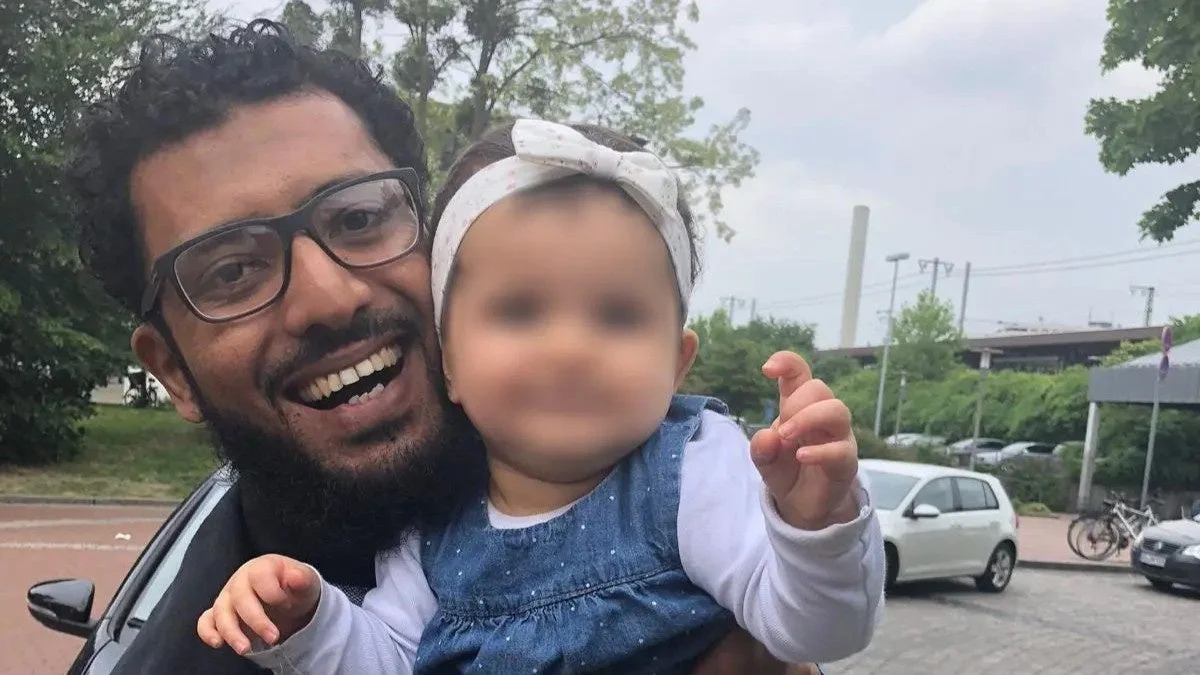
The human toll of the case has been a focal point for advocacy groups. Omar’s wife, Alexandra Maria, a German national, has spearheaded a public campaign to save her husband’s life. In a letter addressed to President Tharman Shanmugaratnam on April 12, 2026, she detailed the profound suffering the family has endured since Omar’s incarceration in 2018.
The family’s situation is marked by extreme hardship. Due to financial constraints and the complex health needs of their children, Alexandra and their two children remained in Germany throughout Omar’s imprisonment. The family suffered a devastating loss in November 2025 when their 11-year-old son, Naqeeb, passed away following a long-term illness. Because of his incarceration and the distance, Omar was unable to see his son before he died.
In her plea for clemency, Alexandra Maria highlighted the impact on their surviving daughter, Amal, now nine years old. "Please give Amal the opportunity to experience the joy of reconnecting with her father, and not the irrevocable pain and regret of never having gotten to know him," she wrote. Human rights advocates argue that the execution would represent a "double punishment" for a family that has already faced the death of a child and nearly a decade of separation.
Singapore’s Legal Framework vs. International Standards
Singapore’s use of the death penalty for drug offenses remains one of the most controversial aspects of its judicial system. The government maintains that capital punishment serves as a vital deterrent against the drug trade, protecting the domestic population from the scourge of addiction and associated crime. Officials frequently cite the city-state’s low crime rates and successful drug suppression as evidence of the policy’s efficacy.
However, international human rights law, as outlined in the International Covenant on Civil and Political Rights (ICCPR), stipulates that in countries that have not yet abolished the death penalty, the sentence may be imposed only for the "most serious crimes." United Nations experts, the UN High Commissioner for Human Rights, and various international legal bodies have consistently stated that drug-related offenses do not meet the "most serious" threshold, which is generally understood to be limited to intentional killing.
The "mandatory" nature of the death penalty in drug cases is another point of contention. By removing judicial discretion in cases where a certificate of assistance is not provided, the law effectively shifts the power of sentencing from the judiciary to the prosecution. Critics argue this undermines the principle of a fair trial and prevents judges from considering mitigating factors, such as the defendant’s personal history, socioeconomic status, or level of culpability.
Trends in Capital Punishment: Singapore and the Region
The scheduled execution of Omar bin Yacob Bamadhaj comes amidst a significant uptick in the use of capital punishment in Singapore. According to data compiled by Human Rights Watch, the city-state has executed seven people since the start of 2026, all for drug-related offenses. This follows a year in which authorities executed 15 people in 2025, a sharp increase from the eight executions recorded in 2024.
This trend places Singapore in stark contrast with several of its regional neighbors. In recent years, Southeast Asia has seen a gradual shift away from mandatory capital punishment:
- Malaysia: In 2023, Malaysia officially abolished the mandatory death penalty, granting judges the discretion to impose life imprisonment instead.
- Thailand: The country has moved toward the decriminalization of cannabis, fundamentally altering the legal landscape for the drug that Omar is accused of trafficking.
- Vietnam and Indonesia: While both maintain the death penalty for drugs, the frequency of executions and the legal processes surrounding them have faced increasing internal and external scrutiny.
Jacinta Smith, chair of the Capital Punishment Justice Project, noted that Singapore appears to be "ramping up" executions even as the rest of the world moves toward abolition. "The Singaporean government’s stance reflects a total disregard for the right to life and a refusal to acknowledge the global consensus that the death penalty is not a solution to drug-related issues," Smith stated.
The Precedent for Presidential Clemency
While clemency is rarely granted in Singapore, it is not without precedent. Advocacy groups have pointed to the case of Tristan Tan Yi Rui as a potential model for Omar. In August 2025, President Tharman Shanmugaratnam granted clemency to Tan, who had been sentenced to death for trafficking 337.6 grams of methamphetamine. His sentence was commuted to life imprisonment.
At the time, the Ministry of Home Affairs stated that the Cabinet had recommended clemency due to the "specific facts and circumstances of the case." Alexandra Maria’s letter to the President explicitly referenced this decision, describing it as an "act of compassion and fairness" that recognized the possibility of redemption. Advocates argue that if clemency was possible for methamphetamine trafficking, it should certainly be considered for cannabis, a substance that is being legalized or decriminalized in many parts of the world.
Analysis of Implications and Public Debate
The execution of Omar bin Yacob Bamadhaj would likely have significant diplomatic and social implications. As a case involving a resident of Germany, the execution may strain relations with the European Union, which maintains a principled opposition to the death penalty in all circumstances.
Furthermore, the Singaporean government has faced criticism for its treatment of domestic anti-death penalty activists. Organizations like the Transformative Justice Collective (TJC) have frequently been targeted with the Protection from Online Falsehoods and Manipulation Act (POFMA) and other restrictive laws for questioning the government’s narrative on capital punishment. Human rights defenders argue that this environment stifles informed public debate and prevents citizens from fully understanding the complexities of the justice system.
"The government uses overly broad laws to silence those who speak for the marginalized," said Karen Gomez-Dumpit of ADPAN. "By executing Omar, they are not just taking a life; they are reinforcing a system that refuses to engage with the human reality of the drug trade."
Conclusion: An Urgent Window for Intervention
As the April 16 deadline approaches, the international community continues to pressure Singapore to reconsider. The joint appeal from HRW, Amnesty, CPJP, and ADPAN calls for an immediate moratorium on all executions as a first step toward full abolition.
For Omar bin Yacob Bamadhaj, the window for legal intervention has closed, leaving presidential clemency as his final hope. The decision now rests with the Singaporean Cabinet and President Shanmugaratnam. Whether they will choose to uphold the mandatory sentence or exercise the "compassion and fairness" seen in the Tan case remains a question of profound consequence for Omar’s family and for Singapore’s standing on the global stage.
The world watches as the city-state decides whether to proceed with the execution of a father and husband for a non-violent drug offense, or to align its judicial practices with evolving international human rights standards.

Related Posts

Human Rights Watch Calls for Investigation into Death of Detainee Following Removal from Najaf Hospital by Iraqi Drug Police

Human Rights Watch Urges UN Security Council to Extend Lebanon Peacekeeping Mission Amid Escalating Conflict and Humanitarian Crisis