US Navy Deploys Uncrewed Surface Vessels for Combat Operations Against Iran Amid Regional Escalation
The United States Pentagon has officially confirmed the deployment of uncrewed drone speedboats for active maritime patrols as part of its ongoing military operations against Iranian forces, marking the first time Washington has acknowledged the use of such autonomous technology in a kinetic conflict environment. The deployment centers on a fleet of specialized vessels known as the Global Autonomous Reconnaissance Craft (GARC), which are being utilized for surveillance and potential strike capabilities within the Middle East theater. This milestone comes at a critical juncture in naval history, as the U.S. Navy seeks to pivot from traditional, multi-billion-dollar manned platforms toward a more agile, "attritable" force capable of countering asymmetric threats in contested waters.
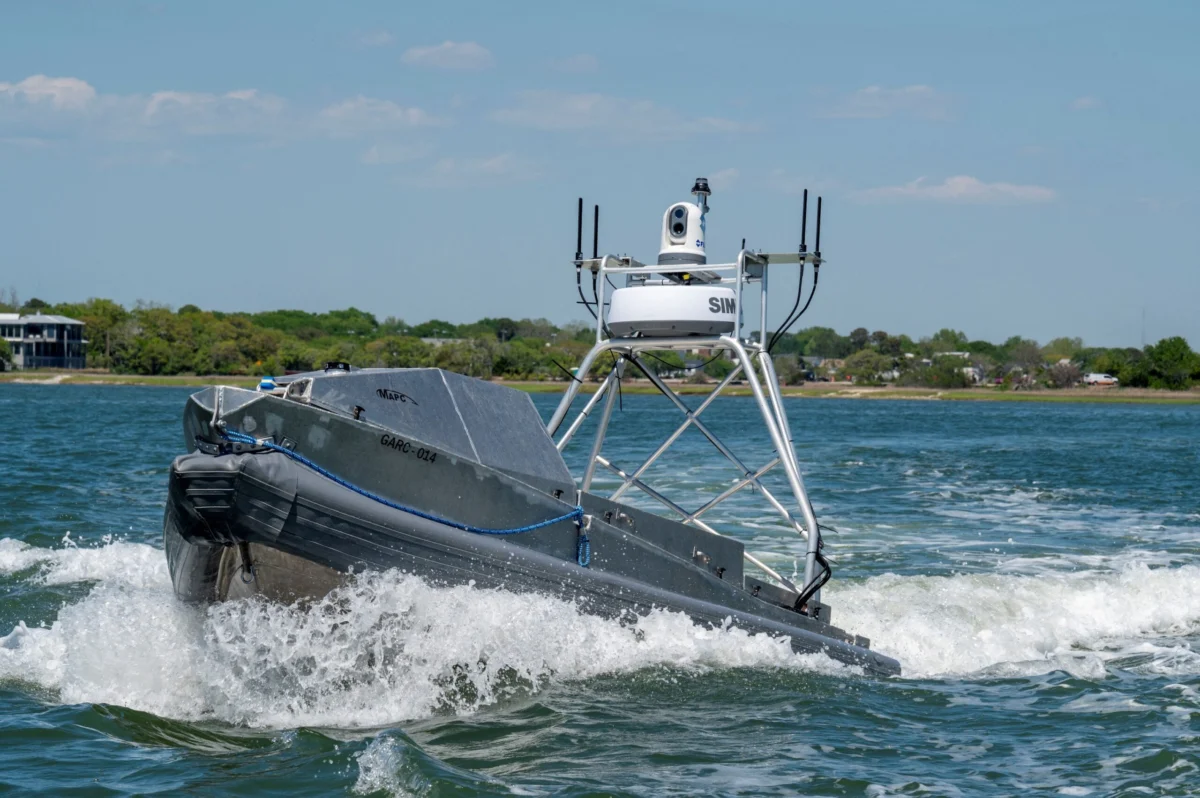
According to statements released by the Department of Defense, these uncrewed surface vessels (USVs) are currently integrated into "Operation Epic Fury," a targeted U.S. campaign aimed at neutralizing Iranian maritime aggression and securing vital shipping lanes. While the U.S. Navy has experimented with autonomous systems for over a decade, the transition from experimental exercises to active combat deployment signifies a major shift in the Pentagon’s operational doctrine. The use of the GARC—a five-meter-long, angular speedboat designed for high-speed maneuvers—is intended to provide the U.S. 5th Fleet with a persistent "eyes and ears" presence in the Gulf and surrounding waters without risking the lives of American sailors.
Technical Specifications and Operational Data
The Global Autonomous Reconnaissance Craft, manufactured by Maryland-based defense contractor BlackSea, represents the cutting edge of small-scale naval autonomy. Measuring approximately 16 feet (5 meters) in length, the vessel is designed with a low radar cross-section and high-speed propulsion systems, making it difficult for traditional coastal defense systems to detect and intercept.
Tim Hawkins, a spokesperson for U.S. Central Command (CENTCOM), provided rare data regarding the performance of these systems in the field. According to Hawkins, the GARC platforms have already logged over 450 underway hours and covered more than 2,200 nautical miles during maritime patrols in support of Operation Epic Fury. These figures suggest a high level of operational tempo, indicating that the Navy is relying on these drones for long-endurance missions that would typically exhaust a manned crew.
The GARC is modular by design, allowing it to be outfitted with a variety of sensor suites, including electro-optical/infrared (EO/IR) cameras, signals intelligence (SIGINT) equipment, and advanced radar. While the Pentagon has emphasized its current role in reconnaissance and awareness, the platform’s design allows for the integration of kinetic payloads. This enables the craft to function as a "kamikaze" or one-way attack drone, similar to the systems that have revolutionized maritime warfare in the Black Sea.
Chronology of Naval Autonomy and Recent Escalations
The road to the current deployment has been marked by both rapid technological advancement and significant institutional hurdles. The timeline of the U.S. Navy’s USV program reflects a broader struggle to modernize in the face of shifting global threats.
- September 2021: The U.S. Navy establishes Task Force 59 in Bahrain, the first unit dedicated to integrating unmanned systems and artificial intelligence into Middle East maritime operations.
- 2022–2023: Ukraine begins utilizing explosive-laden uncrewed speedboats to target the Russian Black Sea Fleet. The success of these low-cost systems in sinking or damaging major Russian warships, including the Moskva and several frigates, serves as a proof-of-concept that accelerates U.S. interest in USVs.
- Late 2023 – Early 2024: The U.S. Navy faces criticism from Congress and internal auditors over the slow pace of its "Ghost Fleet Overlord" and other USV programs. Technical failures and a lack of clear mission requirements lead to the termination of several early-stage programs in favor of the "Golden Fleet" era initiatives.
- March 2025: Tensions in the Middle East escalate following a series of strikes between U.S.-Israeli forces and Iranian-backed groups. Iran reportedly uses its own sea drones to strike oil tankers in the Gulf on at least two occasions.
- April 2025: The Pentagon officially launches Operation Epic Fury. The GARC is deployed to the Red Sea and the Persian Gulf, marking its transition from a testing asset to a combat tool.
Technical Challenges and Safety Concerns
Despite the successful logging of patrol hours, the deployment of the GARC has not been without controversy. Internal reports and previous military tests have highlighted a series of technical setbacks that have dogged the platform’s development.
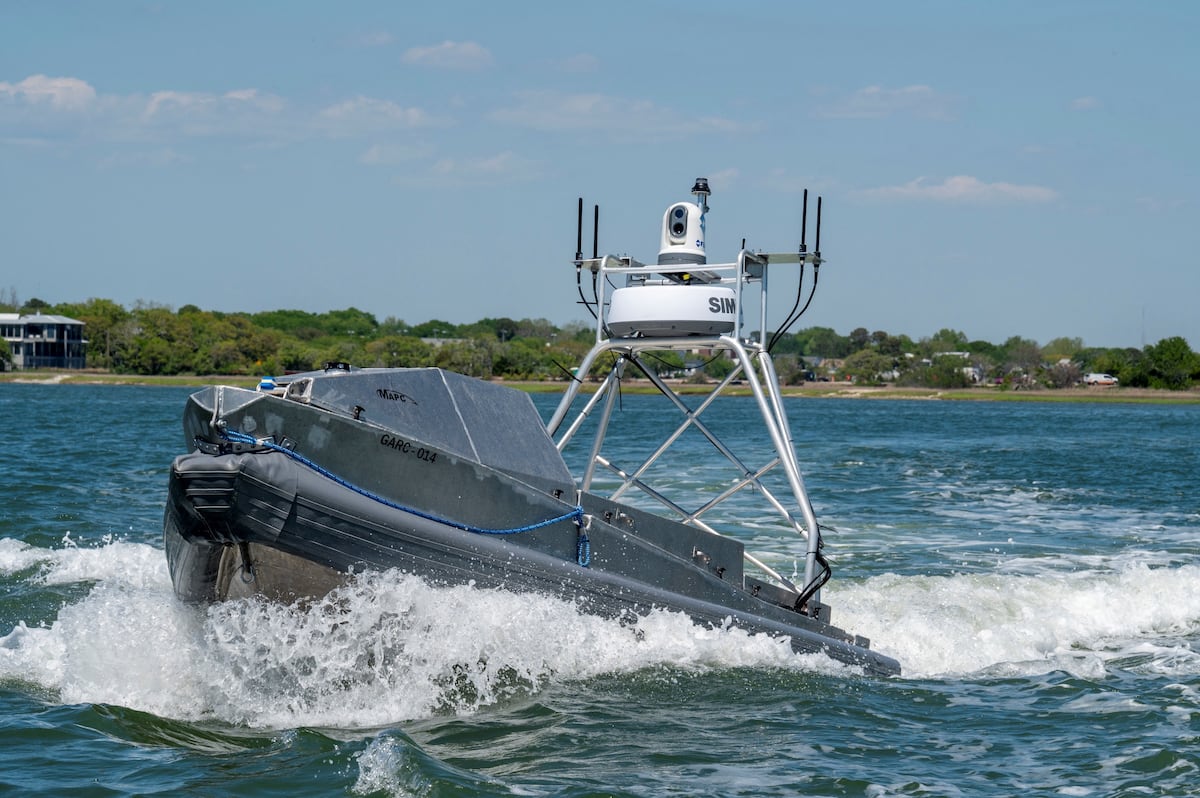
In 2024, a series of tests involving the GARC resulted in multiple performance and safety issues. Most notably, one of the craft was involved in a high-speed collision with another vessel during a military exercise, raising questions about the reliability of its autonomous collision-avoidance algorithms. Furthermore, sources briefed on recent operations in the Middle East indicate that at least one GARC boat became completely inoperable during a mission in recent weeks due to a mechanical or software failure.
The Navy’s struggle to field a reliable fleet of uncrewed vessels is part of a larger debate regarding the "Replicator" initiative—a Pentagon program aimed at fielding thousands of cheap, autonomous systems to counter China’s numerical advantage in the Pacific. Critics argue that the Navy is rushing immature technology into the field, while proponents maintain that "learning by doing" in active conflict zones is the only way to refine these systems quickly enough to stay ahead of adversaries.
Official Responses and Strategic Rationale
The Pentagon’s confirmation of the GARC’s role in Operation Epic Fury serves as a strategic signal to Tehran. By publicizing the success of these patrols, Washington is demonstrating a commitment to maintaining maritime superiority through technological innovation.
"The GARC is an emerging capability and part of a fleet of surface drones operated by U.S. 5th Fleet to enhance awareness of what’s happening in regional waters," said Tim Hawkins. While Hawkins declined to elaborate on other unmanned systems in the theater, he emphasized that the integration of these assets allows for a "Digital Ocean" concept, where AI-driven sensors provide a continuous, real-time picture of maritime activity.
BlackSea, the manufacturer of the GARC, has remained silent regarding the deployment, citing the sensitive nature of ongoing military operations. However, industry analysts suggest that the success or failure of the GARC in Operation Epic Fury will likely determine the future of BlackSea’s contracts with the Department of Defense.
From a strategic standpoint, the deployment serves two primary purposes. First, it acts as a force multiplier in the Middle East, allowing the Navy to cover vast areas of water with fewer manned ships. Second, it serves as a live-fire laboratory for the Navy’s future conflict with China. The lessons learned regarding autonomy, satellite link stability, and maintenance in the harsh, salt-heavy environment of the Middle East will be directly applicable to the South China Sea.
Broader Implications for Global Maritime Warfare
The use of USVs in Operation Epic Fury represents a "paradigm shift" in naval doctrine. For over a century, naval power has been measured by the tonnage and number of manned capital ships. The emergence of effective, low-cost uncrewed vessels threatens to render traditional naval power projection vulnerable to asymmetric "swarming" tactics.
- Cost-Exchange Ratio: A single GARC costs a fraction of a traditional destroyer or even a littoral combat ship. If these drones can successfully deter Iranian fast-attack craft or detect mine-laying operations, the cost-benefit analysis heavily favors the U.S.
- Risk Mitigation: By using drones for "dull, dirty, and dangerous" missions—such as patrolling narrow straits where Iranian shore-based missiles are a constant threat—the Navy significantly reduces the risk of American casualties, which in turn provides policymakers with more flexibility in how they respond to provocations.
- The Proliferation of Autonomy: The deployment confirms that the "drone revolution" is no longer confined to the air. As the U.S., Russia, Ukraine, and Iran all deploy maritime drones, the world is entering an era of "robotic naval warfare" where the speed of software updates may become as important as the caliber of a ship’s guns.
As Operation Epic Fury continues, the performance of the GARC and its autonomous counterparts will be closely watched by military planners in Beijing and Moscow. The U.S. Navy’s ability to overcome the technical hurdles that have previously hindered its drone programs will be a decisive factor in whether it can maintain its status as the world’s preeminent maritime power in an increasingly automated century. For now, the angular silhouettes of the GARC speedboats in the waters of the Middle East serve as a clear indication that the future of naval warfare has arrived.

Related Posts
Pentagon Forges Landmark Seven-Year Agreements with Boeing and RTX to Accelerate Standard Missile-3 Production and Stabilize Defense Supply Chains
Boeing Unveils Ultra Low-Cost Seeker to Enhance Missile Inventory and Combat Cost Challenges in Modern Warfare