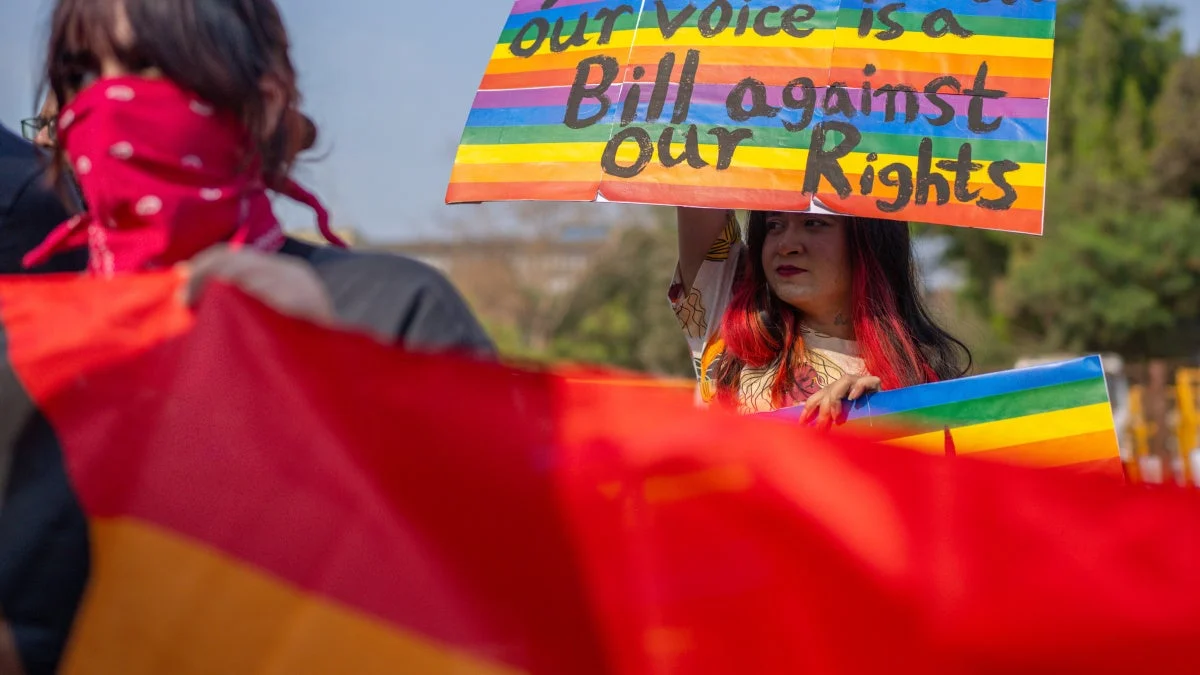
India’s 2026 Transgender Amendment Bill Faces Backlash as Parliament Moves to Rescind Self-Identification Rights and Narrow Legal Recognition
The Indian Parliament has moved to significantly alter the legal landscape for transgender individuals with the passage of the Transgender Persons (Protection of Rights) Amendment Bill, 2026. This legislative development, which passed through both houses of Parliament this week, represents a fundamental shift in how the state recognizes gender identity, effectively revoking the right to self-identification. If the bill receives presidential assent and becomes law, it will mark a major reversal of the legal protections established over the last decade, particularly those granted by the Supreme Court of India. The move has sparked immediate and widespread condemnation from human rights organizations, legal experts, and the transgender community, who argue that the amendment pathologizes identity and exposes vulnerable populations to increased state surveillance and criminalization.
The Shift from Self-Identification to Socio-Cultural Categorization
The core of the controversy lies in how the 2026 Amendment Bill redefines who qualifies as "transgender" under Indian law. The original 2019 Transgender Persons (Protection of Rights) Act provided a relatively inclusive definition that recognized self-perceived gender identity. However, the new amendment seeks to narrow this scope significantly. Under the proposed law, legal recognition would be restricted primarily to members of historically recognized socio-cultural groups, such as the hijra and kinner communities, as well as intersex individuals.
By tethering legal identity to specific traditional groups, the bill effectively excludes a vast demographic of the trans community, including trans men, trans women who do not belong to traditional clans, and gender non-binary or gender-fluid individuals. Activists argue that this creates a hierarchy of "legitimacy," where the state decides which forms of transgender identity are valid based on historical precedent rather than individual autonomy. Akkai Padmashali, a prominent transgender rights activist, characterized the bill as a profound disrespect to the right to exist, stating that the legislative body lacks a fundamental understanding of the distinctions between gender, sex, and sexuality.
Reversing the NALSA Judgment: A Historical Context
To understand the weight of this amendment, it is necessary to examine the legal progress made over the previous decade. In 2014, the Supreme Court of India delivered a landmark judgment in National Legal Services Authority (NALSA) v. Union of India. The court ruled that the right to self-identify one’s gender is inherent to the right to life, dignity, and autonomy under Article 21 of the Indian Constitution. The NALSA judgment was celebrated globally as a progressive step, as it mandated that the state recognize "third gender" individuals and allow for self-declared gender identity without the requirement of medical or surgical intervention.
Following the NALSA ruling, the 2019 Act was passed, which, while criticized by some activists for certain administrative hurdles, still maintained a semblance of the right to self-perceived identity. The 2026 Amendment, however, mandates medical certification for identity recognition. This requirement forces individuals to undergo physical examinations or provide clinical proof of their "biological" status to obtain government-issued identification. Legal scholars argue that this "medicalization" of identity violates international human rights standards, including the Yogyakarta Principles, which assert that a person’s self-defined sexual orientation and gender identity are integral to their personality and is one of the most basic aspects of self-determination, dignity, and freedom.
The Legislative Timeline and Parliamentary Friction
The passage of the 2026 Amendment Bill was marked by intense friction within the Indian Parliament. The Bharatiya Janata Party (BJP)-led government introduced the bill and navigated it through both the Lok Sabha (Lower House) and the Rajya Sabha (Upper House) amid vocal protests from opposition benches.
The timeline of the bill’s passage suggests a rapid legislative process:
- Introduction: The bill was introduced early in the session with the stated aim of "streamlining" the identification process and preventing the "misuse" of transgender protections.
- Lok Sabha Debate: Opposition members raised concerns regarding the exclusion of self-identity, calling for the bill to be referred to a Standing Committee for detailed scrutiny. These requests were declined.
- Rajya Sabha Approval: The bill was passed in the Upper House shortly thereafter. During the session, the Union Minister for Social Justice and Empowerment defended the legislation, asserting that the bill’s primary goal is to protect those who face severe discrimination due to specific "biological reasons."
- Current Status: The bill awaits the signature of the President of India. If signed, it will officially amend the 2019 Act.
Opposition MPs criticized the haste of the proceedings, arguing that a law affecting the fundamental rights of nearly half a million citizens should not be passed without broad consultation with the stakeholders it directly impacts.
Supporting Data: The Gap in Legal Documentation
The necessity for clear and accessible legal recognition is underscored by existing data on India’s transgender population. According to the 2011 Census—the last official count—there were approximately 487,803 transgender persons in India. However, community advocates suggest this number is a significant undercount due to the stigma associated with disclosure.
Despite the population size, the infrastructure for legal recognition remains underutilized or inaccessible. Data from the National Portal for Transgender Persons indicates that only about 32,500 individuals have successfully obtained identity cards. These cards are vital for:
- Social Security: Accessing pension schemes and food subsidies.
- Healthcare: Seeking gender-affirming care or general medical services without discrimination.
- Education and Employment: Enrolling in institutions or applying for jobs under protected categories.
- Voting: Exercising the right to franchise with an accurate identity.
Critics of the 2026 Amendment argue that by introducing mandatory medical certification and narrowing the definition of "transgender," the government is creating even higher barriers to entry. This likely ensures that the vast majority of the community remains undocumented and, consequently, excluded from state-sponsored welfare measures.
Concerns over Criminalization and the "Allurement" Clause
Perhaps the most alarming aspect of the 2026 Bill for human rights defenders is the introduction of new criminal offenses. The bill includes provisions for up to life imprisonment for anyone found "coercing or alluring" individuals into becoming transgender.
The People’s Union for Civil Liberties (PUCL) has raised concerns that the language of "allurement" is dangerously vague. Historically, transgender communities in India have relied on informal support systems, such as the guru-chela (mentor-disciple) relationship within hijra households, to survive when rejected by their biological families. There is a significant fear that these traditional support networks could be targeted under the new law, framed as "coercing" young people into the community.
Furthermore, legal experts have pointed out that these provisions mirror colonial-era legislation. The Criminal Tribes Act of 1871, enacted by the British, specifically targeted "eunuchs" and transgender people, criminalizing their presence in public spaces and their traditional modes of dress. While that act was eventually repealed, activists argue that the 2026 Amendment revives the spirit of such policing by treating the transgender identity as something that is "allured" or "induced" rather than an inherent aspect of a person’s being.
Official Responses and Justifications
The government’s stance remains focused on the prevention of fraud and the protection of "biologically" transgender individuals. In his address to Parliament, the Social Justice and Empowerment Minister emphasized that the government is committed to the welfare of the "genuine" transgender community. Proponents of the bill argue that self-identification could lead to the exploitation of affirmative action policies by individuals who do not face the same historical and biological marginalization as the hijra or intersex communities.
However, this "biological" focus is exactly what activists find regressive. By reducing gender identity to biological markers, the state is seen as ignoring the psychological and social dimensions of gender. Furthermore, the exclusion of trans men and non-binary individuals from the bill’s protections suggests a legislative oversight that fails to account for the diversity of the gender spectrum.
Broader Impact and Human Rights Implications
The implications of the 2026 Amendment extend beyond the borders of India, as the country had previously been seen as a leader in the Global South regarding transgender rights following the 2014 NALSA ruling. The international community, including various UN agencies, has consistently advocated for the "depathologization" of gender identity. The World Health Organization (WHO) removed "gender identity disorder" from its list of mental disorders in 2019, moving toward a model of healthcare that respects identity without requiring a diagnosis of abnormality.
By reverting to a medicalized model, India risks aligning itself with more restrictive regimes rather than the global trend toward self-determination. The practical impact on the ground will likely be an increase in harassment. When identity recognition requires a medical certificate, it empowers medical professionals and local bureaucrats to act as "gatekeepers" of gender. For a community that already reports high levels of discrimination in healthcare settings, this requirement is seen as a recipe for further abuse and extortion.
Conclusion: The Path Forward
The 2026 Transgender Persons (Protection of Rights) Amendment Bill stands at a critical juncture. As it awaits the President’s signature, the transgender community and its allies are calling for a veto and a return to the consultative process. The People’s Union for Civil Liberties and other advocacy groups have signaled that if the bill becomes law, it will almost certainly face a constitutional challenge in the Supreme Court.
The legal battle would likely center on whether the legislature has the power to override the fundamental rights established in the NALSA judgment. Until then, the transgender community in India remains in a state of uncertainty, facing a future where their legal existence may once again be determined by the state’s narrow definitions rather than their own lived realities. The transition from the progressive promise of 2014 to the restrictive measures of 2026 highlights a significant ideological shift in the governance of identity in the world’s most populous democracy.

Related Posts

Human Rights Watch Calls for Investigation into Death of Detainee Following Removal from Najaf Hospital by Iraqi Drug Police

Human Rights Watch Urges UN Security Council to Extend Lebanon Peacekeeping Mission Amid Escalating Conflict and Humanitarian Crisis