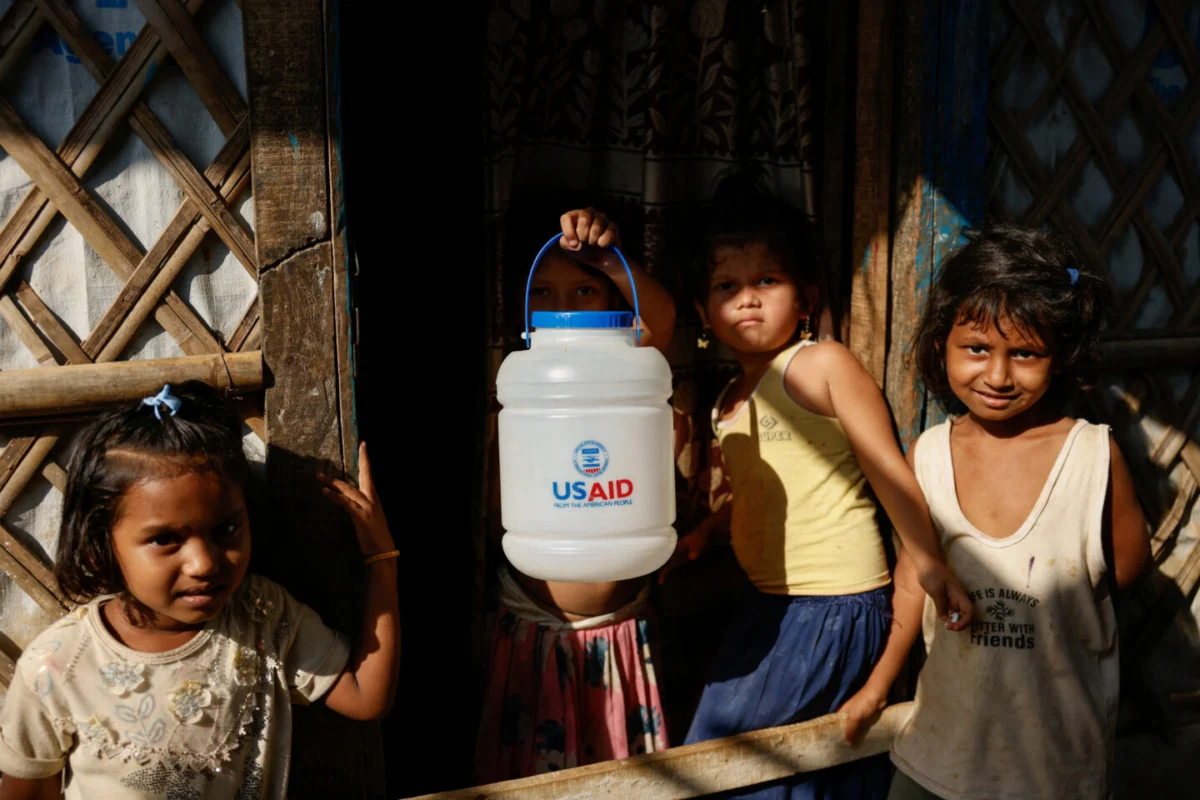
UK Aid Budget Slashed to Finance Largest Defense Expansion Since the Cold War Era
The United Kingdom government has officially announced a sweeping reallocation of its national budget, diverting billions of pounds from the international development fund to facilitate what Foreign Secretary Yvette Cooper described as the most significant surge in defense spending since the height of the Cold War. This strategic pivot, confirmed on March 19, 2026, marks a definitive end to the era of "soft power" priority that defined British foreign policy for much of the early 21st century. The decision comes at a time of unprecedented global volatility, characterized by escalating conflicts in the Middle East, a deepening civil war in Sudan, and an energy crisis spurred by disruptions in the Persian Gulf.

According to the Foreign, Commonwealth & Development Office (FCDO), the redirected funds will be used to modernize the British Armed Forces, enhance cyber-defense capabilities, and bolster NATO’s eastern flank. However, the move has ignited a firestorm of criticism from humanitarian organizations and climate advocates, who argue that stripping the aid budget will leave the world’s most vulnerable populations defenseless against the compounding threats of famine, displacement, and environmental collapse.
The Strategic Shift: Defense Over Development
The announcement by Foreign Secretary Yvette Cooper represents a stark departure from the UK’s long-standing commitment to international aid. For decades, the UK was one of the few G7 nations to meet the United Nations-mandated target of spending 0.7% of Gross National Income (GNI) on Official Development Assistance (ODA). While that target was previously reduced to 0.5% during the post-pandemic economic contraction, this latest move signals a more permanent structural shift toward a "security-first" doctrine.

"The world has changed fundamentally over the last twenty-four months," Cooper stated during a press briefing following her recent visit to the Sudanese border, where she met with refugees fleeing the ongoing civil war. "While our compassion remains undiminished, our primary responsibility is the safety and sovereignty of the British people. To maintain our deterrent in an increasingly hostile global landscape, we must invest in the tools of hard power. This increase in defense spending is not a luxury; it is a necessity born of the most dangerous geopolitical environment we have seen in forty years."
The "Cold War" comparison used by the Foreign Secretary is not merely rhetorical. Defense analysts point to the rapid militarization of the Arctic, the proliferation of sophisticated drone technology in regional conflicts, and the ongoing naval instability in the Strait of Hormuz as primary drivers for the budget hike. The Ministry of Defence (MoD) is expected to receive an additional £15 billion over the next three fiscal years, funded almost entirely through the reduction of overseas aid and climate mitigation grants.

A Timeline of Budgetary Attrition
To understand the magnitude of this shift, one must look at the trajectory of the UK’s international spending over the last decade.
- 2013–2019: The UK maintains the 0.7% GNI aid target, positioning itself as a "development superpower" and a leader in global health and education initiatives.
- 2020–2021: In the wake of the COVID-19 pandemic, the government temporarily reduces the aid budget to 0.5%, citing "fiscal exceptionalism."
- 2024–2025: Amidst the fallout of the conflict in Ukraine and rising inflation, the government begins "in-housing" a large portion of the aid budget to cover the costs of housing refugees within the UK, effectively reducing the amount of money reaching developing nations.
- March 2026: The current announcement confirms that the aid budget will be permanently de-prioritized to fund a historic expansion of the Royal Navy and the UK’s nuclear deterrent.
The chronology of these cuts suggests a deliberate retreat from global development leadership. Critics point out that while the defense budget is expanding, the "soft power" tools that prevent conflict—such as poverty alleviation, democratic institution building, and climate resilience—are being systematically dismantled.

Humanitarian and Climate Implications
The timing of the cuts is particularly dire for regions currently facing acute crises. In Sudan, where Yvette Cooper recently witnessed the human toll of the civil war, more than 10 million people have been displaced. The UK was previously a major donor to the World Food Programme’s operations in the Sahel and East Africa. With the new budget constraints, humanitarian agencies warn that funding for emergency rations and medical supplies will be drastically curtailed.
Furthermore, the impact on climate finance is expected to be catastrophic. The UK has been a pivotal player in the Paris Agreement framework, often acting as a bridge between developed and developing nations. By slashing the aid budget, the UK is effectively reneging on promises made at successive COP summits to provide "loss and damage" funding to nations hit hardest by global warming.

In East Africa, for instance, Kenya is currently grappling with a historic drought that has left over 3 million people facing acute hunger. Experts from the Intergovernmental Panel on Climate Change (IPCC) have long advocated for investment in early-warning systems to mitigate such disasters. However, with the UK withdrawing its financial support for these programs, the burden of adaptation will fall entirely on local governments that are already overextended.
The Intersection of War and Resource Scarcity
The logic behind the government’s defense boost is inextricably linked to the global energy and food crisis. The ongoing war in the Middle East has sent oil and gas prices soaring, which in turn has driven up the cost of synthetic fertilizers and international shipping. As a result, global food systems—already strained by climate change—are nearing a breaking point.

UN Climate Chief Simon Stiell recently warned that the world is entering a "vicious cycle" where fossil fuel reliance leads to conflict, and conflict leads to further fossil fuel reliance as nations scramble for energy security. "It is completely delusional to think we can bomb our way to stability while ignoring the environmental and economic foundations of peace," Stiell remarked in a recent address.
The UK’s decision to prioritize military spending over climate and development aid reflects a growing global trend of "fortress diplomacy," where wealthy nations invest in border security and military hardware rather than addressing the root causes of global instability. This shift is mirrored in the United States, where recent Supreme Court rulings and political attacks on climate science have emboldened the fossil fuel industry to avoid legal and financial accountability for its role in the climate crisis.

Official Responses and Domestic Backlash
The reaction to Yvette Cooper’s announcement has been polarized along ideological lines. Within the halls of Westminster, hawks in both the Conservative and Labour parties have largely welcomed the defense boost, citing the need for "national resilience."
"For too long, we have operated on a ‘peace dividend’ that no longer exists," said a spokesperson for the Ministry of Defence. "This budget allows us to recapitalize our fleet and ensure that our cyber-defenses are robust enough to withstand state-sponsored attacks from hostile actors."

Conversely, the shadow cabinet and various NGO coalitions have expressed "profound alarm." A joint statement released by a group of over 50 charities, including Oxfam and Save the Children, argued that the cuts would lead to "avoidable deaths on a massive scale."
"Slashing aid to buy warships is a moral and strategic failure," the statement read. "You cannot secure the UK by turning your back on the rest of the world. Poverty, disease, and climate change do not respect national borders, and no amount of military spending can stop a pandemic or a drought."

Broader Impact and Geopolitical Implications
The UK’s move is likely to have a "domino effect" across Europe. As the continent moves toward a more autonomous defense posture—less reliant on the fluctuating political winds of the United States—other nations may follow the UK’s lead in cannibalizing their development budgets to meet NATO’s 2% of GDP spending target.
This shift carries significant risks for global diplomacy. For decades, the UK’s influence in the Commonwealth and the UN was bolstered by its reputation as a reliable partner in development. By withdrawing this support, the UK leaves a power vacuum that other global players, such as China and Russia, are eager to fill. China, in particular, has already expanded its "Belt and Road Initiative," offering infrastructure loans to African and Asian nations that are increasingly being sidelined by Western donors.

Furthermore, the move undermines the collective effort to manage the transition to a green economy. While nations like China and Brazil have recently pledged to triple their nuclear energy capacity to meet carbon targets, the global South requires significant capital to make similar leaps. Without the support of traditional donors like the UK, many developing nations will be forced to remain dependent on coal and oil, further accelerating the climate crisis that the UK’s military is now being built to defend against.
Conclusion: A New and Uncertain Era
The reallocation of the UK budget on March 19, 2026, will be remembered as a watershed moment in the nation’s post-imperial history. It marks the formal transition from a foreign policy based on international cooperation and development to one defined by military deterrence and strategic competition.

While the government argues that this "biggest increase in defense spending since the Cold War" is a pragmatic response to a dangerous world, the long-term consequences remain to be seen. If the history of the 20th century is any guide, a world that prioritizes armaments over the basic needs of its inhabitants is a world that is inherently less stable. As the UK prepares to launch its new frigates and deploy its upgraded cyber-regiments, the millions of people in Sudan, Kenya, and beyond who relied on British aid are left to face an increasingly hostile future alone.

Related Posts
Constitutional Court of South Africa Bars Shell Oil Exploration in Landmark Victory for Environmental and Community Rights

The Battle for Saldanha Bay: South Africa’s Ambitious Ocean Economy Strategy Faces Legal and Environmental Reckoning