The Strategic Case for Integrating the KNDS RCH 155 into the United States Army Field Artillery Arsenal
The United States Army is currently navigating a pivotal transition in its field artillery doctrine, driven by the stark technological realities emerging from high-intensity peer-to-peer conflicts. As the war in Ukraine demonstrates the lethal efficiency of modern counter-battery systems, the traditional paradigm of stationary or slow-displacing artillery is being fundamentally challenged. Central to this evolution is the emergence of the KNDS RCH 155, a German-engineered remote-controlled howitzer that promises to redefine the survivability and lethality of brigade-level fires. By enabling a "fire-on-the-move" capability, the RCH 155 addresses a critical vulnerability in the U.S. Army’s current inventory, particularly within Stryker Brigade Combat Teams (SBCTs), where the gap between mobility and firepower has become an operational liability.
The Evolution of the Counter-Battery Threat
For decades, Western artillery doctrine relied on the assumption of air superiority and relatively slow enemy response times. However, the proliferation of advanced counter-battery radar systems, such as Russia’s Zoopark-1, has rendered the traditional "stop, emplace, and fire" methodology increasingly perilous. These radar systems can detect a projectile’s trajectory within seconds of launch, calculating the precise coordinates of the firing unit before the first shell has even reached its apex.
In the current operational environment, a self-propelled howitzer that remains stationary for more than a few minutes is a high-priority target for precision-guided munitions and loitering drones. The M109A7 Paladin, the U.S. Army’s premier self-propelled howitzer, requires a sequence of halting, emplacing, and eventually displacing that is measured in minutes. While the Paladin remains a robust platform, its displacement timeline is increasingly at odds with the near-instantaneous detection capabilities of modern adversaries.
The situation is even more dire for towed assets like the M777A2. While highly portable by helicopter, the M777 is inherently stationary during its fire mission. Displacement for a towed 155mm gun can take upwards of seven minutes, a duration that doctrine now suggests is a "death sentence" in a contested electronic warfare and high-transparency environment.
Technical Specifications of the RCH 155
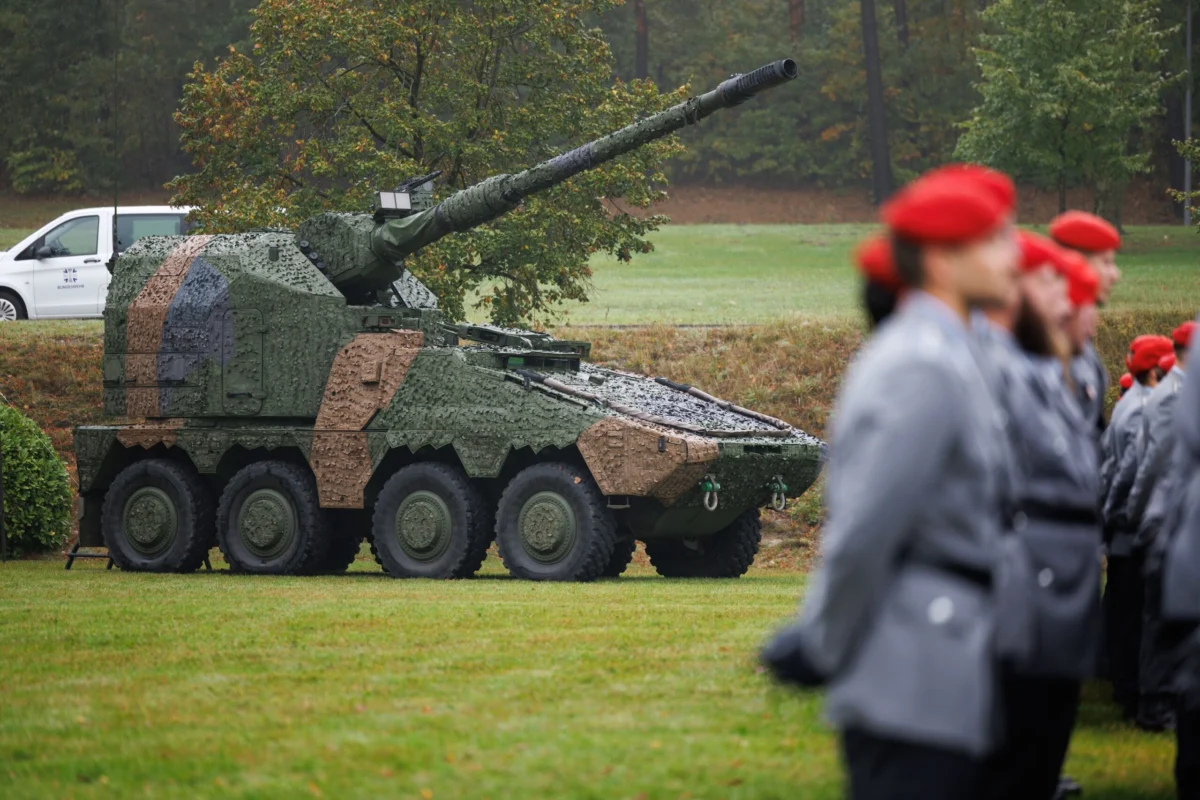
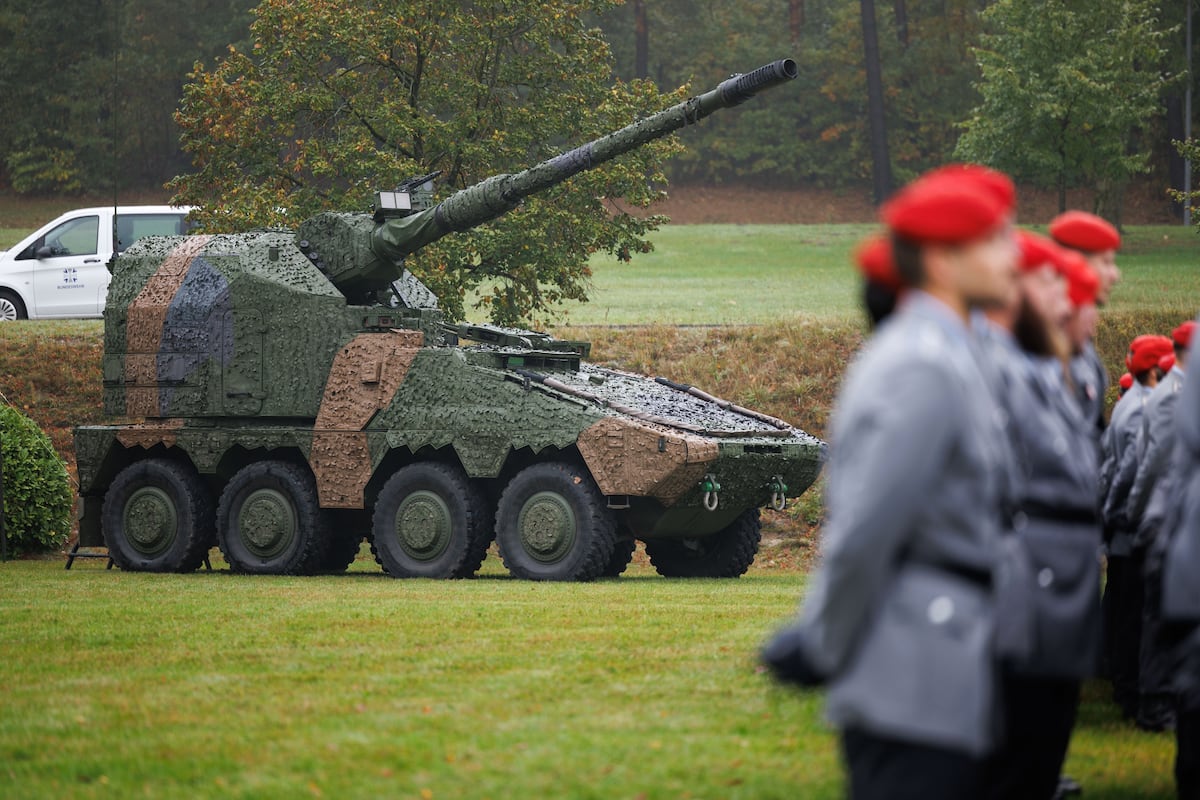
The KNDS RCH 155 represents a radical departure from conventional artillery design. It utilizes the Artillery Gun Module (AGM), an unmanned, fully automated 155mm/L52 turret derived from the proven PzH 2000 howitzer. This module is integrated onto the Boxer 8×8 multi-role armored vehicle chassis, providing a unique combination of protected mobility and automated lethality.
The defining characteristic of the RCH 155 is its ability to fire while in motion. Utilizing a high-precision inertial navigation system (INS) and advanced fire-control software, the system continuously monitors the vehicle’s pitch, roll, and heading. It calculates the optimal firing solution in real-time, discharging the weapon at the exact millisecond the barrel aligns with the target coordinates. This allows a crew to receive a digital fire mission, navigate to a release point, and fire while maintaining speed, never providing a static signature for enemy radar to fix.
Even when operating from a static position for maximum precision, the RCH 155’s reaction times are unprecedented. It can receive a mission and fire its first round in under 20 seconds, and it can be back in motion in less than 10 seconds after the final round leaves the barrel. This "shoot-and-scoot" capability is facilitated by a two-man crew, significantly lower than the standard crews required for the Paladin or M777.
Comparative Operational Efficiency
The shift toward automation offers more than just survivability; it provides a massive leap in operational efficiency and logistical sustainability. According to data provided by KNDS, the performance metrics of the RCH 155 suggest a transformative impact on battery-level operations.
In a standard fire-for-effect mission requiring 216 rounds, a battery of 24 M109 Paladins—manned by 144 soldiers—would typically take over 180 seconds to complete the task. In contrast, a battery of only 12 RCH 155s, requiring a mere 24 soldiers at the gun line, can complete the same mission in 140 seconds. This represents an 83% reduction in personnel requirements at the point of fire while simultaneously increasing the volume of fire delivered per unit of time.
Furthermore, the RCH 155 achieves a burst rate of fire of nine rounds per minute, compared to the six rounds per minute of the M109. The automated loading system handles the 95-pound projectiles and modular charges, eliminating the physical fatigue associated with manual loading and allowing for sustained high-intensity engagements without a drop in performance.
Logistics and Accuracy: The Hidden Multiplier
The RCH 155’s ability to operate closer to the Forward Edge of the Battle Area (FEBA) due to its high survivability has a cascading effect on ammunition consumption. By reducing the range at which engagements occur, the system naturally improves accuracy, which in turn reduces the number of rounds required to neutralize a target.
Analytical models indicate that against a 200×200-meter target at a range of 7 kilometers, a conventional howitzer might require 516 rounds to achieve the desired effect. The RCH 155, utilizing its advanced fire control and closer positioning, can achieve the same result with 216 rounds. At a range of 11 kilometers, the requirement is 353 rounds for the RCH 155 versus 727 for conventional systems. This saving of hundreds of rounds per mission significantly reduces the burden on the logistics "tail," requiring fewer resupply trucks and less personnel in the hazardous combat zone.
Range and Advanced Munitions
The RCH 155 is designed to maximize the potential of modern 155mm ammunition. When firing Velocity-Enhanced Long-Range Artillery Projectiles (V-LAP), the system can reach targets up to 54 kilometers away. This exceeds the 40-kilometer range of the M109A7 firing Excalibur precision rounds. When equipped with Vulcano guided munitions, the RCH 155’s range extends to 70 kilometers, placing it within the operational envelope of the High Mobility Artillery Rocket System (HIMARS) Guided Multiple Launch Rocket System (GMLRS).
This range capability allows the RCH 155 to perform Multiple Rounds Simultaneous Impact (MRSI) missions. In an MRSI engagement, the gun fires up to five rounds at different trajectories and propellant charges so that all five projectiles strike the target within a two-second window. A single RCH 155 can thus replicate the concentrated impact of a multi-gun battery, overwhelming enemy defenses before they can react or take cover.
Strategic Synergy with HIMARS
One of the most compelling arguments for the RCH 155 is its role as a complement to the HIMARS. While HIMARS is an exceptional platform for long-range precision strikes against high-value targets, its cost-per-shot is substantial. A single GMLRS rocket costs approximately $150,000. Using HIMARS for sustained suppressive fire or routine counter-battery missions is economically and logistically unsustainable in a prolonged conflict.
The RCH 155 fills this "fires gap" by providing high-volume, survivable, and precise artillery support at a fraction of the cost. By utilizing standard 155mm shells, the RCH 155 can maintain the pressure of sustained suppression and harassment that would otherwise deplete expensive rocket inventories. Together, the RCH 155 and HIMARS create a tiered fires system: HIMARS for the deep, high-value strike, and the RCH 155 for the mobile, persistent, and survivable brigade-level fight.
Global Adoption and Chronology
The RCH 155 has transitioned from a developmental concept to a combat-proven asset in a remarkably short timeframe.
- April 2024: The United Kingdom selected the RCH 155 as its Mobile Fires Platform to replace the aging AS90 fleet, citing the system’s automation and protection as key factors.
- 2024-2025: Germany established a procurement framework for up to 500 RCH 155 vehicles. This framework includes a government-to-government arrangement that allows allied nations to purchase the systems at German contract pricing, streamlining the acquisition process for NATO partners.
- Late 2025: Ukraine began operating an initial batch of 54 RCH 155 systems. These units have been deployed in one of the world’s most sophisticated electronic warfare and counter-battery environments, providing invaluable real-world data on the system’s performance against modern Russian assets.
Implications for the U.S. Army and the SBCT
The U.S. Army’s Stryker Brigade Combat Teams are currently at a disadvantage regarding organic fires. The M777 towed howitzer, while effective in low-intensity environments, cannot keep pace with the 60-mph road speed of the Stryker vehicle and lacks the armor protection necessary for modern peer-to-peer maneuvers.
Integrating the RCH 155 into the SBCT would align the brigade’s fires capability with its maneuver capability. Because the RCH 155 uses the Boxer chassis—which offers protection against 14.5mm rounds and 10-kilogram anti-tank mines—the gun crews enjoy a level of survivability that far exceeds current Western self-propelled howitzers. Furthermore, the unmanned nature of the turret ensures that the crew is physically separated from the ammunition and firing mechanism, a critical safety feature in the event of a catastrophic hit.
Industry analysts suggest that the Army’s evaluation of the RCH 155 could signal a broader shift away from the "Strategic Cannon" programs of the past toward highly mobile, automated, and "distributed" lethality. As the U.S. Army retools for the challenges of the late 2020s and beyond, the RCH 155 stands as a mature, fielded solution to the enduring problem of surviving and winning the artillery duel on the modern battlefield. The era of the stationary battery is coming to a close; the era of the mobile, remote-controlled fires platform has begun.

Related Posts
Pentagon Forges Landmark Seven-Year Agreements with Boeing and RTX to Accelerate Standard Missile-3 Production and Stabilize Defense Supply Chains
Boeing Unveils Ultra Low-Cost Seeker to Enhance Missile Inventory and Combat Cost Challenges in Modern Warfare