Digital Footprints and Deadly Risks: The Ethical Dilemma of Verifying Human Rights Abuses in Iran
On March 9, Shayan Sardarizadeh, a prominent journalist with BBC Verify, issued a critical warning regarding the dissemination of open-source intelligence (OSINT) originating from Iran, emphasizing that the pursuit of transparency must not come at the cost of human life. Sardarizadeh’s alert focused on a specific and growing danger: the possibility that publishing precise coordinates or detailed geolocations of protest or conflict videos could inadvertently provide the Iranian state with a roadmap to the doorsteps of dissidents. As the Islamic Republic intensifies its surveillance and domestic crackdowns, the digital breadcrumbs left by citizens filming from their windows have become a primary tool for the Islamic Revolutionary Guard Corps (IRGC) to identify, detain, and silence voices of opposition.
This warning highlights a profound ethical crisis within the global human rights and journalistic communities. While the verification of video evidence is essential for documenting state-sponsored violence and potential war crimes, the very act of proving a video’s authenticity—often through painstaking geolocation—can expose the person who filmed it to immediate retaliation. In Iran, where the IRGC’s Intelligence Organization has become increasingly adept at utilizing social media to track internal dissent, a single set of GPS coordinates can be the difference between a successful human rights report and the arbitrary detention of a civilian source.
The IRGC’s Digital Counter-Offensive
The severity of this risk was recently underscored by the IRGC itself. The Intelligence Organization of the Revolutionary Guard published two videos documenting the arrest of several Iranian citizens. These individuals were allegedly targeted for filming and sharing footage of reported US-Israeli strikes—footage that was captured from the privacy of their own homes. The IRGC’s propaganda videos did not merely show the arrests; they featured coerced "confessions" where detainees, visibly under duress, admitted to "collaborating with hostile entities" by sharing visual evidence of military activity.
In these broadcasts, intelligence officials are seen threatening the detainees with lengthy prison sentences, using the videos as a deterrent to the broader public. This tactic serves a dual purpose: it punishes those who dare to document events the state wishes to keep hidden, and it creates a climate of "digital panopticon" where citizens feel that even their private windows are under constant state surveillance. By showcasing their ability to find and arrest individuals based on the perspective of a smartphone camera, the IRGC has turned the tools of citizen journalism into liabilities for those on the ground.
Human Rights Watch and the Challenges of Verification
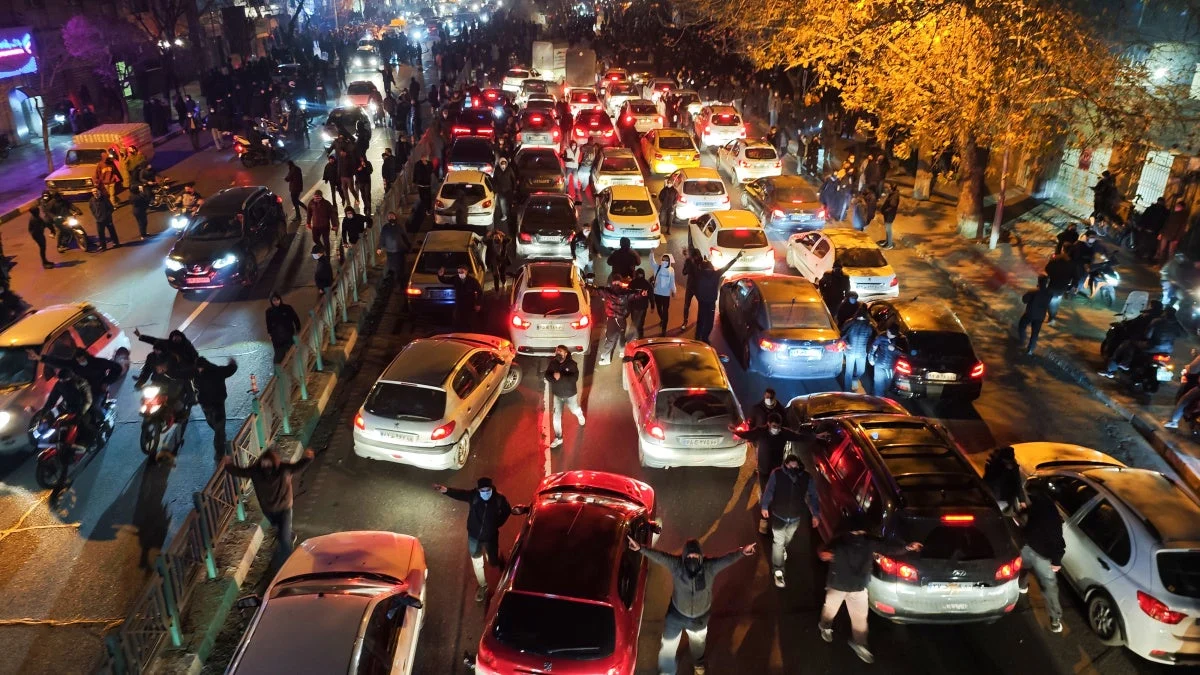
The warning from BBC Verify has been echoed and internalized by major international monitors, most notably Human Rights Watch (HRW). Since early 2024, and continuing through the first quarter of 2026, HRW has been documenting a "tsunami" of arbitrary arrests, enforced disappearances, and what it describes as countrywide massacres of protesters and bystanders. The Iranian government’s response to internal unrest has shifted from traditional street-level policing to a more sophisticated, technologically-driven campaign of repression.
For organizations like HRW, the challenge is compounded by the lack of physical access to the country. With international observers barred and the Iranian government imposing severe communications restrictions—including localized and national internet shutdowns—open-source information is often the only window into the reality of the situation on the ground. However, the process of verifying this information is fraught with danger.
In one recent instance, HRW researchers spent weeks geolocating a critical video filmed during a period of intense state violence. The video, which documented security forces engaging in what appeared to be lethal force against unarmed civilians, was eventually traced to a major road in a small town. While HRW typically prides itself on transparency and providing specific data to back its claims, the internal debate over whether to name the town and the specific apartment block was intense. Ultimately, acknowledging that the video was clearly taken from a residential building, the organization chose to omit the town’s name and keep the location vague to protect the occupants of that building from state retaliation.
The Evolution of Iranian State Surveillance: A Chronology of Repression
The current digital crackdown is the result of a multi-year evolution in how the Iranian state manages information and dissent. To understand the gravity of the current situation, it is necessary to look at the timeline of Iran’s digital and physical response to protest:
- September 2022 – Early 2023: Following the death of Mahsa Amini, Iran experienced its most significant wave of protests in decades. The state responded with a combination of lethal force and "digital blackouts," cutting off Instagram and WhatsApp—the last major foreign platforms available in the country.
- Late 2023 – 2024: The IRGC’s "Cyber Army" began more aggressive "patrolling" of Telegram and X (formerly Twitter). Specialized units were formed to cross-reference protest footage with Google Earth and Iranian-made mapping software to identify the buildings from which footage was filmed.
- January 2026: Human Rights Watch documented a series of "massacres" in several provinces, where security forces used heavy weaponry against protesters. The influx of video evidence led to a massive wave of "door-to-door" arrests, as security forces used metadata and visual landmarks to find the sources of the leaks.
- March 2026: The IRGC officially integrated "AI-driven visual analysis" into its surveillance apparatus, allowing for the rapid identification of residential locations based on the unique skyline and architectural features visible in citizen-recorded videos.
Supporting Data: The Scale of the Digital Siege
The scale of this repression is reflected in the data compiled by digital rights groups and human rights monitors. According to reports from Access Now and the NetBlocks internet observatory, Iran has consistently ranked among the top countries globally for state-mandated internet shutdowns.
- Internet Shutdowns: In the first quarter of 2026 alone, Iran implemented over 15 localized internet "curfews" in regions experiencing high levels of dissent, such as Sistan and Baluchistan and Kurdistan.
- Arbitrary Arrests: Human rights groups estimate that between January and March 2026, over 4,000 individuals were arrested in connection with online activity or the sharing of "unauthorized" media.
- Surveillance Infrastructure: The Iranian government has increased its budget for the "National Information Network" (an intranet designed to decouple Iran from the global internet) by an estimated 35% over the last two fiscal years, prioritizing domestic tracking over connectivity.
Bahar Saba, a researcher specializing in Iran, has documented numerous cases where security forces entered homes without warrants, specifically demanding access to smartphones and cloud storage accounts. "They are not just looking for the videos you posted," Saba noted. "They are looking for the original files, the metadata, and the communication apps used to send them. They are treating a smartphone as a weapon of war."
The "Do No Harm" Protocol in Modern Journalism
In response to these risks, a new set of protocols is emerging within the OSINT community. The principle of "Do No Harm," long a staple of medical and humanitarian ethics, is being adapted for the digital age. Journalistic outlets and NGOs are increasingly adopting the following measures:
- Vague Attribution: Instead of providing exact coordinates (e.g., 35.6892° N, 51.3890° E), reports now often refer to "a residential neighborhood in northern Tehran" or "a town in the western province."
- Redaction of Landmarks: When sharing verified videos, analysts may blur unique architectural features, such as the specific pattern of a neighbor’s balcony or a unique tree line, that could help state intelligence services triangulate the filming location.
- Metadata Scrubbing: Before any video is re-shared or archived in a public database, all EXIF data and metadata are stripped to ensure that the time, date, and device ID cannot be traced back to the original user.
- Avoiding Hyperlinks: As noted by HRW, there is a growing policy against hyperlinking directly to sensitive footage on platforms like X or Telegram if that footage was taken from a private residence. Instead, researchers describe the content or provide stills that have been safety-checked.
Broader Impact and Global Implications
The situation in Iran serves as a cautionary tale for human rights documentation globally. In conflicts ranging from the Russian invasion of Ukraine to the civil war in Myanmar, OSINT has been hailed as a revolutionary tool for accountability. It has allowed the International Criminal Court (ICC) and other bodies to build cases even when they cannot access the ground. However, the Iranian model of "counter-OSINT"—using the same verification techniques to hunt down sources—is being studied and adopted by other autocratic regimes.
The implications for international humanitarian law are significant. If the risk of filming a violation becomes too high, the world may lose its most effective check on state power: the citizen witness. International law protects the right to seek, receive, and impart information, but these protections are increasingly difficult to enforce in the face of sophisticated digital repression.
The decision by Human Rights Watch to prioritize the safety of individuals over the precision of their data reflects a somber reality. In the modern age, information is indeed power, but for those living under the shadow of the IRGC, that power can be lethal. As Shayan Sardarizadeh and other experts continue to warn, the documentation of history must not become a death sentence for those brave enough to record it. The future of human rights work will depend on the ability of researchers to balance the need for undeniable evidence with the absolute necessity of protecting the human beings behind the camera.

Related Posts
Human Rights Watch Calls for Investigation into Death of Detainee Following Removal from Najaf Hospital by Iraqi Drug Police
Human Rights Watch Urges UN Security Council to Extend Lebanon Peacekeeping Mission Amid Escalating Conflict and Humanitarian Crisis