The Growing Crisis of Confidence: How Hungarian Allegations of Leaks to Moscow are Reshaping European Union Security and Diplomacy
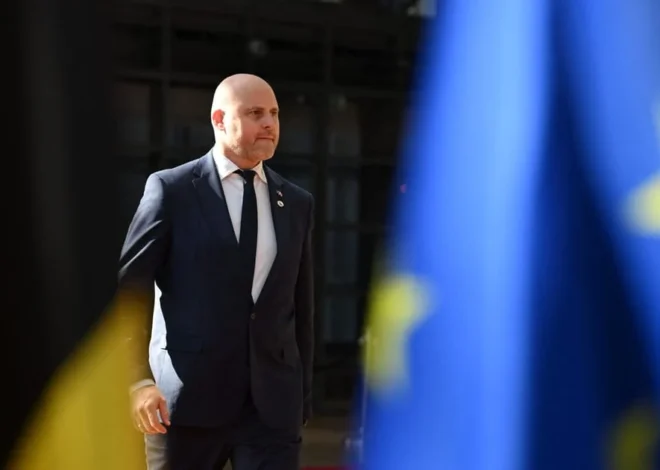
The European Union is currently navigating a period of profound institutional instability following explosive allegations leveled by European Council President Donald Tusk regarding the potential compromise of sensitive discussions by the Hungarian government. These accusations, which suggest that confidential deliberations within the European Council may have been leaked to the Kremlin, have ignited a firestorm in Brussels, casting a long shadow over the principle of solidarity that serves as the bedrock of the European project. As Zoya Sheftalovich and Nick Vinocur have highlighted, the tension between Budapest and the rest of the bloc has reached an inflection point, raising critical questions about intelligence security, the viability of consensus-based decision-making, and the political future of Prime Minister Viktor Orbán.
A Timeline of Escalating Friction
The discord between Budapest and Brussels is not a new phenomenon; it is the culmination of years of policy divergence. However, the current crisis can be traced through a specific recent chronology that underscores the deterioration of trust:
- 2022 – Early 2023: As the European Union moved to impose successive rounds of sanctions against Russia following the invasion of Ukraine, Hungary utilized its veto power to secure carve-outs, most notably regarding energy imports.
- Late 2023: Negotiations regarding the long-term financial assistance package for Ukraine were repeatedly stalled by Hungarian opposition, forcing European leaders to consider alternative, bypass-oriented funding mechanisms.
- Early 2024: Intelligence reports and internal briefing leaks began circulating among EU member states suggesting that information shared during closed-door sessions was appearing in Russian state media or being utilized in diplomatic maneuvering by Moscow.
- Mid-2024: Donald Tusk, acting as a pivotal voice for the pro-integrationist camp, publicly signaled that the "leakage" of sensitive discussions had compromised the council’s internal security, effectively accusing the Orbán administration of acting as a conduit for information to the Kremlin.
The Data Behind the Discord
The economic and political reality of Hungary’s position within the European Union is defined by a stark contrast between its financial dependency and its ideological defiance. Data from the European Commission indicates that Hungary remains a significant net recipient of EU cohesion funds, despite the ongoing freezing of billions of euros due to Rule of Law concerns.
According to recent budget reports, Hungary has historically received approximately 3% to 4% of its annual GDP from EU structural and investment funds. This financial leverage is a central pillar of the European Commission’s strategy to force compliance. However, the economic data also reveals that Hungary’s energy dependency on Russia remains exceptionally high. Over 80% of Hungary’s natural gas imports continue to flow from Russian suppliers, a figure that is significantly higher than the EU average, which has dropped below 15% since 2022. This structural dependency provides a quantifiable basis for the suspicion that Budapest is prioritizing its energy security ties with Moscow over the collective security mandates of the European Union.
Official Responses and Diplomatic Fallout
The accusations have triggered a defensive posture from the Hungarian government. Officials in Budapest have consistently dismissed the allegations as a "political witch hunt," arguing that the leaks are a fabrication intended to discredit a sovereign government that dares to pursue a "pragmatic" foreign policy.
Spokespeople for the Hungarian administration have stated that Hungary remains a committed member of NATO and the EU, emphasizing that their outreach to Moscow is a necessary component of maintaining national stability in a volatile region. Conversely, European Commission officials, speaking on condition of anonymity, have expressed growing frustration. One high-level diplomat noted that the "sanctity of the Council room is the only thing keeping the bloc functioning," implying that if the confidentiality of high-level discussions is compromised, the European Union can no longer operate as a coherent geopolitical actor.
The European Parliament has also signaled its intent to launch formal inquiries into the security protocols governing the European Council. While the Council operates with high levels of digital and physical security, human intelligence leaks—the sharing of information by participants—are significantly harder to mitigate through technical upgrades.
Balancing Acts: Iran and the Transatlantic Dimension
The crisis over Hungarian leaks is further complicated by the shifting geopolitical environment, particularly regarding the European Union’s approach to Iran. As the administration of Donald Trump exerts renewed pressure on European partners to abandon the Joint Comprehensive Plan of Action (JCPOA) and adopt a more aggressive stance toward Tehran, the EU finds itself in a precarious balancing act.
European leaders are desperate to maintain a unified front on Iran to avoid being sidelined in Washington’s foreign policy calculations. However, internal fissures—exacerbated by the perception that Hungary may be undermining collective positions—threaten to fracture this unity. If the EU cannot guarantee the security of its internal deliberations, its ability to negotiate with global powers like the United States and Iran is severely hampered. Analysts suggest that the lack of internal trust makes the EU appear weak, providing an opening for external actors to play individual member states against one another.
Electoral Context: France and Germany
The broader context of this institutional crisis is underscored by recent political tremors in France and Germany. The weekend’s voting results in both nations—marked by a surge in populist and euroskeptic sentiment—add a layer of urgency to the situation in Brussels.
In France, the rise of parties questioning the depth of European integration suggests that the public appetite for "Brussels-led" policies is waning. Similarly, in Germany, the political landscape is shifting as the ruling coalition contends with internal pressures to prioritize domestic economic concerns over the costs of supporting the European security architecture. When combined with the Hungarian issue, these electoral results paint a picture of a continent struggling to maintain a cohesive narrative.
For leaders like Donald Tusk, the message is clear: if the EU cannot demonstrate that it can secure its own processes and govern its members effectively, it risks losing the mandate of its citizens at a time when the external geopolitical threats are at their highest level since the Cold War.
Implications for the Future of European Integration
The implications of these leaked discussions extend far beyond the immediate scandal. If it is proven that internal Council discussions were compromised, the European Union may be forced to adopt a tiered system of intelligence sharing. This would effectively relegate certain member states to a "second tier" of access, a move that would fundamentally alter the structure of the bloc and likely lead to a permanent fracturing of the European project.
Furthermore, the position of Viktor Orbán in Brussels has become increasingly untenable. While there is currently no legal mechanism to strip a member state of its voting rights without unanimous consent—a threshold that is impossible to meet given Hungary’s strategic alliances with other skeptical nations—the social and political isolation of Budapest is accelerating.
As the European Union looks toward the next legislative session, the focus will likely shift from policy expansion to institutional fortification. The challenge for Brussels is to address the security concerns without triggering an irreversible exit or a total breakdown in relations with Central European partners.
Ultimately, the crisis serves as a stark reminder that the European Union’s strength is entirely dependent on the trust that its members place in one another. Whether that trust can be repaired, or whether the bloc is heading toward a more decentralized, less integrated future, will be the defining question of the next several years of European politics. The current allegations, while perhaps localized in the short term, represent a systemic vulnerability that the EU can no longer afford to ignore.