The August War: How Hong Kong Defended Its Dollar Against Global Speculators
The summer of 1998 remains etched in the annals of financial history as a period of unprecedented turmoil, a time when the seemingly unassailable Hong Kong dollar found itself squarely in the crosshairs of powerful international speculators. In the sweltering heat of August, the usually serene atmosphere within the Hong Kong Monetary Authority’s (HKMA) headquarters in Citibank Tower crackled with tension. Regional currencies had begun a precipitous collapse, cascading like dominoes across Asia, and the contagion threatened to engulf one of the world’s most vibrant financial hubs.
The architects of this financial onslaught were rapacious speculators, primarily international hedge funds, who had systematically shorted currencies such as the Thai baht, the Indonesian rupiah, and the Korean won. Their strategy, executed with ruthless precision, had already yielded substantial profits. The prevailing sentiment was that the Hong Kong dollar, despite its robust peg to the US dollar, was the next logical target, poised to be brought to its knees. As financial chroniclers of that era have vividly recalled, the "wolves" were indeed at the gates, their predatory intent palpable in the charged air of the financial district.
The speculators’ strategy was a sophisticated and lethal "double play." They simultaneously initiated short positions on the Hang Seng Index, Hong Kong’s benchmark stock market index, and began aggressively dumping the Hong Kong dollar. Their audacious bet hinged on a core tenet of Hong Kong’s economic philosophy: its rigidly maintained currency peg. The HKMA’s commitment to this peg, under its currency board system, meant that to defend the Hong Kong dollar from speculative attacks, it would be compelled to raise interest rates dramatically. The speculators anticipated that these astronomically high interest rates would cripple the already teetering stock market, leading to a catastrophic decline in the Hang Seng Index. This dual assault was designed to deliver a colossal, multi-billion-dollar payday to the funds involved.
For two agonizing weeks, the city’s financial leadership, comprising top officials from the HKMA and the Hong Kong government, found themselves in a high-stakes war room. Decisions were made under immense pressure, with the very integrity of Hong Kong’s financial sovereignty at stake. The central dilemma they faced represented an ideological heresy for a government that prided itself on its "laissez-faire" principles: should a free-market champion government intervene directly in the stock market? Such an intervention was anathema to the established economic orthodoxy that had served Hong Kong so well.
Yet, with the specter of financial collapse looming, the pragmatic imperative overrode ideological purity. Operating with absolute secrecy, the authorities began to mobilize the formidable "firepower" of the Exchange Fund, Hong Kong’s vast foreign reserves. A meticulously orchestrated defensive maneuver was put into motion. In a move that underscored the clandestine nature of their operations, three of the city’s largest stockbrokers were discreetly invited to breakfast at the prestigious China Club in Central. Sworn to the strictest secrecy, they were tasked with executing trades on behalf of the HKMA, acting as proxies for the government’s intervention in the market.
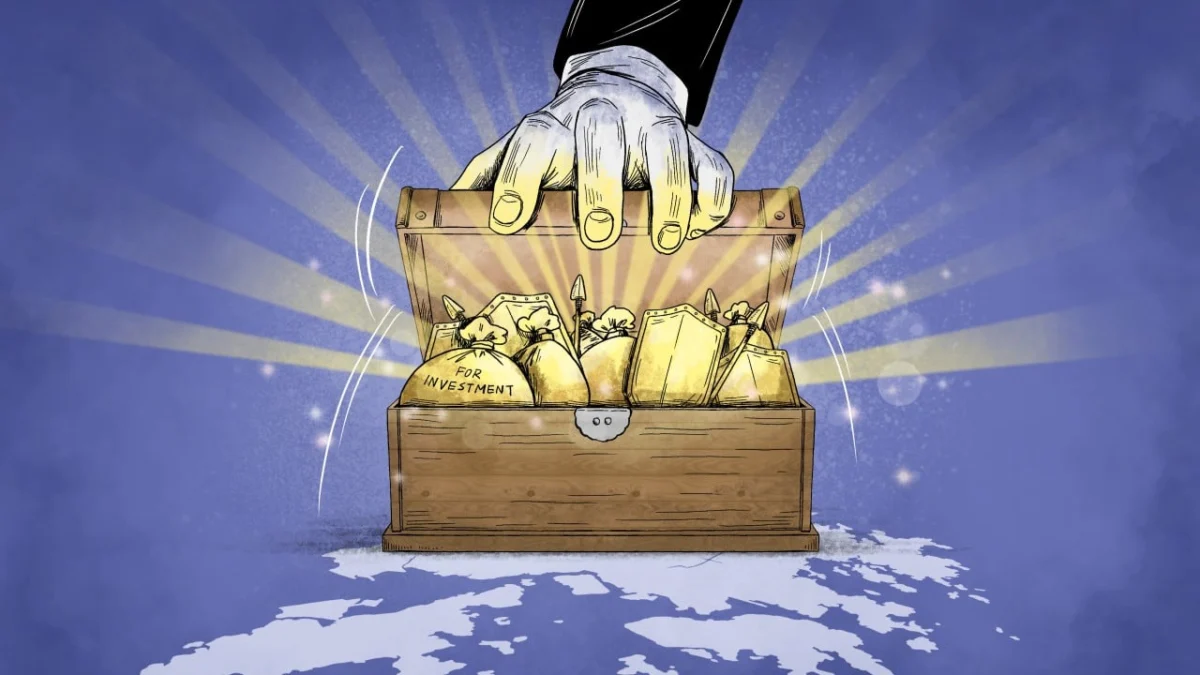
The HKMA unleashed its formidable spending power over a tense ten-day period. The scale of the operation was unprecedented. The Exchange Fund, a war chest built over decades from Hong Kong’s robust trade surpluses and foreign exchange earnings, was now being deployed not for investment, but for direct market intervention. The objective was clear: to absorb the relentless selling pressure and demonstrate an unwavering commitment to defending the currency peg, thereby making the speculators’ position untenable.
The climax of this financial battle arrived on a single, pivotal Friday. The market was awash with sell orders, a torrent of liquidity being unleashed by the retreating speculators and those caught in the panic. The HKMA, through its appointed brokers, stepped into the breach, absorbing an avalanche of sell orders. In a breathtaking display of financial might, the authority spent an astonishing HK$79 billion in just five hours. This massive expenditure was the decisive blow, designed to shatter the speculators’ resolve and break their backs. The sheer volume of buying power deployed by the HKMA overwhelmed the selling pressure, signaling that the market had found a floor and that further bets against the Hong Kong dollar would be ruinous.
The entire operation, dubbed the "August War," incurred a total cost of HK$118 billion. While this figure represents a substantial sum, the strategic victory it secured was far more valuable. It cemented the reputation of the Exchange Fund as the city’s ultimate, untouchable "war chest," a powerful instrument capable of defending Hong Kong’s financial stability against even the most formidable global attacks. This intervention, though controversial and a departure from Hong Kong’s free-market ethos, ultimately preserved the integrity of its currency peg and averted a potentially devastating financial crisis.
The Asian Financial Crisis: A Broader Context
The events of August 1998 did not occur in a vacuum. They were a critical chapter in the broader Asian Financial Crisis that erupted in July 1997. The crisis began with the devaluation of the Thai baht, triggered by a combination of factors including unsustainable current account deficits, excessive foreign debt, and speculative attacks on the currency. The domino effect was swift and brutal. Within months, the Indonesian rupiah, Malaysian ringgit, Philippine peso, and South Korean won experienced dramatic devaluations, wiping out years of economic gains and plunging millions into poverty.
Several underlying vulnerabilities had rendered these economies susceptible to speculative pressure:
- Fixed Exchange Rate Regimes: Many Asian economies, including Thailand and South Korea, maintained pegged or managed exchange rate systems. While providing stability, these regimes became attractive targets for speculators who could bet on a government’s ability to defend its currency.
- Large Foreign Debt: A significant portion of this debt was short-term and denominated in US dollars. As currencies weakened, the cost of servicing this debt ballooned, creating a vicious cycle of devaluation and increased debt burden.
- Weak Financial Sectors: Inadequate regulation, poor corporate governance, and the presence of non-performing loans had weakened the banking sectors of many affected countries, making them less resilient to economic shocks.
- Capital Flows: The rapid inflow of foreign capital in the preceding years, often referred to as "hot money," had fueled asset bubbles and exacerbated current account imbalances. When investor sentiment shifted, the sudden outflow of capital amplified the crisis.
Hong Kong, with its open capital account and pegged currency, was seen by many as an inevitable casualty. The HKMA’s commitment to its currency board system, which mandated that the monetary base be fully backed by foreign reserves, meant that any defense of the Hong Kong dollar would require significant intervention, potentially impacting interest rates and the stock market.
Chronology of the "August War"
The events of August 1998 unfolded with a rapid and intense pace, characterized by escalating speculation and a decisive government response. While precise daily details are often closely guarded, the general chronology can be reconstructed:
- Late July/Early August 1998: As regional currencies continued to weaken, pressure on the Hong Kong dollar intensified. Speculators, emboldened by their successes elsewhere, began to build substantial short positions against the Hong Kong dollar and the Hang Seng Index.
- Early to Mid-August 1998: The intensity of speculative attacks escalated. Daily trading volumes surged, and the HKMA was reportedly engaged in significant intervention to defend the peg, leading to higher interest rates. The market began to price in a potential devaluation.
- Mid-August 1998 (Two Weeks of Intense Activity): This period marked the height of the "war room" phase. The HKMA and government officials deliberated on the unprecedented decision to intervene directly in the stock market. Secrecy was paramount.
- Mid-August 1998 (The "Double Play" Intensifies): Speculators simultaneously shorted the Hang Seng Index and dumped the Hong Kong dollar, creating a two-pronged assault designed to force the HKMA’s hand.
- A Specific Friday in Mid-August 1998 (The Decisive Intervention): The HKMA launched its massive intervention. Over a five-hour period, an estimated HK$79 billion was spent to absorb sell orders and stabilize the market. This was the critical turning point, signaling the end of the speculative offensive.
- Late August 1998: The speculative attacks subsided. The HKMA’s decisive action, coupled with the realization that the Hong Kong authorities were willing to deploy significant resources, deterred further attacks. The market began to stabilize, and the Hong Kong dollar remained pegged to the US dollar.
- Post-August 1998: The HKMA publicly acknowledged its intervention, defending its actions as necessary to preserve financial stability. The total cost of the intervention was later disclosed as approximately HK$118 billion.
Supporting Data and Financial Muscle
The HKMA’s ability to execute such a massive intervention was underpinned by the strength of Hong Kong’s foreign reserves, managed through the Exchange Fund. By the late 1990s, Hong Kong had accumulated substantial reserves, a testament to its decades of economic success and prudent fiscal management.
- Exchange Fund Reserves: While exact figures fluctuate, the Exchange Fund held hundreds of billions of US dollars in assets. This vast pool of capital provided the necessary firepower to counter speculative attacks. For context, the HK$118 billion spent in August 1998 represented a significant, but not crippling, portion of these reserves.
- Currency Board System: The credibility of Hong Kong’s currency board system, established in 1983, was also a crucial factor. This system ensured that the monetary base was fully backed by foreign currency reserves at a fixed exchange rate of HK$7.80 to US$1. This provided a strong anchor for the currency, but also meant that defending it required direct intervention in the foreign exchange market and, consequently, potentially higher interest rates.
- Interest Rate Hikes: To defend the peg, the HKMA had to allow interest rates to rise sharply. This put immense pressure on the stock market, as borrowing costs soared for companies and investors. Interbank lending rates, for example, spiked to exceptionally high levels during this period, reflecting the tightness of liquidity and the cost of defending the currency.
The intervention was not simply about spending money; it was a calculated display of financial power and resolve. The HKMA demonstrated that it possessed the means and the will to defend the Hong Kong dollar at any cost, making further speculative attacks prohibitively risky.
Official Responses and Inferred Reactions
The decision to intervene directly in the stock market was a significant departure from Hong Kong’s long-standing "positive non-interventionist" policy. This policy, championed by former Financial Secretary Sir John James Cowperthwaite, emphasized minimal government interference in the market.
HKMA and Government Officials:
- Justification: In the aftermath, officials from the HKMA and the Hong Kong government defended their actions as a necessary measure to protect the stability of the Hong Kong dollar and the broader financial system. They argued that the speculative attacks were indiscriminate and threatened to destabilize the entire economy.
- "Laissez-faire" Reinterpreted: While acknowledging the ideological shift, they framed the intervention not as an abandonment of free-market principles, but as a defense of the conditions necessary for the market to function. They argued that unchecked speculation could lead to market collapse, thereby undermining the very foundations of a free economy.
- Secrecy as a Tool: The emphasis on secrecy during the intervention was a strategic choice. Revealing their plans in advance would have allowed speculators to adapt and potentially increase their bets. The element of surprise was crucial to the operation’s success.
International Speculators (Inferred Reactions):
- Disappointment and Losses: The failure of their strategy would have led to significant financial losses for the hedge funds involved. Their bets against the Hong Kong dollar and the Hang Seng Index would have become increasingly costly as the HKMA’s intervention pushed up interest rates and stabilized the market.
- Respect for HKMA’s Resolve: While likely frustrated, the sophisticated players in the financial markets would have gained a grudging respect for the HKMA’s decisive action and its deep reserves. They would have recognized that Hong Kong was not an easy target.
- Shift in Strategy: The experience likely led to a reassessment of strategies targeting countries with strong central banks and deep reserves capable of mounting sustained defenses.
Market Participants and the Public:
- Anxiety and Uncertainty: During the crisis, there was widespread anxiety among businesses and residents about the potential devaluation of the Hong Kong dollar and the impact on the economy.
- Relief and Vindication: Following the successful defense, there was a sense of relief and vindication. The HKMA’s actions were seen by many as a crucial victory for Hong Kong’s financial independence and resilience.
- Debate on Intervention: The intervention sparked a long-standing debate about the appropriate role of government in financial markets, particularly in a free-market economy like Hong Kong.
Broader Impact and Implications
The "August War" had profound and lasting implications for Hong Kong and the broader international financial landscape:
- Strengthened HKMA’s Reputation: The successful defense significantly enhanced the HKMA’s reputation as a capable and formidable financial regulator. It demonstrated its ability to act decisively and effectively in the face of severe external threats.
- Reinforcement of the Currency Board System: The event underscored the robustness of Hong Kong’s currency board system. While the intervention was a departure from pure laissez-faire, it ultimately served to reinforce the credibility of the peg by demonstrating the HKMA’s capacity to defend it.
- Precedent for Market Intervention: The intervention set a precedent for direct government involvement in the stock market during times of crisis. While controversial, it provided a template for future actions if deemed necessary to protect financial stability.
- Increased Vigilance Against Speculation: The experience heightened awareness among financial regulators globally about the potential for sophisticated speculative attacks and the need for robust defense mechanisms.
- Hong Kong’s Resilience: The crisis and its resolution showcased Hong Kong’s remarkable resilience and its ability to navigate severe economic shocks. It solidified its position as a major international financial center, capable of withstanding significant pressure.
- Long-Term Economic Analysis: The intervention’s cost of HK$118 billion was a significant outlay. However, economic analyses have largely concluded that the cost of inaction – a potential devaluation and widespread financial panic – would have been far greater, impacting trade, investment, and employment for years to come. The preservation of confidence in the Hong Kong dollar was paramount to the city’s continued economic prosperity.
In conclusion, the August War of 1998 was a defining moment in Hong Kong’s financial history. It was a testament to the strategic acumen and financial might of the Hong Kong Monetary Authority, which, against the backdrop of a devastating regional crisis, chose to defend its currency with unprecedented intervention. The event serves as a potent reminder of the ever-present risks in global finance and the critical importance of strong, decisive leadership in safeguarding economic stability.