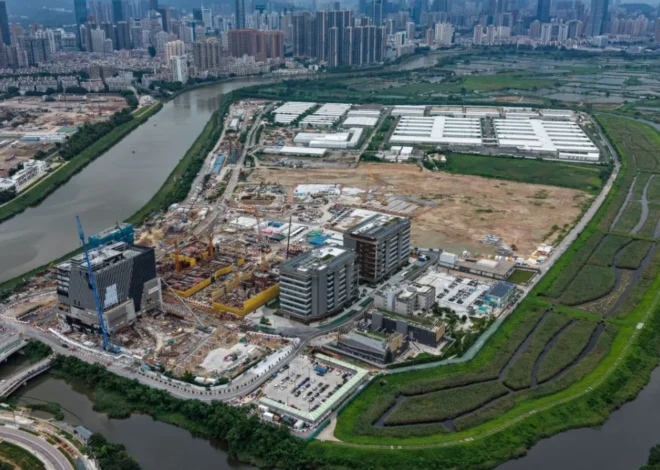
The arduous journey to Hong Kong’s San Tin Technopole underscores the ambitious vision of the Northern Metropolis megaproject.
Travelling from Hong Kong’s bustling commercial heart to the site of the San Tin Technopole, a planned innovation hub under the Northern Metropolis megaproject, is currently an exercise in endurance that highlights the significant infrastructure development required to realize the ambitious vision for this nascent economic engine. The journey, which can take approximately two hours from the vibrant district of Causeway Bay, necessitates a multi-modal approach, involving navigating two distinct train lines, expertly transitioning through two major transit interchanges, and finally, securing a ride on a public minibus to reach the designated area.
Upon arrival, visitors are not greeted by the anticipated panorama of gleaming skyscrapers, state-of-the-art research facilities, or bustling commercial centres. Instead, the landscape is characterized by a more tranquil, albeit underdeveloped, tableau: a patchwork of serene fish ponds, traditional villages, scattered squatter homes, and brownfield sites. Direct, seamless access to public transport remains a rarity in this area, presenting a stark contrast to the urban efficiency of Hong Kong’s established districts. Yet, beneath this seemingly rural and underdeveloped soil lies the foundational blueprint for what authorities envision as Hong Kong’s future economic powerhouse.
The Northern Metropolis, a megaproject first unveiled in 2021, is being hailed as a potential game-changer for Hong Kong’s economic trajectory. This ambitious undertaking aims to transform approximately 30,000 hectares of land strategically located along the border with Shenzhen in mainland China. The overarching objective is to cultivate a dual engine for economic growth and address the territory’s persistent housing challenges. This expansive development is meticulously planned to encompass several key zones, including a dedicated innovation and technology (I&T) zone, a robust commerce and industry zone, a sophisticated high-end professional services and logistics hub, and a vital area integrating recreation and conservation elements.
Recognizing the strategic importance of the Northern Metropolis, which has been elevated to a national priority by Beijing, Hong Kong authorities are actively engaged in garnering public support for the implementation of a suite of designated laws. These legislative measures are designed to expedite the development process, effectively granting the megaproject special administrative status and allowing for more streamlined decision-making and land acquisition. This move signals a clear commitment from both Hong Kong and mainland authorities to accelerate the realization of this transformative project.
The Genesis and Scope of the Northern Metropolis
The concept of the Northern Metropolis emerged as a strategic response to several critical challenges facing Hong Kong. Faced with a growing demand for housing, a need to diversify its economic base beyond its traditional strengths in finance and services, and a desire to strengthen its integration with the Greater Bay Area (GBA), the government identified the underutilized land in the New Territories North as a prime candidate for large-scale development. The initial announcement in October 2021 by Chief Executive Carrie Lam outlined a vision for a vibrant, livable, and economically dynamic region that would serve as a new growth pole for Hong Kong.
The sheer scale of the Northern Metropolis is unprecedented in Hong Kong’s recent history. Spanning an area significantly larger than Hong Kong Island and Kowloon combined, it is designed to accommodate a projected population of around 2.5 million people and create approximately 650,000 jobs. The project’s strategic location, bordering Shenzhen, is a crucial element, fostering closer economic ties and collaboration within the GBA, a region with a combined GDP exceeding USD 1.6 trillion.
The development plan is multifaceted, with the San Tin Technopole serving as a cornerstone of the I&T cluster. This zone is envisioned to be a hub for cutting-edge research and development, attracting leading technology companies, startups, and academic institutions. The adjacent commerce and industry zones are slated to support manufacturing, advanced logistics, and other business activities, creating a synergistic ecosystem. Furthermore, the inclusion of a high-end professional services and logistics hub aims to leverage Hong Kong’s existing strengths in these sectors while expanding their capacity. The commitment to integrating recreation and conservation underscores a broader objective of creating a balanced and sustainable environment for residents and visitors alike.
Navigating the Development Landscape: Infrastructure and Challenges
The current state of accessibility to the San Tin Technopole, as evidenced by the lengthy and complex journey from Causeway Bay, underscores the monumental infrastructure task ahead. The Northern Metropolis development plan includes substantial investments in transportation networks. This is not merely about connecting the new metropolis to existing urban centres but also about establishing robust links with mainland China. Key projects include the expansion of the East Rail Line, the development of new light rail systems, and the enhancement of road networks, including cross-border bridges and tunnels.
Data from the Hong Kong government’s Planning Department indicates that the Northern Metropolis project is projected to cost upwards of HK$600 billion (approximately US$77 billion) over the next two decades. This figure encompasses land formation, infrastructure development, and the provision of public amenities. The financing model is expected to involve a combination of public funds, private sector investment, and land revenue.
However, the path to realizing this vision is fraught with challenges. One of the most significant is land resumption and acquisition. Much of the land designated for the Northern Metropolis is privately owned, including agricultural land, villages, and brownfield sites. The process of acquiring this land, often involving lengthy negotiations and compensation disputes, can be a major bottleneck. The government’s proposed legislative measures aim to streamline these processes by granting special powers for expedited land acquisition in designated areas, a move that has drawn scrutiny and concerns from some stakeholders regarding property rights.
Another critical challenge is environmental protection. The development area encompasses ecologically sensitive wetlands and agricultural land. Balancing the imperative for rapid urban development with the need for environmental conservation requires careful planning and mitigation strategies. Environmental impact assessments are crucial, and the government has committed to setting aside significant areas for nature reserves and ecological corridors within the Northern Metropolis.
Public Consultation and Legislative Push
The government’s strategy to fast-track development through designated laws highlights a proactive approach to overcoming potential bureaucratic hurdles. This legislative push is currently undergoing public consultation, allowing various stakeholders, including residents, business groups, and environmental organizations, to voice their opinions and concerns. The intention behind these proposed laws is to create a more agile regulatory framework, enabling faster land rezoning, infrastructure approvals, and construction permits.
The rationale for special legislative status is rooted in the sheer scale and complexity of the Northern Metropolis project. Traditional planning and approval processes, while robust, can be time-consuming. By creating a bespoke legal framework, the government aims to accelerate timelines and ensure the project remains on track to meet its ambitious development targets. This approach is not unprecedented in large-scale urban development projects globally, where specific legislation has been enacted to facilitate transformative initiatives.
Reactions from various stakeholders are varied. Industry bodies, such as the construction and technology sectors, have largely welcomed the move, emphasizing the need for speed and efficiency to attract investment and create jobs. They point to the potential for Hong Kong to fall behind regional competitors if development is unduly delayed. Conversely, some community groups and environmental advocates have expressed concerns about the potential for rushed decision-making to overlook important social and environmental considerations. They advocate for robust public engagement and stringent oversight mechanisms even within a streamlined legislative framework.
Economic Implications and Future Outlook
The successful development of the Northern Metropolis is expected to have profound economic implications for Hong Kong. Proponents argue that it will diversify the city’s economy, reducing its reliance on financial services and creating new high-value jobs in innovation, technology, and advanced manufacturing. The proximity to Shenzhen is seen as a significant advantage, fostering collaboration and innovation within the GBA.
The creation of a dedicated I&T zone is particularly crucial for Hong Kong’s long-term competitiveness. As global economies increasingly pivot towards knowledge-based industries, Hong Kong needs to bolster its research and development capabilities. The San Tin Technopole, along with other I&T clusters envisioned within the Metropolis, aims to achieve this by attracting talent, capital, and leading-edge companies. Projections suggest that the Northern Metropolis could contribute significantly to Hong Kong’s GDP, potentially adding billions of dollars annually once fully developed.
Furthermore, the project is designed to alleviate Hong Kong’s persistent housing shortage. The planned residential developments aim to provide a substantial supply of new homes, potentially stabilizing property prices and improving affordability for residents. The inclusion of diverse housing options, from public rental flats to private residences, is intended to cater to a wide range of income groups.
The timeline for the Northern Metropolis is ambitious, with the first phase of development expected to commence in the coming years. The government has set targets for completing key infrastructure and initial development zones within the next decade. However, the full realization of the 30,000-hectare vision will likely span several decades, requiring sustained political will, significant investment, and effective collaboration between government, the private sector, and the community.
The journey from the heart of Hong Kong to the nascent San Tin Technopole may be arduous today, but it symbolizes the immense undertaking of transforming a vision into reality. The Northern Metropolis represents a strategic bet on Hong Kong’s future, aiming to reposition the city as a leading innovation hub and a more livable, sustainable urban centre within the dynamic Greater Bay Area. The success of this megaproject will hinge on the government’s ability to navigate complex challenges, secure broad public support, and execute a development plan of unprecedented scale and ambition. The coming years will be critical in observing how this ambitious blueprint begins to take shape on the ground, and whether the current inconveniences of travel will ultimately give way to a new era of connectivity and prosperity.