Strategic Choke Points and Economic Warfare: The US Navy Blockade of the Strait of Hormuz and the Growing Threat in the Bab el-Mandeb
The global maritime landscape is currently undergoing its most significant transformation since the mid-20th century as the United States Navy implements a full-scale blockade of the Strait of Hormuz. Following a direct executive order from President Donald Trump, the U.S. Fifth Fleet has positioned a formidable carrier strike group and several surface combatants at the mouth of the Persian Gulf, effectively halting the flow of maritime traffic bound for or departing from Iranian ports. While the immediate focus of international markets and military analysts remains fixed on the volatile waters between Oman and Iran, a secondary and perhaps more unpredictable threat is emerging nearly 1,200 miles to the southwest. Foreign policy experts and military strategists are sounding the alarm regarding the Bab el-Mandeb Strait, a narrow waterway off the coast of Yemen that serves as the southern gateway to the Red Sea and the Suez Canal. As the conflict between the United States and Iran—designated Operation Epic Fury—enters its third month, the potential for Iranian-backed Houthi rebels to open a second maritime front threatens to destabilize the global economy and escalate the current regional war into a worldwide shipping crisis.
Chronology of Escalation: From Strikes to Blockade
The current crisis traces its origins to the final days of February 2026. Following months of heightened tensions and intelligence reports regarding imminent threats to regional assets, a combined force of United States and Israeli air assets launched a massive wave of strikes on February 28. These strikes targeted Iranian nuclear facilities, drone manufacturing hubs, and command-and-control centers associated with the Islamic Revolutionary Guard Corps (IRGC). The Pentagon characterized this opening salvo as a "preemptive defensive measure," though it effectively signaled the start of a hot war.
By early April 2026, the conflict had transitioned into a grueling campaign of attrition. On April 8, the Pentagon released sobering data indicating that 13 U.S. troops had been killed and 346 wounded since the commencement of Operation Epic Fury. Despite these casualties, the Trump administration maintained that the "maximum pressure" campaign was yielding results. However, peace talks held over the weekend of April 11–12 reached a total impasse, with Tehran refusing to dismantle its remaining ballistic missile infrastructure and Washington refusing to lift any sanctions without a comprehensive regime change.
On Sunday, April 12, President Trump announced via Truth Social that the U.S. Navy would begin a blockade of the Strait of Hormuz. By April 13, U.S. Central Command (CENTCOM) refined the operational scope, clarifying that while the blockade would be "enforced impartially," it would specifically target vessels bound for or departing Iranian ports. By April 14, reports from the region confirmed that ship traffic to Iranian terminals had come to a virtual standstill, as the U.S. Navy asserted its "right of visit and search" under international maritime law.
The Bab el-Mandeb: The Second Choke Point
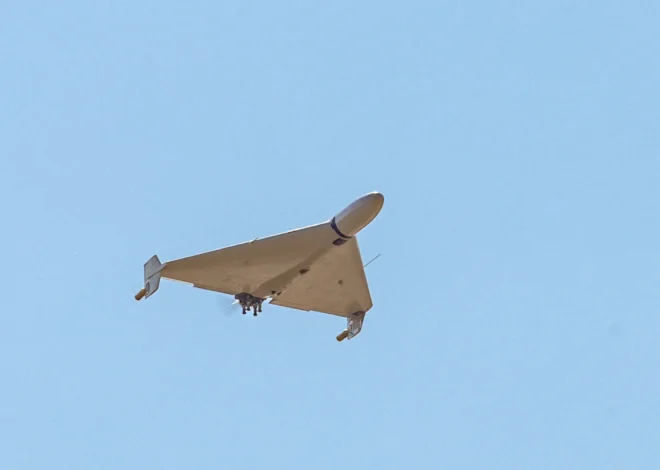
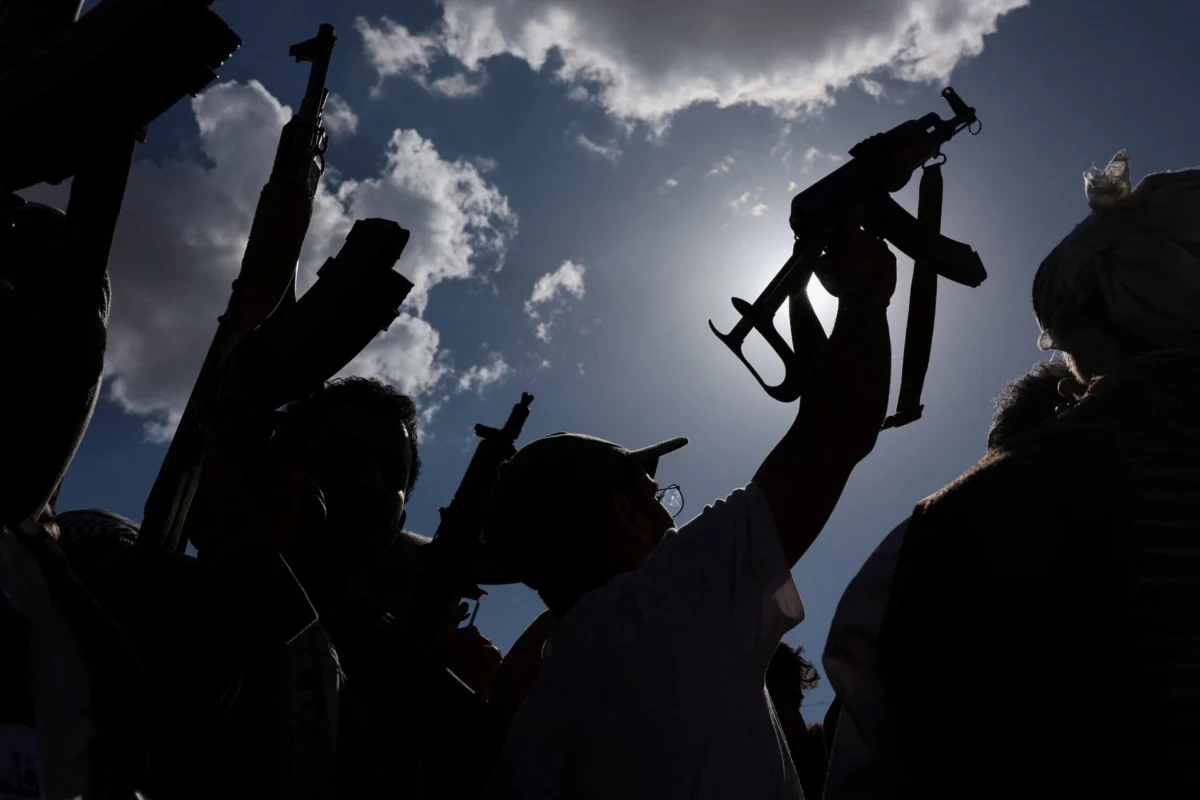
While the Strait of Hormuz is the world’s most important oil transit point, the Bab el-Mandeb Strait is the vital artery for trade between Asia and Europe. Only 18 miles wide at its narrowest point, the strait is flanked by Djibouti and Eritrea to the west and Yemen to the east. The Houthis, who currently control the majority of Yemen’s coastline, have spent years refining their ability to disrupt traffic in these waters using asymmetric tools such as anti-ship cruise missiles, waterborne improvised explosive devices (WBIEDs), and loitering munitions.
Mona Yacoubian, director of the Middle East Program at the Center for Strategic and International Studies (CSIS), emphasizes that the Houthis are no longer a mere proxy but a sophisticated maritime threat. "The Houthis are the ones who pioneered this idea of using asymmetric capabilities to disrupt maritime traffic," Yacoubian stated. She warned that the current blockade in Hormuz could trigger a Houthi response in the Red Sea. "We could potentially see a situation in which they choose to engage on Red Sea shipping and ships attempting to cross the Bab el-Mandeb and also—by virtue of which way the water flows—the Suez Canal."
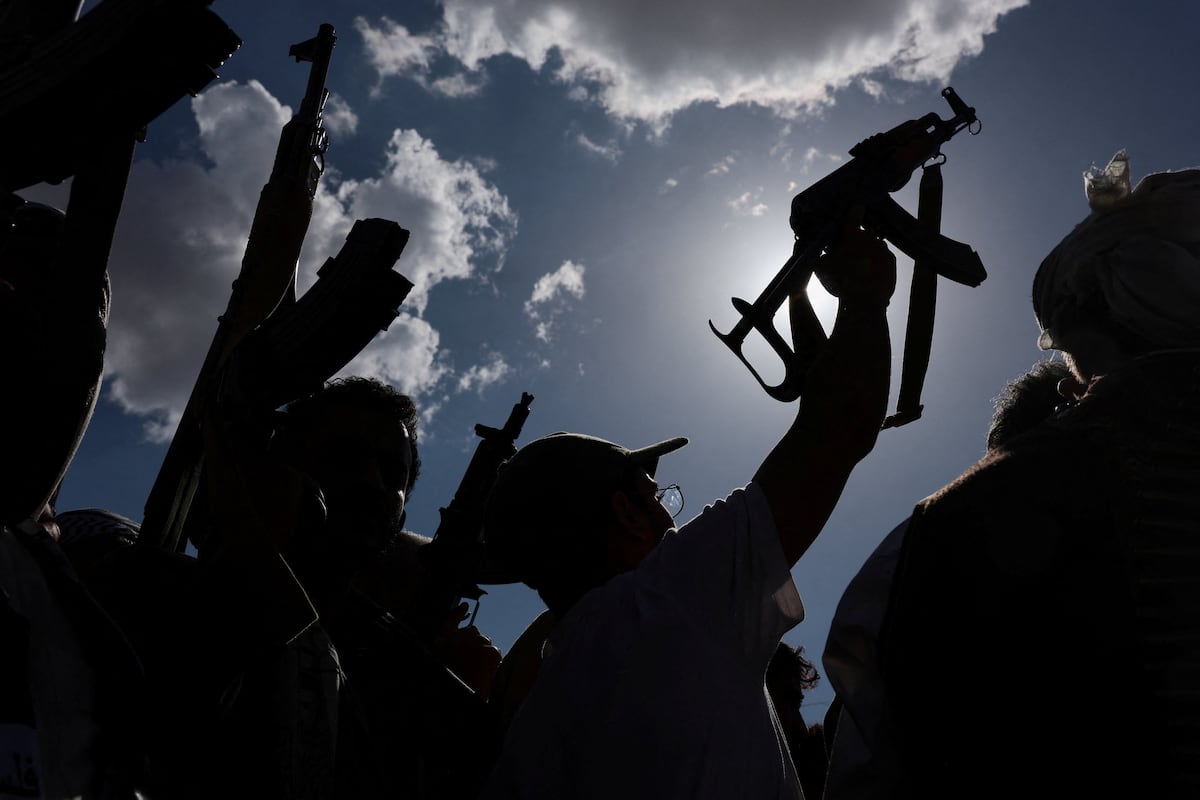
The strategic logic of the Houthis differs significantly from conventional state actors. Elisabeth Kendall, president of Girton College at the University of Cambridge, notes that the Houthis have been "seasoned fighters" for over two decades. Their "battle logic" accepts casualties as a cost of doing business and views economic disruption as their primary leverage against superior military powers. Kendall argues that Houthi restraint in the first weeks of April should be interpreted as "strategic patience" rather than a lack of intent. If the Houthis were to fully engage, the resulting shock to the Suez Canal route would bypass the American-led blockade of Iran and strike directly at the heart of European and Mediterranean economies.
The Economics of Blockade: $435 Million a Day
The financial implications of the Hormuz blockade are staggering. Miad Maleki, a former official with the U.S. Treasury Department, estimated that the blockade is costing the Iranian economy approximately $435 million every single day. Over the course of a month, this amounts to a $13 billion deficit—a sum the sanctioned Iranian economy cannot sustain indefinitely.
The strategy behind the blockade is what James Kraska, a professor of international law at the Naval War College, describes as "economic warfare." By utilizing the "right of visit and search," the U.S. Navy can board any vessel to determine its "enemy character." If a ship is found to be facilitating Iranian arms transfers or financing the IRGC, it can be diverted or seized. Kraska views this not as a new policy, but as the military enforcement of a decade of aggressive sanctions. "It’s simply a wartime extension of what we’ve been doing for a decade," Kraska noted.
However, the economic sword cuts both ways. Analysts warn that if the Houthis retaliate by closing the Bab el-Mandeb, the world could see a simultaneous spike in oil prices and consumer goods inflation. While the Hormuz blockade targets Iranian revenue, a Houthi-led disruption of the Red Sea would target the global supply chain, potentially undoing any domestic economic gains the Trump administration hopes to achieve through the war’s conclusion.
Official Responses and Political Justifications
The Trump administration has framed the blockade as a necessary response to "Iranian economic terrorism." Vice President JD Vance, in a recent interview with Fox News, argued that the United States is simply "flipping the script" on Tehran. Vance asserted that Iran has spent years threatening ships in the Strait of Hormuz, and the current blockade is a signal that "two can play at that game."
The administration’s rhetoric suggests a belief that the Iranian regime is on the brink of collapse and that one final economic "stranglehold" will force a surrender. This view is echoed by some in the Pentagon who see the blockade as a way to achieve military objectives without the need for a large-scale ground invasion of the Iranian plateau.
Conversely, CENTCOM has been careful to frame the naval operations in the language of international law. In its April 13 press release, CENTCOM stressed that the mission would be "enforced impartially" and would not impede the general "freedom of navigation" for ships not involved in the Iranian war effort. This distinction is vital for maintaining the support of maritime allies, many of whom are wary of the legal precedents being set by a unilateral U.S. blockade.
Broader Impact and Strategic Implications
The dual threat at the Strait of Hormuz and the Bab el-Mandeb places the U.S. Navy in a difficult position. Enforcing a blockade in the Persian Gulf requires a massive concentration of hulls, sensors, and personnel. If the Houthis launch a sustained campaign of harassment in the Red Sea, the Navy will be forced to split its assets between two separate theaters of maritime war.
The implications of this situation extend far beyond the current year:
- Global Supply Chain Realignment: If the Red Sea becomes a permanent "no-go zone" for commercial traffic, shipping companies will be forced to reroute around the Cape of Good Hope. This adds 10 to 14 days to transit times between Asia and Europe, drastically increasing fuel costs and carbon emissions.
- The Rise of Asymmetric Deterrence: The success or failure of the Houthi response will serve as a blueprint for other non-state actors and smaller nations looking to challenge naval superpowers. If low-cost drones can successfully counter a multi-billion dollar carrier strike group’s blockade efforts, the nature of naval hegemony will be forever altered.
- The Iranian Domestic Front: While the blockade aims to starve the IRGC of funds, it also creates a humanitarian crisis for the 85 million citizens of Iran. History suggests that such pressure can either lead to an internal uprising or cause the population to "rally ’round the flag" against a foreign aggressor.
- Energy Market Volatility: Despite the United States’ relative energy independence, oil is a fungible global commodity. A sustained closure of both the Hormuz and Bab el-Mandeb straits would likely send Brent crude prices well above $150 per barrel, triggering a global recession.
As Operation Epic Fury continues, the world remains in a state of suspended animation. The U.S. Navy’s blockade has successfully paralyzed Iranian exports, but the silent threat from the Yemeni coast serves as a reminder that in modern warfare, the "choke point" is a weapon that can be wielded by the small and the large alike. The coming weeks will determine whether President Trump’s "economic warfare" leads to a swift conclusion of hostilities or a protracted maritime conflict that reshapes the global order for decades to come.

Related Posts
Pentagon Forges Landmark Seven-Year Agreements with Boeing and RTX to Accelerate Standard Missile-3 Production and Stabilize Defense Supply Chains
Boeing Unveils Ultra Low-Cost Seeker to Enhance Missile Inventory and Combat Cost Challenges in Modern Warfare