Israeli Strikes on Tehran Oil Depots Raise Alarms Over Long-Term Environmental and Health Crisis
The Israeli military’s March 7, 2026, airstrikes targeting four major oil depots in the vicinity of Tehran have triggered a burgeoning environmental and public health crisis, according to a comprehensive investigation by Human Rights Watch (HRW). The attacks, which struck critical energy infrastructure in densely populated areas, have released a cocktail of toxic pollutants, potentially causing "widespread, long-term, and severe" damage to the region’s ecosystem and its 10 million inhabitants. International legal experts and human rights advocates warn that these strikes, characterized by foreseeable civilian harm and environmental degradation, may constitute violations of international humanitarian law and could be classified as war crimes.
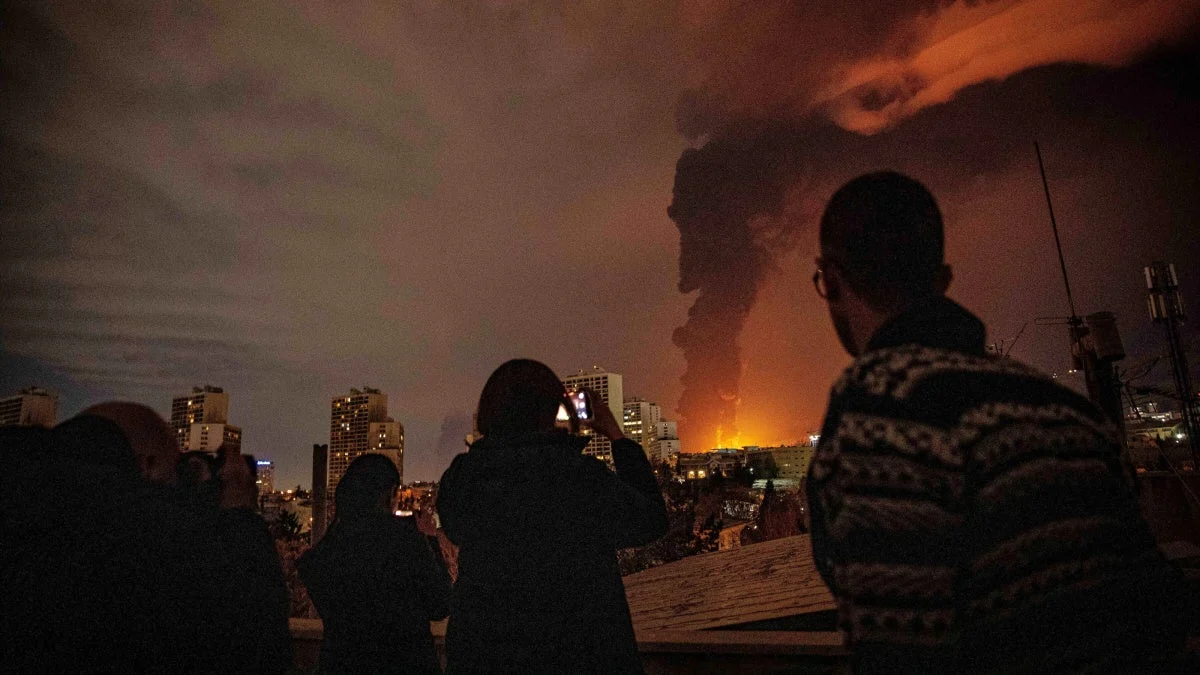
The strikes targeted four key facilities: the Shahr-e Rey oil depot in southern Tehran, the Shahran oil depot in the northwest, the Aghdasieh oil depot in the northeast, and the Fardis oil depot in Karaj, located approximately 48 kilometers west of the capital. According to HRW, the consequences of these attacks extend far beyond the immediate destruction of fuel reserves, creating what residents and experts describe as an "apocalyptic" atmosphere characterized by "black rain" and hazardous air quality.
Chronology of the Attacks and Official Responses
The offensive began in the late hours of March 7, 2026. By the following morning, Iran’s state-owned oil distribution company confirmed that "hostile enemy aircraft" had neutralized four sites used for the storage and distribution of petroleum products, alongside a transport center in the Tehran and Alborz provinces. Simultaneously, the Israeli Defense Forces (IDF) utilized social media platforms to claim responsibility, stating the mission targeted "several fuel storage complexes belonging to the IRGC [Islamic Revolutionary Guard Corps] in Tehran."
On March 30, Israeli authorities provided a formal response to inquiries, asserting that the operations were conducted in strict adherence to the principles of distinction, proportionality, and precaution. The Israeli government maintained that the depots were legitimate military objectives, alleging they were designated to provide fuel directly to military aviation, unmanned aerial vehicles (UAVs), and naval vessels.
However, HRW’s findings suggest a more complex reality. While the organization could not definitively rule out dual-use functions, it confirmed the depots were primary hubs for civilian fuel distribution. Informed sources indicated the facilities contained gasoline and diesel—fuels typically used for commercial transport and agriculture rather than high-grade aviation or naval propulsion. Iranian authorities have yet to respond to formal requests for clarification regarding the specific contents and military involvement at these sites.
The Humanitarian Toll and Immediate Physical Impact
The human cost of the strikes became apparent almost immediately. In the Fardis district of Karaj, local provincial governors reported at least six fatalities and 21 injuries. Satellite imagery analyzed by HRW and verified by the volunteer group GeoConfirmed revealed significant collateral damage to civilian infrastructure. High-resolution photos from March 18 showed apparent destruction at a medical facility and a primary school located adjacent to a destroyed fuel tank at the Fardis depot. In one instance, the Alborz University of Medical Sciences reported that a dialysis center near the site was set ablaze, resulting in the total loss of life-saving equipment.
Residents across the Tehran metropolitan area described a harrowing sensory experience. "The day after they hit the depots, you couldn’t see the sky—it was black," one resident told HRW. Others reported that the city’s white buildings, cars, and even local wildlife were coated in a thick layer of oily soot. Physical symptoms were reported widely, including acute shortness of breath, continuous coughing, chest pain, and chemical irritation of the skin and eyes. For individuals with pre-existing conditions, such as asthma, the sudden drop in air quality necessitated emergency medical interventions, including the use of inhalers and nebulizers.
Environmental Catastrophe: Black Carbon and Acid Rain
The most visible manifestation of the environmental impact was the phenomenon of "black rain." Experts, including Armin Sorooshian, a professor of chemical and environmental engineering at the University of Arizona, identified the falling material as black carbon, or soot. This substance is the byproduct of the incomplete combustion of petroleum products and is notorious for its ability to absorb light and heat, further complicating local climate patterns.
On March 10, the World Health Organization (WHO) issued a warning regarding the toxicity of the precipitation. Christian Lindmeier, a WHO spokesperson, emphasized that the acidic nature of the rain posed an immediate danger to the population. The Iranian Red Crescent Society followed with educational announcements, advising citizens to repeatedly wash skin exposed to the rain with cold water and to perform nasal and throat rinses to mitigate internal chemical burns.
The United Nations Environment Program (UNEP) stated on March 13 that the heavy smoke from the burning oil contains hazardous compounds that are being directly inhaled by civilians, including children. The UNEP warned that the pollution from these uncontrolled fires does not remain in the air; it leaches into the soil and groundwater, potentially contaminating food supplies for years to come.
Technical Analysis of Long-Term Risks
Environmental chemists and engineers warn that the "plume" of toxic materials released on March 7 represents a chronic threat. Hans Peter Heinrich Arp, a researcher at the Norwegian University of Science and Technology, noted that the region would likely face two waves of pollution. The first was the immediate atmospheric surge, while the second involves the slow migration of hazardous chemicals through the ecosystem.
The combustion of gasoline and diesel in a "tank-fire setting" releases a variety of dangerous substances, including:
- Fine and Ultrafine Particulate Matter: These particles can penetrate deep into the lungs and enter the bloodstream.
- Volatile Organic Compounds (VOCs) and Benzene: Known carcinogens that pose long-term risks for leukemia and other cancers.
- Polycyclic Aromatic Hydrocarbons (PAHs): Toxic compounds that persist in the environment and can cause reproductive and developmental issues.
- Sulfur and Nitrogen Oxides: The primary drivers of acid rain, which lowers the pH of soil and water bodies, killing vegetation and aquatic life.
Kaveh Madani, Director of the UN University Institute for Water, Environment and Health, highlighted the downstream effects on agriculture. "If the pollutants are toxic, they’re going to impact the water and thus the agriculture and food systems," Madani stated. He noted that once these chemicals enter the groundwater, they are extremely difficult and expensive to remove, often requiring decades of "pump-and-treat" remediation.
Legal Implications and the Laws of War
The central legal question surrounding the March 7 attacks revolves around the "Principle of Proportionality." Under the laws of war, even if a target is a legitimate military objective, an attack is unlawful if the expected incidental loss of civilian life or damage to civilian objects is excessive in relation to the concrete and direct military advantage anticipated.
Human Rights Watch argues that Israeli forces appear to have failed to factor in the "reverberating effects" of the strikes. The International Committee of the Red Cross (ICRC) guidelines stipulate that proportionality assessments must consider reasonably foreseeable indirect impacts, including long-term health consequences and environmental degradation.
"Israel, as well as the United States and Iran, should be on notice that the laws of war provide specific protections for the environment," said Bahar Saba, senior Iran researcher at HRW. Saba argued that attacking oil infrastructure in a city of 10 million people carries a high burden of proof for military necessity that justifies the resulting "apocalyptic" environmental fallout.
Urban Encroachment and Historical Context
The disaster also highlights the dangers of industrial-urban overlap. The Shahran oil depot, for example, was constructed in the mid-1970s on what was then the outskirts of Tehran. However, decades of rapid population growth have transformed the area into a densely packed residential and commercial hub. Local city council members had repeatedly warned of the risks posed by the facility’s proximity to homes, comparing the potential for disaster to the 2020 Beirut port explosion.
This is not the first time these facilities have been targeted. Similar strikes occurred in June 2025, though the scale of the March 2026 attacks appears significantly larger. The recurring nature of these strikes suggests a strategic pattern of targeting energy infrastructure, a tactic that has been employed by various actors across the Middle East, including previous Iranian-led strikes on facilities in Saudi Arabia and the UAE.
Conclusion: A Legacy of Chronic Pollution
As the smoke clears over Tehran, the focus shifts from the immediate tactical outcome of the strikes to the enduring health and environmental legacy. Health experts are calling for long-term surveillance of affected communities to monitor for spikes in cardiovascular disease, chronic respiratory issues, and pediatric leukemia.
The WHO and UNEP continue to urge for ground-level exposure assessments and the protection of drinking water sources. While the immediate "black rain" has ceased, the chemical signature of the March 7 attacks remains embedded in the soil and lungs of the city. As Bahar Saba concluded, "Pollution is a chronic type of weapon—the kind that keeps on killing when the guns have stopped." The international community now faces the challenge of holding state actors accountable for environmental "reverberating effects" that may haunt the region for generations.

Related Posts
Human Rights Watch Calls for Investigation into Death of Detainee Following Removal from Najaf Hospital by Iraqi Drug Police
Human Rights Watch Urges UN Security Council to Extend Lebanon Peacekeeping Mission Amid Escalating Conflict and Humanitarian Crisis