Maritime Power at a Crossroads: Center for Maritime Strategy Urges Allied Integration Amidst Strait of Hormuz Blockade and Industrial Base Atrophy
The United States Navy finds itself navigating a period of unprecedented operational demand and systemic industrial fragility as it enforces a high-stakes blockade of the Strait of Hormuz during the escalating conflict with Iran. Against this backdrop of heightened maritime warfare, the Center for Maritime Strategy (CMS), a nonpartisan think tank dedicated to national security and maritime issues, released a seminal report on Friday titled "Pier Review." The document offers a sobering assessment of the American maritime industrial base, characterizing it as being in a state of "atrophy" and calling for a radical shift in how the nation builds, maintains, and conceives of its naval power. The report argues that the U.S. can no longer sustain its global maritime obligations through domestic capacity alone and must aggressively leverage its network of international allies to revitalize its shipbuilding, technological innovation, and strategic readiness.
The release of the report coincides with a pivotal moment in the 2026 conflict. As the U.S. military continues to increase its presence in the Persian Gulf, the strain on the Navy’s diminished assets has become a focal point of national security debates. With the blockade of the Strait of Hormuz now effective, the Navy is tasked with a "major military endeavor" that requires constant presence and rapid response capabilities—assets that are currently stretched thin by decades of industrial decline and a fleet size that continues to shrink even as global threats multiply.
Chronology of Escalation: From Counter-Drug Operations to Operation Epic Fury
The current maritime crisis is the culmination of a series of strategic shifts and operational pressures that began in the mid-2020s. In 2025, the U.S. Navy’s readiness began to show visible signs of strain following an intensive endeavor by the Trump administration to combat drug cartels in Latin America and the Caribbean. A Military Times report from August 2025 highlighted that the readiness rate for amphibious assault ships had dipped to a concerning 41%, a direct consequence of the high tempo of operations in the Southern Hemisphere.
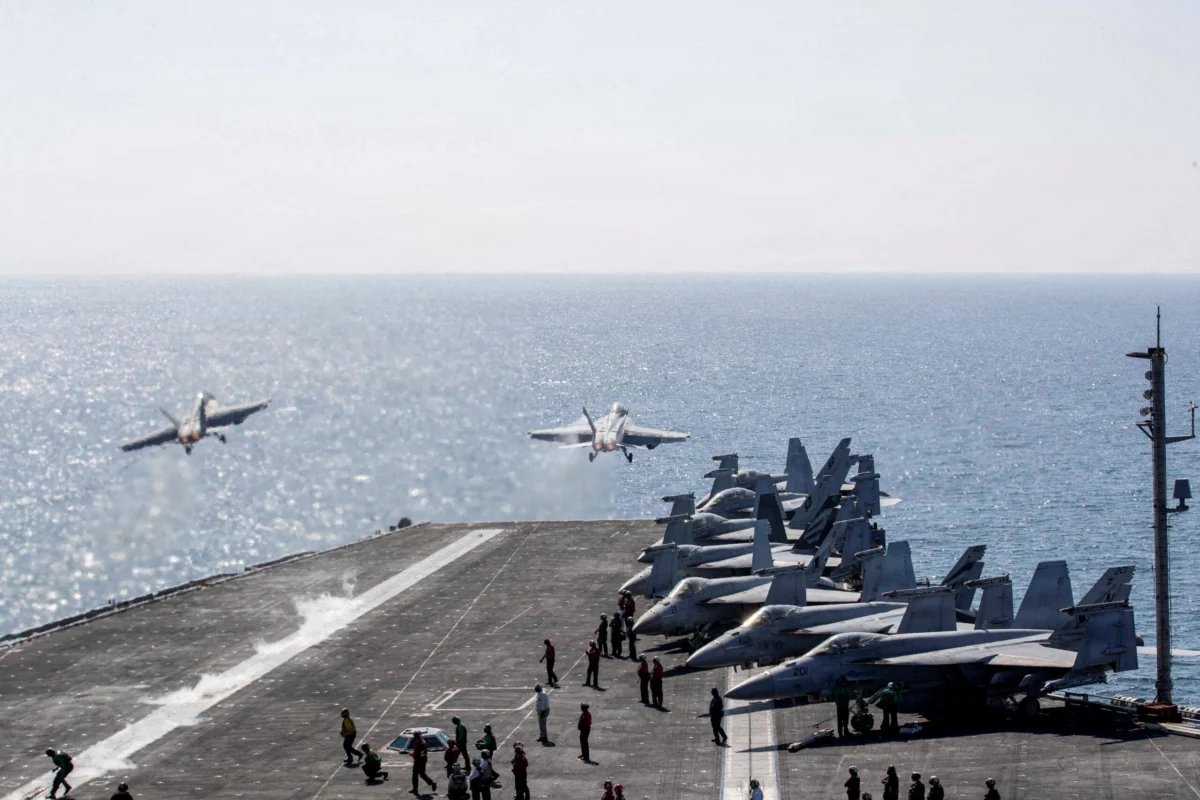
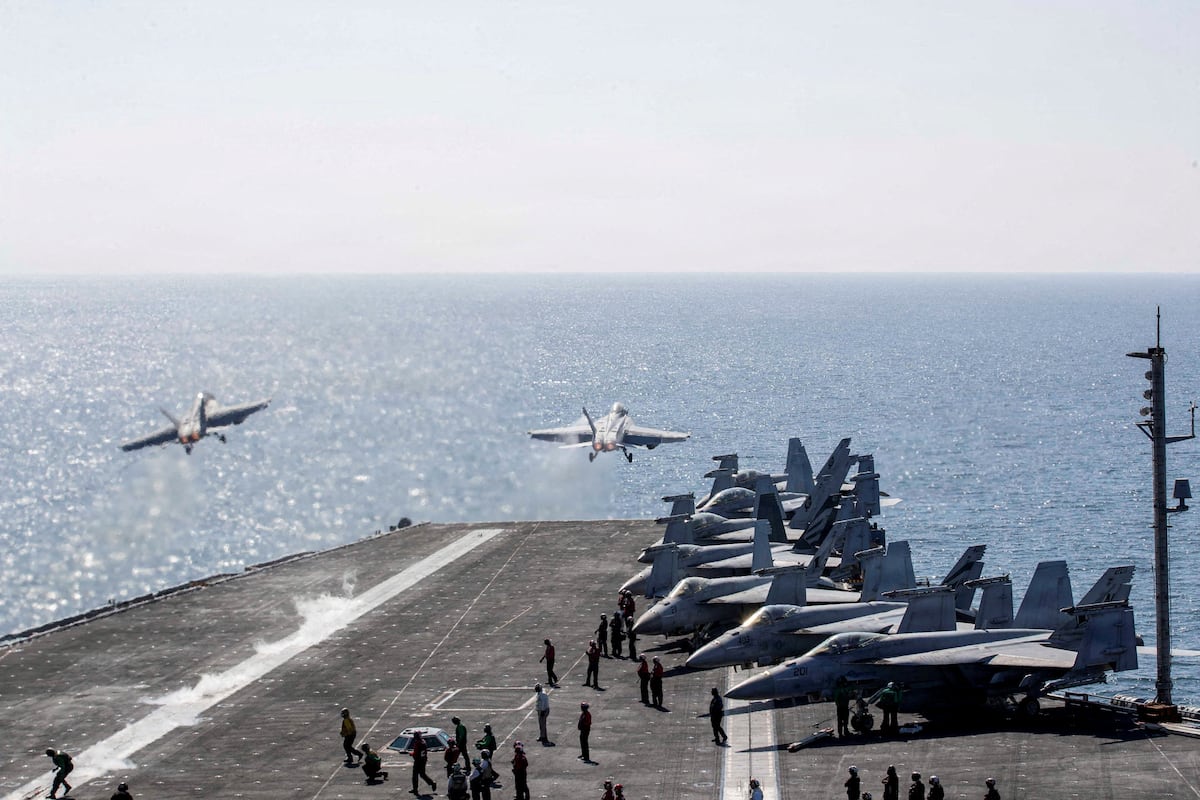
By early 2026, the focus shifted abruptly to the Middle East. On March 3, 2026, the U.S. Navy launched Operation Epic Fury, signaled by the deployment of F/A-18 Super Hornets from the USS Abraham Lincoln. The operation was designed to project power in response to Iranian provocations, but it quickly evolved into a sustained theater of war. By mid-March 2026, the Pentagon reported the dispatch of additional warships and Marines to the region, including the Tripoli Amphibious Ready Group (ARG) and the associated 13th Marine Expeditionary Unit (MEU). This force, comprising roughly 5,000 personnel and significant warships like the USS Tripoli, USS New Orleans, and USS San Diego, was intended to bolster the U.S. footprint as tensions reached a breaking point.
In April 2026, the situation escalated further when President Donald Trump announced that the U.S. military would begin clearing the Strait of Hormuz, followed by the immediate implementation of a full naval blockade. While the blockade was framed as a necessary measure to ensure regional security and isolate Iranian military capabilities, naval experts warned that such a mission would be a massive undertaking for a fleet already struggling with maintenance backlogs and a limited number of hulls.
The Industrial Base Crisis: Data and Projections
At the heart of the "Pier Review" report is a data-driven critique of the U.S. maritime industrial base (MIB). Currently, the U.S. Navy consists of approximately 295 ships. However, this number is projected to decrease in the near term as the service is slated to retire aging vessels at a faster rate than it can commission new ones. This trend stands in direct opposition to the Navy’s long-term goal, articulated in early 2025, of maintaining a battle fleet of 381 ships over the next 30 years to counter the growing maritime capabilities of peer competitors.
The CMS report emphasizes that the U.S. maritime industrial base must be "reconstituted quickly" using modern equipment and streamlined procedures. The current bottleneck is not merely a lack of funding but a lack of capacity. To address this, the Trump administration’s fiscal year 2027 budget request has allotted a historic $65.8 billion for shipbuilding. This budget aims to produce 18 battle force ships and 16 nonbattle force ships—effectively doubling the production requests of fiscal year 2026.
A key component of this new strategy involves the production of "simpler" ships. By manufacturing vessels that lack complex nuclear propulsion systems or high-end integrated radar suites, the Navy hopes to boost its hull count more rapidly. These nonbattle force ships are intended to handle secondary tasks, freeing up high-end destroyers and carriers for the front lines of the Iran conflict and other high-intensity zones.
Human Capital and the Rising Cost of Readiness
The crisis in shipbuilding is as much about people as it is about steel. At the WEST Conference in February 2026, Commandant of the Marine Corps Gen. Eric Smith and Chief of Naval Operations Adm. Daryl Caudle highlighted the soaring costs of maintaining a professional workforce. Smith noted that the industrial base is defined by the skilled laborers—pipefitters, steamfitters, welders, and electricians—who are increasingly difficult to recruit and retain in a competitive labor market.
"Everything costs what it costs," Gen. Smith stated, addressing concerns over the multi-billion dollar price tags of modern warships. He argued that the high costs are a reflection of the necessity to provide competitive wages and incentives to keep the maritime workforce intact. Without these skilled tradespeople, the ambitious shipbuilding goals of the FY2027 budget remain unattainable, regardless of the amount of capital injected into the system.
Strategic Recommendations: The Seven Objectives of the Pier Review
The CMS report outlines seven core objectives to pull the American maritime industry out of its current slump. While the report touches on internal reforms, such as streamlining the design process and embracing disruptive technologies like additive manufacturing and autonomous systems, its most provocative recommendations center on international cooperation.
The report identifies the Republic of Korea (ROK), Italy, Canada, Sweden, and the United Kingdom as essential partners in a "collective revitalization" of the allied maritime industrial base. The recommendations include:
- Modeling Allied Frameworks: Adopting the more efficient procurement and construction models used by allies like South Korea, which currently leads the world in commercial shipbuilding efficiency.
- Utilization of Allied Ports: Relying on the dry docks and repair facilities of partner nations to alleviate the maintenance backlogs currently plaguing U.S. shipyards.
- Labor Integration: In a move that has already sparked debate in Washington, the report suggests supplementing the domestic shipbuilding labor pool with skilled migrants from allied countries to fill the gap in specialized trades.
- Co-Development of Technology: Sharing the burden of research and development for next-generation naval systems to reduce costs and ensure interoperability.
- Reforming the Design Process: Moving away from "gold-plated" requirements that lead to cost overruns and delays, in favor of modular, adaptable designs.
- Supply Chain Resiliency: Creating a unified allied supply chain to ensure that critical components are not sourced from adversarial nations.
- Increased Transparency: Better communication between the Navy and the industrial base to provide shipbuilders with the long-term certainty needed to invest in their facilities.
Kenneth Braithwaite, the 77th Secretary of the Navy, underscored the urgency of these measures in the report’s foreword. He argued that the United States must "take advantage of its strong partnerships with naval allies" to meet the challenges of the coming decades, suggesting that the era of American maritime autarky is over.
Analysis of Implications: A New Era of Collective Defense
The findings of the "Pier Review" report and the ongoing blockade in the Strait of Hormuz point toward a fundamental shift in American naval doctrine. For decades, the U.S. Navy operated under the assumption that it could maintain global dominance through its own industrial might. The reality of 2026—marked by a readiness rate of 41% for amphibious ships and a fleet size that cannot keep pace with two-theater demands—suggests that the "go it alone" approach is no longer viable.
If the recommendations of the CMS are adopted, it could lead to a more integrated "Inter-Allied Navy." This would see U.S. ships being built or serviced in places like Ulsan, South Korea, or Govan, Scotland, while domestic yards focus on the most sensitive nuclear technologies. Such a shift would likely face political hurdles, particularly regarding "Buy American" provisions and national security concerns over outsourcing. However, proponents argue that the alternative is a Navy that is perpetually "too small and too tired" to win a major conflict.
Furthermore, the emphasis on simpler, nonbattle force ships indicates a move toward a "high-low" fleet mix. This strategy acknowledges that not every mission requires a $2 billion destroyer. By flooding the zones with less expensive, more easily manufactured ships, the Navy can maintain the presence required for blockades and maritime security without exhausting its most capable—and expensive—assets.
As Operation Epic Fury continues and the blockade of the Strait of Hormuz tests the limits of American sea power, the "Pier Review" report serves as a roadmap for a necessary evolution. The success of the U.S. Navy in the late 2020s may well depend on whether the Pentagon and Congress are willing to trade a degree of industrial independence for the collective strength of a global maritime alliance.

Related Posts
Pentagon Forges Landmark Seven-Year Agreements with Boeing and RTX to Accelerate Standard Missile-3 Production and Stabilize Defense Supply Chains
Boeing Unveils Ultra Low-Cost Seeker to Enhance Missile Inventory and Combat Cost Challenges in Modern Warfare