India Maintains Strategic Neutrality Amidst Heightened Tensions in the Strait of Hormuz and Shifting Global Alliances
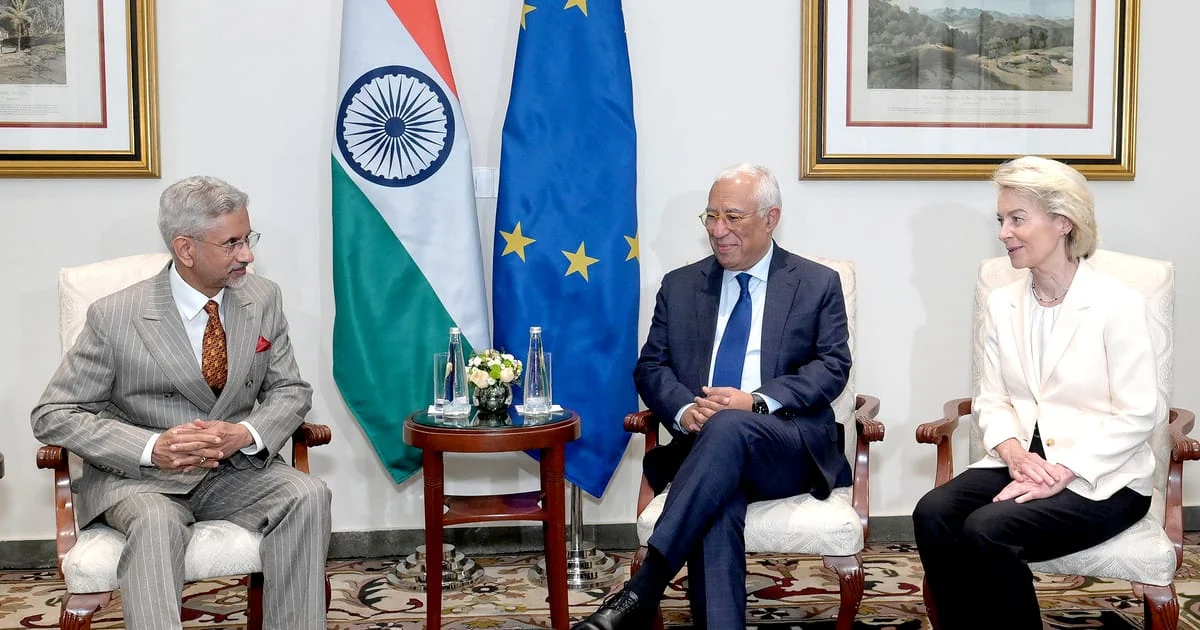
As geopolitical friction intensifies in the Persian Gulf, India has firmly positioned itself as a diplomatic mediator, resisting pressure from the United States to align with Washington’s efforts to secure the Strait of Hormuz. Despite intense lobbying from the Trump administration for increased involvement in maritime security operations, Indian External Affairs Minister S. Jaishankar has adopted a policy of calculated neutrality, emphasizing the need for de-escalation while balancing a complex web of strategic interests.
The Diplomatic Tightrope: India’s Engagement with Tehran
Minister Jaishankar’s recent interactions with his Iranian counterpart, Abbas Araghchi, underscore New Delhi’s commitment to maintaining open channels of communication with Tehran. Reports confirm that the two officials held a substantive phone conversation late last week, with further diplomatic exchanges anticipated in the coming days. These discussions are critical, as India seeks to navigate the volatile landscape of the Middle East without alienating its Iranian partners or its strategic ally in Washington.
The primary messaging from the Ministry of External Affairs remains focused on regional stability. In recent briefings, Jaishankar has articulated four pillars of India’s position: the urgent necessity of de-escalation, profound concern regarding the expansion of the conflict, the protection of India’s vital energy security, and the safety of the approximately 10,000 Indian nationals residing in Iran, alongside the millions of Indian diaspora members scattered across the wider Gulf region.
"Our hope is that there is a decision made that heads toward an end to the conflict, certainly toward de-escalation, and then an end to the conflict," Jaishankar stated recently. He further emphasized the domestic perspective, noting, "We only see a downside to this conflict," a reflection of the potential economic and humanitarian fallout that a prolonged confrontation would impose on India’s growth trajectory.
The Strait of Hormuz: A Global Economic Chokepoint
The Strait of Hormuz serves as the world’s most critical oil chokepoint, with approximately 21 million barrels of petroleum liquids per day flowing through the narrow passage. This accounts for roughly 21% of global petroleum liquid consumption. For India, which imports over 80% of its crude oil requirements, the stability of this waterway is not merely a diplomatic preference but a fundamental national security imperative.
Historically, India has relied heavily on Gulf energy imports to fuel its rapidly industrializing economy. Any disruption in the flow of oil or a spike in insurance premiums for maritime shipping passing through the Strait would immediately manifest as inflationary pressure on the Indian rupee and domestic energy costs. Consequently, New Delhi’s reluctance to take sides is rooted in the pragmatic necessity of ensuring that energy markets remain functional, regardless of the political fallout between the U.S. and Iran.
Navigating Washington: The Rubio-Jaishankar Dialogue
India’s relationship with the United States remains multifaceted, defined by deep defense ties and burgeoning economic cooperation. On February 3, Jaishankar met with U.S. Secretary of State Marco Rubio to discuss bilateral relations and the broader regional security architecture. Despite the high-stakes nature of these talks, the Indian delegation has successfully avoided public friction with Washington.
When pressed on the Trump administration’s recent decision to lift sanctions on energy exports from Russian firms Lukoil and Rosneft—a move that carries significant implications for global energy pricing—Jaishankar maintained a measured tone. Eschewing critical commentary, he argued that market predictability should remain the global priority. "If you want the global economy to grow, if you want to see stability, predictability in the markets, then let the markets be the focus," he remarked. This stance reinforces India’s long-standing policy of prioritizing economic pragmatism over the ideological pressures of unilateral sanctions.
The Stalled Trade Negotiations
Complicating the U.S.-India dynamic is the current state of bilateral trade negotiations, which have faced significant headwinds. Progress has been hampered by a recent U.S. Supreme Court ruling that effectively challenged aspects of the Trump administration’s tariff policies. This legal development has created a period of uncertainty for trade negotiators on both sides.
Responding to speculation that the delay in trade talks might be linked to the U.S.-Iran standoff, Jaishankar provided a categorical rebuttal. "I want to be very clear: what’s happening in the Middle East has nothing to do with that," he stated, emphasizing that the legislative and judicial complexities within the United States are the primary drivers of the delay, rather than a geopolitical "quid pro quo" related to the Iranian crisis.
Historical Context and Regional Implications
The current volatility in the Persian Gulf is part of a longer historical arc of maritime instability that has plagued the region since the late 1970s. India’s historical response has evolved from a policy of "non-alignment" to one of "multi-alignment." In the context of the Middle East, this means maintaining the Chahbahar Port project in Iran—a vital gateway for Indian goods into Central Asia—while simultaneously expanding defense cooperation with the U.S. Navy.
The implications of the current conflict are twofold. First, it poses a direct risk to the Indian diaspora, whose remittances are a crucial component of India’s foreign exchange reserves. Second, it threatens to derail India’s regional connectivity initiatives. If the Strait of Hormuz were to be blocked or heavily militarized, the insurance and transit costs for Indian-bound tankers would rise exponentially, potentially triggering a broader economic slowdown in the Indian manufacturing sector.
A Chronology of Escalation
- Late 2024: Tensions begin to rise in the Persian Gulf following renewed disputes over maritime rights and international sanctions.
- January 2025: The United States calls for a multinational coalition to patrol the Strait of Hormuz, citing threats to commercial shipping.
- February 3, 2025: External Affairs Minister S. Jaishankar meets with U.S. Secretary of State Marco Rubio in Washington to discuss bilateral ties and regional stability.
- Mid-February 2025: India continues direct, high-level diplomatic dialogue with Iran, emphasizing the protection of its citizens and energy security.
- Present: India continues to maintain its neutral stance, advocating for a multilateral diplomatic solution to the Middle East crisis.
Strategic Analysis: The Future of Indian Diplomacy
India’s refusal to pick a side in the U.S.-Iran conflict is a testament to its maturing foreign policy. By focusing on the "downside" of the conflict, New Delhi is signaling to the international community that its primary allegiance is to global stability and its own economic interests, rather than the specific geopolitical goals of any single superpower.
The challenge for the coming months will be whether India can maintain this neutrality as the pressure to take a stance inevitably mounts. With global energy markets remaining fragile and the Middle East conflict showing little sign of imminent resolution, India’s "strategic autonomy" will be tested as never before. However, the current trajectory suggests that New Delhi will continue to prioritize dialogue, humanitarian concerns, and the stability of global energy markets as the cornerstones of its engagement in the region.
As the diplomatic maneuvers continue, the world will be watching to see if India’s call for de-escalation finds resonance in Washington and Tehran. For now, New Delhi’s ability to keep the lines of communication open with all parties remains one of the few stabilizing factors in an increasingly unpredictable geopolitical climate.