
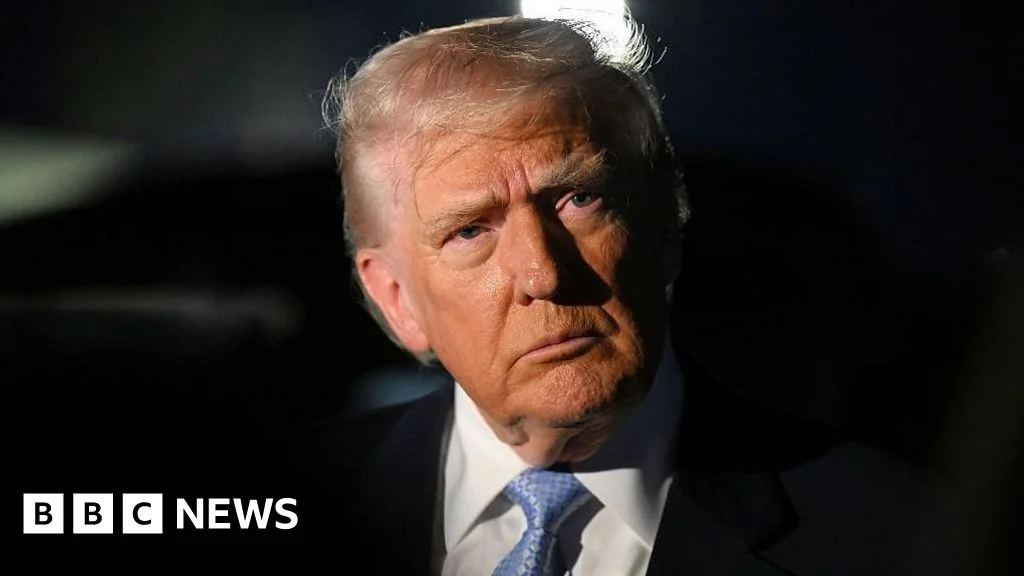
Trump’s NATO Ultimatum on Strait of Hormuz Met with Skepticism and Deep Divisions Among Allies
US President Donald Trump’s latest declaration regarding the strategic Strait of Hormuz, suggesting that a failure to secure the vital waterway would be "very bad for the future of NATO," has ignited a fresh wave of consternation and outright rejection among Washington’s European allies. This assertion, coming from a leader who has consistently challenged the foundational principles and collective defence responsibilities of the North Atlantic Treaty Organization throughout his two terms in office, has been met with significant diplomatic pushback, underscoring the deep fissures within the alliance regarding its purpose and scope.
The Strategic Chokepoint: Strait of Hormuz Under Threat
The Strait of Hormuz, a narrow waterway separating Iran and Oman, is arguably the world’s most critical oil chokepoint. Approximately one-fifth of the world’s total petroleum consumption, including a significant portion of crude oil and liquefied natural gas (LNG), passes through this strait daily. Its strategic importance extends far beyond energy markets, as disruptions here can send shockwaves through the global economy, impacting everything from shipping insurance rates to the price of consumer goods.
In recent months, the region has been plunged into a deepening crisis, largely precipitated by Iran’s actions. Tehran has effectively throttled commercial shipping through the strait, allowing passage only for a handful of vessels carrying its own oil to allied nations like India and China, and selectively harassing or seizing other tankers. This de facto blockade has left Western governments scrambling for a viable solution, acutely aware of the potentially catastrophic global economic ramifications should the situation escalate further or persist indefinitely. The current crisis is widely seen as a direct consequence of President Trump’s "maximum pressure" campaign against Iran, initiated after his administration’s withdrawal from the Joint Comprehensive Plan of Action (JCPOA), commonly known as the Iran nuclear deal, in 2018. This withdrawal and the subsequent re-imposition of stringent sanctions aimed at crippling Iran’s economy, particularly its oil exports, provoked Tehran to retaliate by demonstrating its capacity to disrupt international shipping, thereby imposing its own form of economic pressure.
NATO’s Foundational Principles Under Scrutiny
President Trump’s call for NATO involvement in securing the Strait of Hormuz has, perhaps predictably, been met with incredulity and firm rebukes from European capitals. Critics argue that his understanding of the alliance’s fundamental purpose is fundamentally flawed. General Sir Nick Carter, former chief of the UK Defence Staff, articulated this sentiment clearly on Monday, stating that "Nato was created as a defensive alliance. It was not an alliance that was designed for one of the allies to go on a war of choice and then oblige everybody else to follow. I’m not sure that’s the sort of Nato that any of us wanted to belong to."
This distinction between a defensive alliance and an instrument for prosecuting a "war of choice" goes to the heart of NATO’s Article 5, its cornerstone principle of collective defence. Article 5 stipulates that an attack against one member is an attack against all, triggering a collective response. However, it is explicitly tied to the defence of member states’ territories and interests, not to intervening in conflicts initiated unilaterally by one member outside the alliance’s traditional area of operation, particularly when those conflicts are not directly threatening a NATO member.
The irony of Trump’s latest remarks is not lost on observers, especially given his past actions and rhetoric. Only two months prior, the President had made strident claims to Greenland, the sovereign territory of Denmark – a fellow NATO member – highlighting his transactional approach to international relations and his willingness to disregard diplomatic norms and allied sovereignty. This history of treating alliances as leverage points rather than shared security frameworks contributes significantly to the skepticism with which his latest demands are received.
Allied Rebuke and Reluctance
Responses from key European allies have been notably blunt. In Germany, a government spokesman unequivocally stated that the conflict with Iran had "nothing to do with Nato." German Defence Minister Boris Pistorius further poured scorn on the practicality of European naval contributions, questioning, "What does Trump expect from a handful of European frigates that the powerful US navy cannot do? This is not our war. We have not started it." This sentiment reflects a broader European reluctance to be drawn into a conflict perceived as an American initiative, particularly one that lacks a clear international mandate or a universally agreed-upon casus belli.
The United Kingdom, a close ally often caught between Washington and Brussels, finds itself navigating a delicate diplomatic path. At a news conference on Monday, UK Prime Minister Sir Keir Starmer confirmed that "conversations aimed at working out a viable plan" were ongoing with US, European, and Gulf partners. However, he stressed that the situation was "not at the point of decisions yet," indicating a cautious approach. Sir Keir also underscored the critical need for a "legal basis and with a proper thought through plan" before deploying British military personnel on any potentially dangerous mission, a clear signal that the UK will not blindly follow US directives.
The European Union’s foreign policy chief, Kaja Kallas, acknowledged a "clear wish" to extend EU naval operations in the Middle East but confirmed that EU foreign ministers had declined to extend an existing naval mission in the Red Sea. "This is not Europe’s war," she reiterated, emphasizing the bloc’s desire to avoid entanglement in conflicts not directly threatening European security. The EU’s Operation Aspides, launched in 2024 with a modest strength of just three warships, was specifically designed to counter threats to shipping posed by Iranian-backed Houthi rebels in Yemen, a distinct and geographically separate challenge from securing the Strait of Hormuz against Iranian Revolutionary Guard Corps actions. Germany’s Foreign Minister, Johann Wadephul, further articulated the cautious approach, stating his government’s desire to hear from Israel and the US "when they believe they will have achieved their military objectives in Iran" before even contemplating new security arrangements.
Among the major European allies, France’s President Emmanuel Macron has perhaps shown the keenest interest in forming a coalition to secure freedom of navigation. A week prior to the current developments, Macron had expressed efforts to assemble such a force, but critically qualified that this could only happen once the "hottest phase" of the conflict was over. Days later, his Defence Minister, Catherine Vautrin, clarified that there were "no immediate plans" to dispatch French vessels into the Strait of Hormuz, underscoring the prevalent caution.
The Minefield of Modern Naval Warfare
Beyond the political and diplomatic challenges, the operational realities of securing the Strait of Hormuz present formidable difficulties, particularly regarding mine countermeasures. Prime Minister Starmer referred to autonomous mine-hunting systems already in the region, but the reality is stark. With HMS Middleton, a British mine countermeasures vessel (MCMV), undergoing major maintenance in Portsmouth, it marks the first time in decades that no British mine-clearing ship is actively deployed in the region. The Royal Navy is instead proposing the use of newly developed seaborne drones, designed to detect and neutralize mines without endangering human crews.
However, the efficacy of these nascent technologies in a real-world, high-stakes combat scenario remains untested. Tom Sharpe, a former Royal Navy commander, observed, "We’re probably going to find out in the next few weeks whether or not it works." This reliance on unproven technology highlights a broader problem: minesweeping, once a core function of nearly all navies, has significantly dwindled in priority and investment globally. General Carter recalled the last major Western de-mining operation in 1991, following Iraq’s mining of Kuwaiti waters during the first Gulf War. "It took us fifty-one days to clear the mines," he noted, adding, "No navy has invested in this at the scale that they should have done, least of all the Americans." Indeed, the US Navy’s own Avenger-class specialized minesweepers, distinctively built with wooden hulls to evade magnetic naval mines, are all being withdrawn from service, replaced by Independence-class littoral combat ships that also rely heavily on unmanned systems. The transition period leaves a potential gap in proven conventional capabilities.
Moreover, the threat in Hormuz extends far beyond naval mines. Iran’s Revolutionary Guard Corps (IRGC) possesses a diverse arsenal of asymmetric capabilities, including armed fast boats capable of swarm attacks, naval "suicide" drones designed for kamikaze-style assaults, and sophisticated shore-based anti-ship missiles. Recent images, reportedly released by Iran’s Fars News Agency, showed vast numbers of these boats and drones stored in underground tunnels, suggesting long-term preparation for precisely such a confrontation. Tom Sharpe emphasized the multi-dimensional nature of the threat: "Unlike with the Houthis, where it was only an air threat, with Iran, you have all three [air, surface, and underwater] and you want to try and shoot these things before they’re fired. That’s not always possible."
President Trump’s suggestion that securing the Strait, which he dismissively termed a "very small endeavour," might involve attacks on the Iranian coastline – specifically, "people who are going to knock out some bad actors that are along the shore" – further compounds allied anxieties. While the US has previously targeted mine-laying boats at berth in Iranian ports, expanding such operations to include "boots on the ground" or broader assaults on Iranian territory would mark a significant escalation, one that few, if any, European allies would be willing to support.
Chronology of Escalation
The current crisis is not an isolated incident but the culmination of several years of heightened tensions:
- May 2018: President Trump withdraws the US from the JCPOA and reinstates sanctions on Iran, initiating the "maximum pressure" campaign.
- May-June 2019: Several commercial tankers are attacked in the Gulf of Oman, with the US blaming Iran. Iran denies involvement.
- June 2019: Iran shoots down a US surveillance drone over the Strait of Hormuz, claiming it violated Iranian airspace. The US prepares for retaliatory strikes but cancels them at the last minute.
- July 2019: The UK seizes an Iranian tanker off Gibraltar, citing sanctions violations. Iran retaliates by seizing the British-flagged Stena Impero in the Strait of Hormuz.
- January 2020: US drone strike kills Iranian General Qassem Soleimani in Baghdad, leading to Iranian missile attacks on US bases in Iraq.
- Present Day: Iran’s increased disruption of shipping in the Strait of Hormuz, coinciding with ongoing regional conflicts and the "several more weeks" campaign duration cited by US and Israeli officials.
- Recent Months: President Trump’s controversial remarks regarding Greenland, followed by his latest demands for NATO involvement in Hormuz.
- Monday’s Statements: General Carter, German officials, UK Prime Minister Starmer, and EU Foreign Policy Chief Kallas all issue statements rejecting or expressing reservations about Trump’s call.
Broader Implications: A Fractured Alliance and Global Stability
The impasse over the Strait of Hormuz reveals more than just a disagreement on a specific military operation; it highlights a profound divergence in strategic outlook and a growing mistrust between the United States and its traditional allies. The transactional nature of Trump’s foreign policy has severely strained the cohesion of NATO, an alliance built on shared values and collective security. European nations are wary of being pulled into a conflict they did not initiate, especially one that could destabilize an already volatile region and trigger unforeseen consequences for their own economies and security.
The lack of a clear, unified strategy also sends a dangerous signal to adversaries and undermines the credibility of Western deterrence. While allies agree on the urgent need for a solution to unlock the Strait of Hormuz and mitigate its global economic impacts, the path forward remains deeply contentious. Calls for de-escalation, championed by the UK and many European nations, clash with the more confrontational stance advocated by the Trump administration.
The Path Forward: De-escalation or Confrontation?
At present, Trump’s "somewhat shellshocked allies" find themselves hesitating at the precipice of "Iran involvement," looking nervously at each other, yet acutely aware that inaction is not a sustainable option given the economic stakes. Sir Keir Starmer’s insistence on a solution involving "as many partners as possible" underscores the desire for a multilateral approach, a stark contrast to the perceived unilateralism of the US.
The current situation is fraught with peril. The potential for miscalculation, accidental escalation, or a deliberate broadening of the conflict remains high. Without a unified strategy, a clear legal mandate, and a robust, properly resourced plan that addresses the multi-faceted threats, any intervention risks being ineffective, costly, and further damaging to international relations. As things stand, that comprehensive, agreed-upon plan does not exist, leaving the global community to grapple with the immediate crisis and the deepening divisions within the Western alliance.

Related Posts

Zambia on Edge: Opposition Leader Arrested Amid Allegations of Insurrection Plot and Election Tensions

Rescuers search for survivors of powerful Indonesia earthquake

