UN NGO Committee Elections Raise Concerns Over Gatekeeping by Hostile Regimes
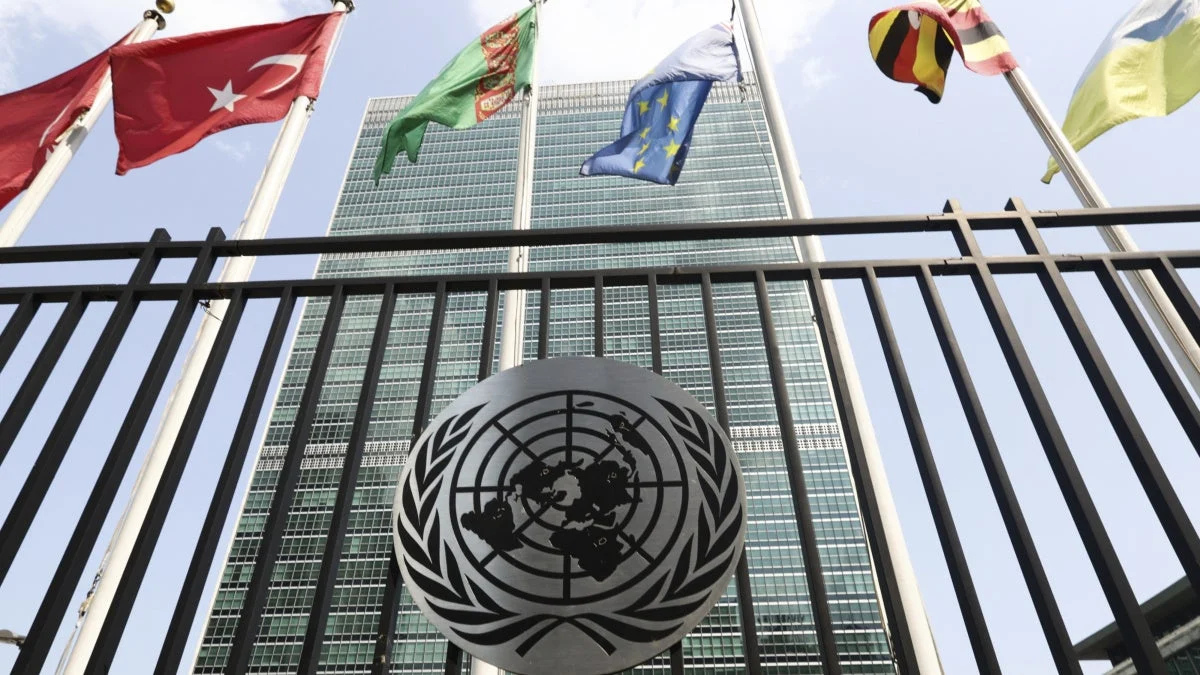
The United Nations is preparing to hold crucial elections this April to determine the membership of the Committee on Non-Governmental Organizations, a 19-member body that serves as the primary gateway for civil society groups seeking formal accreditation within the international system. This election, conducted by the UN Economic and Social Council (ECOSOC), arrives at a historical nadir for global human rights and civic freedoms. Across various continents, governments are increasingly implementing restrictive legislations, defunding grassroots organizations, and utilizing judicial systems to criminalize the advocacy work of human rights defenders. The composition of this committee is significant because it holds the power to grant or deny "consultative status," a designation that allows NGOs to access UN premises, attend high-level meetings, and provide expert testimony to UN human rights bodies.
As the deadline for the April vote approaches, international observers and human rights monitors are sounding alarms over the slate of candidates. The majority of nations vying for seats in this year’s largely uncompetitive election are those whose domestic policies are characterized by deep-seated hostility toward independent civil society. For years, the committee has been criticized for being "captured" by regimes that use their positions not to vet organizations for technical competence, but to block groups that highlight human rights abuses. This trend has transformed the body from a facilitator of public participation into a de facto barrier, effectively freezing out the voices of those who represent the world’s most vulnerable populations.
The Role and Mechanism of the NGO Committee
To understand the stakes of the April election, one must examine the specific authority wielded by the Committee on Non-Governmental Organizations. Established in 1946, the committee is a standing body of ECOSOC. Its primary mandate is governed by ECOSOC Resolution 1996/31, which outlines the eligibility criteria for NGOs to obtain consultative status. There are three categories of status: General, Special, and Roster. General status is reserved for large, international NGOs with a broad geographical reach, while Special status is for groups with competence in specific fields. Roster status is for organizations that make occasional contributions.
Obtaining this status is the only way for an NGO to gain a permanent seat at the table in Geneva and New York. Without it, activists cannot submit written statements to the Human Rights Council, organize "side events" during General Assembly weeks, or engage directly with UN special rapporteurs. The vetting process is designed to ensure that NGOs are transparent and their activities are relevant to the UN’s work. However, in practice, the 19 member states on the committee often use their power to pose endless rounds of repetitive questions to applicants, a tactic known as "perpetual deferral." This can keep an organization in a state of administrative limbo for a decade or more, preventing them from ever achieving accreditation.
Regional Contests and the Crisis of Competition
The upcoming elections are divided into regional groups, and the lack of competition in most categories has virtually guaranteed seats for several governments with poor human rights records. Currently, only the Central and Eastern Europe Group features a competitive race. In this bracket, Belarus is competing against Estonia and Ukraine for two available spots. Human rights advocates have argued that Belarus is fundamentally unfit for the role, given that the administration in Minsk has effectively liquidated nearly all independent civil society organizations within its borders and continues to prosecute human rights defenders under broadly defined extremism laws.
In the Asia-Pacific Group, the situation is even more stark. The four candidates—Saudi Arabia, the United Arab Emirates, India, and China—all have documented track records of suppressing domestic dissent. China, in particular, has been accused of not only dismantling its domestic NGO sector but also actively retaliating against activists who attempt to travel to the United Nations. Beijing has frequently used its position on the committee to block any group that mentions issues related to Tibet, Xinjiang, or Hong Kong. Similarly, Saudi Arabia and the UAE have utilized counterterrorism frameworks to silence advocates, while India has increasingly used the Foreign Contribution Regulation Act (FCRA) to cut off international funding for groups that criticize government policy.
In the Western European and Others Group, the candidates include Israel, Türkiye, the United Kingdom, and the United States. While these nations often present themselves as champions of international law, their recent domestic and foreign policies have drawn scrutiny. The United States, particularly following the legacy of the Trump administration, has faced criticism for its selective support of NGOs. The United Kingdom, despite its public commitment to "championing civil society participation," has recently introduced legislation that restricts the right to protest and has used counterterrorism rhetoric to target groups advocating for climate action or Palestinian rights.
In Latin America and the Caribbean, the candidates are Cuba, Nicaragua, and Peru. Nicaragua represents perhaps the most extreme case of domestic hostility toward NGOs; since 2018, the government has forcibly closed more than 3,000 non-profit organizations, including charitable groups and medical associations. Cuba continues to maintain a legal framework that makes independent civil society activity nearly impossible, and Peru has recently seen legislative moves aimed at increasing executive oversight and control over NGO funding.
A Chronology of Gatekeeping and Obstruction
The transformation of the NGO Committee into a "gatekeeper of silence" has been a gradual process spanning several decades. In the early years of the United Nations, the committee was relatively obscure, dealing with a small number of professional and technical associations. However, the 1990s saw a surge in global activism, culminating in the 1996 revision of the rules governing NGO participation.
By the early 2010s, a "blocking bloc" of countries began to coordinate their efforts within the committee. In 2014, for example, the committee made headlines for its repeated deferral of the International Service for Human Rights (ISHR), a group specifically dedicated to protecting activists. It took a rare and dramatic vote by the full ECOSOC—the parent body—to overturn the committee’s recommendation and grant the ISHR its status.
Between 2016 and 2022, data indicates that the committee’s rate of approval for human rights-focused NGOs plummeted. During this period, organizations working on LGBTQ+ rights, minority rights in authoritarian states, and corporate accountability were the most likely to be met with "perpetual questioning." In 2022, a coalition of democratic nations attempted to force a vote on several long-deferred applications, successfully bypassing the committee’s obstruction for a handful of groups. However, the structural issue remains: the committee itself is still dominated by the very governments the NGOs seek to criticize.
Supporting Data: The Impact of Perpetual Deferrals
The scale of the obstruction is visible in the committee’s own reporting. As of the most recent sessions, hundreds of applications remain in the "deferred" category. Some organizations have answered more than 50 questions over several years, only to be asked the same questions again in slightly different wording.
Statistically, groups from the Global South that focus on domestic government accountability are 70% more likely to be deferred than international NGOs focusing on technical issues like sanitation or climate data. This discrepancy highlights the political nature of the vetting process. Furthermore, the committee has been known to demand lists of individual donors and the private addresses of board members—information that, if handed over to certain member states, could put activists in direct physical danger.
Official Responses and the Call for Reform
The international community is not silent on this issue. The United Kingdom has publicly called for a comprehensive reform of the NGO Committee, suggesting that the body should be more transparent and that its members should be held to a higher standard of "civic openness." In a statement at the UN, British representatives argued that the committee must return to its original purpose of facilitating, rather than hindering, the work of the Economic and Social Council.
UN Secretary-General António Guterres has also frequently spoken about the "shrinking space" for civil society. In his "Call to Action for Human Rights," Guterres emphasized that the UN’s effectiveness depends on the active participation of NGOs. However, the Secretary-General has limited direct power over the committee, which is an intergovernmental body governed by member states.
Human rights organizations, including Human Rights Watch and Amnesty International, have urged ECOSOC member states to ensure that elections are competitive. They argue that "clean slates"—where the number of candidates matches the number of available seats—are the primary reason why abusive regimes continue to dominate the committee. By ensuring that there are more candidates than seats, the broader UN membership can vote out the most egregious offenders.
Broader Implications for Global Governance
The implications of the April election extend far beyond administrative paperwork. When the UN NGO Committee blocks a human rights group, it effectively silences a witness. Many of the groups seeking accreditation are the only entities providing "shadow reports" that contradict official government narratives during the Universal Periodic Review (UPR) and other monitoring processes.
If the committee remains a stronghold for regimes hostile to civil society, the United Nations risks losing its legitimacy as a "parliament of the people." The exclusion of independent voices creates an echo chamber where governments only hear from other governments or from "GONGOs" (Government-Organized Non-Governmental Organizations)—groups that are created and funded by states to mimic civil society while actually promoting government agendas.
Meaningful reform of the committee would require a shift in how ECOSOC members approach the election. Instead of treating the vote as a routine diplomatic trade-off, member states would need to prioritize the integrity of the UN’s engagement with the public. Without a committee membership that is genuinely committed to the principles of the UN Charter, the gate will remain closed to those who are most needed to hold the international community accountable. The April elections will serve as a litmus test for whether the UN is willing to protect its own mechanisms for public participation or if it will allow the "gatekeeper" to continue acting as a "silencer."

Related Posts
Human Rights Watch Calls for Investigation into Death of Detainee Following Removal from Najaf Hospital by Iraqi Drug Police
Human Rights Watch Urges UN Security Council to Extend Lebanon Peacekeeping Mission Amid Escalating Conflict and Humanitarian Crisis