Far right likely to flame out in Marseille mayor race, poll shows
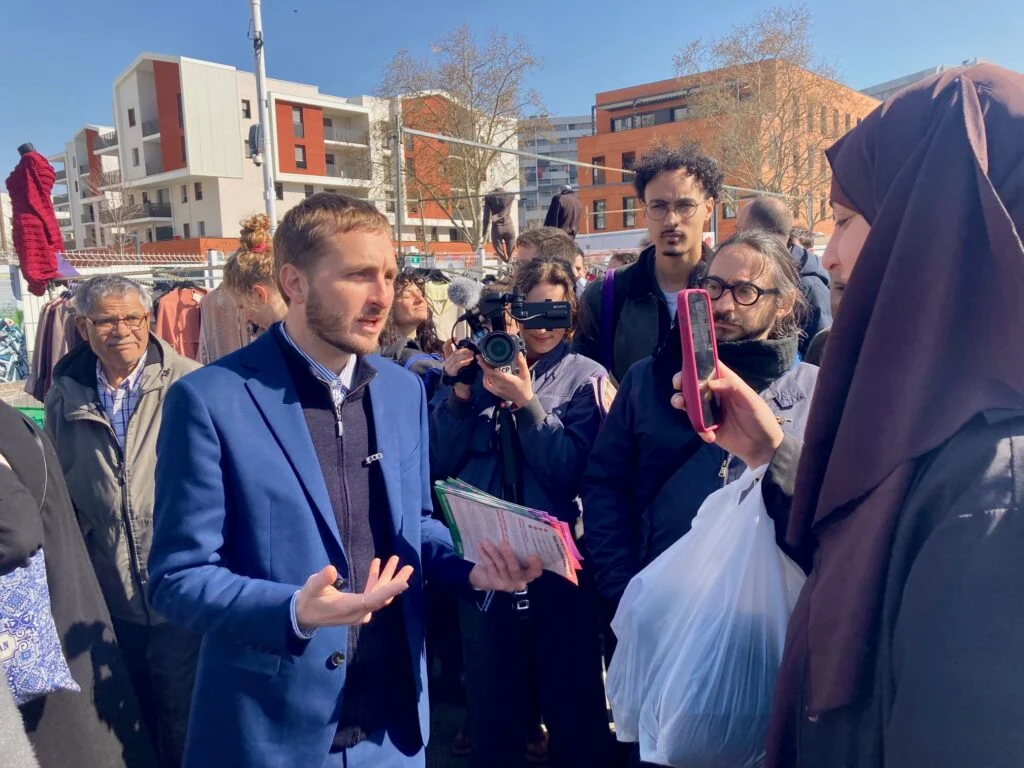
As France approaches a critical juncture in its local political landscape, the city of Marseille finds itself at the center of a national narrative regarding the durability of populist movements. A fresh survey conducted by Cluster 17 indicates that the incumbent mayor, Benoît Payan, is poised to secure a decisive victory in this Sunday’s runoff election. The data suggests that the momentum once anticipated by far-right factions has failed to materialize in the Mediterranean port city, providing a rare moment of stability for the current administration amidst a volatile national electoral climate.
The findings from Cluster 17 serve as a critical barometer for the health of French municipal governance. While national polling has frequently highlighted a surge in support for anti-establishment parties, the Marseille data indicates that local incumbents who focus on tangible urban issues—such as infrastructure, public safety, and housing—retain a significant advantage over ideological challengers. For Payan, the path to victory appears unobstructed, as he leverages his record in office to consolidate a broad coalition of voters who are wary of the political shifts characterizing the wider French landscape.
The Marseille Political Landscape: A Snapshot
Marseille, as the second-largest city in France, has long been a complex battleground. Historically, the city was dominated for decades by the center-right influence of Jean-Claude Gaudin. However, the rise of the "Printemps Marseillais" coalition, which brought Payan to power, signaled a shift toward a more progressive, ecologically focused, and socially conscious municipal agenda.

The current electoral cycle has been defined by a stark contrast between Payan’s pragmatic governance and the insurgent rhetoric of the far right. Observers point to the incumbent’s ability to navigate the city’s deep-seated social inequalities as a primary driver of his current polling lead. By addressing the long-standing issues of urban decay in northern districts and improving public transport connectivity, Payan has effectively neutralized the populist appeal that often thrives on voter frustration in neglected urban areas.
Chronology of the 2026 Municipal Campaign
The road to the current runoff began months ago, characterized by intense debate and a crowded field of candidates. In January 2026, the initial party platforms were solidified, with the far-right candidates focusing heavily on security, migration, and the alleged failure of the state to manage Marseille’s integration challenges.
By mid-February, the discourse shifted toward economic recovery. While the national debate was dominated by the rising profile of Jean-Luc Mélenchon—who has been attempting to reshape the political geography of the left—Marseille remained largely focused on local municipal concerns. As the first round of voting concluded earlier this month, it became clear that the polarization seen in Paris or Lyon was being filtered through a more localized lens in the south.
Throughout the final weeks of the campaign, the "disrupter" strategy employed by various opposition camps failed to gain the necessary traction to force a second-round upset. With the runoff now imminent, the focus has shifted entirely to voter turnout, which analysts believe will be the final determinant of the margin of victory.

Supporting Data and Polling Trends
The Cluster 17 survey provides a granular look at voter intent. According to the data, Payan maintains a double-digit lead over his closest challenger. Crucially, the survey reveals a high degree of "voter stickiness," meaning that those who supported the incumbent in the first round are highly likely to return to the polls this Sunday.
Furthermore, the data suggests that the far-right coalition has reached a ceiling in its voter acquisition. Demographic analysis indicates that while the far-right retains strong support in specific suburban enclaves, it has failed to penetrate the broader urban center, where voters are more concerned with climate policy and the ongoing modernization of the city’s waterfront. The failure to expand the base beyond a core group of disillusioned voters has essentially rendered the far-right challenge a static force rather than a dynamic one.
National Context: The Shadow of Mélenchon and the Far Right
While Marseille prepares for its local vote, the broader French political arena is currently navigating the ambitious maneuvers of Jean-Luc Mélenchon. The France Unbowed leader has been aggressively positioning himself as the primary alternative to the far-right hegemony of Jordan Bardella and Marine Le Pen.
However, the political science of this national maneuver is precarious. Mélenchon’s attempt to pivot from local election successes to a presidential platform faces significant hurdles. Critics argue that his brand of "disruptive" politics, while effective in mobilizing the youth vote in metropolitan hubs, often alienates the moderate middle-class voters who are essential for a national victory. In Marseille, the relative lack of impact from this national drama suggests that local voters are prioritizing the immediate stability of their city over the abstract ideological battles being fought in Paris.

International Dimensions: Security and Global Instability
The local election in Marseille is also occurring against a backdrop of significant international tension. Recent comments by President Emmanuel Macron regarding France’s role in the Middle East—specifically characterizing the nation’s military posture as "purely defensive" following a tragic soldier fatality—have filtered down into local discourse.
Security concerns are often a staple of municipal campaigns, and in a major port city like Marseille, the intersection of national security policy and local policing is inevitable. When global leaders like Ukrainian President Volodymyr Zelenskyy weigh in on international matters—such as the recent criticism of the United States for easing sanctions on Russia—the ripple effects are felt in domestic French discourse. These international tensions create a climate of uncertainty, which usually favors the incumbent. When the global situation feels precarious, voters historically lean toward the status quo, fearing that an experimental shift in local leadership could exacerbate domestic instability.
Broader Impact and Implications
The outcome of the Marseille election will likely have several major implications for the French political system. First, it will provide a template for other major cities to follow: a focus on local, concrete achievements rather than national ideological polarization appears to be the most effective strategy for surviving the current populist wave.
Second, the result will test the durability of the far-right’s momentum. If the party fails to make a significant dent in a city as large and complex as Marseille, it will serve as a signal that the movement has hit a strategic plateau. This could lead to internal friction within the far-right ranks, as leaders debate whether their current messaging is too narrow or too extreme to capture a majority.

Finally, the victory of a progressive incumbent in Marseille would reinforce the idea that France’s urban centers remain a bastion for center-left and ecological politics. As the country moves toward future presidential and legislative cycles, these urban strongholds will serve as the necessary foundation for any coalition attempting to challenge the rise of the national right.
Conclusion
As the residents of Marseille prepare to cast their ballots this Sunday, the message from the polls is clear: continuity is currently favored over radical change. While the national political stage remains a theater of intense competition and dramatic shifts, the municipal level offers a reprieve of relative clarity. Benoît Payan’s anticipated win is not just a reflection of his own political skill, but also a testament to the fact that when faced with a choice between the familiar management of city services and the turbulent promise of a populist shift, the electorate of a major European city often opts for the path that promises the most stability. The coming days will confirm whether this polling data translates into a definitive mandate for the incumbent, but for now, the data strongly suggests that the far-right’s attempt to conquer this key urban center will fall short.