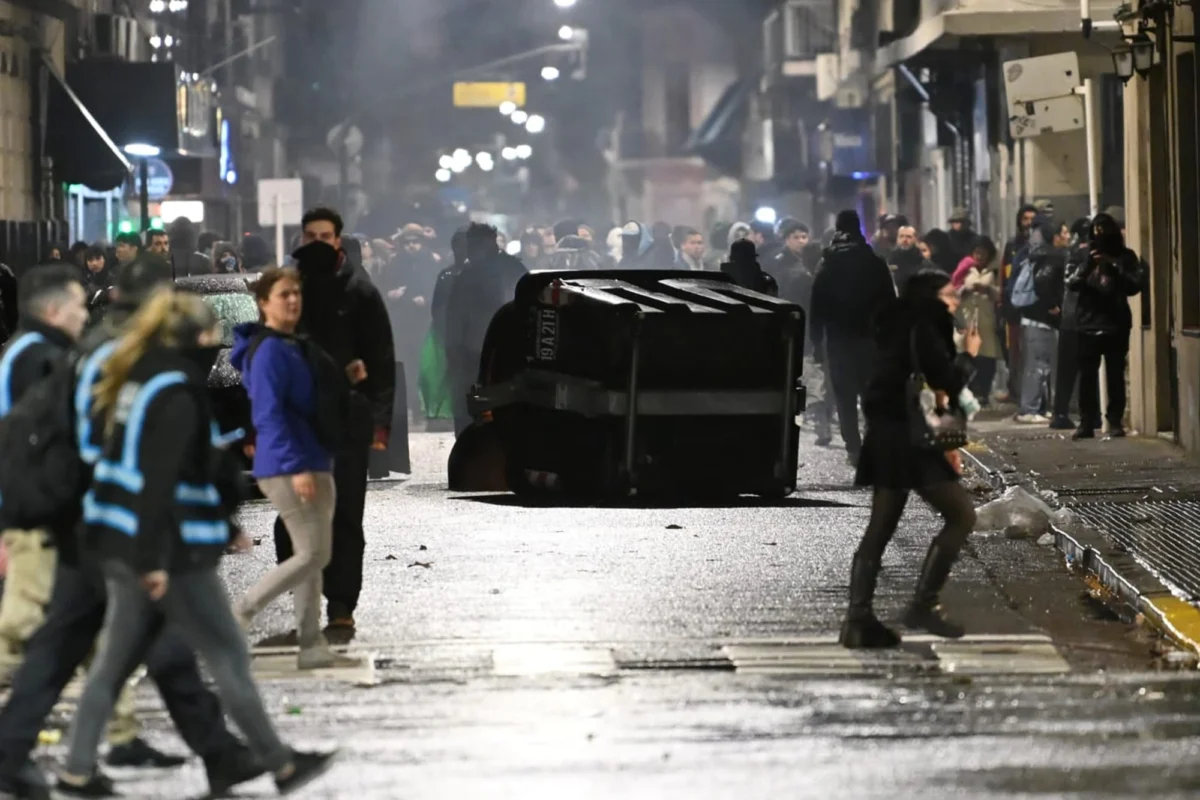
Qué dijo Jorge Macri sobre el operativo en el Senado durante el debate de la Ley de Tierras del jueves pasado
Buenos Aires City Mayor Jorge Macri appeared as a guest on the LN+ program "La Cornisa" to discuss the security operation undertaken by City forces, in coordination with national authorities, last Thursday. The operation coincided with the Senate’s debate on the Ley de Tierras (Land Law). During his appearance, Macri asserted his administration’s commitment to restoring order within the Autonomous City of Buenos Aires (CABA), famously stating, "We will not let them transform the City into the worst of the conurbano." He further criticized some of the demonstrators, suggesting their aim was to import unresolved municipal and provincial issues into the nation’s capital. "There is full coordination in each of these events. We have cleared the city of pickets," Macri declared, underscoring the perceived success of the security measures. He also characterized the disturbances near the Congressional area as exceeding a mere political protest, labeling the participants as "delinquents" and emphasizing that the events did not constitute a peaceful demonstration. Expanding on the broader implications of property rights, Macri voiced his support for provisions within the Ley de Tierras that would expedite the restitution of occupied properties, stating, "I think the law is an advance, and it is good that there can be express evictions."
Context of the Ley de Tierras Debate and Public Reaction
The Ley de Tierras, officially known as the Ley de Régimen de Propiedad de las Tierras de Uso Común y la Creación de un Fondo Fiduciario para la Regularización Dominial de Tierras (Law on the Regime of Common Land Ownership and the Creation of a Trust Fund for the Regularization of Land Titles), has been a focal point of significant political and social contention. Its proponents argue that the law is crucial for addressing historical land tenure issues, promoting equitable development, and providing legal certainty for landholders, particularly in rural areas. The law seeks to regularize titles, potentially redistribute land for development or social housing projects, and establish mechanisms for transparent land management.
However, the legislation has drawn sharp criticism from various sectors. Opponents, including segments of the opposition political parties, labor unions, and social movements, have expressed concerns about potential infringements on private property rights, the concentration of power in regulatory bodies, and the possibility of arbitrary expropriation or redistribution. These groups argue that the law, in its current form, could disincentivize investment, create legal uncertainty, and negatively impact established land ownership structures. The protests that coincided with the Senate debate were largely organized by these dissenting factions, who mobilized to express their opposition and exert pressure on legislators. The scenes witnessed outside the Congress were a visceral manifestation of this deep societal division over land policy.
Chronology of Events and Security Response
The events of last Thursday unfolded against a backdrop of heightened political tension surrounding the Ley de Tierras. As the Senate convened to debate the controversial legislation, a significant number of demonstrators converged on the areas surrounding the Congressional complex. These protests, which began peacefully in the early hours, gradually escalated. Reports indicate that some groups attempted to breach security perimeters, leading to confrontations with law enforcement.
The Buenos Aires City Police, in conjunction with federal security forces, implemented a comprehensive security plan designed to maintain order, protect public buildings, and ensure the safety of citizens. This plan, as described by Mayor Macri, involved a robust presence of uniformed officers and tactical units. The objective was to prevent the complete blockade of access routes to the Congress and to deter any actions that could disrupt the legislative process or lead to widespread public disorder. The deployment of security forces aimed to control the crowds and contain any instances of violence or vandalism. The mayor’s statement that the city had been "cleared of pickets" suggests a proactive approach to maintaining traffic flow and public access, a recurring issue during protests in the capital. The operation was reportedly characterized by a firm stance against any attempts to impede the functioning of democratic institutions.
Supporting Data and Operational Details
While specific operational data regarding the number of officers deployed, arrests made, or instances of property damage were not detailed in the initial report, the mayor’s emphasis on "full coordination" between City and national forces suggests a multi-jurisdictional effort. The security forces were equipped to manage crowd control, including the use of non-lethal deterrents. The aim was to de-escalate situations while maintaining a strong presence. The reference to "delinquents" implies that law enforcement identified individuals or groups whose actions went beyond legitimate protest and constituted criminal behavior. This distinction is crucial in justifying the use of more forceful security measures. The reported success in preventing the city from being "transformed into the worst of the conurbano" can be interpreted as a reference to the frequent and often disruptive roadblocks and protests that have characterized the periphery of Buenos Aires. The City government, under Macri, has made it a priority to address these issues within its jurisdiction, aiming to differentiate the capital’s governance from what they perceive as less orderly areas.
Official Statements and Related Party Reactions
Mayor Jorge Macri’s statements on "La Cornisa" represent the official stance of the Buenos Aires City government. His firm defense of the security operation and his strong rhetoric against disruptive elements underscore a policy of zero tolerance for what he termed "delinquents" and a commitment to maintaining public order. His remarks were likely intended to reassure residents and businesses that the city administration is capable of managing public demonstrations and preventing disruptions.
While specific reactions from opposition leaders, union representatives, or social movement organizers directly to Macri’s "La Cornisa" interview were not included in the provided text, it can be inferred that they would likely contest his characterization of the protesters. Critics would probably argue that Macri’s statements dismiss legitimate grievances and frame peaceful dissent as criminality. They would likely point to the inherent right to protest and the importance of allowing citizens to voice their opposition to legislation they deem harmful. The Ley de Tierras remains a deeply divisive issue, and the differing perspectives are likely to persist. The political discourse surrounding the law and the protests will undoubtedly continue to be shaped by these contrasting viewpoints.
Broader Impact and Implications
Jorge Macri’s assertive stance on public order and his specific reference to preventing the "worst of the conurbano" signal a clear policy direction for his administration. The focus on clearing "piquetes" (roadblocks) and his willingness to support "express evictions" indicate a preference for swift and decisive action in managing urban space and property disputes. This approach aims to project an image of strong governance and a commitment to restoring a sense of normalcy and security in the capital.
The implications of this policy are multifaceted. On one hand, it may be welcomed by residents and businesses who have grown weary of frequent disruptions and seek greater predictability and safety. The emphasis on property rights and the potential for expedited restitution of occupied properties could also resonate with those who advocate for a more robust legal framework protecting ownership.
On the other hand, this firm approach could exacerbate tensions with social movements and unions who see such measures as an infringement on the right to protest and a suppression of dissent. The characterization of protesters as "delinquents" could be seen as an attempt to delegitimize legitimate political opposition and criminalize social activism. The success of such a policy will likely depend on its ability to balance the need for public order with the protection of fundamental rights and freedoms, and on its capacity to address the underlying social and economic issues that often fuel protests, rather than simply managing their immediate manifestations. The ongoing debate surrounding the Ley de Tierras, and the security responses it elicits, will continue to be a critical barometer of the political climate and the evolving relationship between the state and its citizens in Buenos Aires.

Related Posts

The Electric Vehicle Battery Health Debate Emerges as Argentina’s EV Market Accelerates

President Donald Trump Confirms Secret Departure from Turkey Amidst Assassination Threat