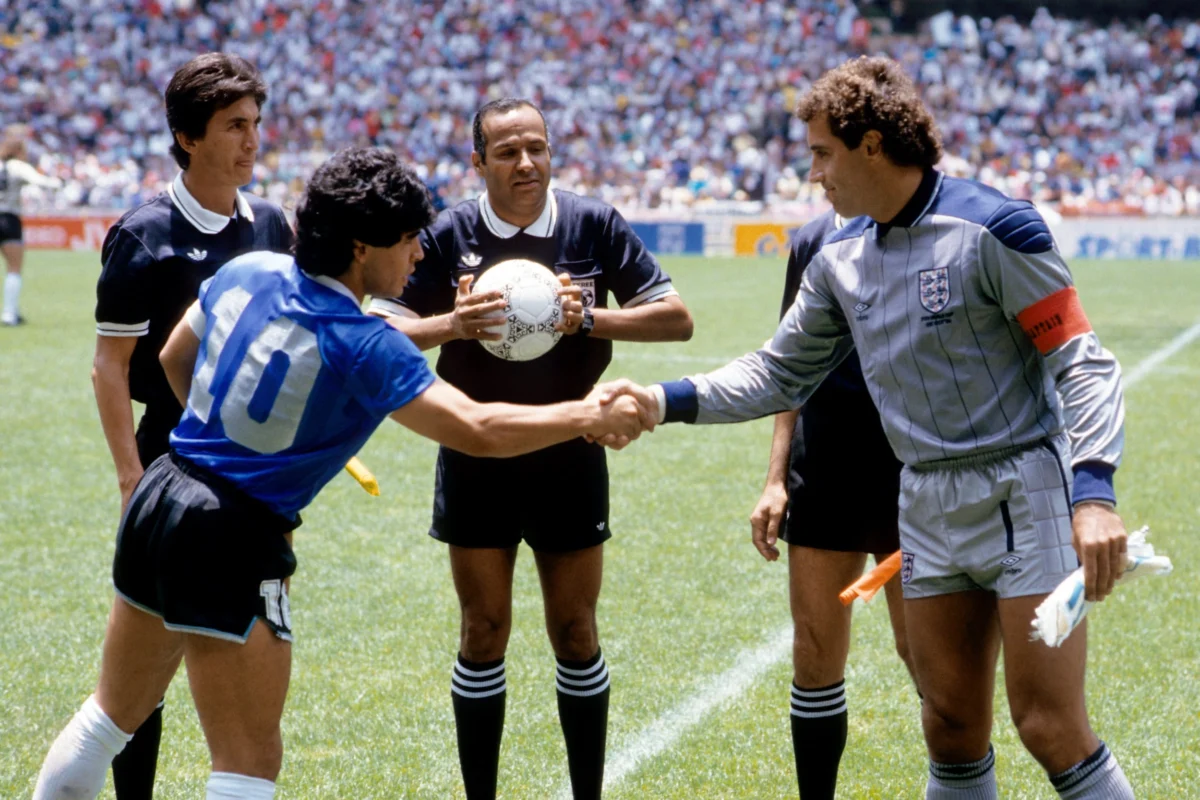
The Ball from Diego Maradona’s "Hand of God" Goal and "Goal of the Century" is Set for Auction, Expected to Fetch Over $10 Million
The legendary football that witnessed two of Diego Maradona’s most iconic goals, the controversial "Hand of God" and the sublime "Goal of the Century," is poised to make history once again as it goes under the hammer in the United States this month. Auction house Heritage Auctions, based in Texas, anticipates the ball will surpass the $10 million mark, potentially setting a new record for a piece of sporting memorabilia. This artifact of footballing immortality is the very sphere that Maradona propelled into the net with his hand, controversially opening the scoring in the 1986 World Cup quarter-final against England in Mexico, a match that ultimately propelled Argentina towards their second world championship title.
A Match Etched in Sporting Lore
The 1986 FIFA World Cup, held in Mexico, remains a watershed moment in football history, largely due to the indelible performances of Diego Maradona. The quarter-final clash between Argentina and England on June 22, 1986, at the iconic Estadio Azteca, transcended the sport, carrying the weight of political and historical undertones stemming from the Falklands War. It was in this high-stakes encounter that Maradona, already a global superstar, etched his name permanently into the annals of sporting legend with two goals that represented the absolute extremes of his genius and his audacity.
The first goal, scored in the 51st minute, was a moment of unparalleled controversy and brilliance. Maradona, rising to meet a lofted pass from teammate Jorge Valdano, outjumped the significantly taller England goalkeeper, Peter Shilton. In a swift and audacious move, Maradona used his left fist to punch the ball over Shilton and into the net. Crucially, in an era devoid of Video Assistant Referee (VAR) technology, the match officials, including Tunisian referee Ali Bennaceur and his assistants, failed to spot the handball. The goal stood, much to the consternation of the English players and fans, and became immortalized as "La Mano de Dios" – "The Hand of God."
The Genesis of Two Legendary Goals
Initial confusion surrounded the nature of Maradona’s first goal. Upon returning to the locker room, teammates reportedly questioned him about the incident, seeking confirmation of the handball. Maradona himself offered enigmatic responses for some time. It wasn’t until months later, through widely circulated video footage, that Maradona publicly acknowledged the "trickery." His own famous quote, "It was scored a little with the head of Maradona and a little with the hand of God," perfectly encapsulated the duality of the moment.
The "Hand of God" goal, while celebrated by Argentinians, was only the prelude to an even more extraordinary display of skill. Just four minutes later, Maradona conjured what is widely regarded as the "Goal of the Century." Receiving the ball in his own half, he embarked on a mesmerising solo run, evading tackle after tackle from a bewildered English defence. He weaved past five English players – Peter Reid, Peter Shilton, Kenny Sansom, Terry Butcher, and Terry Fenwick – before calmly slotting the ball past Shilton to double Argentina’s lead. This goal, a breathtaking exhibition of dribbling, agility, and composure, showcased Maradona’s unparalleled footballing prowess.
The Ball’s Journey Through Time
The football used in that historic match has a unique provenance. It was the sole ball used for the entire 90 minutes of the quarter-final. Following the match, the referee, Ali Bennaceur, retained possession of the ball, a practice that was permitted by FIFA regulations at the time, which stipulated that the principal referee could keep the ball used in a match. Bennaceur kept the ball for over three decades, cherishing it as a memento of one of the most significant games in World Cup history.
In November 2022, Bennaceur decided to part with this extraordinary piece of history. The ball was sold by Graham Budd Auctions in London for £2 million (approximately $2.4 million USD at the time). The current owner, who wishes to remain anonymous, has now decided to offer it for sale through Heritage Auctions, recognizing its immense historical and monetary value.
An Auction of Unprecedented Significance
Heritage Auctions has positioned the ball as "the most historic football in the world." The auction, scheduled to take place from April 21st to April 23rd, opens with an initial bid of $2.5 million. However, the auction house’s vice president of sports, Dan Imler, expressed confidence that the final price could soar significantly higher, potentially reaching an eight-figure sum. "This is, without a doubt, the most historic football in the world of football," Imler stated to AFP, underscoring the ball’s unique place in sporting lore.

The significance of the ball is amplified by the fact that it was instrumental in both the controversial "Hand of God" and the universally acclaimed "Goal of the Century." Heritage Auctions’ description highlights this dual legacy, noting that it was not only the ball for Maradona’s infamous handball but also for his breathtaking solo effort that left the English defence in tatters. The ball itself bears the marks of its historic journey; the signatures of the match officials, including Bogdan Dotchev, Benry Ulloa Morera, and Idrissa Traoré, are still visible on the leather, a testament to its authenticity and journey through time.
The Broader Context of Maradona’s Legacy
Diego Maradona’s career was a tapestry of brilliance, controversy, and profound impact. His performances in the 1986 World Cup cemented his status as one of the greatest footballers of all time, often compared to Pelé. His ability to single-handedly inspire his team, coupled with his flair and charisma, made him a global icon. The 1986 tournament was not just about the goals; it was about Maradona’s command of the game, his audacious dribbling, his visionary passing, and his leadership.
The enduring legacy of the "Hand of God" goal continues to be a subject of debate and discussion among football purists. While it represented a moment of questionable sportsmanship, it also showcased Maradona’s cunning and his willingness to push the boundaries. The "Goal of the Century," on the other hand, stands as an undisputed masterpiece, a testament to his extraordinary individual talent. The fact that both these defining moments occurred with the same ball elevates its status immeasurably.
Financial Milestones in Football Memorabilia
The potential sale of this football for over $10 million would place it among the most valuable sports collectibles ever auctioned. This follows a trend of astronomical figures being paid for items associated with legendary athletes. For instance, the jersey Maradona wore during the same 1986 quarter-final match against England was sold in May 2022 for a record-breaking $9.3 million, becoming the most expensive football jersey ever sold. The continued high valuation of items linked to Maradona underscores his unparalleled global appeal and the deep emotional connection fans have with his legendary career.
The sale of such high-value memorabilia has significant implications for the sports collecting market. It signals a growing appreciation for the historical and cultural significance of sporting artifacts, attracting a new wave of collectors and investors. These items are not merely objects; they are tangible links to moments that have shaped sporting history and captured the imagination of millions.
The Referee’s Perspective and FIFA’s Role
The sale also brings attention back to the referee, Ali Bennaceur, and his role in the historic match. Bennaceur’s decision to keep the ball and later sell it highlights the personal connection individuals can have with pivotal sporting events. His letter from 2023, clarifying the FIFA regulations and confirming the ball’s use throughout the match and the signatures of the assistants, adds an official layer to its provenance. This meticulous documentation is crucial in validating the authenticity and historical significance of such an item for auction.
While the "Hand of God" goal remains a controversial footnote, it’s important to remember the context of football in 1986. The absence of modern technology meant that officials relied solely on their on-field judgment. The introduction of VAR in subsequent years has aimed to rectify such clear errors, though it has also introduced its own set of debates. The "Hand of God" incident serves as a stark reminder of how officiating decisions, or the lack thereof, can profoundly impact the course of a match and the historical narrative.
A Moment of Reflection and Anticipation
As the auction date approaches, the football world watches with keen interest. The sale of this ball is more than just a financial transaction; it’s an opportunity for fans and collectors to own a piece of a legend. It represents the duality of sport – the divine skill and the human error, the celebrated triumph and the controversial shortcut.
The fact that this ball was present for both the "Hand of God" and the "Goal of the Century" makes it an unparalleled artifact. It encapsulates the complex, brilliant, and often contradictory nature of Diego Maradona himself, a figure who continues to inspire awe and debate decades after his peak. The impending auction ensures that this iconic sphere will continue to tell its extraordinary story for generations to come, a silent witness to one of the most electrifying and consequential performances in the history of the beautiful game. The outcome of the auction will undoubtedly be closely watched, potentially setting new benchmarks for the value of sporting history.

Related Posts

The Electric Vehicle Battery Health Debate Emerges as Argentina’s EV Market Accelerates

President Donald Trump Confirms Secret Departure from Turkey Amidst Assassination Threat