Defcon 34 Unveils Revolutionary Open Source Silicon Badge Designed by Andrew Bunnie Huang to Advance Hardware Transparency
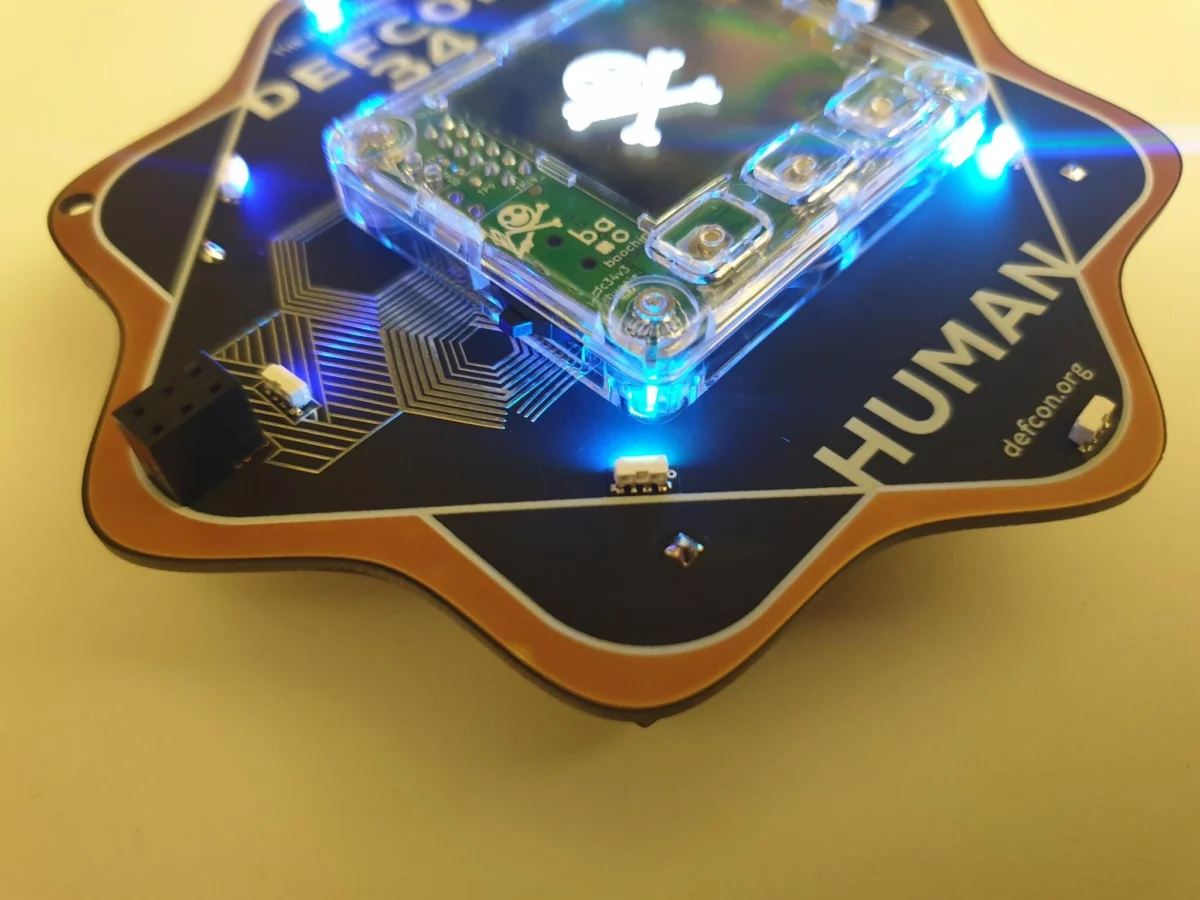
For decades, the annual Defcon hacker conference has been defined by its iconic, elaborate conference badges. These devices have evolved from simple paper credentials into sophisticated electronic masterpieces, frequently featuring intricate mechanical puzzles, complex cryptographic challenges, and hidden Easter eggs. However, the badge for Defcon 34 represents a fundamental departure from this tradition. Rather than focusing solely on aesthetic or recreational complexity, this year’s hardware, designed by legendary security researcher Andrew “bunnie” Huang, serves as a platform for a groundbreaking advancement in computing: the Baochip-1x, an open-source microcontroller designed to provide verifiable security from the transistor level up to the operating system.
A New Standard for Hardware Transparency
The traditional computer chip is the ultimate “black box.” Encased in opaque, industrial-grade plastic, the internal circuitry of a standard microprocessor remains hidden from the end user. This opacity has long been a point of contention within the cybersecurity community, as it creates an inherent “trust me” requirement in the supply chain. Users and manufacturers alike must assume that no unauthorized backdoors or malicious logic gates were added during the fabrication process.
The Baochip-1x addresses this concern through a radical commitment to transparency. By utilizing specialized packaging that allows infrared light to penetrate the silicon, researchers can visually inspect the chip’s internal structures. This capability allows users to verify that the physical silicon matches the published open-source design files. By making the source code for the processor core, firmware, cryptographic engines, and input-output systems available on GitHub, Huang has created a framework where security is not a matter of faith, but a subject for objective, empirical validation.
Chronology of a Three-Year Development Cycle
The road to the Baochip-1x began three years ago, born from Huang’s long-standing professional goal to create a processor whose integrity could be fully audited. The project faced the significant economic hurdle of fabrication costs, which can reach into the millions of dollars for a single run. The breakthrough occurred when the hardware company Crossbar approached Huang with interest in developing a secure, open-source-capable chip.

The two parties reached a mutually beneficial agreement: Huang would piggyback on Crossbar’s manufacturing run. By sharing the wafer space, Huang bypassed the prohibitively expensive startup costs of independent fabrication. This process—while often treated as an industry secret—allowed the Baochip-1x to be manufactured alongside Crossbar’s proprietary ARM-based processor. The resulting silicon contains both architectures, with the Baochip-1x utilizing an open-source RISC-V core. While the manufacturing process itself involves proprietary elements from TSMC’s 22-nanometer fabrication line, the architecture of the chip represents perhaps the most open, security-focused processor ever made available to the public.
Technical Specifications and Security Architecture
The Baochip-1x is designed for both immediate functionality and long-term research. The module operates on a 350 MHz RISC-V processor, supplemented by 2 megabytes of SRAM and 4 megabytes of resistive RAM (RRAM). The inclusion of RRAM is a strategic choice; unlike conventional flash memory, RRAM makes the physical extraction of stored data significantly more difficult for unauthorized parties attempting to bypass security via physical inspection or de-layering.
Furthermore, the chip includes advanced security features such as hardware-level secure boot and a true random number generator. The operating system, written in the memory-safe language Rust, is designed to minimize the vulnerability window for common software-based attacks. Despite these precautions, Huang maintains a pragmatic stance regarding the chip’s limitations. He estimates that while the chip is exceptionally resilient against remote, non-physical attacks, a well-funded adversary with a multi-million-dollar laboratory could eventually compromise the hardware. This admission reflects a departure from the industry trend of over-hyping security products, emphasizing instead that true security is an ongoing process of testing and iteration.
The Role of Defcon in Scaling Adoption
Defcon founder Jeff Moss saw an immediate synergy between the Baochip-1x and the conference theme for this year: "Agency." The concept of agency at Defcon 34 emphasizes individual self-determination and the control users maintain over the technologies they interact with daily. By distributing 27,000 of these badges to attendees, the conference is facilitating the largest-ever deployment of open-source silicon.
The badges are designed to transcend their role as mere event credentials. Upon the conclusion of the conference, the core module of the badge can be detached and repurposed as a high-security hardware token. This device supports FIDO-based authentication, time-based one-time passwords, and password management. It even includes a low-resolution camera specifically tuned for scanning QR codes to streamline authentication processes. In a nod to Defcon’s strict privacy policies, the camera is intentionally limited in scope, lacking photo storage capabilities or the fidelity required for surreptitious surveillance.

Broader Implications for the Hardware Industry
The implications of the Baochip-1x extend far beyond the walls of the conference. By providing thousands of hackers and security researchers with a platform they can tear down, inspect, and reprogram, Huang is effectively crowdsourcing the vulnerability testing of his architecture. This transparency-first approach could serve as a model for future security-sensitive hardware.
Industry analysts note that if the Baochip-1x successfully matures, it could influence the development of hardware security modules (HSMs) and other authentication devices. The ability to audit a device from the bootloader to the transistor level is a standard that many governmental and enterprise entities are beginning to demand, yet few consumer-grade products currently provide. By lowering the barrier to entry for verifiable hardware, the Baochip project challenges the established norms of the semiconductor industry, which have historically favored proprietary obfuscation over open auditability.
Social and Interactive Design
Despite the focus on rigorous security, the badges remain deeply rooted in the culture of the Defcon community. The aesthetic design, curated by the Dutch firm Cheeso, maintains the conference’s tradition of social signaling through hardware. The badges feature customizable LED patterns that evolve as they interact with other badges in the vicinity. This communal aspect—where badges communicate and share information to unlock new patterns—ensures that the device remains a tool for community building rather than just an isolated security appliance.
A Foundation for Future Innovation
As Defcon 34 progresses, the real-world utility of the Baochip-1x will be tested in real-time. Huang expects that attendees will discover “zero-day” vulnerabilities within the code, a prospect he views not as a failure, but as a necessary step in the hardening process. "It’s a feature, not a bug," Huang noted, emphasizing that the open-source nature of the project allows for a collective, community-led response to any flaws discovered.
Looking toward the future, the chip’s architecture is flexible enough to accommodate more complex software environments, including potential ports for Linux-based distributions. With development kits already available in C and Rust, the barrier for developers to build upon the base architecture is minimal. Whether the Baochip-1x remains a niche tool for security enthusiasts or evolves into a template for a new generation of transparent, user-controlled computing hardware remains to be seen. However, by shifting the focus of the Defcon badge from a static piece of flair to a functional, verifiable, and programmable computing platform, Andrew Huang has succeeded in creating a legacy piece of hardware that effectively embodies the conference’s commitment to technological agency and transparency. The success of this experiment will likely be measured by how many of the 27,000 badges find their way into professional security workflows long after the conference floor has been cleared.

Related Posts

The Las Vegas Cybersecurity Summit and the Escalating Threat of Autonomous Digital Exploitation

New York City Council members and privacy advocates launch legislative campaign to ban biometric facial recognition at public entertainment venues