Protesters Set US Flag Ablaze Near Congress Amidst Heated Debate Over Property Law
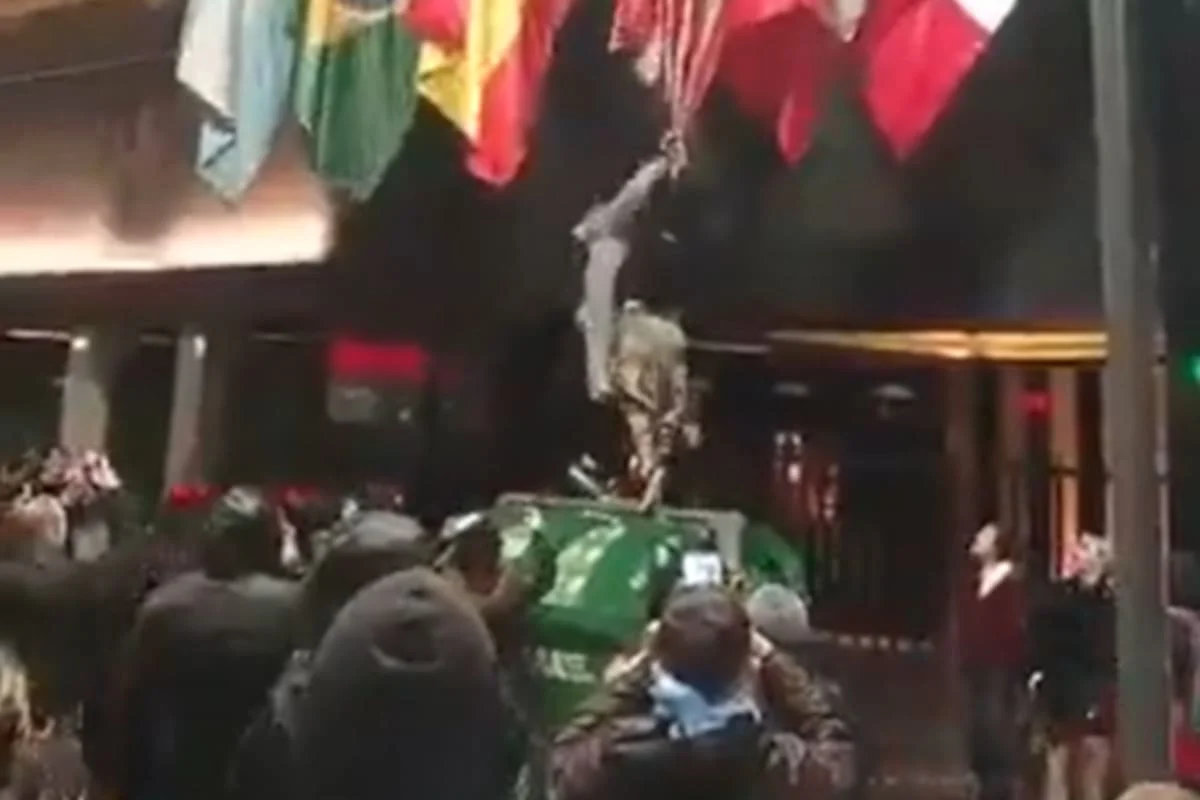
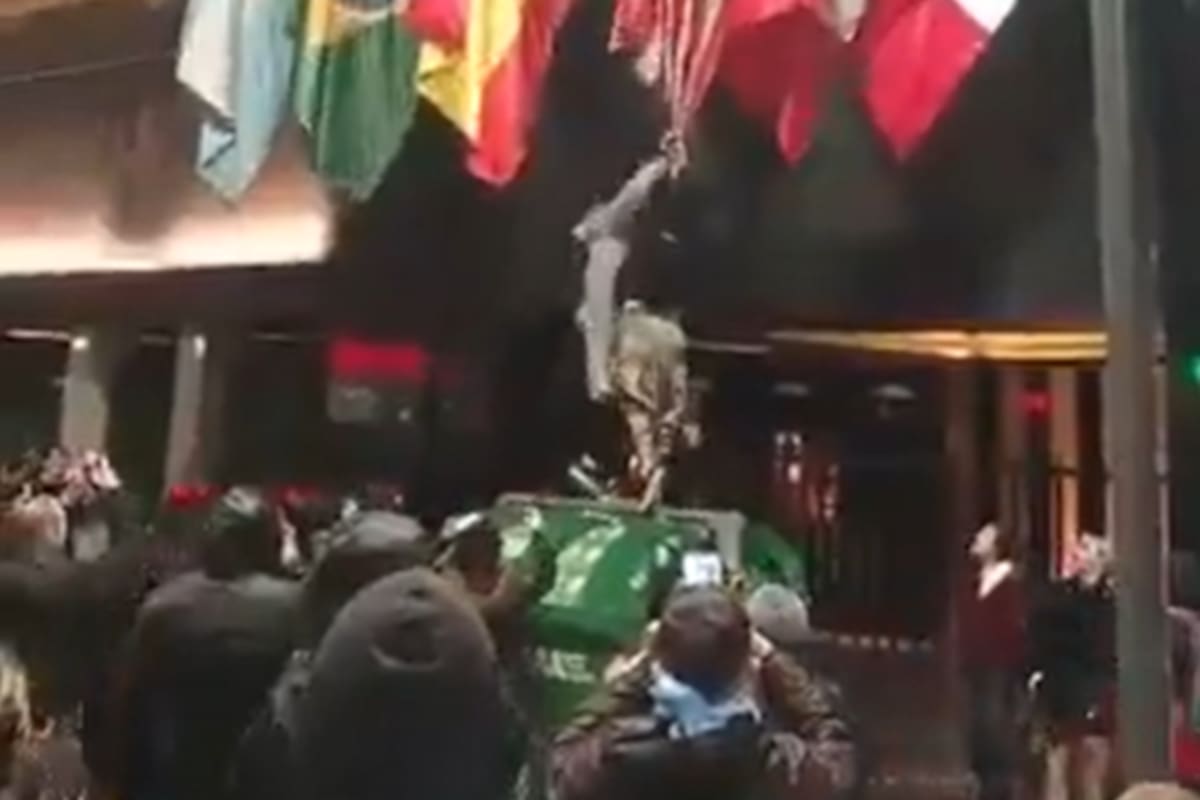
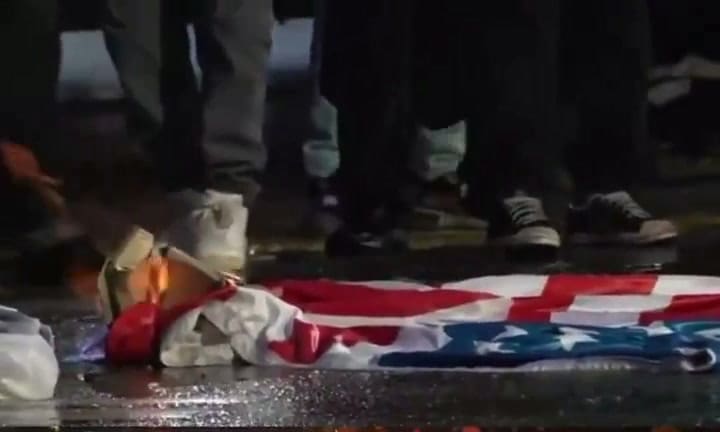
In a scene of heightened tension on Thursday afternoon, just outside the hallowed halls of the Argentine Congress, a group of demonstrators took a dramatic and inflammatory action: they removed a United States flag from a nearby hotel and set it ablaze. This act of defiance, captured in a video circulating widely on social media, was accompanied by chants of "La Patria no se vende" (The Homeland is not for sale), underscoring a deep-seated sentiment of national sovereignty and opposition to perceived foreign influence. The incident occurred against the backdrop of a highly charged political climate, as lawmakers inside the legislative building engaged in a contentious debate over a controversial property law, widely seen by critics as a threat to private ownership.
The demonstration, which saw the participation of opposition parties, trade unions, and various social movements, was a vocal protest against what many perceive as an erosion of fundamental property rights. The unrest outside mirrored the heated exchanges occurring within the Senate, where the debate over the "ley de inviolabilidad a la propiedad privada" (law on the inviolability of private property) had reached a critical juncture. This legislative push, championed by the current administration, has ignited widespread concern among various sectors of society, fueling fears of potential government overreach and a disregard for established legal frameworks protecting private assets.
Chronology of Escalation and Confrontation
The events of Thursday afternoon unfolded in a series of escalating confrontations between protesters and security forces. As the debate inside Congress intensified, so did the tension outside. The initial removal and subsequent burning of the US flag, reportedly occurring shortly after 8 p.m., served as a potent symbol of anti-foreign sentiment and a visceral expression of the protesters’ grievances. The video documentation of this act clearly captured the fervent support from some demonstrators, their rallying cry of nationalistic fervor resonating through the streets.
Following this symbolic act, the situation devolved further. According to sources within the police department, by 9 p.m., twelve individuals had been detained. The confrontation was not one-sided, however. Three members of the security forces – officers from the Federal Police, Gendarmerie, and Prefecture – sustained head injuries from projectiles and were transported to the Churruca Hospital for medical attention. The press corps also found themselves caught in the crossfire, with one photographer suffering a head contusion and a videographer sustaining injuries from rubber bullets. These accounts paint a stark picture of a volatile environment where the line between protest and conflict had become dangerously blurred.
Approximately a hundred protesters later regrouped, advancing towards barricades erected on Ayacucho and Rivadavia streets, mere blocks from the Congress building. Using discarded garbage containers, they partially obstructed vehicular traffic, creating a physical barrier and prolonging the standoff. This maneuver underscored the protesters’ determination to maintain their presence and amplify their dissent, even as a significant deployment of security forces maintained a watchful perimeter. The atmosphere remained thick with palpable tension, a testament to the deep divisions the proposed legislation had exposed.
Broader Context: The "Ley de Tierras" and National Sovereignty
The controversy surrounding the "ley de inviolabilidad a la propiedad privada," often colloquially referred to as the "ley de tierras" (land law) due to its perceived implications for land ownership, has been a simmering issue for weeks. The legislation, as presented, aims to establish a framework that critics argue could grant the government broader powers to intervene in private property matters, potentially impacting foreign ownership of land and other significant assets. This has resonated with nationalist sentiments, evoking historical anxieties about foreign economic control and the safeguarding of national patrimony.
The presence of the US flag, a symbol of global economic and political power, likely served as a focal point for these deeply ingrained concerns. For many of the protesters, the burning of the flag was not merely a random act of vandalism but a symbolic rejection of perceived external influence and a forceful assertion of national autonomy. The slogan "La Patria no se vende" encapsulates this sentiment, suggesting a fear that economic policies, particularly those perceived as favorable to foreign interests, could lead to the commodification or loss of national identity and resources.
The broader opposition to the law includes a diverse coalition: established political parties who view the legislation as a departure from democratic principles of property protection, labor unions concerned about potential impacts on workers’ rights and economic stability, and social movements that often champion the rights of marginalized communities and advocate for a more equitable distribution of resources. This convergence of disparate groups underscores the widespread unease the proposed law has generated across the political spectrum.
Official Responses and Parliamentary Scrutiny
The escalating unrest and the targeting of security personnel did not go unnoticed within the legislative chambers. Esteban Paulón, a national deputy for the Socialist Party (PS), swiftly responded by demanding an urgent explanation from the Minister of Security, Alejandra Monteoliva. Deputy Paulón’s initiative highlighted a growing concern about the conduct of the security forces during the protests and the broader implications of the government’s response to dissent.
The deputy’s formal request for information, aimed at clarifying the nature and proportionality of the police operation outside Congress, sought to scrutinize the methods employed to manage the demonstrations. This parliamentary intervention signals a commitment by some legislators to ensure accountability and transparency in the government’s handling of public order, particularly in the context of controversial legislation.
The Ministry of Security, in its own statement before 9 p.m., reported the detention of three demonstrators charged with “atentado y resistencia a la autoridad” (assault and resistance to authority). This official account emphasizes the government’s perspective on the events, framing the actions of some protesters as direct challenges to law enforcement. The ministry also provided details on the significant security deployment, which included 820 agents from the Federal Police, Gendarmerie, and Prefecture, underscoring the government’s intention to maintain control and prevent further escalation.
Violence and the Role of Force
The confrontational dynamics were further evident at other key intersections, including Rodríguez Peña and Rivadavia, and Yrigoyen and Solís. Here, clashes, running skirmishes, and the audible sounds of police weaponry echoed for extended periods. The use of a water cannon by the police to disperse protesters attempting to breach the barricades in front of Congress illustrated the authorities’ resolve to enforce the perimeter and prevent direct access to the legislative building. This tactic, while effective in moving crowds, can often exacerbate tensions and lead to further friction.
The involvement of a water cannon, alongside reports of rubber bullet use, points to a significant security operation designed to contain the protest. While the stated objective is to maintain order and protect public infrastructure, such forceful methods invariably raise questions about the balance between the right to protest and the use of state power. The injuries sustained by journalists and security personnel underscore the inherent risks involved in such large-scale public demonstrations when they devolve into confrontations.
Analysis of Implications: A Divided Nation
The events of Thursday paint a complex picture of a nation grappling with fundamental questions of sovereignty, property rights, and the role of foreign influence in its economy. The burning of the US flag, while a dramatic act, is indicative of deeper currents of nationalistic sentiment that can be mobilized in times of political and economic uncertainty. The broad coalition opposing the property law suggests that the government faces significant challenges in navigating these deeply held concerns.
The parliamentary scrutiny initiated by Deputy Paulón highlights the ongoing efforts by opposition forces to hold the government accountable for its actions and to ensure that the legislative process is conducted with due respect for civil liberties. The contrasting narratives from the Ministry of Security and the protesters themselves underscore the polarized nature of the discourse surrounding the property law.
The long-term implications of these events will likely hinge on the government’s ability to address the underlying anxieties that fueled the protests. Whether through legislative amendments, enhanced public dialogue, or a more conciliatory approach to dissent, the administration faces the task of bridging divides and fostering a sense of shared national interest. The specter of continued unrest and the potential for further radicalization remain potent concerns as Argentina navigates this period of intense political and social debate. The events outside Congress serve as a stark reminder that legislative battles are often fought not only within the chambers of power but also on the streets, where public sentiment can exert significant pressure.

Related Posts

The Electric Vehicle Battery Health Debate Emerges as Argentina’s EV Market Accelerates
President Donald Trump Confirms Secret Departure from Turkey Amidst Assassination Threat