European Union confronts multiple crises as migration tensions, energy security, and defense mobilization dominate the continental agenda
The European Union finds itself navigating a precarious period of multi-dimensional instability as home affairs ministers convene this morning to address the lingering geopolitical fallout of the Ceuta border crisis. This emergency assembly, aimed at tempering the friction between member states, coincides with an escalating climate-induced energy threat in Central Europe and a significant shift in regional defense posture. As the bloc grapples with these disparate yet interconnected challenges, the capacity of Brussels to maintain unity and functional policy coordination is being tested on several fronts simultaneously.
The Ceuta Crisis: A Stress Test for EU Border Policy
The recent influx of migrants into the Spanish exclave of Ceuta has sent shockwaves through the European diplomatic establishment, highlighting the fragility of the Schengen Area’s external borders. Last week, thousands of migrants, including hundreds of unaccompanied minors, crossed the border from Morocco, an event that triggered an immediate and volatile political reaction from both Madrid and Brussels.
Chronology of the Ceuta Escalation
The crisis began when the border barriers at Ceuta, a Spanish territory on the northern coast of Africa, were overwhelmed during a period of heightened diplomatic tension between Spain and Morocco. While many of the migrants have since been returned under expedited processing agreements, the event served as a catalyst for a broader debate on migration management.
- May 17: Reports emerge of an unprecedented surge of individuals crossing the border via the sea and climbing over the double-wire fence.
- May 18: Spanish Prime Minister Pedro Sánchez deploys the military to the border, characterizing the influx as an act of aggression and a threat to the integrity of European borders.
- May 20-22: European Commission officials issue statements of support for Spain, while human rights organizations express concern over the treatment of minors involved in the crossing.
- Today: Home affairs ministers meet to discuss the development of a unified strategy to prevent future escalations and to establish more robust protocols for border management.
Diplomatic Implications
The incident has exposed deep-seated divisions within the bloc regarding the New Pact on Migration and Asylum. While Mediterranean nations, including Italy, Greece, and Spain, have long advocated for a mandatory solidarity mechanism that shares the burden of asylum processing, northern and eastern member states have remained resistant. The European Commission is expected to propose a series of measures today that attempt to bridge this divide, focusing on strengthening the European Border and Coast Guard Agency (Frontex) and enhancing cooperative agreements with third-party transit countries.
Climate-Induced Energy Vulnerability: The Danube Risk
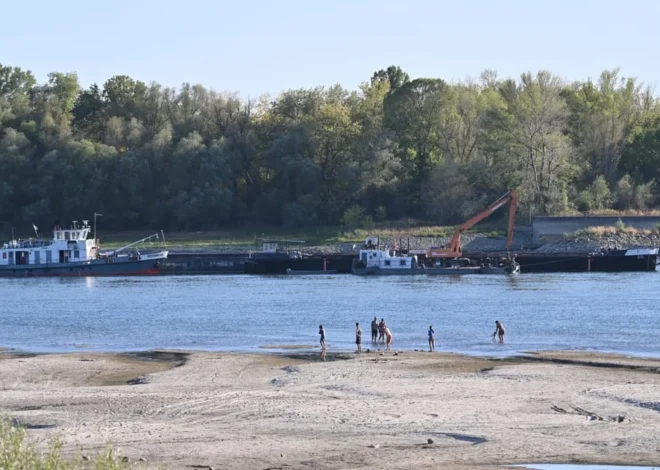
While diplomatic efforts are focused on the Mediterranean, an equally pressing concern is emerging in Central Europe. Severe drought conditions in Hungary and Romania are threatening the stability of the energy grid, specifically concerning nuclear power generation. The River Danube, which serves as the primary water source for the cooling systems of several nuclear reactors, has reached critically low levels.
The Physics of the Crisis
Nuclear power plants require massive volumes of water for cooling the secondary circuits of their reactors. When river levels drop, water intake systems can become exposed or ineffective, and the temperature of the water itself rises, potentially reducing the efficiency of the cooling process. If water levels fall below a specific safety threshold, plant operators are mandated by international safety protocols to reduce power output or, in extreme cases, shut down the reactors entirely to prevent thermal damage.
Regional Energy Security
Budapest and Bucharest are currently on high alert, monitoring hydrological data with growing anxiety. Hungary’s Paks Nuclear Power Plant and Romania’s Cernavodă facility are essential to their respective national energy mixes.
- Data Insight: In Hungary, nuclear power accounts for approximately 50% of the total electricity generation. A forced reduction in output could necessitate the importation of energy from neighboring states at significant cost or trigger rolling blackouts if supply cannot meet peak demand.
- Economic Impact: The energy sector, already reeling from inflationary pressures and volatile natural gas prices, faces a potential supply shock. Analysts suggest that if the drought persists through the summer, the resulting energy shortage could exacerbate the cost-of-living crisis across the region.
The Shift in Defense: Belgium’s Voluntary Military Surge
Amidst the turbulence of migration and energy, the Belgian defense landscape is undergoing a notable transformation. The Ministry of Defense’s push to incentivize voluntary military service among the youth population has exceeded expectations, signaling a shift in societal attitudes toward defense and civic participation.
The Success of the Voluntary Service Program
The program, which is scheduled to commence on September 1, has reported that all available slots are currently filled. This development is significant for a nation that abolished mandatory conscription in the 1990s and has since relied on a professional, volunteer-based military force.
- Strategic Objectives: The Belgian military has sought to address recruitment shortfalls by framing service as a means of gaining professional skills, fostering personal development, and contributing to national security during an era of renewed geopolitical competition.
- Demographic Trends: Analysts note that the interest from young people reflects a broader European trend where younger generations are increasingly engaged with security issues, likely influenced by the ongoing conflict in Ukraine and the heightened perception of external threats.
The success of the program provides a blueprint for other European nations struggling to maintain troop levels in a competitive labor market. However, military experts caution that while the initial interest is high, the long-term challenge lies in retention and the ability of the state to provide adequate training and modern equipment to these new recruits.
Synthesis and Future Outlook
The convergence of these three issues—migration management, climate-threatened energy security, and the resurgence of interest in national defense—illustrates the complex reality facing the European Union in the current decade.
Analysis of EU Resilience
The emergency meeting of home affairs ministers serves as a litmus test for the effectiveness of the bloc’s decision-making apparatus. If the Commission fails to offer a cohesive path forward on migration, the risk of individual member states unilaterally closing borders increases, threatening the fundamental principle of free movement within the Schengen zone.
Simultaneously, the environmental threat to nuclear power plants underscores the urgency of the EU’s climate adaptation policies. The reliance on legacy infrastructure like the Danube for critical cooling processes highlights a vulnerability that was perhaps underestimated during the initial planning phases of these power plants. As climate change increases the frequency and severity of droughts, the EU must invest in redundant cooling technologies and a more interconnected energy grid that allows for rapid power distribution from less affected regions.
Finally, the mobilization of youth in Belgium suggests that societal readiness to address security concerns is evolving. This shift is not isolated; across the continent, defense budgets are reaching record highs, and the discourse around "European strategic autonomy" is moving from theoretical rhetoric to tangible military and industrial action.
Concluding Observations
As the week progresses, the international community will be watching to see if the rhetoric of solidarity in Brussels can be translated into concrete policy. The stability of the European project depends on its ability to handle these disparate pressures without compromising its core values. Whether through the regulation of external borders, the adaptation of energy grids to a changing climate, or the revitalization of national defense through volunteerism, the European Union is currently engaged in a process of significant structural redefinition.
The challenges are manifold: migration requires political compromise, energy security requires environmental and technological innovation, and national defense requires the sustained engagement of the citizenry. The events of this week are merely a microcosm of the long-term adjustments that will be necessary to ensure the continued stability and prosperity of the European bloc. As ministers deliberate, the outcomes of these discussions will undoubtedly set the tone for European policy for the remainder of the year and likely well into the next.