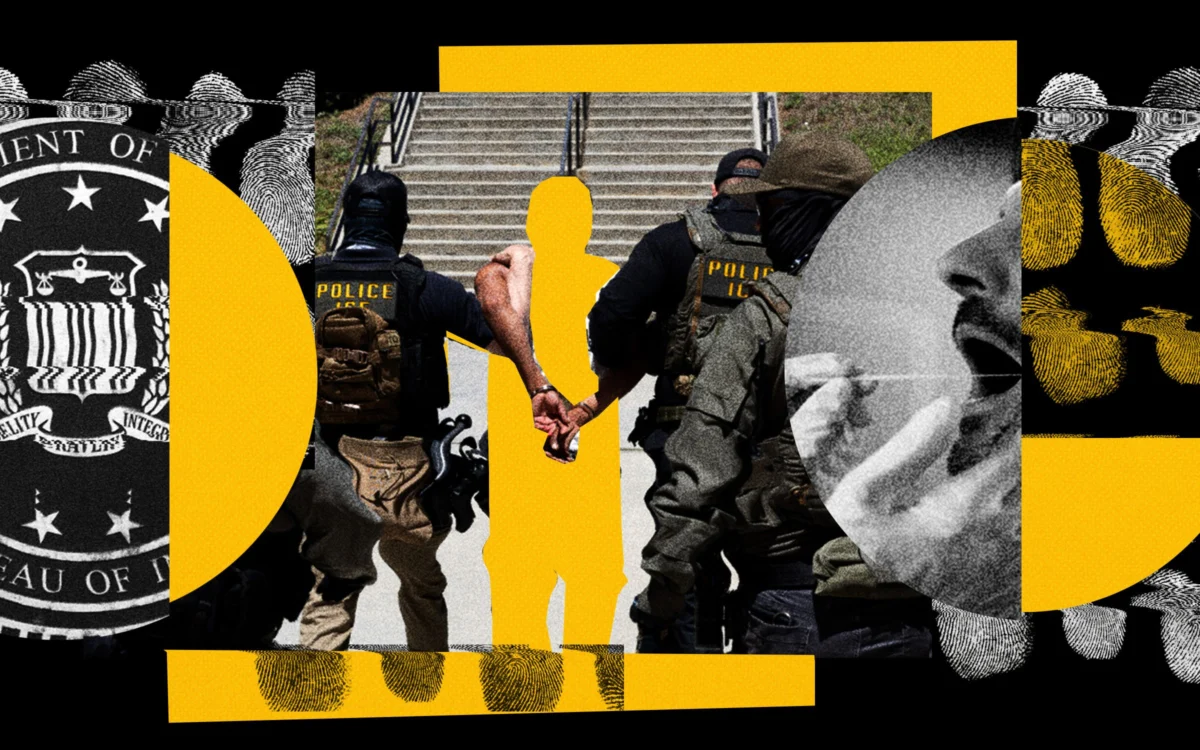
The Rapid Expansion of DNA Collection within US Immigration Detention Systems Marks a Fundamental Shift in Federal Surveillance Policy
On March 13, 2025, Hugo Moreno-Mendez arrived at the McLennan County Probation Department in Waco, Texas, for a standard check-in. What he anticipated as a routine administrative interaction quickly transformed into a federal enforcement operation. Waiting for him at the facility were officers from Immigration and Customs Enforcement (ICE), who immediately took him into custody. This event, while seemingly localized, served as a flashpoint for a broader, quiet, and aggressive expansion of federal biometric data collection that is fundamentally altering the scope of the nation’s criminal DNA database.
According to a criminal complaint reviewed by reporters, the encounter escalated once Moreno-Mendez was transported to a nearby ICE field office. There, he was confronted by multiple deportation officers, each issuing the same directive: he was required to open his mouth for a buccal swab. Moreno-Mendez, citing personal rights and privacy concerns, refused the procedure. Despite his refusal, officers repeatedly pressured him to provide both fingerprints and a DNA sample. Each time a new officer approached, he maintained his refusal.
Four days later, federal prosecutors charged Moreno-Mendez with two specific counts: failing to register as a noncitizen and refusing to provide a DNA sample while in federal custody. The latter charge is particularly notable; it is a misdemeanor that, as recently as 2021, was considered so obscure that ICE officials themselves publicly stated they were unaware of it ever being utilized for prosecution. Moreno-Mendez contested both charges in court. On August 18, 2025, a magistrate judge in Waco delivered a guilty verdict on both counts, sentencing the defendant to time served.
The Mechanism of Mass Collection
The case of Hugo Moreno-Mendez is not an isolated incident of bureaucratic overreach but rather a representative example of a sweeping, systemic initiative to funnel the genetic profiles of nearly every individual in ICE custody into the Combined DNA Index System (CODIS), an FBI-managed database originally designed for criminal investigations.
New research published by the Center on Privacy and Technology at Georgetown Law highlights the sheer scale of this effort. The data indicates that the Department of Homeland Security (DHS) has effectively become the largest single contributor of new genetic profiles to the nation’s criminal DNA system. Projections for 2025 suggest that ICE alone was responsible for the addition of approximately 920,000 profiles.
This program transforms the nature of immigration enforcement. While unauthorized residency in the United States is historically categorized as a civil infraction rather than a criminal one, the entry of these profiles into CODIS subjects individuals to a permanent, perpetual surveillance mechanism. Once a profile is uploaded, it is held indefinitely, allowing law enforcement agencies across the country to cross-reference the genetic data against evidence from unsolved cold cases or future crime scenes for years or even decades to come.
Chronology and Escalation of the Program
The collection of migrant DNA has evolved through several distinct phases. For much of the program’s history, the focus was centered on the border, with Customs and Border Protection (CBP) acting as the primary agency responsible for swabbing individuals upon initial intake. During this period, ICE’s contribution to the national database remained statistically marginal.
Internal training materials obtained via the Freedom of Information Act (FOIA) provide a window into this earlier phase. In fiscal year 2020, ICE collected only 3,609 DNA samples. By mid-May of fiscal year 2021, that number had reached approximately 16,392. Combined, these figures totaled roughly 20,000 samples over a significant period. In contrast, CBP’s operations were vast; internal agency spreadsheets indicate that between October 2020 and the end of 2024, CBP submitted the DNA of at least 1.36 million people to the FBI—a rate more than 12 times higher than that of ICE during the same timeframe.
The year 2025, however, marked a paradigm shift. FBI records concerning the "detainee" index of CODIS—the specific sub-index reserved for DHS-collected profiles—show an unprecedented surge. By December 2025, the index had reached 3,345,692 profiles, representing an increase of roughly 995,000 in a single calendar year. This averages to approximately 2,700 new profiles being added every day, including weekends and holidays.
Congressional Scrutiny and Ethical Debates
The expansion of this program has not occurred without pushback. The inclusion of DNA from vulnerable populations, particularly families held in detention centers, has drawn sharp criticism. Reports of children being swabbed at a family detention facility in Dilley, Texas, prompted direct inquiries from members of Congress.
In a joint statement provided to reporters, U.S. Representatives Joaquin Castro, Greg Stanton, and Nanette Barragán expressed profound concern regarding the practice. "None of the families at Dilley have been convicted of a crime," the lawmakers noted. "They do not belong in a database meant for violent criminals, especially children."
The ethical debate centers on the concept of "mission creep." Critics argue that a database intended to identify violent offenders, rapists, and murderers is being repurposed to track a migrant population that, for the vast majority, has no criminal record. This repurposing, they contend, undermines the civil protections afforded to individuals in the United States, regardless of their immigration status.
Official Justification and Agency Stance
In response to requests for comment, a spokesperson for the Department of Homeland Security defended the program as a vital component of national security and identity verification. The DHS asserted that the collection of DNA is a standard procedure applied to individuals arrested on federal charges and to detained noncitizens who are subject to mandatory fingerprinting protocols and do not fall under specific exemptions.
Regarding the specific issue of DNA collection from children, the DHS attempted to draw a distinction between the general detainee collection program and a separate, specific DNA-testing initiative used to verify family relationships. The agency maintained that the latter is a distinct program with different objectives. However, the DHS declined to address the Georgetown study’s findings regarding the 995,000 new profiles added to the database in 2025, nor did it offer a reconciliation between the broad collection policy and the lack of criminal history among the majority of the detained population.
Implications for the Future of Forensic Surveillance
The long-term implications of this policy are profound. By digitizing the genome of nearly every person processed through the immigration system, the federal government has created a massive, permanent repository of genetic information. Because these samples are held indefinitely, the potential for future use extends far beyond the original intent of border identification.
Legal experts have noted that the expansion of the detainee index into the broader CODIS system allows for a "genetic net" that grows wider with every arrest. As the database becomes more comprehensive, the likelihood of a "hit"—a match between a detainee’s DNA and a sample from a crime scene—statistically increases, even if the vast majority of those in the system are never linked to any criminal activity.
The litigation surrounding the collection of DNA from protesters and other groups who argue they should not have been subject to the program suggests that the legal challenges to this system are only in their infancy. As courts weigh the constitutionality of collecting biological material from individuals who have not been charged with crimes, the Moreno-Mendez case serves as a harbinger of the conflicts to come.
The integration of immigration detention with the national forensic infrastructure represents a fundamental change in the American justice system. With over 3.3 million profiles now residing in the detainee index, the question of whether this massive repository can be constrained by existing privacy laws or whether it will continue to expand in the absence of explicit legislative oversight remains one of the most significant civil liberties issues of the current decade. As the data shows, the system is not merely growing; it is accelerating, shifting the baseline of federal surveillance into a new and largely uncharted territory.

Related Posts

The Las Vegas Cybersecurity Summit and the Escalating Threat of Autonomous Digital Exploitation

New York City Council members and privacy advocates launch legislative campaign to ban biometric facial recognition at public entertainment venues