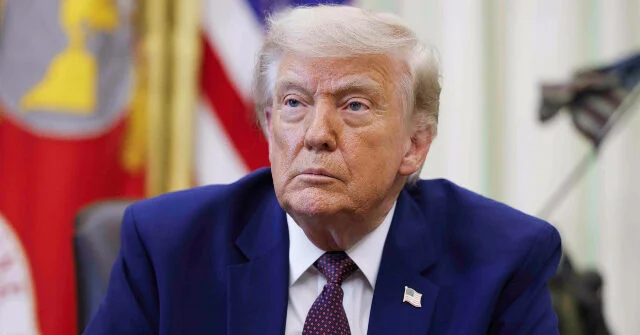
U.S. Prepares for Imminent Strikes Against Iran Amid Escalating Tensions and Regional Warnings
President Donald Trump has reportedly authorized a new wave of strikes against Iran, potentially commencing as early as this weekend, igniting a dangerous escalation in an already volatile Middle East. The impending military action comes as Tehran vows sweeping retaliation, Israel elevates its security posture, and U.S. diplomatic missions across the region issue urgent advisories for American citizens to consider immediate departure amidst fears of an imminent, broader conflict.
President’s Directives and Hardline Rhetoric
The reported authorization followed a high-level meeting at Camp David on Friday, where President Trump was presented with an attack plan. While a final execution order remains pending, leaving a narrow window for a diplomatic breakthrough, the President’s public remarks signaled a stark shift from any lingering hopes of negotiation. "We’ll be hitting them very hard," Trump told reporters, articulating a strategy aimed at breaking Iranian resistance. "And you know at some point, they’re going to say, ‘We just can’t take it anymore.’" His patience, he conveyed, had reached its limit, exacerbated by what he described as Iran’s repeated dishonesty and breaches of trust during prior engagements.
When questioned about reviving diplomatic channels, the President’s response was unequivocal: "I think we just want to win." He expressed a profound loss of faith in reaching an agreement with Tehran, characterizing Iranian negotiators as "very dishonest" and "very dishonorable" to deal with, emphasizing, "All they do is make me angry." This hardened stance underscores a perceived failure of previous diplomatic overtures and a clear pivot towards coercive military pressure.
White House Press Secretary Karoline Leavitt further reinforced the administration’s position, accusing Tehran of flagrantly violating a memorandum of understanding (MOU) signed with Washington just last month. This alleged breach, she stated, included attacks on commercial vessels and the killing of American service members. "President Trump is not going to stand by and allow this terrorist behavior to occur," Leavitt asserted. "Iran will continue to pay until they come to the table in what President Trump deems a meaningful way." The message from the White House is clear: only significant concessions from Iran, compelled by military pressure, would be acceptable.
Strategic Planning and Potential Targets
Sources indicate the offensive could unfold over several days, with initial reports from the Wall Street Journal on Friday suggesting an imminent start. Separate intelligence reports, including those cited by CBS News and Axios, indicate that Washington is contemplating some of its most severe strikes to date, primarily targeting critical Iranian energy and infrastructure assets. Power plants, oil refineries, and other vital energy facilities are reportedly high on the list of potential targets, with discussions even extending to the possibility of cutting electricity across Tehran.
The scale of the planned operation remains somewhat fluid. Earlier in the week, the Wall Street Journal had reported that U.S. Central Command (CENTCOM) had prepared options for an intensive 10-to-14-day air campaign. This campaign would be designed to severely degrade Iran’s remaining missile capabilities, a key strategic objective for Washington. However, U.S. officials are also considering more limited operations, which could deliver a concentrated blow while preserving a diplomatic off-ramp for renewed negotiations. This duality highlights the administration’s dilemma: to inflict decisive damage while attempting to avoid an uncontrollable regional conflagration. The lack of a firm endpoint for any strikes suggests a flexible approach, adaptable to Iranian responses and broader geopolitical dynamics.
Regional Alerts and Evacuation Warnings
The mounting signs of imminent U.S. military action have sent ripples of apprehension across the Middle East. On Saturday, U.S. diplomatic missions throughout the region issued broad new security warnings, urging American citizens to prepare for potential escalation. Embassies in key nations including Israel, Bahrain, Iraq, Jordan, Kuwait, Lebanon, Oman, Qatar, Saudi Arabia, the United Arab Emirates, and Egypt advised Americans to "consider departing, or be prepared to depart should there be escalation."
The State Department’s overarching warning extended to Americans outside the Middle East, advising them to "seriously reconsider travel to and through the region." The alerts detailed potential disruptions such as flight cancellations and airspace closures, underscoring the severe impact a conflict could have on regional mobility and safety. Furthermore, the warnings explicitly cautioned that Iran and its proxy groups could target U.S. diplomatic facilities, businesses, institutions, and other American interests globally. The State Department emphasized the "unpredictable" nature of the Iranian regime, citing recent attacks in areas not previously targeted as evidence of Tehran’s expanding operational reach and willingness to escalate. This widespread advisory underscores the serious nature of the threat perception within U.S. government circles and the imperative to protect American lives.
Israel on High Alert and Coordination Nuances
Amidst the escalating rhetoric and planning, Israel has moved to a heightened state of alert. Two Israeli sources informed the Jerusalem Post on Saturday that officials in Jerusalem believe President Trump is nearing a final decision on renewed military operations, potentially on a larger scale than previous retaliatory actions. "We are on high alert and awaiting the president’s final decision," an Israeli official stated, a sentiment echoed by another Israeli source quoted by Ynet News, who noted, "We are very close to the point of decision."
The working assumption within Israeli defense circles is that Tehran could launch ballistic missiles at the Jewish state in response to a major American attack, even if the Israel Defense Forces (IDF) do not initially participate directly in the U.S. offensive. This concern highlights the interconnected nature of regional security and the potential for spillover effects. Despite the heightened alert, Israel’s Home Front Command had not issued any new instructions to civilians as of Saturday, and Ben Gurion Airport continued to operate normally, indicating a cautious approach to public messaging while behind-the-scenes preparations intensify.
Reports regarding U.S.-Israeli coordination have been nuanced. While CBS News indicated that Israel had been notified of the plans and was coordinating with Washington, an Israeli official pushed back on reports of direct Israeli participation, telling the network that Jerusalem had neither been informed of a decision to fully restart military operations nor asked to join an attack. Axios similarly reported that Trump was seriously considering attacks on Iranian energy targets within days, adding that these strikes could involve the Israeli military for the first time in weeks, suggesting a potential shift in the scope of future operations. These conflicting reports underscore the delicate diplomatic dance and strategic considerations at play between the two close allies.
Tehran’s Veiled and Overt Threats
In response to the mounting reports of potential U.S. strikes, Tehran issued a barrage of increasingly explicit threats on Saturday, signaling its readiness for a robust counter-response. Iran’s Foreign Ministry declared via social media that the Islamic Republic would utilize "all of its means" to defend its "rights, interests, and national security" against what it characterized as U.S. and Israeli aggression. This statement reflects a nationalistic and defensive posture, but one that is also overtly confrontational.
A senior Iranian security official, speaking to the regime-linked Tasnim news agency, went further, stating that Tehran had prepared a broad retaliation plan specifically targeting critical Israeli infrastructure and U.S. energy assets across the region. "We are fully prepared to carry it out," the official asserted, indicating a detailed and pre-planned response matrix. Iranian lawmaker Ebrahim Rezaei warned that Tehran would strike "all enemy bases and the source of attacks from anywhere," pointedly adding that Iran’s response "will not be limited to the Persian Gulf region," suggesting a broader geographical scope for potential retaliation.
Seyed Mohammad Marandi, a member of Iran’s negotiating team and a University of Tehran professor frequently described as close to the regime, issued an even more ominous warning to Gulf states. On X (formerly Twitter), Marandi wrote, "Based on statements from the Trump regime, it seems quite possible that after months of barbaric threats, tonight will be the last night of normality in Qatar, Saudi Arabia, Kuwait, Bahrain, the UAE, and possibly Oman." He continued, "If attacks are carried out against Iran’s civilian infrastructure, the vital infrastructure of these regimes, together with that of Israel and perhaps Jordan, will be destroyed," starkly warning their populations to "prepare for immediate evacuation." Such a statement, from an individual perceived to have close ties to the regime, carries significant weight and suggests a willingness to target regional infrastructure indiscriminately if Iran itself is attacked.
Ali Abdollahi, head of Iran’s military central command, reinforced this regional warning, declaring that any country serving as a "defensive shield" for the United States would be "engulfed by the flames of war." This direct threat aims to deter regional partners from assisting any U.S. military operations, highlighting Iran’s strategy of creating disincentives for regional cooperation with Washington.
Recent Iranian Provocations and Maritime Tensions
The escalating threats from Tehran were not merely rhetorical; they were accompanied by continued Iranian attacks across the region. On Saturday, Kuwait reported that its air defenses had successfully intercepted Iranian drones targeting several "vital facilities," including a government installation in the country’s north. While falling debris caused property damage, no casualties were reported, indicating the drones were likely armed or intended for destructive purposes.
Concurrently, the United Kingdom Maritime Trade Operations (UKMTO) agency reported new incidents in the strategically critical Strait of Hormuz. One tanker was reportedly struck by an unknown projectile, damaging its engine room and rendering the vessel unable to maneuver under its own power. A separate tanker in the vicinity reported a large splash and an explosion nearby. These incidents are consistent with Iran’s established pattern of targeting commercial vessels attempting to transit the strategic waterway during periods of heightened confrontation with Washington, aiming to disrupt global oil supplies and exert economic pressure.
CENTCOM, the U.S. military’s operational command in the Middle East, confirmed on Friday that the Strait of Hormuz remained open despite Iranian claims to the contrary. However, it also disclosed significant U.S. enforcement actions: American forces had redirected 30 commercial vessels, disabled two, and boarded another two as part of efforts to enforce the U.S. blockade against Iran. Nearly 30 additional vessels were permitted through for humanitarian purposes, underscoring the dual objectives of pressure and humanitarian consideration. The Strait of Hormuz, a narrow chokepoint through which a significant portion of the world’s oil supply passes, remains a primary flashpoint in the U.S.-Iran standoff.
Background: A Collapsed Diplomatic Effort and "Maximum Pressure"
The current crisis is a direct consequence of the collapse of last month’s U.S.-Iran memorandum of understanding. This MOU was intended to partially reopen the Strait of Hormuz and establish a framework for broader negotiations aimed at dismantling Tehran’s controversial nuclear program. The agreement, viewed as a tentative step towards de-escalation, quickly unraveled.
The broader context is the "maximum pressure" campaign initiated by the Trump administration following its 2018 withdrawal from the Joint Comprehensive Plan of Action (JCPOA), the international nuclear deal with Iran. This campaign involved severe economic sanctions aimed at crippling Iran’s economy and forcing it back to the negotiating table for a more comprehensive agreement addressing its nuclear program, ballistic missiles, and regional destabilizing activities. Trump’s social media posts on Saturday, including a chart highlighting the collapse of the Iranian rial and a message stating, "Trump is destroying the Iranian currency. Iran is experiencing massive inflation," directly link to this economic pressure strategy.
Following the MOU’s failure, Iran swiftly renewed attacks on commercial vessels and American forces, including deadly assaults that killed U.S. service members. This week, a surprise ballistic missile attack against American troops stationed in Jordan further exacerbated tensions. Washington responded with fresh strikes against Iranian targets, with President Trump repeatedly warning that further attacks would provoke increasingly severe retaliation. The cycle of provocation and retaliation has been a defining feature of the U.S.-Iran relationship since the JCPOA’s demise, but the latest developments suggest a qualitative shift towards more direct and potentially larger-scale military engagement.
Military Posturing and Public Signaling
Beyond official statements, U.S. military figures have also engaged in public signaling. Chief Pentagon spokesman Sean Parnell, who declared on Friday that the Department of War was "locked and loaded, ready to execute the President’s directives at a moment’s notice," continued this posture on Saturday. He posted military imagery alongside a passage from the biblical book of Isaiah: "Here am I. Send me," a powerful message often interpreted as a readiness for duty and sacrifice. Such public declarations, combined with President Trump’s own social media activity, underscore the administration’s determination and readiness for military action.
Geopolitical Implications and Future Outlook
The potential for a new round of U.S. strikes against Iran carries profound geopolitical implications. The primary concern is the risk of a wider regional conflict, drawing in U.S. allies like Israel and various Gulf states, as well as Iranian proxies. Such a conflict would undoubtedly destabilize global oil markets, potentially causing price spikes and supply disruptions, given the centrality of the Persian Gulf to global energy supply chains. The humanitarian cost, particularly if strikes target civilian infrastructure or provoke widespread retaliatory actions, could be immense, leading to mass displacements and a deepening humanitarian crisis.
The diplomatic landscape appears bleak. Trump’s explicit rejection of further diplomacy in favor of a "win" strategy suggests that only a decisive military outcome or Iranian capitulation could de-escalate the situation. The nuanced responses from Israeli officials highlight the complexities of alliance dynamics, as regional partners weigh their own security interests against the potential for an all-out war. The State Department’s warnings about flight cancellations and airspace closures point to the immediate practical consequences for international travel and commerce.
President Trump, despite acknowledging Iran’s resilience ("Most people would have given up by now. They haven’t, so I give them credit for that. They’re tough."), made it unequivocally clear that Washington has no intention of backing down. He reiterated his view that Iran is "doing very, very poorly," and that its leadership has been "very dishonest" and "very dishonorable to deal with." Asked if Americans should brace for continued escalation, Trump replied, "A little bit. It would be foolish to say no. You always have to keep your guard up." This assessment leaves little doubt that the region is teetering on the brink of a significant military confrontation, with global repercussions. The coming days will likely determine whether diplomatic efforts can avert the operation or if the U.S. and Iran are destined for a perilous new chapter of direct conflict.

Related Posts
Democratic Candidates Must Moderate to Win General Elections, Says Rep. Greg Stanton
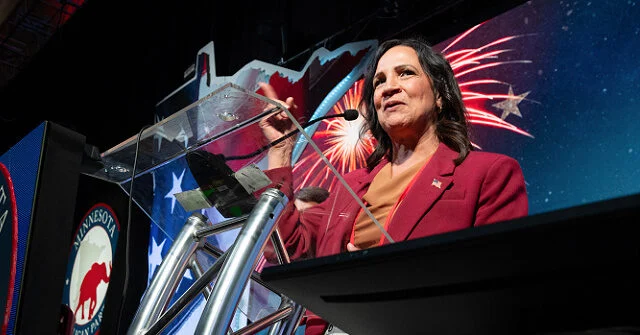
Lisa Demuth Secures Republican Gubernatorial Nomination in Minnesota, Defeating Trump-Endorsed Mike Lindell