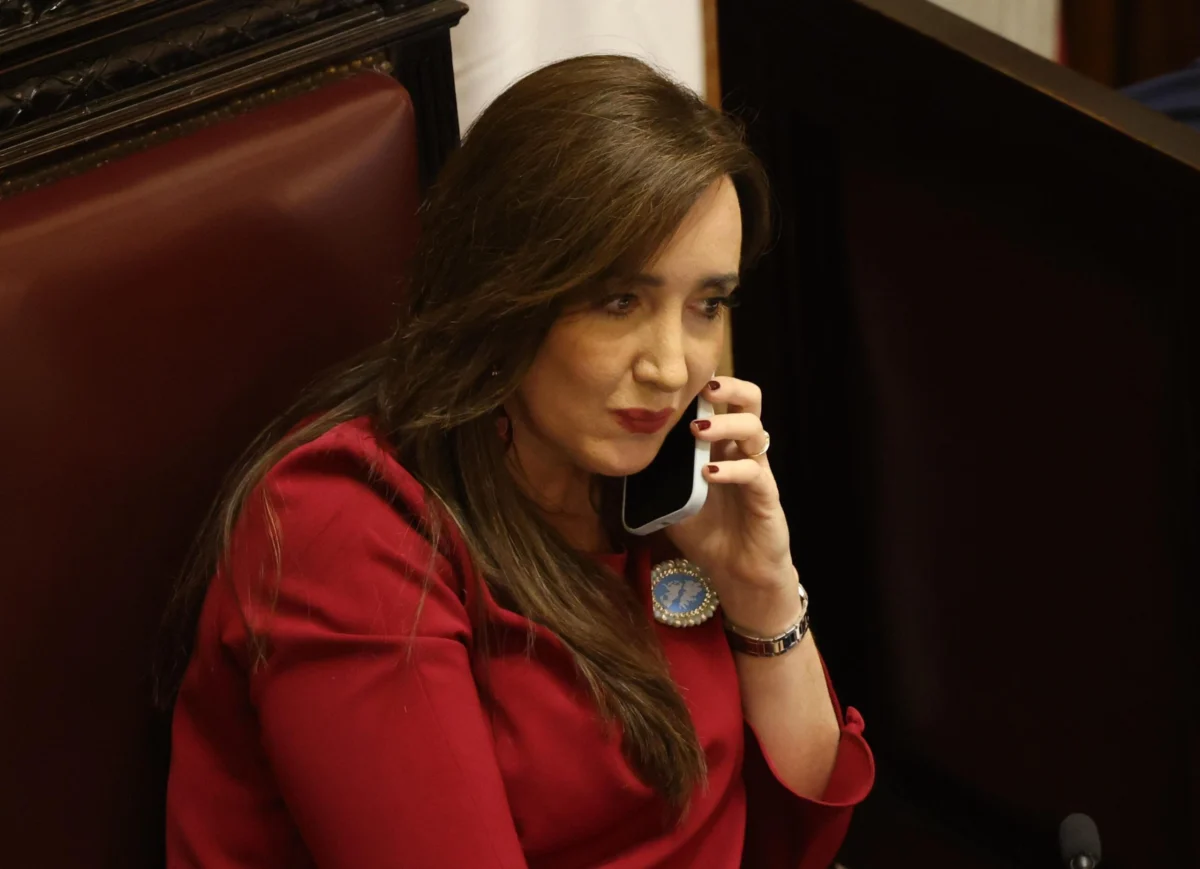
Santilli explicó sus dichos contra Villarruel y volvió a pedir que renuncie: “Antidemocrático es agraviar la figura presidencial”
Buenos Aires, Argentina – In a strong assertion of governmental unity and democratic principles, Cabinet Chief Diego Santilli addressed recent internal political friction, directly challenging Vice President Victoria Villarruel’s public criticism of President Javier Milei. Santilli unequivocally stated that actions undermining the presidential investiture and fostering internal destabilization are fundamentally anti-democratic. His remarks came in response to Villarruel’s social media posts, which questioned the President’s mental state and labeled his perceived actions as "imaginary persecutions." The Cabinet Chief’s firm stance signals a critical juncture in the Milei administration, highlighting the administration’s zero-tolerance policy for dissent that could be perceived as destabilizing from within.
The Genesis of the Controversy: A Tweet Heard Round the Government
The immediate catalyst for Santilli’s pronouncements was a series of social media posts by Vice President Villarruel. These posts, widely interpreted as critical of President Milei’s governance and personal judgment, particularly raised concerns about his mental well-being and accused him of engaging in "imaginary persecutions." Such public statements from the second-highest official in the executive branch were seen by many within the government as a significant breach of protocol and a direct challenge to presidential authority.
Santilli, speaking on the television program TN, characterized Villarruel’s tweet as "hyper-aggravating to the presidential investiture." He expressed surprise that such criticism would emanate from within the government, stating, "One might expect it from Kirchnerism, but not from people within this government." This sentiment underscores the administration’s perception of the criticism as not only inappropriate but also deeply damaging to the perceived integrity of the presidency. The underlying message was clear: internal disagreements, while potentially normal, should not manifest in ways that publicly question the leader’s fitness or intentions.
Defining "Casta" and the Imperative for Change
Santilli further escalated his critique by labeling Villarruel’s perceived stance as belonging to the "casta" – a term frequently used by President Milei and his supporters to denote the entrenched political and economic elites who, according to their narrative, resist necessary change. "Not wanting anything to change is from the casta," Santilli declared. "Or what do they want, for Kirchnerism to return? Casta is sitting in a place so that nothing changes." He contrasted this with his own approach, asserting, "For me, whenever I’ve had to take a position, I’ve stepped forward and changed things." This framing positions the current administration as a force for radical transformation, opposing those who, in their view, benefit from the status quo.
To further illustrate his point, Santilli expanded the definition of "casta" to include those who shy away from confronting significant societal problems. "Casta are those who do not want to face drug traffickers, those who do not want to face crime," he stated. He then lauded President Milei as a "reformist" who is undertaking unprecedented transformations to "save the country." Santilli emphasized the administration’s commitment to tackling deeply entrenched issues, citing the dismantling of the "revolving door" justice system and poverty reduction as key objectives. He reaffirmed his personal commitment to supporting these reforms, stating, "I had to support them for nothing in return when it started, and today I continue to do so, wholeheartedly." This rhetoric aims to rally support for the administration’s agenda by painting a stark dichotomy between reformers and those who benefit from the existing system.
The Democratic Mandate and the Threshold for Resignation
The core of Santilli’s argument rested on the principle of democratic legitimacy and the expectation of loyalty from those elected to support the president. He reiterated that while disagreements are inevitable within any government, there is a clear line that should not be crossed. "Problems and discussions have existed and exist everywhere," he acknowledged. "The number two accompanies the number one: that’s how it is. However, you are not there to talk about the President’s mental faculties. Therefore, if you want that, you have to take a step aside." This statement directly links the Vice President’s public criticisms to a potential trigger for resignation, framing it as a matter of democratic integrity and adherence to the electoral mandate.
The implications of this stance are significant. It suggests that the administration views public criticism of the president’s mental state as an unacceptable act of disloyalty that goes against the very essence of the democratic compact. The administration’s supporters would argue that such comments not only undermine the president but also sow seeds of doubt among the electorate, potentially jeopardizing the reform agenda.
The Specter of Future Elections: Villarruel and Kirchner
Santilli also addressed the looming possibility of Vice President Villarruel potentially competing in future elections, a scenario that has been a subject of considerable political speculation. When asked about this prospect, his response was succinct: "Nothing." He elaborated, however, by stating, "Winning or losing is democratic. Let society decide who leads: that is what democracy is about." This suggests that while a rival candidacy might be politically inconvenient, the ultimate decision rests with the electorate. His core reservation, however, remained unchanged: "My view is that you cannot speak this way about the President when you were chosen to accompany him."
The conversation then shifted to the political future of former Vice President Cristina Kirchner. Santilli firmly stated his belief that Kirchner should not be eligible to run in future elections, citing a recent judicial ruling. "For me, she cannot run. There is a forcefulness in the ruling: it’s already done. It is clear that she cannot be a candidate," he asserted. He theorized that Kirchner’s continued political activity is aimed at "continuing to build her narrative, meaning, accumulating power for the final negotiation." This sentiment reflects a broader political narrative within the current government that seeks to curtail the influence of perceived political adversaries.
Upholding the Separation of Powers and Immigration Policy
Addressing concerns about President Milei’s potential impact on the separation of powers, Santilli defended the President’s conduct. "If there is anything the President has not done, it is to interfere with the judiciary, businessmen, and journalists," he stated. "Things that did happen in other times." This assertion aims to draw a contrast with previous administrations, portraying Milei as a leader who respects institutional boundaries.
The Cabinet Chief also commented on a recent decree, signed by President Milei and the cabinet, which modifies the Migration Law. Decree 681/26 establishes penalties, including prohibition of entry and potential expulsion, for foreigners who "propagate messages of hate." Santilli explained the rationale behind this measure, stating, "If you are a foreigner and you come to the country to build your future with your family, to undertake and develop. Then, do not come to Argentina to offend or to tell us that we are racist. Well: that is the concept. It is something that happens all over the world." This policy reflects a nationalistic stance on immigration, emphasizing the expectation of respect for the host country’s culture and values. The decree has been met with both support and criticism, with opponents raising concerns about potential overreach and infringement on freedom of expression.
Concluding Remarks: A Firm Stance on Governance
In his final remarks, Santilli was asked about his relationship with the Argentine Football Association (AFA) and its president, Claudio "Chiqui" Tapia. His response was brief and definitive: "Now, no relationship." This statement suggests a distancing from certain sectors or figures, possibly indicating a strategic realignment or a focus on core governmental responsibilities.
Diego Santilli’s extensive comments underscore the Milei administration’s commitment to projecting an image of unity and unwavering dedication to its reform agenda. The strong language used against internal dissent, particularly from the Vice President, signals a clear message: adherence to the presidential mandate and the pursuit of transformative policies are paramount. The administration appears determined to navigate political challenges by reinforcing its core message of change and by framing any internal friction as an attempt by established powers to impede progress. The coming weeks and months will likely reveal how effectively this assertive stance can maintain internal cohesion and garner public support for its ambitious reform program. The administration’s ability to manage these internal dynamics will be crucial for its long-term success and its capacity to implement the fundamental changes it promises for Argentina.

Related Posts

The Electric Vehicle Battery Health Debate Emerges as Argentina’s EV Market Accelerates
President Donald Trump Confirms Secret Departure from Turkey Amidst Assassination Threat