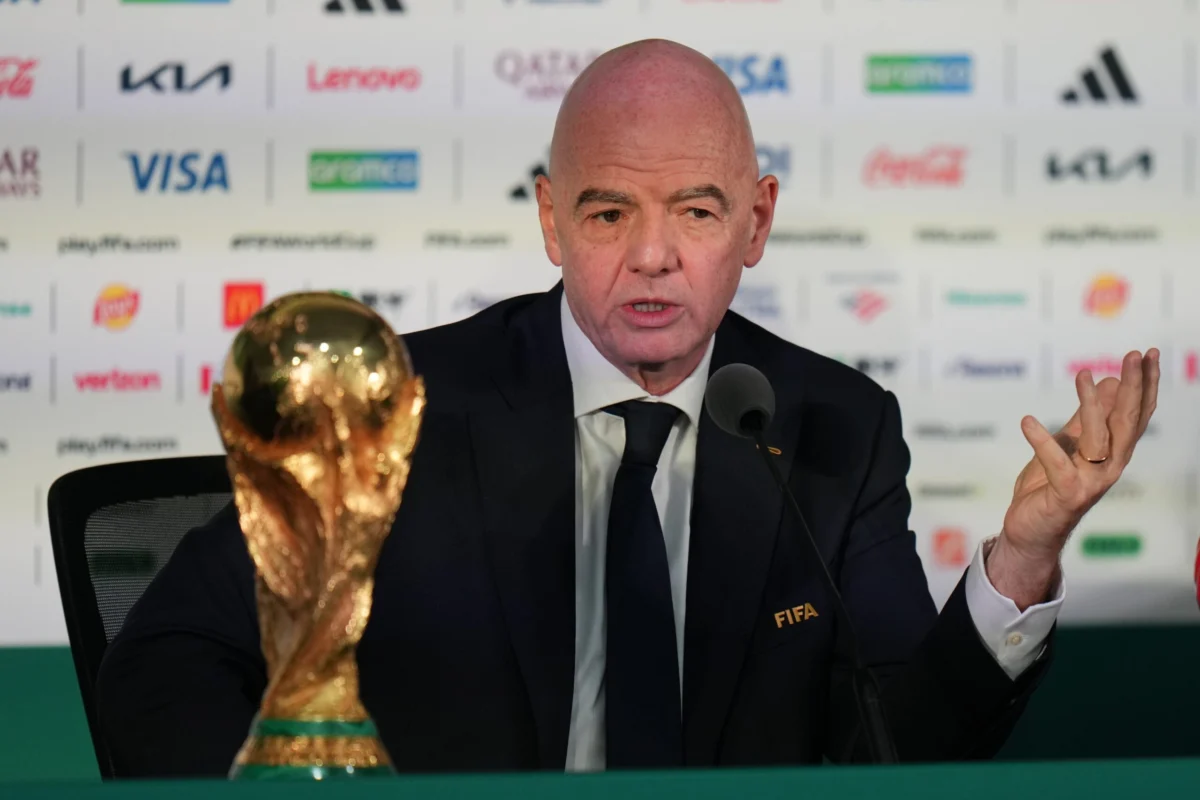
UEFA Member Federations Announce Boycott of All FIFA Competitions in Protest of Gianni Infantino’s World Cup Revenue Plan
The European football confederation, UEFA, and its 55 member national associations have collectively decided to boycott all FIFA competitions, a radical stance taken in direct opposition to FIFA President Gianni Infantino’s controversial proposal to sell a stake in World Cup revenue to private equity investors. This unprecedented move signals a deep rift between European football’s governing body and the global football administration. The immediate impact of this boycott will be felt in upcoming FIFA-sanctioned events, with the next tournament on the horizon being the FIFA U-20 Women’s World Cup, scheduled to be hosted by Poland starting September 5th.
UEFA’s Unyielding Declaration
In a strongly worded statement released following an emergency online meeting of its 55 member associations, UEFA declared, "UEFA and its national associations will not participate in FIFA competitions." The official communiqué, published on UEFA’s website, left no room for ambiguity regarding the severity of their stance. The European body articulated its fundamental disagreement with the commercialization of football’s most prestigious tournament, asserting, "The World Cup cannot be considered an investment product. It is one of football’s greatest sporting legacies. It has been built over generations through the work of players, national teams, and fans from all continents. No part of it should ever be handed over to private investors. The World Cup is not for sale." This declaration underscores a fundamental ideological clash over the stewardship and commercial future of global football.
The Genesis of the Conflict: A Secretive Proposal
The extraordinary meeting of UEFA members was convened to meticulously counter Infantino’s audacious proposal, which offered a substantial financial incentive to FIFA’s 211 global member federations. Each member was reportedly set to receive $20 million, a payout contingent on their acceptance by mid-September. The core of Infantino’s plan, revealed earlier this week, involved the separation of FIFA’s commercial operations into a $20 billion enterprise, with a significant 20% stake to be acquired by private investors. The primary investor identified for this transaction is a New York-based investment firm founded by Joshua Kushner, the brother of one of former U.S. President Donald Trump’s sons-in-law. This potential alliance with a firm linked to the U.S. political establishment has further fueled concerns within European football circles.
Critiques of Process and Principle
UEFA’s condemnation extended beyond the proposed financial arrangements to the very process by which the plan was conceived and advanced. The statement vehemently criticized FIFA’s approach, stating, "It is irresponsible and indefensible that a proposal of such magnitude for football has been conceived in secret and brought to the brink of approval without significant consultation with those responsible for the management of the sport. This not only represents a profound lack of leadership but also an abdication of FIFA’s duty as the guarantor of world football." This criticism highlights a perceived breach of trust and a disregard for established consultative mechanisms within the global football governance structure.
The European body elaborated on its opposition, emphasizing the profound implications of introducing private equity into the core commercial operations of FIFA’s flagship tournament. "But our opposition goes much further than procedure. The moment external investors acquire stakes in FIFA competitions, football changes forever. Commercial profitability becomes a permanent obligation. Investor expectations transform into daily pressure. From that moment on, every decision on the international calendar, every decision on competition formats, and every decision shaping the future of football will no longer be governed by what most benefits the sport, but by what most benefits shareholders." This highlights a core fear that the long-term sporting integrity and developmental priorities of football could be compromised by the short-term profit motives of private investors.
UEFA’s stance is rooted in a deep-seated belief that football’s fundamental values and its global accessibility should not be subservient to financial imperatives. "This model has no place in world football. The future of football cannot be conditioned by the expectations of those who prioritize maximizing their economic profits. Nor can the interests of national federations, leagues, clubs, players, and fans be subordinated to investor gains. Football cannot mortgage its future for money." This rhetoric positions UEFA as a defender of football’s soul against what it perceives as an encroaching tide of commercial exploitation.
The confederation concluded its forceful statement with a declaration of principle, asserting, "There are moments when institutions are judged not by what they are willing to accept, but by what they refuse to cede. This is one of those moments. There are things too important to be sold. The FIFA World Cup belongs to football. It always will. And as long as Europe has a voice, it will never be for sale." This resolute declaration frames the current dispute as a critical juncture for the future of the sport, where fundamental principles are at stake.
The Context: A Shifting Global Football Landscape
This dramatic confrontation did not emerge in a vacuum. It is the culmination of years of evolving dynamics within global football governance, marked by increasing commercialization, debates over tournament expansion, and significant financial flows. FIFA, under Infantino’s leadership, has been actively seeking new revenue streams to fund its ambitious development programs and to solidify its financial position. The proposed sale of a stake in World Cup revenues is seen by proponents as a way to inject significant capital into the organization, enabling greater investment in grassroots football, infrastructure development, and member association support across the globe. FIFA has often highlighted its commitment to making football a truly global sport, accessible and competitive across all continents.
However, UEFA, as the wealthiest and arguably most powerful confederation, has consistently advocated for a more traditional and controlled approach to commercialization. Concerns within Europe often center on the potential dilution of the World Cup’s exclusivity, the impact on competitive balance, and the influence of external financial stakeholders on sporting decisions. The historical development of the World Cup, built over decades through the participation and passion of nations worldwide, is a point of pride and a cornerstone of UEFA’s argument against what it perceives as a commodification of this legacy.
Timeline of Escalation
- Recent Weeks: Reports emerge of FIFA exploring a significant deal with private equity firms to monetize World Cup revenues. Discussions reportedly involve a valuation of FIFA’s commercial operations in the tens of billions of dollars.
- Early September (specific date not provided in original text): FIFA President Gianni Infantino’s plan is officially revealed, outlining the proposed sale of a 20% stake in commercial operations to private investors, with a significant portion potentially going to a firm linked to the Trump administration. The plan includes a financial incentive for FIFA’s member federations.
- Following the Revelation: UEFA convenes an emergency online meeting of its 55 member national associations to discuss the FIFA proposal.
- Post-Meeting: UEFA releases a formal statement announcing its collective boycott of all FIFA competitions. The statement strongly criticizes the secrecy of the proposal and argues against the commercialization of the World Cup.
- Mid-September (deadline): Member federations are expected to formally respond to FIFA’s proposal, with the UEFA boycott creating significant pressure and uncertainty for FIFA’s plans.
- September 5th: The FIFA U-20 Women’s World Cup is scheduled to commence in Poland, marking the first FIFA competition potentially affected by UEFA’s boycott.
Supporting Data and Financial Context
The World Cup is undeniably FIFA’s most lucrative asset. The 2022 FIFA World Cup in Qatar generated record revenues for the organization. FIFA reported that the tournament generated over $7.5 billion in revenue, a substantial increase from previous editions. This revenue is critical for FIFA’s operations, including its substantial investments in the FIFA Forward Development Programme, which aims to support football development in all member associations. The proposed $20 billion valuation for commercial operations suggests that FIFA is aiming to unlock significant capital for future investment and to secure its financial future against potential economic downturns or shifts in broadcast rights markets.
However, the exact distribution and allocation of profits from private investment remain a key point of contention. UEFA’s concern is that a significant portion of the revenue generated from the World Cup, a tournament that is a global collective achievement, could end up in the hands of private investors rather than being reinvested into the sport’s development in a manner that aligns with football’s broader interests. The $20 million offered to each member federation, while substantial, is viewed by some as a potential distraction or a means to secure support for a plan that fundamentally alters the ownership and control of football’s premier event.
Analysis of Implications
The ramifications of this dispute are far-reaching and could reshape the global football landscape.
- Impact on FIFA Competitions: A boycott by all UEFA member nations would severely diminish the prestige and competitive integrity of FIFA tournaments. European teams consistently feature some of the world’s strongest footballing nations, and their absence would create a significant void. This could lead to a collapse in broadcast viewership, sponsorship deals, and overall revenue for FIFA.
- UEFA’s Leverage: UEFA’s unified stance grants it considerable leverage. The European market is a major driver of global football revenue, and any disruption to competitions involving European teams would have a profound economic impact on FIFA. This could force FIFA to reconsider its strategy or face significant financial losses.
- Precedent for Other Confederations: While other confederations have not yet issued similar boycott declarations, UEFA’s actions could inspire or embolden them. Concerns about financial transparency, governance, and the commercialization of football are not exclusive to Europe. The solidarity shown by UEFA’s 55 members could set a precedent for collective action on issues of governance.
- Future of Football Governance: This conflict highlights a fundamental tension between the centralized, global approach of FIFA and the regional, established power bases like UEFA. It raises questions about the balance of power within football governance and the extent to which global federations can unilaterally impose significant strategic decisions without broad consultation.
- Potential for Negotiation and Compromise: While the boycott is a strong opening gambit, it is likely that intense negotiations will follow. Both sides have significant stakes, and a complete breakdown of relations would be detrimental to all involved. The ultimate outcome could involve a revised proposal from FIFA, a compromise on the percentage of private investment, or a more robust framework for consultation and oversight.
- Impact on Players and Fans: The players, who are the heart of the sport, would be directly affected, unable to represent their national teams in major tournaments. Fans would be deprived of seeing their favorite European stars compete on the world stage. This could lead to widespread disillusionment and a questioning of the leadership at both UEFA and FIFA.
The decision by UEFA and its member federations to boycott FIFA competitions represents a critical moment in the ongoing evolution of global football governance. It is a stark illustration of the deep divisions that can emerge when differing visions for the sport’s commercial future clash, and the stakes could not be higher for the integrity and sustainability of the world’s most popular sport. The coming weeks will be crucial in determining whether this dispute leads to a fundamental shift in power or a fragile resolution that attempts to balance commercial ambition with the enduring spirit of football.

Related Posts

The Electric Vehicle Battery Health Debate Emerges as Argentina’s EV Market Accelerates
President Donald Trump Confirms Secret Departure from Turkey Amidst Assassination Threat