ACLU of Massachusetts Launches Legal Toolkit to Expose Secret Police Surveillance in Criminal Defense
The American Civil Liberties Union (ACLU) of Massachusetts has officially launched an innovative online legal toolkit designed to empower criminal defense attorneys to uncover the hidden use of high-tech surveillance tools by law enforcement. As police departments across the United States increasingly integrate sophisticated technologies into their investigative workflows, a significant constitutional gap has emerged, often leaving defendants unaware of the digital evidence being used against them. This new resource, described by the organization as the first of its kind, provides a repository of handcrafted legal motions intended to compel prosecutors to disclose whether technologies like facial recognition, automated license plate readers (ALPRs), gunshot detection systems, and AI-generated forensic reports played a role in building a case.
The initiative represents a pivotal shift in how the defense bar approaches digital privacy. By providing verified defense attorneys with a password-protected library of motions, the ACLU aims to standardize the discovery process regarding surveillance, ensuring that the burden of transparency falls on the state rather than the defendant.
The Technological Arms Race in Criminal Investigation
Modern policing has moved rapidly toward a data-centric model, yet the legal mechanisms for overseeing these tools have struggled to keep pace. The toolkit covers a wide range of invasive technologies that frequently bypass public or judicial scrutiny. Among the tools targeted by the new motions are cell-site simulators, commonly known as "stingrays," which mimic cell towers to track mobile device locations; commercial location data brokers that sell granular movement history to law enforcement; and advanced forensic software capable of siphoning data from modern vehicle infotainment systems.
The core of the ACLU’s strategy is rooted in the 1963 landmark Supreme Court decision in Brady v. Maryland, which established that prosecutors have a constitutional obligation to disclose exculpatory evidence to the defense. The ACLU argues that when police use secret surveillance to identify a suspect or build a narrative, that methodology constitutes evidence that must be disclosed. When prosecutors fail to do so—or when they are unaware of the technology used by local agencies—the defendant’s right to a fair trial is fundamentally compromised.
Chronology of Surveillance Secrecy and Legal Lags
The tension between rapid technological deployment and slow judicial oversight has been building for decades. A review of recent history highlights a recurring pattern of "secret-first, disclose-never" practices:
- 2007–2015: Baltimore police utilize cell-site simulators over 4,300 times. Internal FBI agreements, which were later exposed by the ACLU, mandated that prosecutors drop criminal charges rather than reveal the use of the technology in court.
- 2014: The Massachusetts Supreme Judicial Court becomes a leader in digital privacy, ruling that police must obtain a warrant to access cell phone location data.
- 2018: The U.S. Supreme Court finally affirms the warrant requirement for cell site location information in Carpenter v. United States.
- 2020: Evidence emerges that FBI nondisclosure agreements regarding surveillance technology continued to influence local court proceedings well into the decade.
- 2022: A Georgia man, Randal Quran Reid, is falsely arrested after facial recognition software misidentifies him. The arrest warrant obscures the technology’s role, attributing the identification to an anonymous "credible source."
- 2024: The Massachusetts Supreme Judicial Court sets a precedent by throwing out charges against a defendant after police failed to disclose the use of fake social media profiles for surveillance.
- 2026: The U.S. Supreme Court rules that geofence warrants constitute a search under the Fourth Amendment, setting the stage for renewed litigation regarding how police track individuals via location data.
The Preservation Challenge: Data That Disappears by Design
One of the most insidious aspects of modern digital evidence is its ephemeral nature. Defense attorneys often face the challenge of "self-destructing" data. For instance, Axon’s "Draft One" software uses AI to transcribe body-camera audio into police reports. The tool is designed to discard the original machine-generated draft, a practice that the company suggests avoids "disclosure headaches" for law enforcement. However, this destruction of the initial digital record prevents defense teams from analyzing the AI’s original interpretation of events.
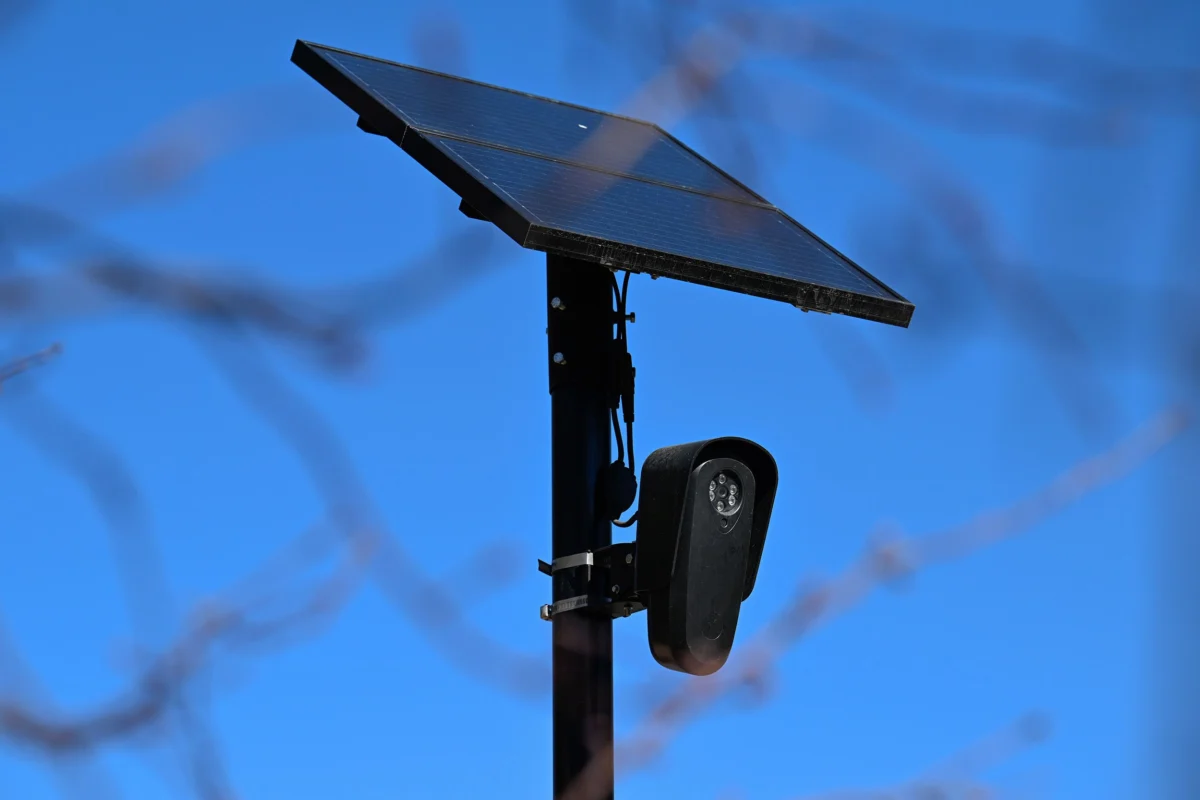
Similarly, the Flock Safety ALPR network, while a staple in modern crime-fighting, defaults to deleting footage after 30 days. In Chicago, the contract for the ShotSpotter gunshot detection system has historically treated data as the vendor’s proprietary intellectual property rather than public record, complicating defense efforts to audit the accuracy of gunshot alerts used as probable cause for police stops.
"The amount of time that it can take for that initial use of technology and investigation to actually get to a court and constitutional challenge is long," says Jennifer Herrmann, a staff attorney at the ACLU of Massachusetts. "The motions give attorneys a way to challenge what has already happened in the past, building a record that carries over to whatever tool comes next."
Official Responses and Corporate Accountability
The private companies behind these technologies maintain that they operate within the bounds of the law. Representatives for Flock Safety have noted that the company maintains strict procedures to preserve the integrity of data and that legal demands for information are referred to the specific law enforcement agencies that operate the cameras. They assert that Flock does not disclose data unless legally compelled or permitted by contractual obligations.
SoundThinking, the manufacturer of ShotSpotter, has similarly stated that it complies with court orders and subpoenas, cooperating with reasonable requests for data during criminal proceedings. However, the company often files motions to protect its trade secrets, arguing that the underlying algorithms used to detect gunfire should remain confidential.
The ACLU’s position is that such proprietary claims should not supersede a defendant’s Sixth Amendment right to confront the evidence against them. By forcing these issues into the discovery phase, the new toolkit aims to pierce the veil of "trade secret" protections that have historically shielded investigative tools from cross-examination.
Implications for the Future of Criminal Defense
The broader impact of the ACLU’s toolkit may be the standardization of "surveillance discovery." Historically, defense attorneys have had to reinvent the wheel in every case, filing custom motions to learn if a stingray was used or if a license plate reader placed their client at the scene. By centralizing this expertise, the ACLU is lowering the barrier to entry for public defenders and solo practitioners who may lack the resources to conduct a deep-dive investigation into forensic technology.
The toolkit also serves as a strategic warning to law enforcement agencies: the era of "shadow surveillance" is drawing to a close. As Massachusetts courts continue to demand that the state prove the efficacy and legality of tools like ShotSpotter under the Daubert-Lanigan standard, the pressure on prosecutors to be transparent about their investigative methods is mounting.
For the judicial system, this means an increase in evidentiary hearings and potential motions to suppress. While this may increase the workload for courts in the short term, legal scholars argue that it is a necessary evolution. As digital surveillance becomes the default setting for modern law enforcement, the courtroom must become the primary venue for determining where the right to privacy ends and the state’s investigative power begins.
As Gideon Epstein, a policy counsel at the ACLU and co-author of the toolkit, points out, the goal is not merely to win individual cases but to force a structural change in how surveillance is governed. By arming defense attorneys with the tools to demand disclosure, the ACLU is effectively creating a "bottom-up" regulatory framework, where the cumulative weight of judicial rulings will eventually force police departments to adopt transparent, constitutional, and publicly accountable surveillance policies. Whether this will lead to a retreat in the use of certain technologies or a more robust legal framework for their deployment remains to be seen, but the days of using surveillance tools in total secrecy are rapidly coming to an end.

Related Posts

The Las Vegas Cybersecurity Summit and the Escalating Threat of Autonomous Digital Exploitation

New York City Council members and privacy advocates launch legislative campaign to ban biometric facial recognition at public entertainment venues