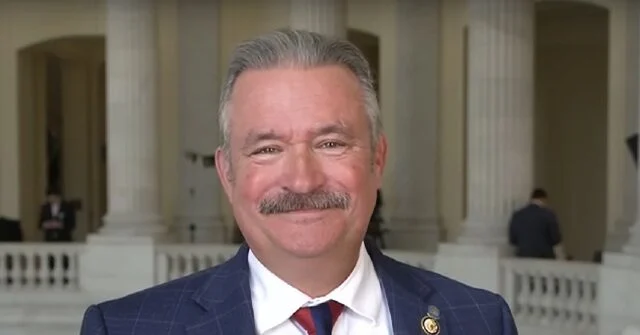
Representative Don Bacon Alleges Pentagon Kept White House Uninformed on Poland Troop Deployments, Citing Lack of Commitment
On Friday’s broadcast of C-SPAN’s “Ceasefire,” Representative Don Bacon (R-NE), a distinguished retired brigadier general of the U.S. Air Force and a member of the House Armed Services Committee, leveled serious allegations against the Pentagon, asserting that the Department of Defense has failed to adequately inform the White House regarding critical troop deployments in Europe. Specifically, Bacon stated that, based on his direct conversations with White House officials, they were “surprised that nothing has happened with those 5,000 troops” that were designated for deployment to Poland. This revelation brings to light potential communication breakdowns and inter-agency friction at a time of heightened geopolitical tension, particularly concerning NATO’s eastern flank and ongoing security challenges posed by Russia.
Rep. Bacon’s Direct Accusations and White House Agreement
During his appearance on “Ceasefire,” Rep. Bacon articulated profound concerns regarding the pace and transparency of U.S. military operations, especially those critical to reinforcing NATO allies. “I have concerns that there’s a lack of commitment from the Pentagon to get this done,” Bacon stated, referring to the deployment of 5,000 troops to Poland. His remarks were not merely an observation but an indictment of what he perceives as a bureaucratic inertia or perhaps even resistance within the Pentagon.
Crucially, Bacon underscored that his concerns resonated within the highest echelons of the executive branch. “The White House actually agrees with me. I’ve talked to the White House. I think they were surprised that nothing has happened with those 5,000 troops. I think the Pentagon’s not been keeping them informed enough, I think,” he elaborated. This assertion suggests a rare public disclosure of internal discord between the White House, which sets strategic foreign policy objectives, and the Pentagon, which is tasked with their execution.
Bacon did not shy away from confronting the anticipated backlash from the military establishment. He acknowledged, “But the Pentagon responded, and they were angry about it. And I really don’t care. … They’re – they don’t like being pushed around. But, in this case, they need to be pushed around, because they have shown a lack of ability to do the right thing when it comes to NATO, Russia, and Ukraine.” This forceful stance from a former military officer now serving in Congress highlights the depth of his frustration and signals a potential flashpoint in civil-military relations concerning the execution of U.S. foreign policy.
Strategic Imperatives: Poland and NATO’s Eastern Flank
The deployment of U.S. troops to Poland is not merely a logistical exercise but a cornerstone of NATO’s collective defense strategy, particularly since Russia’s annexation of Crimea in 2014 and its full-scale invasion of Ukraine in February 2022. Poland, bordering both Ukraine and the Russian exclave of Kaliningrad, holds immense strategic significance as a bulwark against potential Russian aggression in Eastern Europe. Its geographical position makes it a critical staging ground for NATO forces and a vital partner in projecting stability and deterrence.
For years, Poland has been a vocal advocate for a stronger, more permanent U.S. and NATO military presence on its soil. This advocacy stems from a deep-seated historical awareness of Russian expansionism and a modern recognition of the direct threat posed by Moscow’s revisionist foreign policy. The presence of U.S. troops serves multiple purposes: it enhances Poland’s defensive capabilities, acts as a credible deterrent against Russian adventurism, and reassures other frontline NATO allies in the Baltic states and Central Europe.
The United States has steadily increased its military footprint in Poland, often through rotating deployments and bilateral agreements. Significant milestones include the establishment of an Enhanced Forward Presence (EFP) battlegroup under NATO command, led by the U.S., and the signing of an Enhanced Defense Cooperation Agreement (EDCA) in 2020. This agreement facilitated an increased rotational presence of U.S. forces, infrastructure improvements, and enhanced cooperation, with the ultimate goal of establishing a permanent U.S. V Corps forward command post in Poland. Each commitment, whether to a rotating brigade or a specific number of troops, is carefully negotiated and carries substantial geopolitical weight.
Chronology of Commitments and Perceived Delays
While Rep. Bacon’s statement refers to “those 5,000 troops” without specifying an exact public announcement date for that specific deployment, it must be understood within the broader context of evolving U.S. and NATO commitments to reinforce Eastern Europe. Following Russia’s full-scale invasion of Ukraine in February 2022, the United States significantly bolstered its troop presence in Europe. President Biden announced in June 2022, during the NATO Summit in Madrid, that the U.S. would enhance its force posture across Europe, including establishing a permanent headquarters for the U.S. V Corps in Poland, sending two additional F-35 squadrons to the UK, and increasing rotational deployments to the Baltics and Romania.
Prior to these announcements, and in the immediate run-up to the 2022 invasion, thousands of additional U.S. troops were rapidly deployed to reinforce NATO’s eastern flank, including to Poland, Romania, and Germany, as a precautionary and deterrent measure. These deployments were framed as temporary or rotational, designed to reassure allies and demonstrate resolve. The 5,000 troops Bacon refers to could be part of a subsequent, more specific commitment or a continued rotational cycle that has, in his view, stalled or failed to materialize as expected by the White House.
The “surprise” from the White House, as reported by Bacon, suggests a significant disconnect. Troop deployments, especially those involving thousands of personnel, require extensive planning, logistical support, and political coordination. Decisions are typically made at the highest levels, involving the President, the National Security Council (NSC), the Secretary of Defense, and the Joint Chiefs of Staff. A delay in execution, or a failure to inform the White House of such a delay, would represent a serious breakdown in established protocols and a challenge to the principle of civilian control over the military.
Inter-Agency Dynamics: White House vs. Pentagon
The relationship between the White House and the Pentagon is inherently complex, characterized by both close cooperation and occasional friction. The White House, through the President and the National Security Council, formulates overarching foreign policy and national security strategy. The Pentagon, as the executive agent for defense, is responsible for translating these strategies into operational plans, allocating resources, and executing military missions. Effective communication and coordination are paramount to ensure that policy objectives are met and that the President is fully apprised of military capabilities, constraints, and progress.
Rep. Bacon’s allegation points to a potential failure in this critical communication pipeline. The White House being “surprised” implies either that the Pentagon failed to communicate delays or changes in deployment plans, or that it did not provide sufficient detail to satisfy presidential expectations. This could stem from various factors: logistical challenges underestimated by policymakers, competing priorities within the Department of Defense, bureaucratic inertia, or a deliberate decision by Pentagon officials that was not adequately communicated or justified to the White House.
Bacon’s blunt assessment that the Pentagon “don’t like being pushed around” but “need to be pushed around” in this instance, reflects a frustration often felt by political leaders when they perceive military bureaucracy as resistant or slow to implement directives. While the military prides itself on methodical planning and execution, political urgency, especially in a dynamic geopolitical environment, often demands swift and decisive action. The tension between these two imperatives can lead to the kind of inter-agency friction described by Rep. Bacon.
Implications for U.S. Credibility and Alliance Cohesion
The implications of such alleged communication failures and deployment delays are multifaceted and potentially far-reaching. At a fundamental level, they can undermine the credibility of U.S. commitments to its allies. Poland and other frontline NATO states rely on the certainty of U.S. military support as a cornerstone of their defense planning. Any perceived wavering or delay in promised deployments could sow seeds of doubt and potentially weaken the alliance’s collective deterrence posture.
A delay in deploying 5,000 troops, particularly when those troops are seen as a direct response to Russian aggression, could be interpreted by adversaries as a sign of weakness or disunity within the U.S. government. This could embolden Russia and complicate efforts to maintain stability in Eastern Europe. For NATO, the principle of “one for all and all for one” (Article 5) is paramount, and the timely deployment of forces is a tangible demonstration of this commitment.
Furthermore, internal friction between the White House and the Pentagon, if pervasive, can hamper effective national security decision-making. A President who is not fully informed about the status of military operations cannot make optimal strategic choices. It also risks creating a perception of disarray, which can be exploited by adversaries and cause concern among allies.
Wider Context: U.S. Military Footprint in Europe
The United States maintains a significant and dynamic military footprint in Europe, which has been consistently adjusted in response to evolving security threats. Prior to Russia’s 2022 invasion of Ukraine, the U.S. had approximately 80,000 troops permanently stationed or rotationally deployed across the continent, primarily in Germany, Italy, and the UK. Following the invasion, this number surged to over 100,000, with thousands of additional troops deployed to bolster defenses in Eastern Europe.
These deployments include a mix of ground forces, air assets, naval components, and specialized units. The purpose is to enhance readiness, conduct joint exercises with allies, and provide a credible deterrent. While many of these deployments are rotational, the U.S. has increasingly focused on making its presence in key areas like Poland more enduring, including through infrastructure investments and the establishment of command elements.
Rep. Bacon’s concern about "those 5,000 troops" must be viewed against this backdrop of substantial U.S. commitment and ongoing adjustments. It implies that despite the overall increase in force posture, a specific, expected deployment of significant size has not materialized or has been delayed without proper notification to the White House. This points to an operational or communication lapse rather than a wholesale retraction of U.S. commitment to Europe.
Conclusion: A Call for Transparency and Accountability
Rep. Don Bacon’s candid remarks on C-SPAN’s “Ceasefire” have illuminated a critical area of potential concern within the U.S. national security apparatus. His allegations of the Pentagon failing to keep the White House properly informed on crucial troop deployments to Poland, and the subsequent surprise expressed by White House officials, underscore the imperative for transparent communication and robust inter-agency coordination.
At a time when global security is increasingly fragile, particularly in Eastern Europe, the effective and timely execution of defense commitments is paramount. Delays, perceived lack of commitment, or communication breakdowns can have profound consequences for U.S. credibility, alliance cohesion, and deterrence capabilities against revisionist powers. Rep. Bacon’s call for the Pentagon to be "pushed around" reflects a demand for accountability and a clear demonstration of the U.S. government’s ability to act decisively and in concert on matters of national security. Further clarification from both the Pentagon and the White House regarding the status of these deployments and the alleged communication issues will be crucial to reassuring allies and maintaining confidence in the nation’s defense posture.

Related Posts

Democratic Candidates Must Moderate to Win General Elections, Says Rep. Greg Stanton

Lisa Demuth Secures Republican Gubernatorial Nomination in Minnesota, Defeating Trump-Endorsed Mike Lindell