Javier Milei’s Latin American Tour: A Quest for Regional Leadership Amidst Declining Domestic Popularity and Allegiances to Donald Trump
The prestigious British newspaper The Guardian published a comprehensive article on Saturday, July 25, 2026, dissecting the regional tour of Argentine President Javier Milei. Focusing on his extensive travels across Latin America, including his recent visit to Brazil, the newspaper’s regional correspondent posited that Milei, while ostensibly seeking to establish himself as a significant leader, "isn’t really the one in charge." The report further characterized the Argentine president as a "representative" figure for his American counterpart, Donald Trump, a notion echoed by various political analysts.
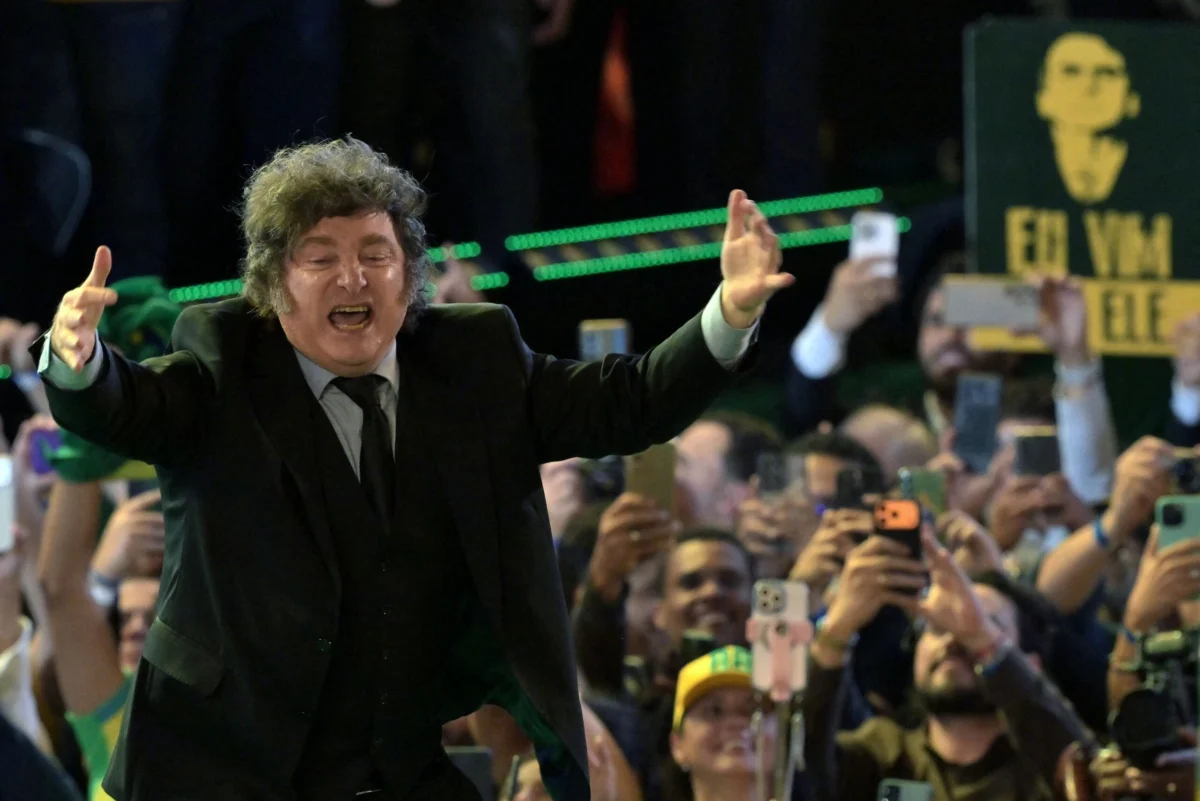
Milei’s itinerary has been marked by high-profile appearances and pointed political pronouncements. On Saturday morning, he attended the convention of the Liberal Party held at the Mercado Livre Arena Pacaembu in São Paulo, Brazil. He was the central figure of the event, delivering a robust speech that directly challenged Brazilian President Luiz Inácio Lula da Silva. This trip to Brazil was strategically timed to bolster the presidential campaign of Flavio Bolsonaro, who is vying for the presidency in the upcoming October elections. The presence of a foreign head of state at such a pivotal domestic political rally underscores the increasingly intertwined nature of right-wing political movements in the region.
The Argentine president’s ambitious diplomatic and political outreach is not limited to Brazil. His schedule includes further engagements in South America. On Tuesday, he is slated to attend the inauguration of Keiko Fujimori in Peru, a key figure in Peruvian conservative politics. Following this, on August 7, he will participate in the assumption of office by Abelardo de la Espriella in Colombia, another prominent conservative voice. From Colombia, Milei is scheduled to travel to Ecuador to meet with President Daniel Noboa, further solidifying his network of alliances across the continent.
The Guardian’s Analysis: A Leader Seeking Influence Beyond Borders
Tiago Rogero, The Guardian‘s correspondent for Latin America, offered a critical assessment of Milei’s regional ambitions. He highlighted the apparent paradox of Milei’s international profile-building efforts occurring concurrently with a discernible decline in his domestic popularity within Argentina. "Amidst a decrease in his popularity within Argentina, the tour comes after a series of victories for right-wing and far-right candidates in presidential elections across Latin America," Rogero observed. This context suggests Milei is attempting to leverage the broader regional trend of right-wing ascendancy to bolster his own standing, both domestically and internationally.
The article further delves into the complex relationship between Milei and former U.S. President Donald Trump. Benjamin Gedan, a senior fellow and director of the Latin America program at the Stimson Center, shared his insights with Rogero, emphasizing Milei’s consistent efforts to maintain his "respect with President Donald Trump and avoid any attempt to overshadow him." This dynamic suggests a strategic alignment, where Milei seeks to benefit from Trump’s influence while carefully navigating their relationship to avoid appearing subordinate.
The Trump Factor: A Guiding Star in the Southern Hemisphere?
Rogero elaborated on this dynamic, noting that when Trump assumed the presidency in January 2025, Milei faced "relatively little competition in Latin America in terms of attracting his attention." At that time, the region had fewer than a dozen far-right presidents, with Nayib Bukele of El Salvador being the most prominent. Trump himself had described Milei as his "favorite president." However, the political landscape has shifted significantly since then.
Since early 2025, right-wing or far-right candidates have emerged victorious in all seven presidential elections held across the region. This surge in conservative electoral success has created a more crowded field for attention from influential figures like Trump. Rogero pointed out that Trump has even been accused of attempting to influence some of these electoral outcomes, a testament to his continued sway in the region.
Furthermore, Rogero noted that "almost all of these victors have also interacted with Milei during their campaigns, whether through mutual public praise or video calls." This suggests that Milei, while perhaps not the sole beneficiary of Trump’s attention, has actively cultivated relationships with other emerging right-wing leaders, positioning himself as a key player within this ideological bloc.
Analysts’ Perspectives: A Proxy for American Influence?
Juan Gabriel Tokatlian, a sociologist and professor at the Torcuato Di Tella University, offered a nuanced perspective when interviewed by Rogero. He stated that "all these right-wing leaders see Milei as a kind of representative of Trump, who is the one who truly commands." Tokatlian added, "They don’t want to be under any Argentine leadership. It is Milei who tries, but there isn’t special enthusiasm for following him." This viewpoint suggests that while Milei may be actively seeking regional leadership, his influence is perceived by some as an extension of Trump’s broader political agenda, rather than an independent force.
Ariel Goldstein, a researcher and professor at the University of Buenos Aires, echoed this sentiment, suggesting that Milei "is still ahead of his peers in the race to capture Trump’s attention." This implies a continued competition among regional leaders to align themselves with the former U.S. president, with Milei currently maintaining a prominent position in that regard.
Policy Echoes and Domestic Challenges
Rogero also highlighted the policy parallels between Milei and Trump, citing specific examples such as Argentina’s withdrawal from the World Health Organization (WHO) and the tightening of immigration policies. These mirrored actions underscore a shared ideological framework and a willingness to adopt policies that align with a nationalist and often isolationist stance.
The article also touched upon the financial aspect of their relationship. It was noted that "last year, Trump promoted a U.S. financial bailout of $40 billion that was widely considered crucial for the libertarian party’s victory in Argentina’s mid-term legislative elections." This suggests a tangible level of support that transcends mere political rhetoric, indicating a strategic investment in Milei’s political success by forces associated with Trump.
However, the analysis also points to significant domestic challenges facing Milei. Rogero concluded that "Milei’s path to reelection next year is far from clear." While inflation has indeed decreased in Argentina, so too has purchasing power. Unemployment and informal labor have seen an increase, creating economic hardship for a significant portion of the population. Furthermore, Milei’s government has been plagued by various corruption scandals, which have undoubtedly impacted public trust and could pose a substantial obstacle to his re-election bid. The combination of these domestic pressures and the complex regional political dynamics paints a picture of a president actively seeking to expand his influence abroad while grappling with mounting challenges at home. The success of his regional tour, therefore, will likely be measured not only by the alliances he forges but also by his ability to translate international visibility into sustained domestic support.

Related Posts

The Electric Vehicle Battery Health Debate Emerges as Argentina’s EV Market Accelerates
President Donald Trump Confirms Secret Departure from Turkey Amidst Assassination Threat