The Rapid Expansion of Cyber-Scam Compounds in Myanmar Signals Failure of Regional Enforcement Efforts
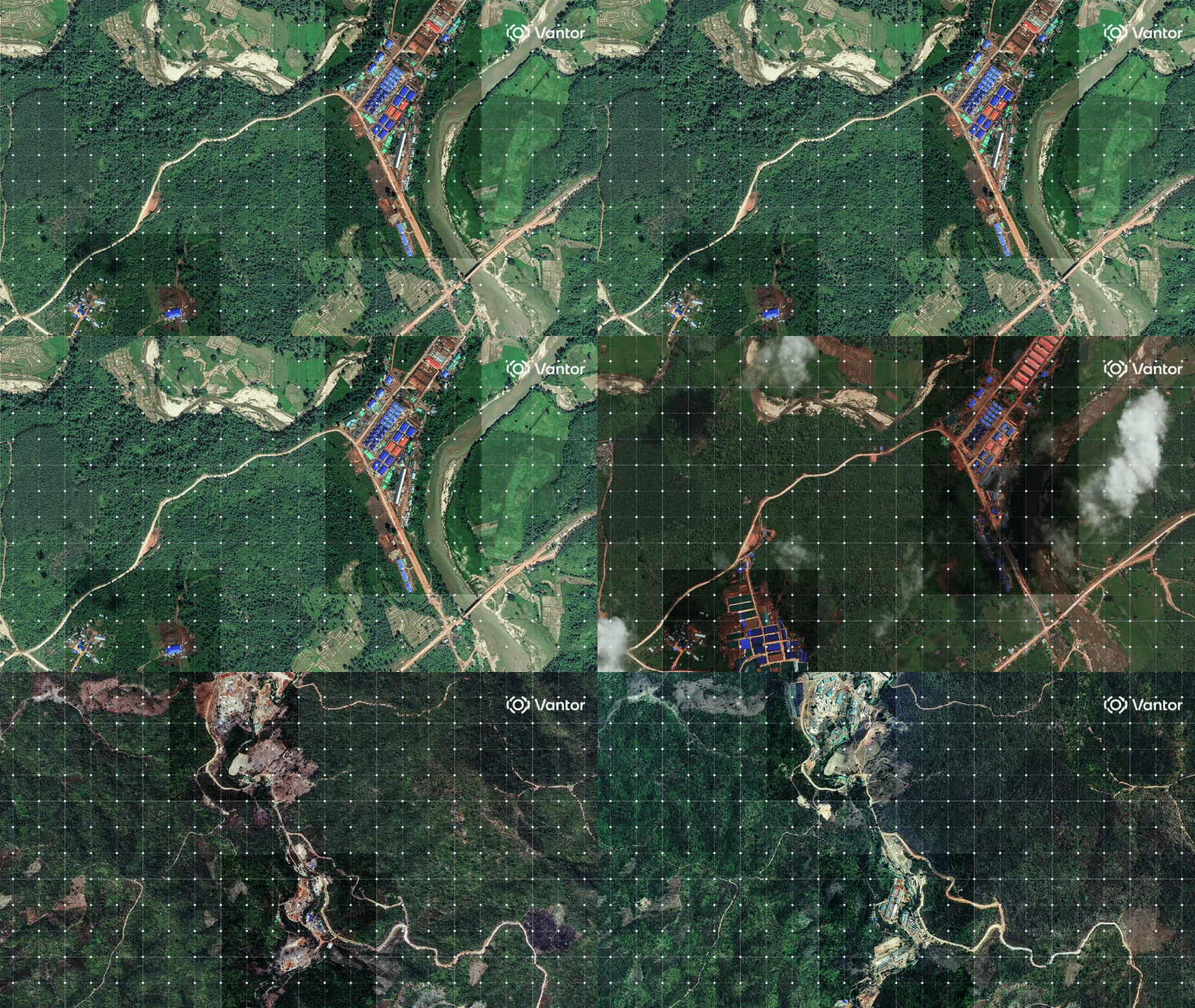
The industrial landscape of Myanmar’s border regions, particularly near Myawaddy, is undergoing a profound and troubling transformation. Over the past six months, satellite imagery analysis has revealed the construction or significant expansion of more than two dozen suspected cyber-scam compounds. This rapid development suggests that the highly publicized crackdown initiated by the Myanmar military junta last year has failed to dismantle the underlying criminal infrastructure, which continues to facilitate a global epidemic of financial fraud, human trafficking, and organized crime.
A Chronology of Unchecked Growth
The emergence of these sites is not a new phenomenon, but the pace at which they are currently expanding is unprecedented. For the better part of a decade, Southeast Asia—specifically Myanmar, Cambodia, and Laos—has served as a base for Chinese organized crime syndicates looking to capitalize on the region’s porous borders and weak regulatory oversight.
The chronology of this crisis is marked by periodic, performative interventions. In late 2023, ahead of planned elections, the Myanmar military junta launched high-profile raids against several well-known scam hubs. These operations were documented in state media, featuring the theatrical destruction of buildings and the public crushing of confiscated hardware, including computers and mobile phones. However, evidence gathered by the International Justice Mission (IJM) and independent humanitarian organizations indicates that these raids were largely cosmetic.
By January 2024, construction activity resumed in earnest. Satellite reconnaissance shows that large swaths of dense forest were razed, and in some instances, clearings were transformed into fully operational compounds within a matter of months. Data from the IJM highlights that at least 25 new sites have appeared in the Myawaddy region since the start of the year, effectively replacing the capacity lost during the previous year’s supposed purge.
The Anatomy of a Modern Scam Factory
The operational model of these compounds relies on a combination of advanced technology and large-scale human exploitation. The sites are designed as self-contained fortresses, often housing hundreds, if not thousands, of trafficked individuals. These victims, recruited from over 60 countries, are lured to the region under the pretense of legitimate employment opportunities in hospitality, technology, or finance.
Once they arrive, their passports are confiscated, and they are subjected to rigorous, often violent, coercion. These individuals are forced to operate as "scammers," working around the clock to execute complex "pig butchering" schemes—a form of long-term investment fraud where victims are groomed via social media to invest in fraudulent cryptocurrency platforms.
The physical infrastructure of these sites—which includes dormitory blocks, high-security fencing, and dedicated communication hubs—is a hallmark of the industry. Analysts note that these buildings are distinct from local residential or agricultural architecture. The reliance on foreign internet service providers, including the unauthorized use of Starlink satellite terminals, allows these compounds to maintain high-speed, encrypted connections to global financial markets and potential victims in the United States and Europe, despite their remote, rural locations.
Data-Driven Insights and Technological Facilitation
The role of satellite technology in maintaining these operations has become a focal point for international investigators. Despite efforts by the United States Department of Justice and other international agencies to track and seize equipment used in these compounds, the persistence of satellite internet remains a critical hurdle.
Eric Heintz, a global analyst at the IJM, points out that the digital footprint of these locations is unmistakable. "We know exactly where these compounds are," Heintz notes. "In many cases, we have identified the specific IP addresses utilized by Starlink connections within these facilities." While SpaceX has publicly stated that it has disconnected approximately 2,500 devices linked to scam operations in Myanmar, the reality on the ground suggests that the measures are either insufficient or easily circumvented by the criminal syndicates.
The construction of these sites follows a predictable pattern. Fields are flattened, roads are paved to allow for supply logistics, and high-density, multi-story buildings are erected to house the forced labor pool. For local observers like Mechelle B. Moore, CEO of Global Alms Incorporated, the growth is visible and persistent. Moore reports that her organization has identified at least a dozen new sites, and drone footage confirms that even facilities previously thought to have been "cleared" by the military are now fully repopulated and functioning at capacity.
The Failure of Regulatory Enforcement
The failure to curb the growth of these compounds raises serious questions about the political will of regional authorities. The crackdown in late 2023 was widely criticized by international human rights watchdogs as a superficial attempt to appease global pressure while leaving the core revenue streams of the criminal groups intact.
The lack of effective intervention is compounded by the complex geopolitical situation in Myanmar, where the military junta faces significant internal opposition. The scam compounds, which generate billions of dollars in illicit revenue, are often located in territories controlled by ethnic armed organizations or border guard forces that maintain complex, sometimes symbiotic, relationships with the central government. Consequently, enforcing international standards or local laws in these regions is nearly impossible.
The economic impact is staggering. With billions of dollars siphoned annually from victims worldwide, the scam industry has become a significant, albeit illicit, component of the regional economy. The persistence of these compounds suggests that they are seen as "too big to fail" by the local power brokers who benefit from the rents and "protection" fees paid by the criminal syndicates.
Global Implications and Future Outlook
The expansion of these scam compounds is not merely a regional crisis; it is a global security challenge. The sophisticated nature of these operations—utilizing AI-driven scripts, deepfake technology, and global financial networks—means that the damage extends far beyond the victims trapped within the walls of the compounds.
International sanctions against individuals and entities linked to these sites have been implemented, but their efficacy is limited when the underlying operations can simply relocate or rebuild. The current trajectory suggests that without a concerted, multi-national effort that goes beyond performative raids, the scamming industry will continue to scale.
As the international community grapples with how to address this, the humanitarian toll remains the most urgent concern. Hundreds of thousands of people remain in conditions of modern-day slavery, facing the constant threat of violence if they fail to meet their daily quotas. The evidence provided by recent satellite analysis serves as a sobering reminder that the "crackdown" has not ended the crisis—it has merely catalyzed a more robust and resilient iteration of the criminal enterprise.
Moving forward, investigators emphasize the need for greater transparency from satellite internet providers and stronger cooperation between Southeast Asian nations. Without a fundamental change in the enforcement strategy—one that targets the financial flow and the leadership behind the syndicates rather than the physical structures alone—the proliferation of these compounds is likely to continue, further entrenching the power of the criminal groups operating in the shadows of the Myanmar border.

Related Posts

The Las Vegas Cybersecurity Summit and the Escalating Threat of Autonomous Digital Exploitation

New York City Council members and privacy advocates launch legislative campaign to ban biometric facial recognition at public entertainment venues